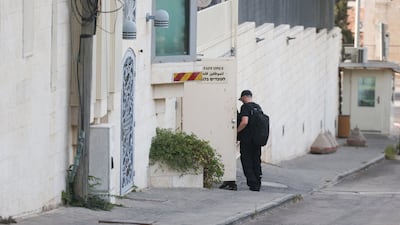

Britain will keep its diplomatic mission in East Jerusalem open despite an Israeli order to close the consulate, Foreign Secretary Ed Miliband said on Thursday, averting an immediate escalation between the two allies as talks continue over the dispute.
Mr Miliband said the building would remain independent and operational under a new name, UK Mission, Jerusalem, and continue serving Palestinians in the city and the wider occupied Palestinian territories.
Israeli Foreign Minister Gideon Saar said Israel had implemented measures announced last month, but that the two sides had agreed to continue dialogue.

He said the British consulate had ended its role in the city and that 19 diplomats would leave Israel, while a task force of seven British diplomats would be allowed to continue operating from the building with a limited remit.
“Following discussions with the Israeli government, our consulate general building will not be closing,” Mr Miliband said. “It will be known as UK Mission, Jerusalem, and will be independent and operational.”
The dispute follows Britain's sanctions against Israeli settlements in the occupied West Bank.
“We have been clear that we do not accept that the government of Israel has the legal right to close the British consulate general in Jerusalem, which has been there for nearly 200 years,” Mr Miliband said. “The UK government reiterates its long-standing view that East Jerusalem is occupied territory.”
His announcement came hours after workers removed signs and plaques identifying the building as the British consulate general. Signage identifying the mission was still missing on Thursday, although the British flag remained flying above the building.
The UK government appears determined to preserve its diplomatic presence for Palestinians while avoiding escalation with Israel.
UK Middle East Minister Stephen Doughty rejected suggestions that the arrangement represented a political fudge allowing Britain to say the mission remained open while Israel could claim it had closed.
“The building remains open. We continue to have staff able to do important work, engaging with the Palestinian Authority, supporting British nationals, and we are engaged in ongoing conversations with Israel on this matter,” he said.

Regardless of the name change, Mr Doughty said, Britain’s presence needed to remain.
Mr Miliband said: “We will work to build back up our presence in the coming months.” Britain has withdrawn several diplomats, staff and family members in recent weeks.
The Foreign Secretary said the withdrawal had been necessary because Britain had not received sufficient security assurances.
“Without an understanding, we would not have the necessary assurances for the security and protection of our staff and premises. Accordingly, the UK has temporarily withdrawn a number of staff and families to ensure their safety and security,” he said.
The consulate handles Britain's relations with Palestinians in Jerusalem, the West Bank and Gaza and provides consular services to Palestinians. Britain's diplomatic presence in Jerusalem dates back almost 200 years, well before the establishment of Israel in 1948.
Israel ordered the consulate to close within 30 days after Britain announced measures including a ban on imports of goods produced in Israeli settlements and sanctions against individuals and companies supporting settlement activity. The UN and most countries consider the settlements illegal under international law, while Israel disputes that position.
Foreign Minister of Israel
Mr Doughty said the UK remained engaged in dialogue with the Israelis and would push on with the sanctions on illegal settlements.
He said the move, along with Britain's accusation that the Israeli government was turning a blind eye to “ethnic cleansing”, had enraged the Israeli government and led to its decision to close the consulate.
Mr Saar said all four measures he announced on September 8 had been implemented, including removing British representatives from the International Gaza Support Centre in Kiryat Gat, ending British activity to train Palestinian Authority forces in the West Bank, and barring 12 British officials and other citizens from entering Israel.
He said Israel had agreed to continue dialogue with Britain, but warned: “Any country that acts against Israel must know that there will be a price for doing so.”
Mr Miliband also sought to dampen speculation that Britain would retaliate by expelling Israeli diplomats. “We will not take reciprocal action while such discussions are under way and credible,” he said.
Britain had been considering expelling Israeli diplomats if Israel forced the consulate to close, sources told Reuters earlier this week. Such a move would have represented a highly unusual escalation between two countries that remain close security and intelligence partners.
The confrontation marks another sharp deterioration in UK-Israel relations after Britain repeatedly criticised Israel's conduct in Gaza and Israeli settler attacks on Palestinians in the West Bank. Israeli Prime Minister Benjamin Netanyahu's government has accused Britain's Labour government of hostility towards Israel.
“This will ensure that we maintain our long-standing British presence and the UK's role in support of [a] two-state solution,” Mr Miliband said.