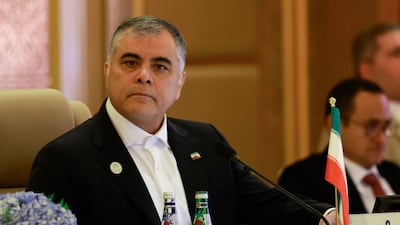
Iranian Oil Minister Mohsen Paknejad has resigned, with Hamid Bovard, chief executive of the state-run National Iranian Oil Company, appointed as acting minister.
Mr Paknejad, who had served in the role since August 2024, submitted his resignation some time ago for “personal reasons” and had insisted on leaving, officials said.
The office of President Masoud Pezeshkian said he accepted the resignation on Sunday. He named Mr Bovard in his place, the ministry's Shana news service reported.

Mr Bovard, 62, has led the NIOC since 2024 and previously managed the National Iranian South Oil Company and the Iranian Offshore Oil Company. He is to oversee the ministry while the government considers who to appoint as Mr Paknejad's permanent replacement.
Mr Bovard takes over with Iran's energy industry under intense pressure from a US naval blockade. It has caused exports to plunge to zero, the country's central bank chief said previously.
The change comes less than a month after Iran raised the price of petrol for motorists exceeding their subsidised monthly allocation. From September 7, petrol above the 110-litre quota was priced at 100,000 rials a litre – double the previous rate.
The government said the measure was intended to address a daily petrol deficit of about 10 million litres.
Iran continues to subsidise the first 110 litres purchased each month, with 60 litres priced at 15,000 rials a litre and a further 50 litres at 30,000 rials. The higher third-tier price applies to consumption above that level.
The price increase followed shortages and queues at petrol stations as Iran struggles to balance domestic consumption with available supplies. Fuel consumption has increased beyond domestic refining capacity, raising the country's reliance on imports.
The fuel shortages have coincided with severe disruption to Iran's oil exports.
The war with the US and restrictions on Iranian shipping have constrained the country's ability to move crude through the region and collect oil revenue.
Mr Paknejad said before his resignation that revenue from oil already sold was continuing to reach Iran. In August, he said Iran had lost about 95 million cubic metres of gas production owing to infrastructure damage caused by the war.

