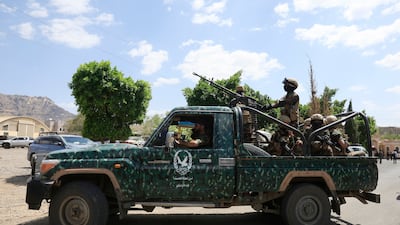

The renewed civil war in Yemen pits an exiled government backed by Saudi Arabia and several armed factions against the Iran-backed Houthi rebels.
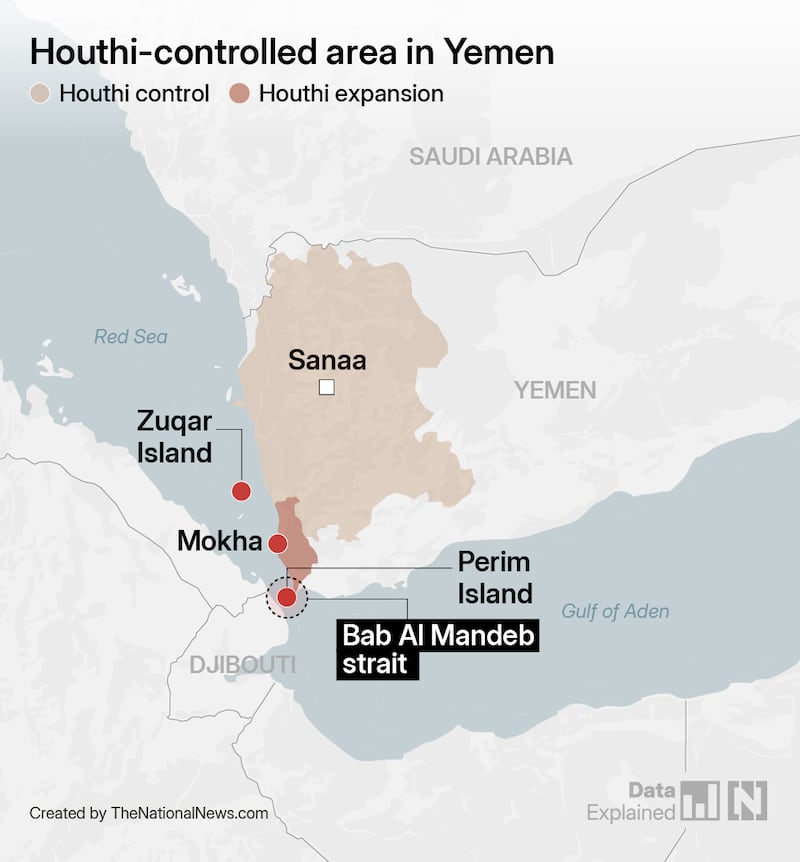
After a lull since 2022, fighting has burst back into the open in recent weeks as the Houthis seized control of Yemen's Red Sea coast, prompting a counter-offensive from the government.
Although backed by the air power of a Saudi-led coalition, the Yemeni government also faces internal divisions and has failed in previous attempts to drive the Houthis out of their territory.
Here is a guide to the key players:
Yemeni government
Based in Aden, Yemen's internationally recognised government has been unable to operate from Sanaa since the Houthis captured the capital in 2015. On Sunday it announced a new push to reclaim territory from the Houthis.
The Saudi-backed government is run by an eight-member Presidential Leadership Council headed by Rashad Al Alimi. A factional struggle in December led to some members who favoured secession for southern Yemen being removed.
Mr Al Alimi has declared a general mobilisation to beat back the latest Houthi advances, with a declared aim to “reclaim the remaining territories of the republic”.
Pro-government forces have about 122,000 troops to their name as well as armoured vehicles, anti-tank rockets and air defence guns, according to the International Institute for Strategic Studies. However, it says the government has “limited control” over some of the factions involved.

Saudi-led coalition
Saudi Arabia has led the anti-Houthi alliance since 2015. On Monday the coalition said 100 fighter jets were taking part in the new government offensive and providing air cover on the Bab Al Mandeb strait.
The kingdom has advanced warplanes and had a military budget of 272 billion riyals ($72.6 billion) last year. It also has a new defence pact with Turkey and Pakistan, who were holding a meeting in Riyadh on Monday.
The UAE was part of the coalition until 2019. A small number of remaining counter-terrorism specialists were withdrawn late last year.
Houthis
The Iran-backed Houthis, also known as Ansar Allah, have occupied large parts of Yemen throughout the civil war. With a range of missiles and drones, they have also attacked shipping in the Red Sea and launched occasional strikes on Israel.
Having largely sat out the first round of this year's regional war, they launched an offensive in September to seize Yemen's Red Sea coast and claim unrivalled control over the sensitive Bab Al Mandeb strait.
The National revealed last month how Iran had played a role in the Houthi offensive, with an Islamic Revolutionary Guard Corps operative known as “Shadow Man” among those helping to use Yemen as a new pressure point in the wider war.
Military experts say Iran is a key supplier of drones, missiles and other equipment to the rebels but that the Houthis have also experimented with their own weapons development. Led by Abdul-Malik Al Houthi, the group has also carried out attacks on Saudi Arabia, causing outrage by targeting the holy cities of Makkah and Madinah.
Brigades and factions
The Yemeni government said two loyalist factions, the Giants Brigades and Nation’s Shield Forces, were helping to run a flanking manoeuvre around the Houthis on Monday.
The Giants Brigades are a southern faction whose numbers have been estimated at between 15,000 and 30,000. They have previously taken action on the Bab Al Mandeb strait to intercept alleged weapons shipments to the Houthis.
The Saudi Arabia-aligned Nation's Shields Forces helped to restore government control over the south after skirmishes late last year. Mr Al Alimi also said last month he “placed great hope” in Yemeni tribes siding with the government.
Some anti-Houthi fighters are part of the National Resistance Forces, a coalition led by Gen Tariq Saleh – the nephew of Yemen's former billionaire president Ali Abdullah Saleh.
There are rivalries within the anti-Houthi movement. The Hadhrami Elite Forces, a group loyal to the southern secessionists, last year seized oilfields in the south of Yemen before Saudi-backed forces restored government control.

