

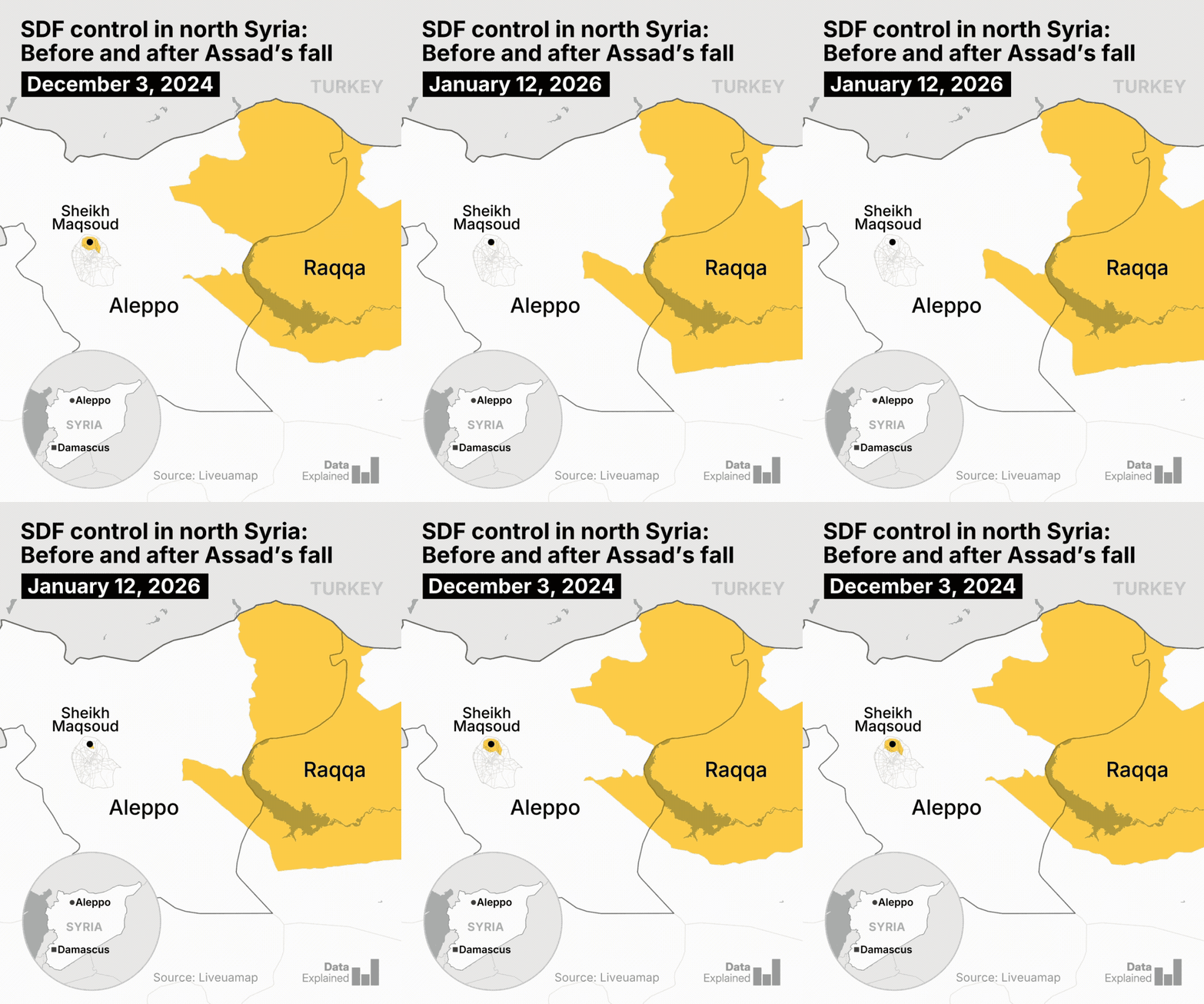
The mostly Kurdish militia in control of Syria's energy and farming heartland is facing extinction after losing its former stronghold in Aleppo to government forces, with sources telling The National that the US told the group not to resist the takeover.
The Syrian Democratic Forces (SDF) has positioned itself as the defender of the Kurdish community since the civil war, although Syria’s one million Kurds are not cohesive and some do not support the militia. But on Sunday, its last affiliated personnel left Aleppo on buses to SDF-held areas in eastern Syria.
A Kurdish source in contact with the SDF command said the group's leader, Mazloum Abdi, was told by US Central Command to hand over the areas and not intervene on behalf of his men. The message was relayed before a US-supervised meeting between Israel and Syria on January 6 in Paris.
The two countries, technically in a state of war, agreed in Paris to avoid hostilities and explore security and commercial co-operation.
“The US has wider geopolitical objectives and the feeling is creeping into the SDF that they have become a spent force,” the source said. "I am afraid there will be more calls to come from Centcom to abandon more cities."
The source expected Deir Ezzor, capital of an oil-producing province, partly held by the SDF, to be next.
Violence involving Syria's Alawite, Druze and Kurdish minorities has marred the first year in power of the Syrian government led by President Ahmad Al Shara. Mr Al Shara founded Hayat Tahrir Al Sham, the former Al Qaeda affiliate that became the current government.
The SDF presence in hilltop areas of Aleppo was part of its massive territorial acquisitions during the civil war. The SDF was founded with US backing in 2015 as the ground component of the American-led war against ISIS in Syria.
A source in Washington, recently briefed on American policy in eastern Syria, said his impression was that US President Donald Trump would “sacrifice” the SDF as long as Damascus, and its main regional ally Turkey, went along with his quest for a Syrian-Israeli rapprochement and co-operated with the US on counter-terrorism.
“The SDF knows that, without US support, it will be futile to defend their holdings,” said the source, who referred to the example of the Afrin countryside north of Aleppo, which was captured by Turkey and its Syrian proxies in 2018, expanding Ankara's zone of control in Syria. Russia and Iran also had zones of control in Syria during the civil war, but only the American and Turkish ones remain.
“The SDF put up a fight for Afrin but ultimately lost because it did not have US support to heel the area,” the source said.

Territorial acquisitions supported by the US had put the SDF in control of areas along the ancient Euphrates Valley that account for most of Syria’s oil, gas, commodities and power output, although most of these areas are majority-Arab.
However, in late 2024, the regime of former president Bashar Al Assad fell and the US started supporting the government in Damascus, counting it as a counter-terrorism partner, instead of solely relying on the SDF. In March last year, the US brokered an integration deal between Damascus and the SDF, which has not been realised.
This has been mainly because the SDF wants to enter into the new system as a distinctive bloc, which the government and Turkey opposes, sources say. The Damascus government also refused SDF demands for federalism and assigning a share of oil revenue to the Kurds, similar to the arrangement in the Kurdistan region of Iraq.
Another source said that, although the SDF areas of Aleppo were not as important to the group as its territory in the east, their loss has sent shivers within the SDF because the fall was preceded by the Arab tribal fighters joining the government. These fighters, from the Baqara tribe, had previously fought with the SDF against the former rebels now in power.
“The tribes in the east will do the same and turn against the SDF,” said the source, adding that the “the only question left” is whether Mr Trump gives “the go ahead" to Mr Al Shara to advance into the east. “First, Trump would want to safeguard US interests as far as the oil and other issues, but he will do it," the source said.

