


A former British intelligence counter-terrorism chief has questioned the continued arrests of Palestine Action activists, after more than 50 people were detained on Thursday while protesting for the group.
Richard Barrett has condemned the UK government's designation of Palestine Action as a terror group and the amount of police time and resources being used to arrest people holding signs. “I oppose genocide, I support Palestine Action,” he said.
“With all the arrests that the police made … were they a sensible use of police time?” Mr Barrett asked. More than 1,600 people, most of them elderly, have been detained since July.
Under the UK’s terrorism laws, police made arrests on Thursday of people quietly sitting and holding placards outside the Ministry of Justice in central London.
The protest is part of a wave of actions in 20 towns and cities across the UK opposing the ban before a judicial review next week of the government's proscription of Palestine Action under the Terrorism Act 2000.
The group was proscribed after two activists broke into RAF Brize Norton in Oxfordshire, southern England, in June, and spray-painted transport aircraft, causing £7 million's worth of damage.
“That's an action you might consider to be terrorist but the impetus behind their support is not necessarily terrorist. They're not a small malignant cell looking to harm the government,” said the former intelligence officer, who is now involved in countering violent extremism.
Designating them terrorists was, as many among the British public believe, “going too far”, he said. He added that “an awful lot of people feel quite strongly about Gaza and that doesn't make them terrorists”.
Mr Barrett, who served as MI6’s director of global counter-terrorism operations both before and after 9/11, also argued that Britain’s Terrorism Act 2000, which was mainly designed to tackle terrorism in Northern Ireland, should be “updated continually to maintain the trust and confidence of the public”.
While people wanted protection from terrorism “they're certainly not going to get it from a law which is outdated and no longer relevant to the circumstances,” he added.
Gaza war impact
Mr Barrett, who also worked for MI5 and the Foreign Office, commented on the Gaza conflict, saying that with “tens of thousands of Palestinian families suffering the death of a mother or a child or uncle or aunt”, it was “hard to imagine seeing people not being radicalised”.
“That's not going to stop them wanting to hit back,” said the former intelligence officer, who led on the UN’s radicalisation issues and on terrorist use of the internet.
-
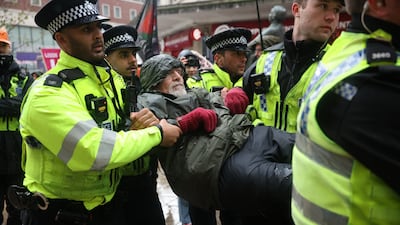
Police arrest a supporter of the banned Palestine Action group at a protest in Leeds. EPA -
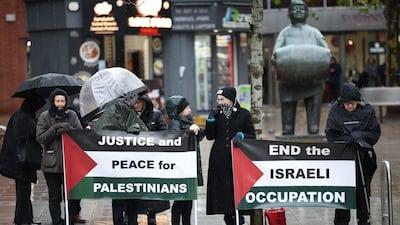
Nationwide protests are taking place over six days against the proscribing of activist group Palestine Action as a terrorist organisation. EPA -

Protestors from the group Defend Our Juries demonstrate outside the UK government hub Queen Elizabeth House in Edinburgh, Scotland. Getty Images -
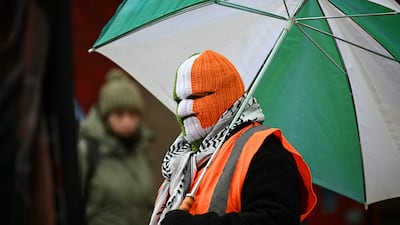
A protester in Leeds. AFP -

The demonstration in Edinburgh. Getty Images -
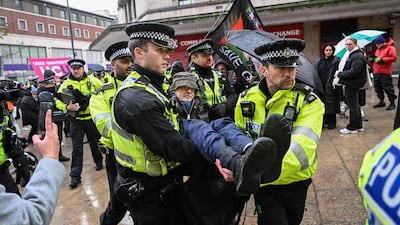
A protester is removed by police in Leeds. AFP -
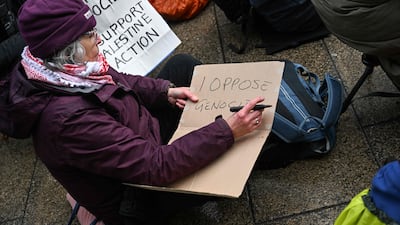
A protester writes out a placard in Leeds. AFP


More than 68,200 Palestinians have been killed during the two-year conflict, according to the Gaza Health Ministry.
“A lot of terrorism is probably the result of a sense of powerlessness, discrimination, people not hearing and listening and no other way of affecting change,” added Mr Barrett, a founding member of the UN Counter-Terrorism Implementation Task Force.
Look deeper
He also argued that “just a military response like we saw after 9/11 is not really going to be effective in dealing with the root causes of terrorism”. He said that to prevent future terrorism, societies and governments would have to “look a bit deeper” and focus more on social cohesion.
“If you're attacking your own family, well, why would you do that? That would be a very odd thing. But if you're attacking somebody who you see as the ‘other’ and they see you as the ‘other’, you change from the individuality into the anonymity of them,” he said.
He also argued that “terrorist movements in history usually end when the leaders or the issue is drawn into the mainstream of politics”. Mr Barrett cited as an example Syria's President Ahmad Al Shara, who in the past led an Al Qaeda splinter group.
“Syria is a very interesting example of community and nationality, lots of different disparate groups, different very strongly held ideas trying to come together to make a future for the country that's very fragile,” he added.

