
Iran's President Masoud Pezeshkian was injured in an Israeli attack on Tehran on June 16, during the 12-day war, according to Iranian reports.
The attack took place during a meeting of Iran's Supreme National Security Council in the Iranian capital just days after the war began, reported the Islamic Revolutionary Guard Corps-affiliated Fars news agency on Sunday.
Mr Pezeshkian suffered slight leg injuries, according to the report.
The report said six missiles or bombs were used to block the exits of the building, where the meeting was being held, but officials managed to escape through an emergency hatch. Mr Pezeshkian was reportedly injured while escaping from the building.
The speaker of Iran's parliament, Mohammad Bagher Ghalibaf, and the head of the judiciary, Gholam-Hossein Mohseni Ejei, were also said to have been in the meeting.
Given the precise target of the strike, Fars said an investigation was under way to determine whether information on the meeting had been leaked to Israel.
Both Iran and Israel have acknowledged that Israeli covert operations with agents on the ground had taken place. Iran has cracked down on suspected Mossad agents and affiliates, with numerous arrests and executions made since the end of the war.
-
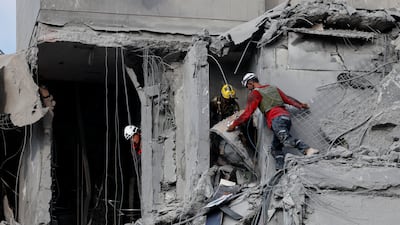
Rescue and recovery crews at work at a residential site in Be'er Sheva following a missile attack from Iran on June 24. Reuters -

Contrails from Israeli air defence system are visible as interceptor rockets are launched towards Iranian missiles during an Iranian attack on June 24. AP -
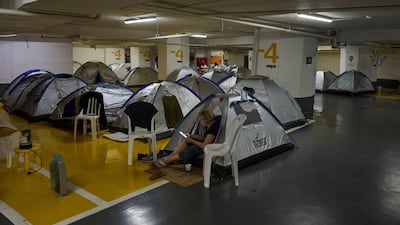
Residents spend the night in an underground garage as a precaution against Iranian missile attacks in Tel Aviv on June 23. AP -
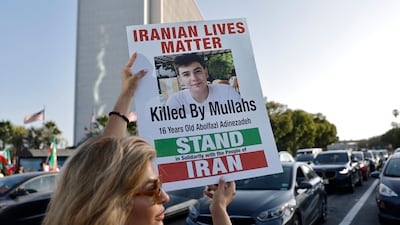
Supporters of regime change in Iran rally outside the Wilshire Federal Building in Los Angeles, California. The Los Angeles area holds the largest Iranian community in the world outside of Iran. AFP -
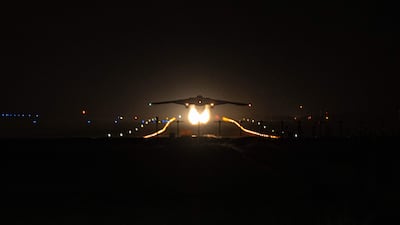
A US Air Force B-2 Spirit bomber takes off from Whiteman Air Force Base in Missouri to support Operation Midnight Hammer against Iran. AFP -

Projectiles in the sky over Doha, Qatar, on June 23 as the US military base at Al Udeid is attacked by Iran. AFP -
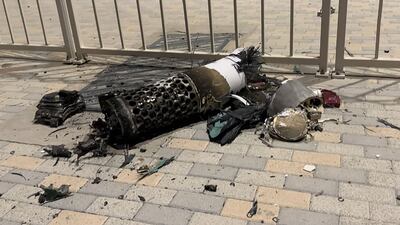
The remnants of an Iranian missile intercepted over Qatar. AFP


According to the report, the operation was modelled on the strike in which Hezbollah leader Hassan Nasrallah was assassinated in the southern suburbs of Beirut last September.
The exact location of the Tehran strike was not revealed in the report.
In an interview with American journalist Tucker Carlson aired this week, Mr Pezeshkian said that Israel had tried to assassinate him but not specify whether this was during the latest war. “They did try, yes. They acted accordingly, but they failed,” he said.
There was no comment from Israel.
Israel launched a surprise attack on Iran on June 13, leading to a brief aerial war that saw strikes both from sides. Israel's military targeted top Iranian political and military officials, as well as nuclear scientists.
IRGC chief Maj Gen Hossein Salami and Iranian armed forces chief of staff Maj Gen Mohammad Bagheri were among those assassinated on the first day of Israeli strikes.
Israeli Defence Minister Israel Katz said his country's forces had sought to kill Iran's supreme leader Ayatollah Ali Khamenei but despite searching for him, the opportunity did not arise. Israeli officials and US President Donald Trump threatened Mr Khamenei several times.
The US joined Israel's war and launched strikes on Iran's nuclear sites, with Mr Trump declaring the “total obliteration” of Tehran's programme.

