

Clashes between Druze fighters and pro-government forces in Syria have intensified into a violent urban assault, leaving scores dead, in some of the worst fighting involving the religious minority.
Backed by tribal militias and extremist factions, the assault in mid-July quickly turned from a Syrian “security operation” into a street battle in which military personnel and civilians have lost their lives.
As hostilities mount, the spotlight has returned to the secretive, scattered minority that was once regarded as safe from crackdowns by the former Assad regime.
Here is a closer look at the Druze minority:
Who are the Druze?
The Druze are a small religious sect that emerged from a branch of Islam in the 11th century. Their faith blends elements of Islam with ancient traditions.
It is a closed faith − you can only be born Druze as people are not allowed to convert to or from the religion − and reincarnation is central to their beliefs.
According to set leaders, they have kept their faith closed and secretive to protect its spiritual core, preserve unity, and guard against external interference.
Despite the small size of their community, the Druze have figured prominently in Middle Eastern history. They have served as kingmakers, military leaders, and political mediators.
Where do they live?
About one million Druze live across the Middle East, mainly in Syria, Lebanon, Jordan and Israel.

In Syria, the largest Druze population is based in the southern province of Suweida, as well as in certain Damascus suburbs such as Jaramana and Sahnaya. Their numbers in Syria are estimated at about 700,000.
In Lebanon, the community, about 300,000, is concentrated in the Chouf mountains and parts of Mount Lebanon. Though they make up less than 10 per cent of the population, their influence far outweighs their numbers.
About 150,000 live in Israel, particularly in the north and in the Israeli-occupied Golan Heights. A smaller community also exists in Jordan, mostly near the Syrian border.
What has happened in Syria?
Tension erupted in Syria in April after a manipulated recording falsely claimed a Druze cleric had insulted Islam. The fake triggered sectarian violence, with Sunni militants attacking Druze towns near Damascus. Dozens were killed in the unrest.
In a significant move, Israel launched air strikes near the Syrian presidential palace in Damascus, warning the Syrian regime not to harm the Druze minority. Syrian Druze spiritual leader Sheikh Hikmat Al Hijri condemned a “genocidal campaign” against his people and called for “international forces to maintain peace".
Parts of Sweida, the sect’s ancestral home, also came under assault from gunmen in nearby Deraa, in the biggest threat to the ancient minority since Hayat Tahrir Al Sham took power last year.
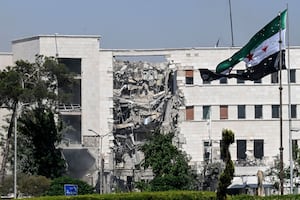
A new round of fighting began this month after clashes involving Druze militiamen and Bedouin tribes escalated, resulting in a Syrian government offensive in Sweida. Israel intervened again, striking the city and military headquarters in Damascus.
What does Israel want?
Within Israel, Druze citizens are subject to mandatory military service. As a result, maintaining a strong relationship with the Druze community has been a priority for Israeli governments.
In the Golan Heights, most Druze have retained Syrian citizenship and publicly reject the Israeli occupation.
Last year, a projectile hit a football pitch in the town of Majdal Shams in the Israeli-occupied Golan Heights, killing 12 children and young people amid a devastating war between Israel and Hezbollah. Israel said Hezbollah launched the attack, but the Lebanese group denied responsibility.
Israel's leaders have sought to embrace the Druze since the attack, but have been met with a mixed response. Prime Minister Benjamin Netanyahu was met by chants of "murderer" during his visit, while far-right Finance Minister Bezalel Smotrich, was surrounded by angry locals when he arrived in the area.

How have they been treated under Assad?
Syria’s Druze community has long tried to stay neutral in the country’s civil war, avoiding open rebellion while maintaining local autonomy, especially in Suweida and the suburbs of Damascus.
But that balance was not sustainable.
The state offered little protection during sectarian violence, and resentment deepened over economic neglect and the presence of Iran-backed militias near Druze areas.
Why does the Druze community matter politically?
Despite their small numbers, the Druze are politically significant across the Middle East.
In Israel, they are embedded in state institutions, yet increasingly vocal about inequality.
In Syria, Druze communities are strategically positioned in the south near the borders with Jordan and Israel.
In Lebanon, they play kingmaker roles in coalition politics. Druze leaders often tip the balance between rival blocs, especially during government formation or presidential elections. Walid Jumblatt, the long-time Druze leader, has kept his group politically relevant even as other sects outnumber them.

