

Live updates: Follow the latest on Syria
Hours after rebels released tens of thousands of detainees from Bashar Al Assad’s most feared dungeons, families were still clinging to hope. Rumours were quickly spreading that thousands more were still hidden in the secret underground cells of Sednaya, dubbed the human slaughterhouse by human rights campaigners after decades of torture there.
Thousands rushed to the prison after the rebels’ swift advance ended more than five decades of Assad family rule, freeing decade-long detainees from the regime’s prison network.
Inside Sednaya, families combed through the snaking corridors and squalid cells in an effort to find those being held.
Voices were heard from behind an unlocked door. Amid celebratory gunfire and screams, a crowd forced open the entrance, allowing dozens to flow inside the dark stairwell, their faces lit with the emotion of finally being reunited with their relatives after years of absence.
But no one was there.
On Monday, Syria’s White Helmets civil defence force said they were investigating claims that hidden underground cells might hold more detainees, sending in five emergency teams, but haven’t found anyone yet. About 100,000 detainees are still unaccounted for since the conflict began in 2011, including many political prisoners.
Many Syrians remain undeterred. The rebels’ swift advance sparked hope among families of those who disappeared.
Behind the rusted bars lay dirty blankets, scattered official prison papers and personal belongings left behind. Drops of dried blood stained the stairs, with a stretcher and a prosthetic leg abandoned on the floor.

In Sednaya, like other Assad regime prisons, human rights groups have documented systematic torture, sexual violence and mass killings. It stands as a symbol of the regime’s breaches of human rights.
Many are searching for people who have been missing for over a decade. Yaman El Ali said his uncle, Ahmad, had been missing since 2016. He said that he arrived in the morning but found no trace of him but that they would keep searching.
Like thousands of others, Yaman walked several kilometres to reach the prison. The line of cars blocking the road to the entrance prompted many to abandon their vehicles and continue the journey to the prison on foot. Many walked in the darkness, guided only by their phone torch and starlight as planes, probably Israeli, flew overhead. A Syrian army tank was abandoned on the side of the road.
Some families lit fires along the way, remaining close to the prison in the hope of positive news about their relatives.
-
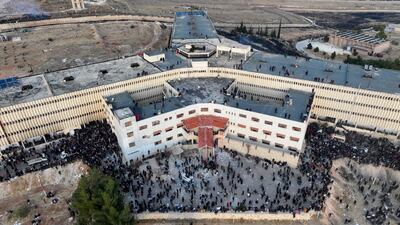
Sednaya prison in Damascus, which is synonymous with the worst human rights abuses of president Bashar Al Assad's rule. AFP -

On December 9, Syrians began searching for relatives they feared were being held in secret cells at Sednaya prison. EPA -
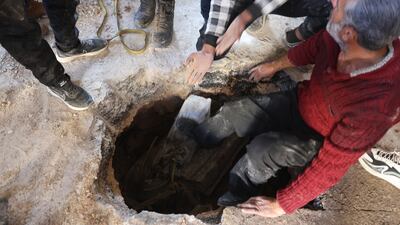
Holes are dug in the ground as the search for secret cells at Sednaya prison begins. EPA -
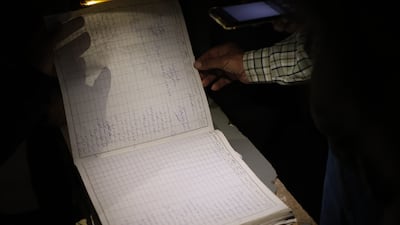
Prison records are checked as people search for relatives they believe were held in secret at Sednaya prison. EPA -
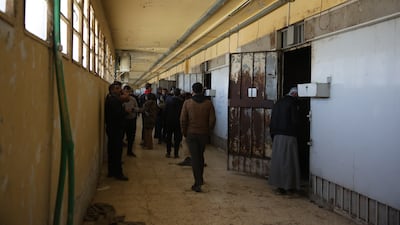
Syrians search for relatives they believe were held in secret cells at Sednaya prison. EPA -
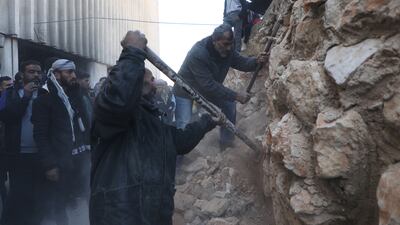
People chip at a wall in Sednaya prison, where thousands of people were alleged to have been detained and tortured by the Assad regime in the past decade. Getty Images -
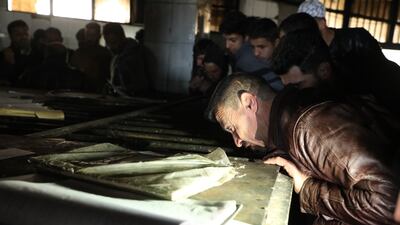
Searchers peer into a chamber at Sednaya prison. Getty Images -
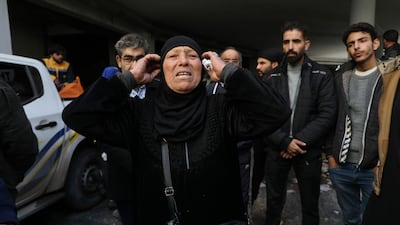
Outside Sednaya prison, a woman voices frustration as people search for relatives they believe are held in concealed cells. Getty Images -
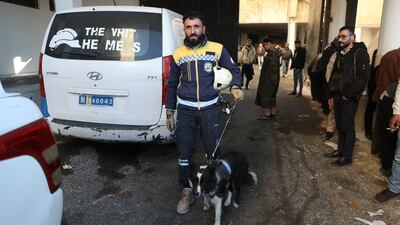
A member of the White Helmets outside Sednaya prison, where the civil defence organisation provided assistance to search teams. Getty Images -
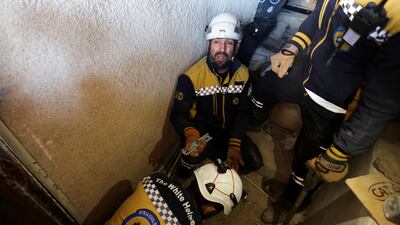
Members of the Syrian White Helmets civil defence organisation search for prisoners underground at Sednaya prison in Damascus. Reuters


A group of people gathered around a car with a notebook containing the names of detainees held from 2013. Many were trying to find their loved ones on the list.
“I heard someone was found alive. Is that true?” a man asked. Another person asked if anyone in the crowd had information about their missing uncle.
Mohamed Al Zein, a commander of the rebel group the Southern Front for the Liberation of Damascus, said he remains hopeful about finding his brother, who has been missing for more than a decade. This is the first time he has visited Sednaya. His mother had visited in vain, however rumours of hidden cells have reignited hopes.
“Inshallah, we find him. We also have many other friends who are missing,” he said.
Another fighter, Moussa, said that many people released from the prisons of the Assad regime had lost their memory. Mr Al Zein claimed his brother was detained on a false report. “Since then, we haven’t heard anything,” he said. “It was always like that – arbitrary detentions. Everyone was afraid; we couldn’t do anything.” But now, he said, “everything is allowed”.

