


Iraq has renewed its commitment to hold a national census in November, its first in 27 years, amid signs of stability returning to a country ravaged by decades of war.
A curfew will be imposed in all provinces on November 20 and 21 to allow officials to count the number of people in the country, Prime Minister Mohammed Shia Al Sudani said in a statement. Security concerns and political infighting has led to the census being put off several times since the 2003 US-led invasion that toppled Saddam Hussein’s regime.
“The meeting focused on discussing and monitoring the ongoing preparations for the upcoming general census of population and housing scheduled for November,” said the statement.
On Sunday, Iraqi Planning Ministry launched the numbering and enumeration phase for all houses, buildings and facilities in the country ahead of the census, according to its statement. More than 30,000 researchers are taking part in the process, it added.
-

Yazidi men clean the grounds of the Lalish temple ahead of a tribute to victims of ISIS from the village of Kocho, in northern Iraq, in 2018. AFP -

Nobel Peace Prize laureate Nadia Murad visits one of the Nadia Initiative's building projects in Sinjar, northern Iraq, in 2022. Photo: Nadia Murad -
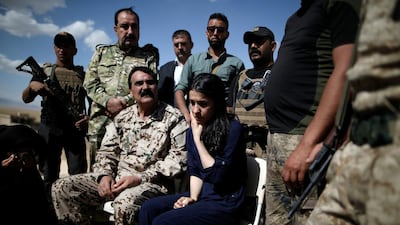
Ms Murad in Kocho for the first time since the ISIS attack. Reuters -
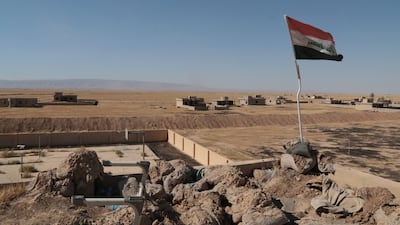
A view of Mount Sinjar from the roof of Kocho's school, which was once occupied by ISIS but is now abandoned. Florian Neuhof for The National -

Ashwaq Haji from Kocho visits the Lalish temple to pay tribute to villagers who were victims of ISIS. AFP -
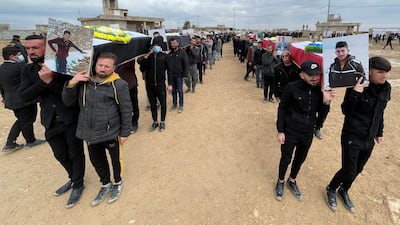
Mourners carry coffins of victims from Kocho in February 2021, after their remains were exhumed from a mass grave. Reuters -
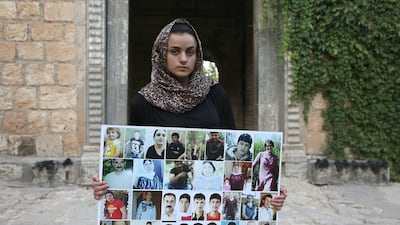
Ms Haji with pictures of dead and missing relatives from Kocho. AFP -
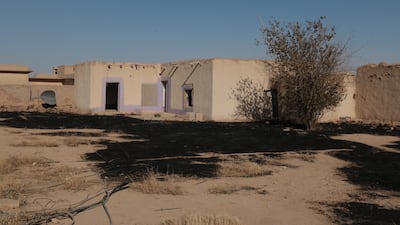
An abandoned house in Kocho. Florian Neuhof for The National -
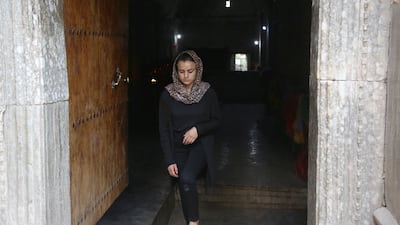
Ms Haji passes through the doorway of the Lalish temple to pay tribute to villagers who were victims of ISIS. AFP -
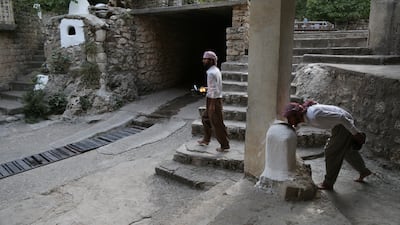
Yazidi men light candles at the Lalish temple in tribute to victims of ISIS from Kocho. AFP


Holding a census became one of the government's priorities when Mr Al Sudani took office in October 2022, and it was pencilled in for November 20 and 21 this year. On Sunday, he chaired a meeting of the Higher Council for Population to ensure preparations were on track.
Post-2003, plans for a national census were mooted to aid development and settle claims for rights on assets such as land, resources, or shares in government. Political wrangling, a deteriorating security situation, lack of funds and the coronavirus pandemic proved to be obstacles.
Mr Al Sudani's government has sought to build on the current political stability and improved security nationwide to push for reforms and projects, mainly in public services.
Iraq's last census was in 1997 but did not include the northern semi-autonomous Kurdish region, which had acquired international protection after the Iraqi army was driven out of Kuwait in 1991. However, the headcount in November will include the governorates of this region.
During the national census hiatus, the Central Organisation for Statistics and Information Technology – the Iraqi government's statistics agency – has been conducting counts. The population stands at an estimated 43 million, based mainly on the annual birth rate that has been between 850,000 and 1 million a year.
Authorities have teamed up with the UN Population Fund (UNFPA) for the coming census. The count will play “a crucial role in equipping Iraq with accurate demographic information, facilitating effective policymaking and promoting inclusive growth”, AFP quoted UNFPA as saying.

