

Gulf states plan to increase intelligence sharing, develop new missile warning systems and hold joint air defence drills after Israel's deadly attack on Qatar.
Defence officials from the Gulf Co-operation Council agreed to several measures at a meeting in Doha on Thursday. The talks followed Monday's emergency Arab-Islamic summit in the Qatari capital, where leaders expressed alarm about Israel's escalating attacks across the Middle East.
On Thursday, the GCC's Joint Defence Council agreed to increase the exchange of intelligence information through what is known as the Unified Military Command. Gulf countries said they would "accelerate work" to develop an early warning system against ballistic missiles and transmit the "air situation" to all affected countries. Qatar said it did not receive a warning about Israel's attack on Doha until the explosions began.

The council also agreed to update defence plans and hold joint drills between troops and command centres in the next three months. That is to be followed by an "actual air exercise", it added.
It also agreed to continue work "at all military and intelligence levels" to enhance Gulf defence ties and work to link security systems "to confront all risks and challenges", a statement said. It added that the aim was "ensuring the security, stability and safety of all GCC countries, and confronting any potential threats or attacks that threaten the stability of the region".
Israel targets Hamas leadership in attack on Doha - in pictures
-
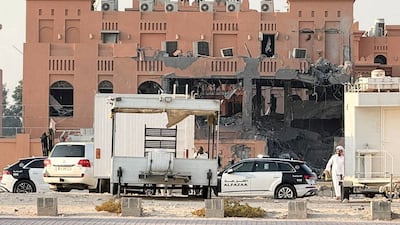
A damaged building following an Israeli attack on Hamas leaders, in Doha, Qatar. Reuters -
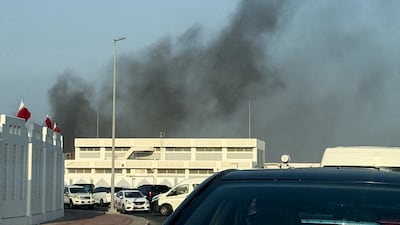
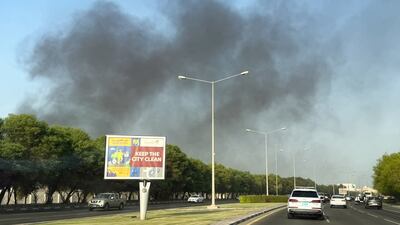
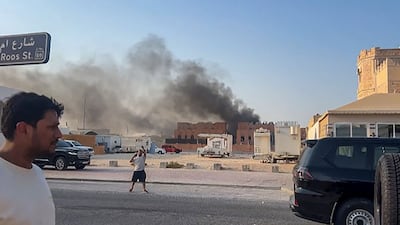
Smoke rises after several blasts were heard in Doha. Reuters -
Israel says it carried out a 'precise strike' on a site where Hamas negotiators have been discussing Gaza ceasefire proposals. Reuters -
Israel's Prime Minister Benjamin Netanyahu said it was a "wholly independent Israeli operation". AFP -
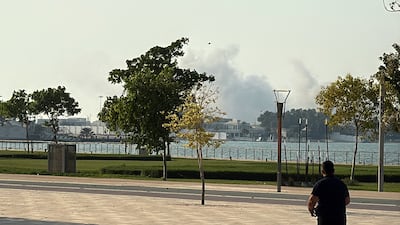
The Israeli army said it used 'precise munitions' to mitigate harm to civilians in Doha. Reuters -
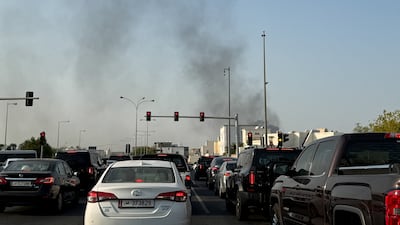
Majid Al Ansari, Qatar's Foreign Ministry spokesman, said the 'cowardly Israeli attack' had targeted residential buildings 'housing several members of the political bureau of Hamas' in Doha. Reuters


During the meeting, the council condemned in "the strongest terms" Israel's attack on Doha, calling it a dangerous and unacceptable escalation.
The meeting was attended by the Mohammed Al Mazrouei, the UAE's Minister of State for Defence Affairs; Bahrain's Minister of Defence Affairs, Lt Gen Abdullah Al Nuaimi; Saudi Arabia's Deputy Minister of Defence, Prince Abdulrahman bin Mohammed; Secretary General of the Oman's Ministry of Defence, Mohammed Al Zaabi; Kuwait's Minister of Defence Sheikh Abdullah Ali Al Abdullah Al Sabah; and Jasem Al Budaiwi.
Israel's attempt to kill the political leaders of Hamas in Doha, while they were discussing a Gaza ceasefire proposal, infuriated the Arab world and sent shockwaves through Gulf states. The strike was a significant escalation in a region shaken by conflict since the Hamas-led attacks on October 7, 2023, that ignited the Gaza war.
Hamas said the strike killed five of its members, including a son of its exiled Gaza chief, but its leadership survived. One Qatari security officer also died in the attack.
Qatar has called the strike “cowardly and treacherous”, but said it would not be deterred from its role as a mediator in ceasefire talks, alongside Egypt and the US.
The strike was the second military attack on Qatar in three months, after the Iran-Israel war culminated in an Iranian attack on the US-operated Al Udeid air base. Tehran insisted the strike was a retaliation for an American bombing of Iran, but it was widely condemned by Gulf countries.

