Syrians inspect debris after a bomb hit a building during clashes between rebel fighters and Syrian government forces on August 10, 2013 in the northern city of Raqqa. AFP

Swedish woman charged over ISIS torture of Yazidi women and children in Syria


Soraya Ebrahimi
  • English
  • Arabic

A 52-year-old woman in Sweden was on Thursday charged over her association with ISIS, genocide, crimes against humanity and serious war crimes against Yazidi women and children in Syria, in the first such trial in the Scandinavian country.

Swedish citizen Lina Laina Ishaq is accused of committing the crimes between August 2014 and December 2016, in the city of Raqqa, the former de facto capital of ISIS's self-proclaimed caliphate and home to about 300,000 people.

Senior prosecutor Reena Devgun said the crimes “took place under ISIS rule in Raqqa, and this is the first time that ISIS attacks against the Yazidi minority have been tried in Sweden”. The Yazidis are one of Iraq’s oldest religious minorities.

Iraq's Yazidis wait for ISIS-abducted relatives to return - in pictures

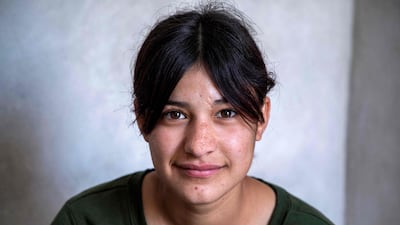
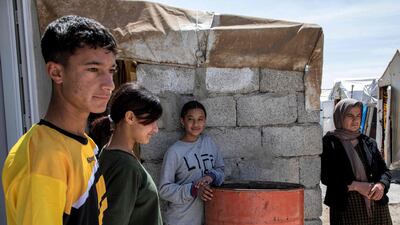
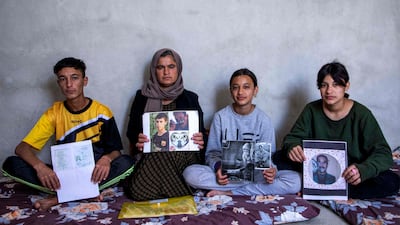
  • Fawziya Jasim, 16, was one of many affected when ISIS fighters swept over Mount Sinjar in August 2014. All photos: AFP
    Fawziya Jasim, 16, was one of many affected when ISIS fighters swept over Mount Sinjar in August 2014. All photos: AFP
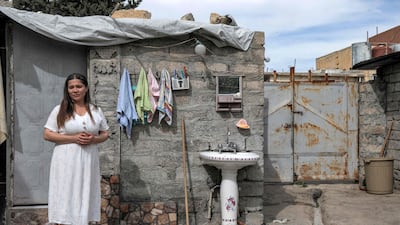
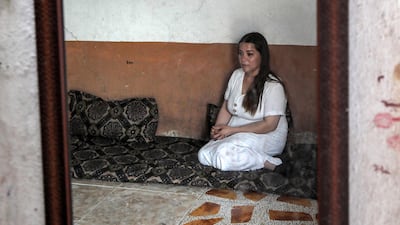
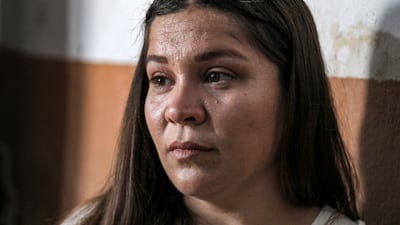
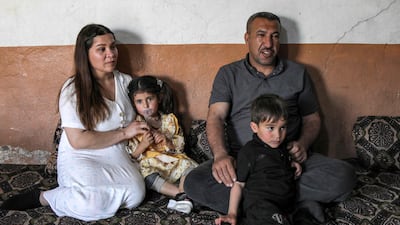
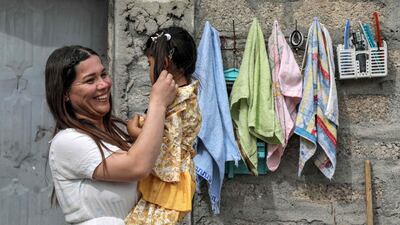
  • Hayam, pictured, was 17 when ISIS abducted her on August 3, 2014, along with her parents, five sisters and two brothers
    Hayam, pictured, was 17 when ISIS abducted her on August 3, 2014, along with her parents, five sisters and two brothers
  • In an ISIS prison, she met Leila, a fellow Yazidi. In May 2015, Hayam was sold to a Syrian and Leila to an Iraqi
    In an ISIS prison, she met Leila, a fellow Yazidi. In May 2015, Hayam was sold to a Syrian and Leila to an Iraqi
  • Four months later, Hayam was given to a man from Dagestan before escaping and reaching Iraqi Kurdistan after a year and a half in captivity
    Four months later, Hayam was given to a man from Dagestan before escaping and reaching Iraqi Kurdistan after a year and a half in captivity
  • She has since married Leila's brother, Marwan, and the couple and their two children have sought asylum in Australia where Hayam has family
    She has since married Leila's brother, Marwan, and the couple and their two children have sought asylum in Australia where Hayam has family
  • She has the word 'huriya' (freedom) tattooed on her wrist and has no intention of returning to her former home, with her family and friends no longer there
    She has the word 'huriya' (freedom) tattooed on her wrist and has no intention of returning to her former home, with her family and friends no longer there
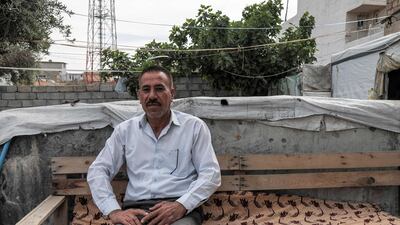
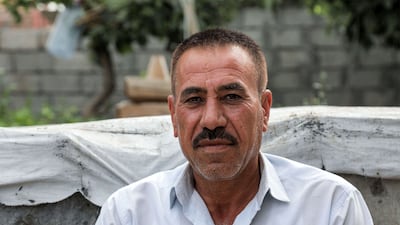
  • After paying nearly $100,000 in ransoms to free 10 family members, Khaled Taalou, a member of Iraq's Yazidi minority, is still working to free other relatives kidnapped by ISIS
    After paying nearly $100,000 in ransoms to free 10 family members, Khaled Taalou, a member of Iraq's Yazidi minority, is still working to free other relatives kidnapped by ISIS
  • Nineteen members of Mr Taalou's family were abducted, including his brother and sister and their spouses and children
    Nineteen members of Mr Taalou's family were abducted, including his brother and sister and their spouses and children
  • Now displaced and living in Iraqi Kurdistan, Mr Taalou said expensive releases are negotiated 'via networks of traffickers in Iraq and abroad'
    Now displaced and living in Iraqi Kurdistan, Mr Taalou said expensive releases are negotiated 'via networks of traffickers in Iraq and abroad'
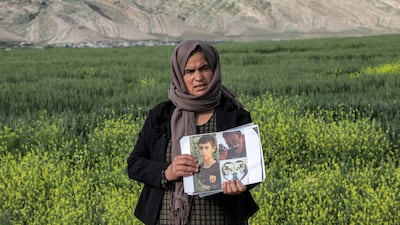
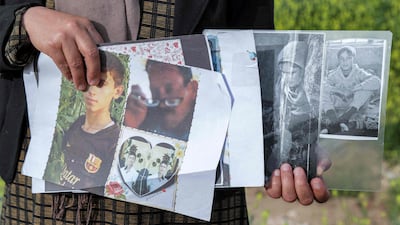
  • Bahar Elias was separated from her husband Jassem and their son Ahmed, who was just 19 when they were kidnapped
    Bahar Elias was separated from her husband Jassem and their son Ahmed, who was just 19 when they were kidnapped
  • Relatives paid intermediaries $22,000 to secure the release of Bahar and her three younger sisters
    Relatives paid intermediaries $22,000 to secure the release of Bahar and her three younger sisters
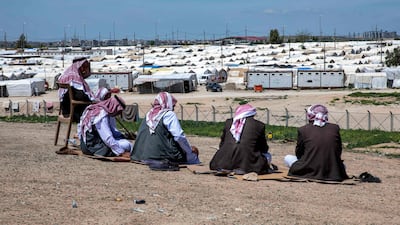
  • Now in a camp for displaced people, the 40-year-old said she has her 'eyes glued to the road' in the hope that her husband and son will return
    Now in a camp for displaced people, the 40-year-old said she has her 'eyes glued to the road' in the hope that her husband and son will return
  • She appealed for international assistance to 'help us find a trace of our families, to find out if they are dead or alive'
    She appealed for international assistance to 'help us find a trace of our families, to find out if they are dead or alive'

“Women, children and men were regarded as property and subjected to being traded as slaves, sexual slavery, forced labour, deprivation of liberty and extrajudicial executions,” Ms Devgun said. “ISIS tried to annihilate the Yazidi ethnic group on an industrial scale."

In announcing the charges, Ms Devgun said prosecutors were able to identify Ishaq through information from the UN team investigating atrocities in Iraq, known as Unitad.

The Stockholm District Court said the prosecution claims she detained a number of women and children of the Yazidi ethnic group in her residence in Raqqa, and “allegedly exposed them to, among other things, severe suffering, torture or other inhumane treatment" and deprived them "of fundamental rights for cultural, religious and gender reasons contrary to general international law”.

Militias who played a vital role in defeating ISIS - in pictures

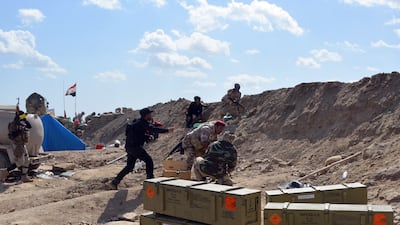
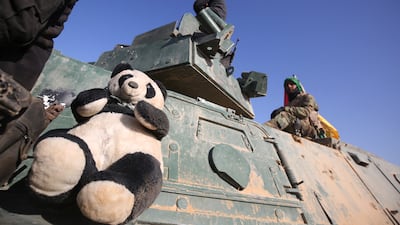
  • Iraqi government forces and allied militias take a position in the northern part of Diyala province as part of an assault to retake the city of Tikrit from ISIS, on March 2, 2015. All photos: AFP
    Iraqi government forces and allied militias take a position in the northern part of Diyala province as part of an assault to retake the city of Tikrit from ISIS, on March 2, 2015. All photos: AFP
  • Members of the Iraqi paramilitary Popular Mobilisation units flash the 'V' for victory sign after regaining control of the village of Albu Ajil, near Tikrit, on March 9, 2015.
    Members of the Iraqi paramilitary Popular Mobilisation units flash the 'V' for victory sign after regaining control of the village of Albu Ajil, near Tikrit, on March 9, 2015.
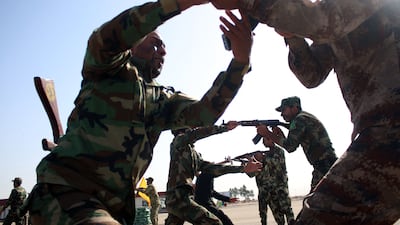
  • Fighters from a Popular Mobilisation unit take part in an exercise during their graduation ceremony in the southern Iraqi city of Basra, on April 9, 2015.
    Fighters from a Popular Mobilisation unit take part in an exercise during their graduation ceremony in the southern Iraqi city of Basra, on April 9, 2015.
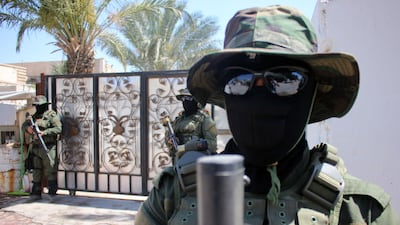
  • Iraqi fighters of the Shiite group Asaib Ahl Al Haq (The League of the Righteous) stand guard outside their headquarters on May 18, 2015, in the mainly Shiite southern city of Basra, as Shiite militias converged on Ramadi in a bid to recapture it from ISIS.
    Iraqi fighters of the Shiite group Asaib Ahl Al Haq (The League of the Righteous) stand guard outside their headquarters on May 18, 2015, in the mainly Shiite southern city of Basra, as Shiite militias converged on Ramadi in a bid to recapture it from ISIS.
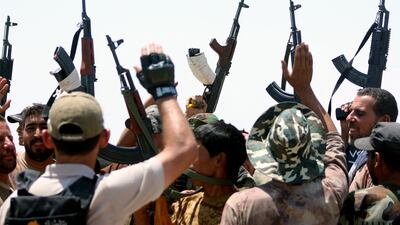
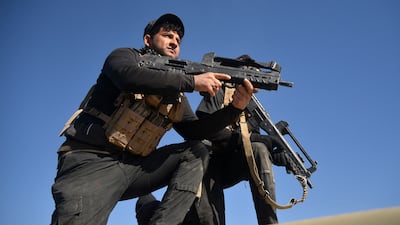
  • Iraqi government forces and members of the Popular Mobilisation units raise their weapons on the front line during battles with ISIS on the road leading to Saqlawiya, in Iraq's Anbar province, on August 4, 2015.
    Iraqi government forces and members of the Popular Mobilisation units raise their weapons on the front line during battles with ISIS on the road leading to Saqlawiya, in Iraq's Anbar province, on August 4, 2015.
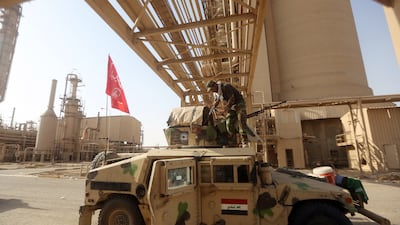
  • An Iraqi Shiite fighter cleans his weapon on his vehicle at the petrochemical plant in the town of Baiji, north of Tikrit, on October 16, 2015.
    An Iraqi Shiite fighter cleans his weapon on his vehicle at the petrochemical plant in the town of Baiji, north of Tikrit, on October 16, 2015.
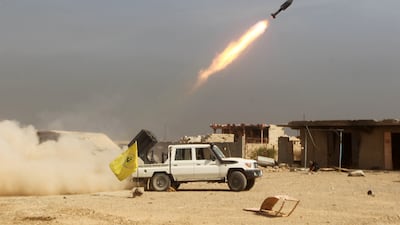
  • Iraqi Shiite fighters fire a rocket during a military operation against ISIS as they advance towards the centre of Baiji, about 200 kilometres north of Baghdad, on October 19, 2015.
    Iraqi Shiite fighters fire a rocket during a military operation against ISIS as they advance towards the centre of Baiji, about 200 kilometres north of Baghdad, on October 19, 2015.
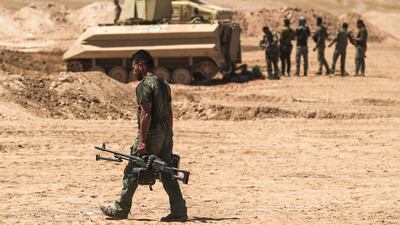
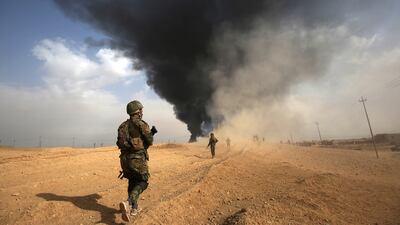
  • Iraqi Shiite fighters from the Hashed Al Shaabi paramilitaries advance in a desert area near the village of Tall Abtah, south-west of Mosul, on November 28, 2016, during a broad offensive by Iraq forces to retake Mosul from ISIS.
    Iraqi Shiite fighters from the Hashed Al Shaabi paramilitaries advance in a desert area near the village of Tall Abtah, south-west of Mosul, on November 28, 2016, during a broad offensive by Iraq forces to retake Mosul from ISIS.
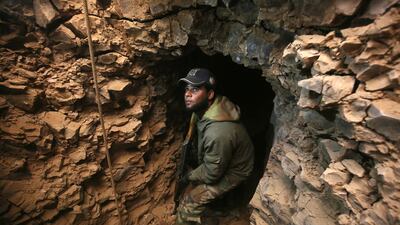
  • An Iraqi Shiite fighter from the Hashed Al Shaabi paramilitary forces inspects an underground tunnel in the town of Tal Abtah, south of Tal Afar, on December 10, 2016.
    An Iraqi Shiite fighter from the Hashed Al Shaabi paramilitary forces inspects an underground tunnel in the town of Tal Abtah, south of Tal Afar, on December 10, 2016.
  • Iraqi pro-government forces advance towards the Unesco-listed ancient city of Hatra, south-west of Mosul, during an offensive to retake the area from ISIS fighters, on April 26, 2017.
    Iraqi pro-government forces advance towards the Unesco-listed ancient city of Hatra, south-west of Mosul, during an offensive to retake the area from ISIS fighters, on April 26, 2017.
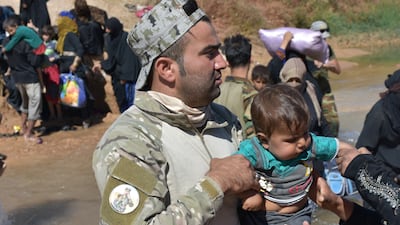
  • A fighter from the Hashed Al Sahaabi units helps displaced people who fled from battles to oust ISIS from Hawija cross a river in the area of Zarga, about 35km south-east of Kirkuk, on October 4, 2017.
    A fighter from the Hashed Al Sahaabi units helps displaced people who fled from battles to oust ISIS from Hawija cross a river in the area of Zarga, about 35km south-east of Kirkuk, on October 4, 2017.
  • Iraqi forces advance towards the city of al-Qaim, in Iraq's western Anbar province near the Syrian border, as they fight against remnant pockets of ISIS forces, on November 3, 2017.
    Iraqi forces advance towards the city of al-Qaim, in Iraq's western Anbar province near the Syrian border, as they fight against remnant pockets of ISIS forces, on November 3, 2017.
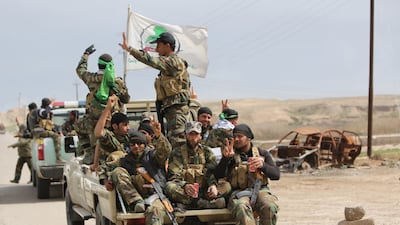
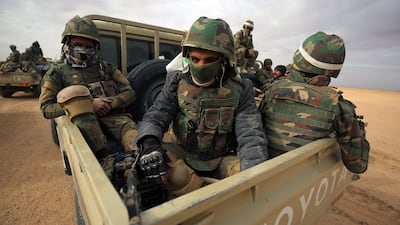
  • Iraqi forces ride in the back of pick-up trucks during the advance through Anbar province in the western desert bordering Syria, on November 25, 2017, to flush out remaining ISIS fighters in the region.
    Iraqi forces ride in the back of pick-up trucks during the advance through Anbar province in the western desert bordering Syria, on November 25, 2017, to flush out remaining ISIS fighters in the region.
  • Members of the Iraqi forces and the Hashed Al Shaabi carry their firearms as they stand on an infanty-fighting vehicle near the Iraqi-Syrian border, about 80km west of the border town of al-Qaim, on December 9, 2017.
    Members of the Iraqi forces and the Hashed Al Shaabi carry their firearms as they stand on an infanty-fighting vehicle near the Iraqi-Syrian border, about 80km west of the border town of al-Qaim, on December 9, 2017.
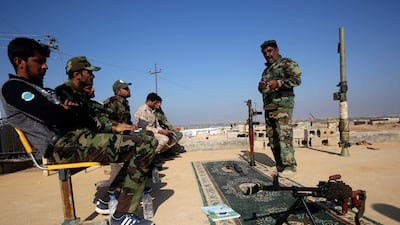
  • Abbas Hamza Hassan, a 56-year-old Iraqi fighter, is pictured on November 13, 2018 while training fellow Hashed members how to use weapons in the western Iraqi province of Anbar.
    Abbas Hamza Hassan, a 56-year-old Iraqi fighter, is pictured on November 13, 2018 while training fellow Hashed members how to use weapons in the western Iraqi province of Anbar.

Ishaq is accused of holding nine people, including children, in her home for up to seven months and treating them as slaves, and abusing some of them.

Ishaq, who denies wrongdoing, is further accused of having molested a baby, said to have been one month old at the time, by holding a hand over the child’s mouth when he screamed to silence him. She is also accused of having sold people to ISIS knowing they risked being killed or subjected to serious sexual abuse.

“In short, her explanation is that she has never bought another person, that she has never owned or exercised any control over another person and that she has never sold another person,” Ishaq's lawyer Mikael Westerlund told Swedish news agency TT.

In 2014, ISIS militants stormed Yazidi towns and villages in Iraq’s Sinjar region and abducted women and children. Women were forced into sexual slavery and boys were taken to be indoctrinated.

Iraqi artist depicts Yazidi heritage - in pictures

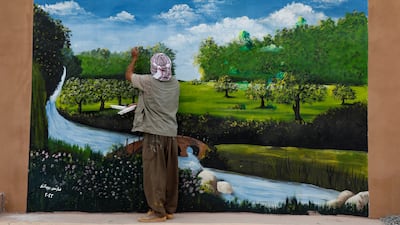
  • Artist Fares Bibani, 55, paints a colourful mural on the wall of a house in Beban village in Mosul, Iraq. All photos: Reuters
    Artist Fares Bibani, 55, paints a colourful mural on the wall of a house in Beban village in Mosul, Iraq. All photos: Reuters
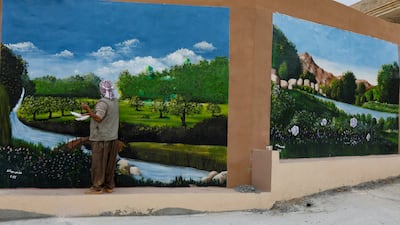
  • Several walls in the main square of the village have murals depicting the Yazidi way of life as a farming community before the rise of extremist group ISIS
    Several walls in the main square of the village have murals depicting the Yazidi way of life as a farming community before the rise of extremist group ISIS
  • Bibani says the aim of the project is to make new generations aware of their heritage
    Bibani says the aim of the project is to make new generations aware of their heritage
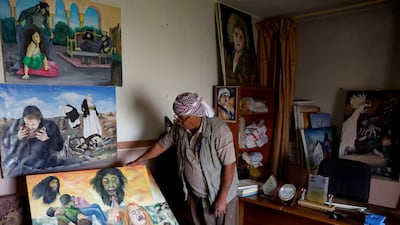
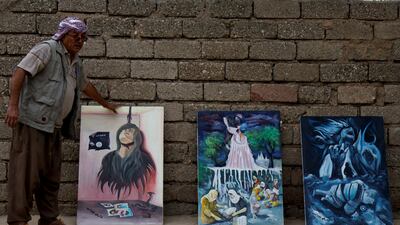
  • Some of his paintings depict what a UN-appointed commission of independent war crimes investigators said was genocide against the Yazidis
    Some of his paintings depict what a UN-appointed commission of independent war crimes investigators said was genocide against the Yazidis
  • A woman buys vegetables near one of Bibani's murals
    A woman buys vegetables near one of Bibani's murals
  • Bibani started his project in March 2022 and says he will continue to paint until he decorates the entire village
    Bibani started his project in March 2022 and says he will continue to paint until he decorates the entire village

The court said Ishaq's trial was to start on October 7 and would last approximately two months. Much of it will be held behind closed doors.

Ishaq was earlier convicted in Sweden and sentenced to three years in prison for taking her two-year-old son to Syria in 2014, to an area then controlled by ISIS.

She had claimed that at the time, she had told the child’s father that she and the boy were going on holiday to Turkey. However, once in Turkey, the two crossed into ISIS-run territory in Syria.

In 2017, when ISIS’s reign began to collapse, Ishaq fled Raqqa and was captured by Syrian-Kurdish troops. She managed to escape to Turkey where she was arrested with her son and two other children she had given birth to in the meantime, with an ISIS foreign fighter from Tunisia.

She was extradited from Turkey to Sweden. During her first trial and conviction in 2021, Ishaq was not identified by name. She previously lived in the southern Swedish town of Landskrona.


In%20the%20Land%20of%20Saints%20and%20Sinners
%3Cp%3E%3Cstrong%3EDirector%3A%20%3C%2Fstrong%3ERobert%20Lorenz%3C%2Fp%3E%0A%3Cp%3E%3Cstrong%3EStarring%3A%3C%2Fstrong%3E%20Liam%20Neeson%2C%20Kerry%20Condon%2C%20Jack%20Gleeson%2C%20Ciaran%20Hinds%3C%2Fp%3E%0A%3Cp%3E%3Cstrong%3ERating%3A%20%3C%2Fstrong%3E2%2F5%3C%2Fp%3E%0A
'Ghostbusters: From Beyond'

Director: Jason Reitman

Starring: Paul Rudd, Carrie Coon, Finn Wolfhard, Mckenna Grace

Rating: 2/5

Queen

Nicki Minaj

(Young Money/Cash Money)

Ten tax points to be aware of in 2026

1. Domestic VAT refund amendments: request your refund within five years

If a business does not apply for the refund on time, they lose their credit.

2. E-invoicing in the UAE

Businesses should continue preparing for the implementation of e-invoicing in the UAE, with 2026 a preparation and transition period ahead of phased mandatory adoption. 

3. More tax audits

Tax authorities are increasingly using data already available across multiple filings to identify audit risks. 

4. More beneficial VAT and excise tax penalty regime

Tax disputes are expected to become more frequent and more structured, with clearer administrative objection and appeal processes. The UAE has adopted a new penalty regime for VAT and excise disputes, which now mirrors the penalty regime for corporate tax.

5. Greater emphasis on statutory audit

There is a greater need for the accuracy of financial statements. The International Financial Reporting Standards standards need to be strictly adhered to and, as a result, the quality of the audits will need to increase.

6. Further transfer pricing enforcement

Transfer pricing enforcement, which refers to the practice of establishing prices for internal transactions between related entities, is expected to broaden in scope. The UAE will shortly open the possibility to negotiate advance pricing agreements, or essentially rulings for transfer pricing purposes. 

7. Limited time periods for audits

Recent amendments also introduce a default five-year limitation period for tax audits and assessments, subject to specific statutory exceptions. While the standard audit and assessment period is five years, this may be extended to up to 15 years in cases involving fraud or tax evasion. 

8. Pillar 2 implementation 

Many multinational groups will begin to feel the practical effect of the Domestic Minimum Top-Up Tax (DMTT), the UAE's implementation of the OECD’s global minimum tax under Pillar 2. While the rules apply for financial years starting on or after January 1, 2025, it is 2026 that marks the transition to an operational phase.

9. Reduced compliance obligations for imported goods and services

Businesses that apply the reverse-charge mechanism for VAT purposes in the UAE may benefit from reduced compliance obligations. 

10. Substance and CbC reporting focus

Tax authorities are expected to continue strengthening the enforcement of economic substance and Country-by-Country (CbC) reporting frameworks. In the UAE, these regimes are increasingly being used as risk-assessment tools, providing tax authorities with a comprehensive view of multinational groups’ global footprints and enabling them to assess whether profits are aligned with real economic activity. 

Contributed by Thomas Vanhee and Hend Rashwan, Aurifer

World Cricket League Division 2

In Windhoek, Namibia - Top two teams qualify for the World Cup Qualifier in Zimbabwe, which starts on March 4.

UAE fixtures

Thursday February 8, v Kenya; Friday February 9, v Canada; Sunday February 11, v Nepal; Monday February 12, v Oman; Wednesday February 14, v Namibia; Thursday February 15, final

What is the FNC?

The Federal National Council is one of five federal authorities established by the UAE constitution. It held its first session on December 2, 1972, a year to the day after Federation.
It has 40 members, eight of whom are women. The members represent the UAE population through each of the emirates. Abu Dhabi and Dubai have eight members each, Sharjah and Ras al Khaimah six, and Ajman, Fujairah and Umm Al Quwain have four.
They bring Emirati issues to the council for debate and put those concerns to ministers summoned for questioning. 
The FNC’s main functions include passing, amending or rejecting federal draft laws, discussing international treaties and agreements, and offering recommendations on general subjects raised during sessions.
Federal draft laws must first pass through the FNC for recommendations when members can amend the laws to suit the needs of citizens. The draft laws are then forwarded to the Cabinet for consideration and approval. 
Since 2006, half of the members have been elected by UAE citizens to serve four-year terms and the other half are appointed by the Ruler’s Courts of the seven emirates.
In the 2015 elections, 78 of the 252 candidates were women. Women also represented 48 per cent of all voters and 67 per cent of the voters were under the age of 40.
 

ORDER OF PLAY ON SHOW COURTS

Centre Court - 4pm (UAE)
Gael Monfils (15) v Kyle Edmund
Karolina Pliskova (3) v Magdalena Rybarikova
Dusan Lajovic v Roger Federer (3)

Court 1 - 4pm
Adam Pavlasek v Novak Djokovic (2)
Dominic Thiem (8) v Gilles Simon
Angelique Kerber (1) v Kirsten Flipkens

Court 2 - 2.30pm
Grigor Dimitrov (13) v Marcos Baghdatis
Agnieszka Radwanska (9) v Christina McHale
Milos Raonic (6) v Mikhail Youzhny
Tsvetana Pironkova v Caroline Wozniacki (5)

Mercer, the investment consulting arm of US services company Marsh & McLennan, expects its wealth division to at least double its assets under management (AUM) in the Middle East as wealth in the region continues to grow despite economic headwinds, a company official said.

Mercer Wealth, which globally has $160 billion in AUM, plans to boost its AUM in the region to $2-$3bn in the next 2-3 years from the present $1bn, said Yasir AbuShaban, a Dubai-based principal with Mercer Wealth.

Within the next two to three years, we are looking at reaching $2 to $3 billion as a conservative estimate and we do see an opportunity to do so,” said Mr AbuShaban.

Mercer does not directly make investments, but allocates clients’ money they have discretion to, to professional asset managers. They also provide advice to clients.

“We have buying power. We can negotiate on their (client’s) behalf with asset managers to provide them lower fees than they otherwise would have to get on their own,” he added.

Mercer Wealth’s clients include sovereign wealth funds, family offices, and insurance companies among others.

From its office in Dubai, Mercer also looks after Africa, India and Turkey, where they also see opportunity for growth.

Wealth creation in Middle East and Africa (MEA) grew 8.5 per cent to $8.1 trillion last year from $7.5tn in 2015, higher than last year’s global average of 6 per cent and the second-highest growth in a region after Asia-Pacific which grew 9.9 per cent, according to consultancy Boston Consulting Group (BCG). In the region, where wealth grew just 1.9 per cent in 2015 compared with 2014, a pickup in oil prices has helped in wealth generation.

BCG is forecasting MEA wealth will rise to $12tn by 2021, growing at an annual average of 8 per cent.

Drivers of wealth generation in the region will be split evenly between new wealth creation and growth of performance of existing assets, according to BCG.

Another general trend in the region is clients’ looking for a comprehensive approach to investing, according to Mr AbuShaban.

“Institutional investors or some of the families are seeing a slowdown in the available capital they have to invest and in that sense they are looking at optimizing the way they manage their portfolios and making sure they are not investing haphazardly and different parts of their investment are working together,” said Mr AbuShaban.

Some clients also have a higher appetite for risk, given the low interest-rate environment that does not provide enough yield for some institutional investors. These clients are keen to invest in illiquid assets, such as private equity and infrastructure.

“What we have seen is a desire for higher returns in what has been a low-return environment specifically in various fixed income or bonds,” he said.

“In this environment, we have seen a de facto increase in the risk that clients are taking in things like illiquid investments, private equity investments, infrastructure and private debt, those kind of investments were higher illiquidity results in incrementally higher returns.”

The Abu Dhabi Investment Authority, one of the largest sovereign wealth funds, said in its 2016 report that has gradually increased its exposure in direct private equity and private credit transactions, mainly in Asian markets and especially in China and India. The authority’s private equity department focused on structured equities owing to “their defensive characteristics.”

Marathon results

Men:

 1. Titus Ekiru(KEN) 2:06:13 

2. Alphonce Simbu(TAN) 2:07:50 

3. Reuben Kipyego(KEN) 2:08:25 

4. Abel Kirui(KEN) 2:08:46 

5. Felix Kemutai(KEN) 2:10:48  

Women:

1. Judith Korir(KEN) 2:22:30 

2. Eunice Chumba(BHR) 2:26:01 

3. Immaculate Chemutai(UGA) 2:28:30 

4. Abebech Bekele(ETH) 2:29:43 

5. Aleksandra Morozova(RUS) 2:33:01  

While you're here
'Cheb%20Khaled'
%3Cp%3E%3Cstrong%3EArtist%3A%20%3C%2Fstrong%3EKhaled%3Cbr%3E%3Cstrong%3ELabel%3A%20%3C%2Fstrong%3EBelieve%3Cbr%3E%3Cstrong%3ERating%3A%3C%2Fstrong%3E%204%2F5%3C%2Fp%3E%0A

Who is Ramon Tribulietx?

Born in Spain, Tribulietx took sole charge of Auckland in 2010 and has gone on to lead the club to 14 trophies, including seven successive Oceania Champions League crowns. Has been tipped for the vacant New Zealand national team job following Anthony Hudson's resignation last month. Had previously been considered for the role. 

Tips from the expert

Dobromir Radichkov, chief data officer at dubizzle and Bayut, offers a few tips for UAE residents looking to earn some cash from pre-loved items.

  1. Sellers should focus on providing high-quality used goods at attractive prices to buyers.
  2. It’s important to use clear and appealing photos, with catchy titles and detailed descriptions to capture the attention of prospective buyers.
  3. Try to advertise a realistic price to attract buyers looking for good deals, especially in the current environment where consumers are significantly more price-sensitive.
  4. Be creative and look around your home for valuable items that you no longer need but might be useful to others.

The Laughing Apple

Yusuf/Cat Stevens

(Verve Decca Crossover)

Who was Alfred Nobel?

The Nobel Prize was created by wealthy Swedish chemist and entrepreneur Alfred Nobel.

  • In his will he dictated that the bulk of his estate should be used to fund "prizes to those who, during the preceding year, have conferred the greatest benefit to humankind".
  • Nobel is best known as the inventor of dynamite, but also wrote poetry and drama and could speak Russian, French, English and German by the age of 17. The five original prize categories reflect the interests closest to his heart.
  • Nobel died in 1896 but it took until 1901, following a legal battle over his will, before the first prizes were awarded.
Red flags
  • Promises of high, fixed or 'guaranteed' returns.
  • Unregulated structured products or complex investments often used to bypass traditional safeguards.
  • Lack of clear information, vague language, no access to audited financials.
  • Overseas companies targeting investors in other jurisdictions - this can make legal recovery difficult.
  • Hard-selling tactics - creating urgency, offering 'exclusive' deals.

Courtesy: Carol Glynn, founder of Conscious Finance Coaching

COMPANY%20PROFILE
%3Cp%3E%3Cstrong%3EName%3A%3C%2Fstrong%3E%20Carzaty%2C%20now%20Kavak%3Cbr%3E%3Cstrong%3EBased%3A%3C%2Fstrong%3E%20Dubai%3Cbr%3E%3Cstrong%3ELaunch%20year%3A%20%3C%2Fstrong%3ECarzaty%20launched%20in%202018%2C%20Kavak%20in%20the%20GCC%20launched%20in%202022%3Cbr%3E%3Cstrong%3ENumber%20of%20employees%3A%3C%2Fstrong%3E%20140%3Cbr%3E%3Cstrong%3ESector%3A%3C%2Fstrong%3E%20Automotive%3Cbr%3E%3Cstrong%3EFunding%3A%20%3C%2Fstrong%3ECarzaty%20raised%20%246m%20in%20equity%20and%20%244m%20in%20debt%3B%20Kavak%20plans%20%24130m%20investment%20in%20the%20GCC%3C%2Fp%3E%0A
Updated: September 19, 2024, 5:39 PM