


Restrictions on how Ukraine can use weapons donated by Nato allies should be lifted, the alliance's secretary general Jens Stoltenberg said at the start of a two-day meeting of foreign ministers in Prague on Thursday.
His comments come as frustration mounts in Kyiv over the US administration's ban on Ukraine using its weapons against Russia on Russian territory – a demand driven by fear of further escalation with Moscow.
The ban has contributed to protect Russian troops across the border from Ukraine's second-biggest city Kharkiv, which has been the target of a Russian offensive since May 10, Mr Stoltenberg said.
"We see Russia can be on the Russian side of the border – more or less the same as the front line – they can be there with their artillery, their missile launchers, their planes and their depots for ammunition and fuel," he said.
"I believe the time has come to reconsider some of these restrictions to enable the Ukrainians to really defend themselves."
Ukrainian President Volodymyr Zelenskyy this month pleaded for permission to strike within Russian territory.
"We are in a nonsense situation where the West is afraid that Russia will lose the war – and it does not want Ukraine to lose it," Mr Zelenskyy told AFP.
Divisions
Western countries appear increasingly divided on whether the Ukrainian military should be allowed to strike targets on Russian soil.
The US is the main holdout.
US ambassador to Nato, Julianne Smith, said before the Prague meeting that there had been "no shift" in Washington's policy regarding use of its weapons on Russian territory.
Ms Smith said US Secretary of State Antony Blinken and others had been clear that "this is ultimately Ukraine’s war".
"They need to make the determination about how to execute that war and we leave it ultimately in their hands," she added.
Alexander De Croo, the Belgian Prime Minister, this week said the F-16 fighter jets his country planned to start sending to Ukraine could be used only within Ukraine's borders.
Germany, the second-largest military donor to Ukraine after the US, has also said its weapons must be used on Ukrainian territory.
But Politico has reported that Germany is shifting its position, with Chancellor Olaf Scholz's office saying on Wednesday that Ukraine's use of its weapons could be "expanded to the territory of the aggressor".
Ukrainian allies have demonstrated that they tend to overcome initial reservations with a delay of several months. This includes deliveries of F-16s and Leopard tanks.

Some of Ukraine's allies such as the UK and the Baltic states have argued allowing Ukraine to strike Russia is part of legitimate self-defence.
Mr Stoltenberg agreed, saying international law granted Ukraine the right to defend itself.
"It's enshrined in the UN charter," he said.
"The right to self-defence includes also striking legitimate military targets outside Ukraine, for instance on the border of Russian territory launching attacks against Ukrainian forces."
Norway's Foreign Minister Espen Barth Eide on Thursday said Kyiv should not have to fight "with one hand tied behind its back".
French President Emmanuel Macron this week said Ukraine should be allowed to "neutralise" bases in Russia used to launch strikes. This should not include other military targets, in his opinion.
Mr Macron has also said he would support sending Nato troops on the ground to Ukraine – a proposal that triggered sharp criticism from some allies and his opponents in France, who accused him of warmongering.
Mr Stoltenberg, meanwhile, has urged caution. "That's not the plan," he told The Economist. The aim was not an escalation into "full-scale conflict", he said.
Weapons wanted by Ukraine - in pictures
-
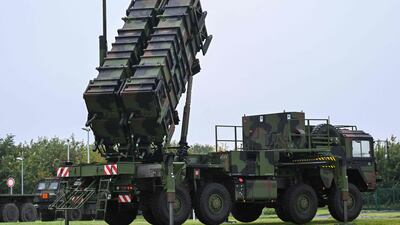
Air defence: Ukraine’s air defence largely depends on the Patriot system. AFP -
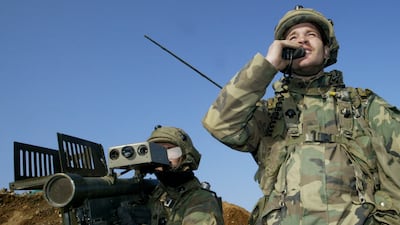
Air: Stinger short-range surface-to-air missile. Reuters -
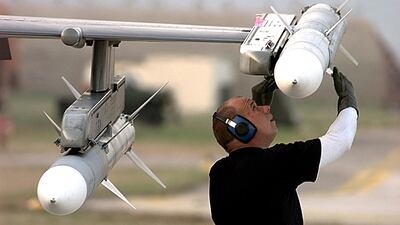
Air: Aim-120 air-to-air missiles. More than 14,000 of the missiles, that have a range exceeding 120km, have been produced with their accuracy so good that they have been nicknamed “Slammer”. Getty Images -
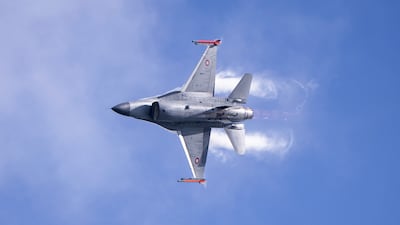
Air: F-16s will provide greater surveillance and the ability to attack high-value targets behind Russian lines in occupied Ukraine. EPA -
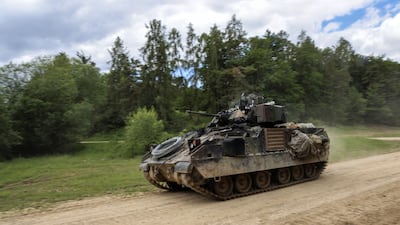
Armour: Bradley IFV. The Ukrainians have found the Bradley infantry fighting vehicle, with its 25mm cannon, very useful in protecting troops and providing decent firepower. Bloomberg -
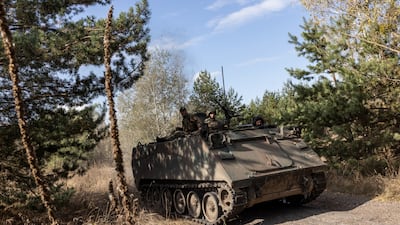
Armour: M113. The 1960s-designed versatile M113 armoured personnel carrier has proven effective in protecting troops against minefields. Getty Images -
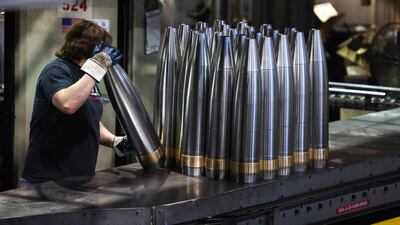
Artillery: 155mm artillery rounds. A massive delivery of 155mm rounds could prove crucial in preventing further Russian advances, particularly in its expected summer offensive. AFP -
Artillery: ATACMs long-range precision missiles. The ATACMS have a range of 300km with the ability to land within a few metres of a target. Getty Images -
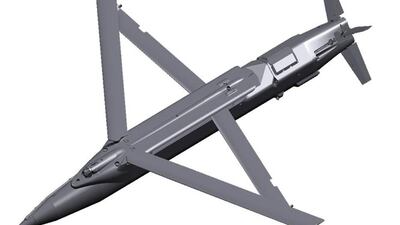
Artillery: Ground-Launched Small Diameter Bomb (GLSDB). It can be fired from the HIMARS system. Photo: Wikimedia Commons -

Artillery: M777 guns and replacement barrels. The Ukrainians need many M777 howitzer barrels to replace those worn down by extensive use. Getty Images



