

Tunisia's former prime minister Hamadi Jebali has been arrested on suspicion of money laundering, his lawyer told Reuters.
Mr Jebali, who is also a former senior member in the Ennahda Islamist party, was taken to an unknown location after police seized his and his wife's phones, his family said on Facebook.
Mr Jebali's arrest in the city of Sousse raises opposition concerns over the human rights record since President Kais Saied seized control of executive power last year, in a move his opponents called a coup.
The Interior Ministry called a press conference for Friday but did not comment on Mr Jebali's arrest.
Mr Jebali's defence team said they met him at the detention centre where he was being held.
"Jebali told us he will not answer the investigators’ questions and he entered into a hunger strike as the issue has a political motivation and nothing to do with money laundering", his lawyer Mokhtar Jemai said, according to Reuters.
Ennahda was the biggest party in Tunisia's parliament before Mr Saied dissolved the assembly last year.
Mr Saied said the move was temporary and was needed to save Tunisia from what he saw as a corrupt, self-serving elite.
-
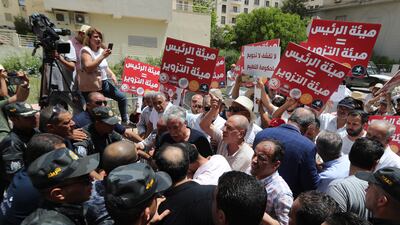
Protesters in Tunis try to break through security barriers to reach the headquarters of the Independent High Authority for Elections during a demonstration against Tunisian President Kais Saied. All photos: EPA -
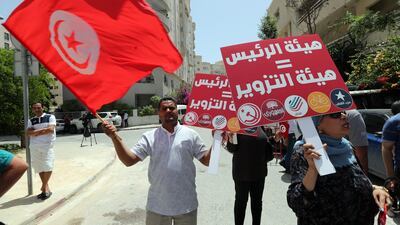
A demonstrator holds a sign reading 'the organisation of the president = the organisation of fraud' during a demonstration in Tunis. EPA -
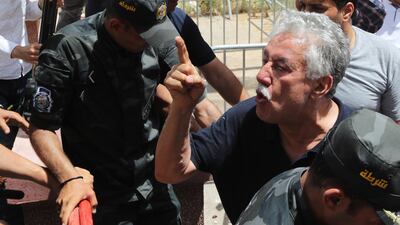
The leader of Tunisia's Popular Front party, Hamma Hammami, shouts slogans during a demonstration against President Kais Saied and a referendum on a new constitution to be held on July 25. EPA -

Tunisians shout slogans against President Kais Saied in Tunis. EPA -
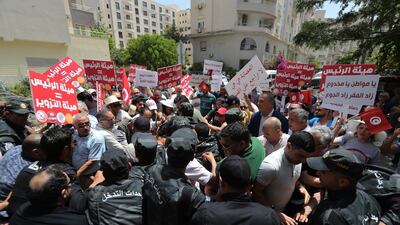
Protesters try to break through security barriers to reach the entrance to the headquarters of the Independent High Authority for Elections in Tunis. EPA


"The president is personally responsible for Jebali's physical and psychological well-being," his family said in the Facebook post. They called on civil society and human rights organisations "to stand up against these repressive practices".
Mr Jebali was prime minister in 2012 and resigned in 2013 following a political crisis.
Earlier this year, police arrested Noureddine Bhiri, vice president of the Ennahda party for more than two months, before releasing him without any charges being brought.
Mr Saied's opponents say he is waging a campaign through the police and the judiciary to target his opponents, but he denies this and says he is not a dictator.

