Syrian doctor Alaa Mousa, accused of crimes against humanity, arrives on January 19, 2022 for trial at a court in Frankfurt. AFP

Trial of Syrian doctor in Germany revives horrors of torture for surgeon in exile


Khaled Yacoub Oweis
  • English
  • Arabic

Dr Shady was in a car on his way to treat wounded people in a rebel-held suburb of Damascus when he was intercepted by Syrian security forces.

The surgeon says the security men stripped and threw him in a 4-metre square room.

It was already packed with 107 civilian prisoners at an Airforce Intelligence branch inside the Mezzeh military airport to the west of the capital.

“Their wounds were exposed and infected. Scabies covered their skin. Pus balls the size of chickpeas covered their eyes. Some were paralysed. Three died, one of them in front of me, and I could do nothing,” Dr Shady recalls of the events a decade ago.

“From a medical perspective, I never saw anything like this.”

Dr Shady was working at a state hospital in Damascus when he was arrested in August 2012, the second year of the revolt against five decades of Assad family rule. He says the prisoners with him were held and tortured on suspicion of supporting the revolt.

Dr Shady's experience was not isolated.

War crimes investigators have catalogued thousands of cases of torture, abuse and summary execution by the Syrian security forces and their militia auxiliaries, describing the killings as being on an "industrial scale".

In pictures: Syrian doctors who disappeared after arrest

  • Bashir Arab, a laboratory doctor from Aleppo, Syria. Born in 1980, he was last seen in December 2013 in Seydnaya Military Prison. Al photos: Syrian Network for Human Rights
    Bashir Arab, a laboratory doctor from Aleppo, Syria. Born in 1980, he was last seen in December 2013 in Seydnaya Military Prison. Al photos: Syrian Network for Human Rights
  • Omar Arnous, a dentist born in 1979, was arrested in October 2012 in the Dummar suburb of Damascus, along with his wife and child. His wife and child were released, while Omar’s fate is unknown.
    Omar Arnous, a dentist born in 1979, was arrested in October 2012 in the Dummar suburb of Damascus, along with his wife and child. His wife and child were released, while Omar’s fate is unknown.
  • Hayyan Mahmoud, a heart specialist from Salamiya, was born in 1986. He was arrested in July 2012 at Al Mujtahed Hospital in Damascus and has not been seen since.
    Hayyan Mahmoud, a heart specialist from Salamiya, was born in 1986. He was arrested in July 2012 at Al Mujtahed Hospital in Damascus and has not been seen since.
  • Rania Al Abbasi, a dentist from Damascus, was born in 1970 and arrested in March 2013 in the Dummar suburb of the capital, along with her husband and their six children. Their fate is unknown.
    Rania Al Abbasi, a dentist from Damascus, was born in 1970 and arrested in March 2013 in the Dummar suburb of the capital, along with her husband and their six children. Their fate is unknown.
  • Kenan Taylouni, a general surgeon born in 1982 in Damascus, worked at the government’s Al Mujtahed Hospital. Arrested in November 2011, he was last seen in Seydnaya Military Prison in 2013.
    Kenan Taylouni, a general surgeon born in 1982 in Damascus, worked at the government’s Al Mujtahed Hospital. Arrested in November 2011, he was last seen in Seydnaya Military Prison in 2013.
  • Loay Khattab, an ear nose and throat doctor from Hama governorate, was arrested in March 2012 at the Tishreen Military Hospital in Damascus. He has since disappeared.
    Loay Khattab, an ear nose and throat doctor from Hama governorate, was arrested in March 2012 at the Tishreen Military Hospital in Damascus. He has since disappeared.

A 2019 piece of US legislation known as the Caesar Act, which enhances sanctions on the Syrian government and those dealing with it, is named after the codename of a photographer who took pictures of thousands of corpses of jailed dissidents who were killed or who died in regime jails.

Few have been held responsible, but that may be starting to change.

Around the same time as Dr Shady's detention, according to prosecutors in Germany, another Syrian doctor was participating in the torture and murder of demonstrators.

Alaa Mousa went on trial in Frankfurt in January on 18 counts of torture and murder. Prosecutors say he committed the alleged crimes at military hospitals in Damascus and in the central city of Homs in the 2011-2012 period.

The 36-year old is accused of kicking and beating patients, setting a teenager's genitals alight, operating on a patient without anaesthesia and killing one patient with a lethal injection.

Mr Mousa came to Germany in 2015 from Syria on a visa for skilled workers and was arrested in 2020. He denies the charges.

  • A Syrian man walks past damaged buildings in the town of Ihsim in the southern countryside of Idlib. AFP
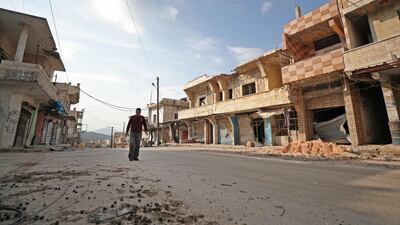
    A Syrian man walks past damaged buildings in the town of Ihsim in the southern countryside of Idlib. AFP
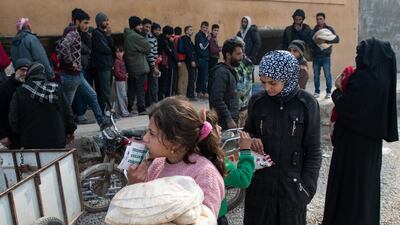
  • Displaced Syrians wait in a queue as an NGO delivers bread as they wait to receive aid in a stadium which has been turned into a makeshift shelter, Idlib, Syria. Getty
    Displaced Syrians wait in a queue as an NGO delivers bread as they wait to receive aid in a stadium which has been turned into a makeshift shelter, Idlib, Syria. Getty
  • Displaced Syrians sit on the tribunes of a stadium which has been turned into a makeshift refugee shelter in Idlib, Syria. Getty
    Displaced Syrians sit on the tribunes of a stadium which has been turned into a makeshift refugee shelter in Idlib, Syria. Getty
  • Displaced Syrians wait in front of their tents at the basement of a stadiums tribunes as it is turned into a makeshift refugee shelter in Idlib, Syria. Getty
    Displaced Syrians wait in front of their tents at the basement of a stadiums tribunes as it is turned into a makeshift refugee shelter in Idlib, Syria. Getty
  • A displaced Syrian girl carries a bag of bread in a stadium which has been turned into a makeshift refugee shelter in Idlib, Syria. Getty
    A displaced Syrian girl carries a bag of bread in a stadium which has been turned into a makeshift refugee shelter in Idlib, Syria. Getty
  • Internally displaced people stand outside tents at a makeshift camp in Azaz, Syria. Reuters
    Internally displaced people stand outside tents at a makeshift camp in Azaz, Syria. Reuters
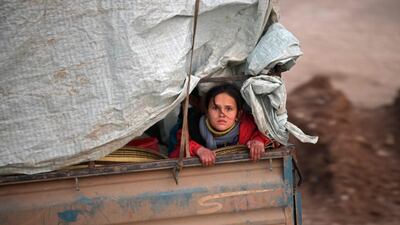
  • A displaced Syrian girl rides in the back of a truck on the way to Deir al-Ballut camp in Afrin's countryside along the border with Turkey. AFP
    A displaced Syrian girl rides in the back of a truck on the way to Deir al-Ballut camp in Afrin's countryside along the border with Turkey. AFP
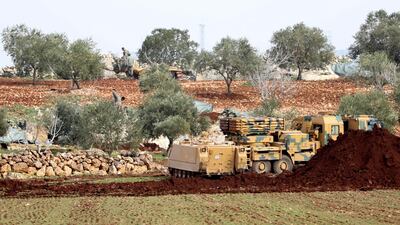
  • A view of Turkish soldiers and millitary armored vehicles at the Ad Dana district of north-east Idlib, Syria. EPA
    A view of Turkish soldiers and millitary armored vehicles at the Ad Dana district of north-east Idlib, Syria. EPA
  • People drive motorcycles at the Turmanin district of north-east Idlib, Syria. EPA
    People drive motorcycles at the Turmanin district of north-east Idlib, Syria. EPA
  • Displaced Syrians pass through the village of Deir al-Ballut in Afrin's countryside along the border with Turkey. AFP
    Displaced Syrians pass through the village of Deir al-Ballut in Afrin's countryside along the border with Turkey. AFP
  • An aerial view taken on February 19, 2020 shows destroyed buildings in the Syrian town of Ihsim in the southern countryside of Idlib/ AFP
    An aerial view taken on February 19, 2020 shows destroyed buildings in the Syrian town of Ihsim in the southern countryside of Idlib/ AFP
  • A Syrian man walks past damaged buildings in the town of Ihsim in the southern countryside of Idlib. AFP
    A Syrian man walks past damaged buildings in the town of Ihsim in the southern countryside of Idlib. AFP
  • A truck rides past destroyed buildings in the town of Ihsim in the southern countryside of Idlib. AFP
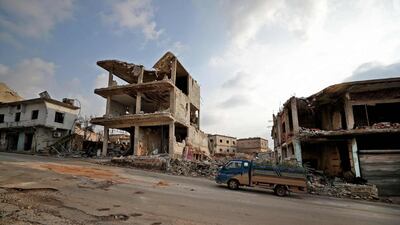
    A truck rides past destroyed buildings in the town of Ihsim in the southern countryside of Idlib. AFP
  • Displaced Syrians arrive to Deir al-Ballut camp in Afrin's countryside, along the border with Turkey. AFP
    Displaced Syrians arrive to Deir al-Ballut camp in Afrin's countryside, along the border with Turkey. AFP

Dr Shady, who is in exile in Saudi Arabia and works at a hospital after having fled Syria, is considerably older than Mr Mousa and says he does not know him.

But Dr Shady says his experience in regime hospitals before the war and his subsequent imprisonment sheds insight on a system he says encourages medical staff to use violence. The two men are in the same profession and trace their roots to the same governorate of Homs.

He says if the German court convicts Mr Mousa it would be a symbolic triumph for justice that needs to be built upon.

"This doctor is one of hundreds, if not thousands, who did the same thing at regime hospitals, especially the military ones," says Dr Shady.

He said there were health workers in regime-controlled hospitals who might not have participated in the atrocities but witnessed torture and killings. Many of them found work in Europe and elsewhere and stayed silent, he says.

"They must present their testimonies if this regime is tried one day," Dr Shady says.

The more savage you are the more they appreciate you
Dr Shady

In April this year, President Bashar Al Assad signed an anti-torture law.

Amnesty International said the law ignores “a decade of torture, ill-treatment and extrajudicial executions carried out by Syria’s security forces”.

Dr Shady says that even before the revolt, disregard for patients and the value of individual lives was rife.

At a military hospital in Damascus known as Hospital 30, he says he saw doctors do surgical procedures on conscripts without anaesthesia "to make them feel they are nothing."

Doctors would also stamp on the legs of conscripts who had tried to avoid serving the widely resented two-year military service by injecting their own legs with diesel — an extreme act to inflict tissue damage with the hopes of a medical dispensation.

“The more savage you are the more they appreciate you," Dr Shady says of his colleagues.

People queue in front of the Frankfurt courthouse where Syrian doctor Alaa Mousa is being tried for crimes agains humanity. AP

After the revolt erupted in 2011, doctors would inform on other doctors who treated protestors, he says.

“They used to justify it by saying they are terrorists treating terrorists,” says Dr Shady.

Kheireddin Hadidi, a doctor at Al Mustahed Hospital in Damascus, disappeared after soldiers dragged him from the operating room while he was treating a patient, Dr Shady says.

“He was in the middle of surgery that required the most sterile of conditions."

Dr Shady says a culture of brutality applied across the board, from the well-educated to the least.

Before Dr Shady even had arrived at the military airport where he was held by soldiers, he had several cigarettes put out on his back and was being repeatedly hit with rifle butts, he says. In the security car that took him to prison his head was placed on the armrest and beaten with military boots.

One secret policeman shoved sand into his mouth. "He told me 'swallow the sand of the homeland' [but] I told him 'sand cannot be swallowed.'"

The wider 40-50 square metre prison compound where he was held was overseen by three members of the Airforce Intelligence, who were themselves prisoners, held on petty violations. They were kept in a building with no roof, which Dr Shady says was crucial otherwise the three "guards" could not have coped with the stench from the other prisoners.

The floor was covered with puss, sweat, blood and urine, a grim mess several centimetres deep, he says. Water was scarce and the prisoners were kept thirsty.

With hard plastic polymer pipes, the guards would regularly beat the prisoners, who wore only their underwear. That violence was in addition to torture sessions the prisoners were regularly subjected to by more senior personnel in an adjacent interrogation compound.

“They revelled in our condition. But I convinced them to supply us with hosed water to cleanse our bodies,” Dr Shady says, referring to his guards and their superiors.

“I told them that if you continue leaving us like this scabies would spread to you. They provided us with water and ointments.”

Dr Shady was released after nine days.

One day was spent in that room with the 107 prisoners and the rest in a smaller room with seven prisoners who were doctors, a lawyer and several blue-collar workers.

He says a bribe of $3,000 helped secure his release and that of his colleague who was with him, who also used his connections at a UN office in Damascus to secure freedom.

Just before he was released, he recalls being slapped so hard by an Airforce Intelligence operative while he was blindfolded that his head crashed into a wall behind him.

“He told me that this was to make sure I would not forget him. I spent one month at home not being able to move or speak,” he says.


Scotland's team:

15-Sean Maitland, 14-Darcy Graham, 13-Nick Grigg, 12-Sam Johnson, 11-Byron McGuigan, 10-Finn Russell, 9-Ali Price, 8-Magnus Bradbury, 7-Hamish Watson, 6-Sam Skinner, 5-Grant Gilchrist, 4-Ben Toolis, 3-Willem Nel, 2-Stuart McInally (captain), 1-Allan Dell

Replacements: 16-Fraser Brown, 17-Gordon Reid, 18-Simon Berghan, 19-Jonny Gray, 20-Josh Strauss, 21-Greig Laidlaw, 22-Adam Hastings, 23-Chris Harris

MATCH INFO

Liverpool 2 (Van Dijk 18', 24')

Brighton 1 (Dunk 79')

Red card: Alisson (Liverpool)

The burning issue

The internal combustion engine is facing a watershed moment – major manufacturer Volvo is to stop producing petroleum-powered vehicles by 2021 and countries in Europe, including the UK, have vowed to ban their sale before 2040. The National takes a look at the story of one of the most successful technologies of the last 100 years and how it has impacted life in the UAE. 

Read part four: an affection for classic cars lives on

Read part three: the age of the electric vehicle begins

Read part two: how climate change drove the race for an alternative 

THE%20SPECS
%3Cp%3EEngine%3A%203-litre%20V6%20turbo%20(standard%20model%2C%20E-hybrid)%3B%204-litre%20V8%20biturbo%20(S)%0D%3Cbr%3EPower%3A%20350hp%20(standard)%3B%20463hp%20(E-hybrid)%3B%20467hp%20(S)%0D%3Cbr%3ETorque%3A%20500Nm%20(standard)%3B%20650Nm%20(E-hybrid)%3B%20600Nm%20(S)%0D%0D%3Cbr%3EPrice%3A%20From%20Dh368%2C500%0D%3Cbr%3EOn%20sale%3A%20Now%3C%2Fp%3E%0A
How to apply for a drone permit
  • Individuals must register on UAE Drone app or website using their UAE Pass
  • Add all their personal details, including name, nationality, passport number, Emiratis ID, email and phone number
  • Upload the training certificate from a centre accredited by the GCAA
  • Submit their request
What are the regulations?
  • Fly it within visual line of sight
  • Never over populated areas
  • Ensure maximum flying height of 400 feet (122 metres) above ground level is not crossed
  • Users must avoid flying over restricted areas listed on the UAE Drone app
  • Only fly the drone during the day, and never at night
  • Should have a live feed of the drone flight
  • Drones must weigh 5 kg or less
What is an ETF?

An exchange traded fund is a type of investment fund that can be traded quickly and easily, just like stocks and shares. They come with no upfront costs aside from your brokerage's dealing charges and annual fees, which are far lower than on traditional mutual investment funds. Charges are as low as 0.03 per cent on one of the very cheapest (and most popular), Vanguard S&P 500 ETF, with the maximum around 0.75 per cent.

There is no fund manager deciding which stocks and other assets to invest in, instead they passively track their chosen index, country, region or commodity, regardless of whether it goes up or down.

The first ETF was launched as recently as 1993, but the sector boasted $5.78 billion in assets under management at the end of September as inflows hit record highs, according to the latest figures from ETFGI, a leading independent research and consultancy firm.

There are thousands to choose from, with the five largest providers BlackRock’s iShares, Vanguard, State Street Global Advisers, Deutsche Bank X-trackers and Invesco PowerShares.

While the best-known track major indices such as MSCI World, the S&P 500 and FTSE 100, you can also invest in specific countries or regions, large, medium or small companies, government bonds, gold, crude oil, cocoa, water, carbon, cattle, corn futures, currency shifts or even a stock market crash. 

Teachers' pay - what you need to know

Pay varies significantly depending on the school, its rating and the curriculum. Here's a rough guide as of January 2021:

- top end schools tend to pay Dh16,000-17,000 a month - plus a monthly housing allowance of up to Dh6,000. These tend to be British curriculum schools rated 'outstanding' or 'very good', followed by American schools

- average salary across curriculums and skill levels is about Dh10,000, recruiters say

- it is becoming more common for schools to provide accommodation, sometimes in an apartment block with other teachers, rather than hand teachers a cash housing allowance

- some strong performing schools have cut back on salaries since the pandemic began, sometimes offering Dh16,000 including the housing allowance, which reflects the slump in rental costs, and sheer demand for jobs

- maths and science teachers are most in demand and some schools will pay up to Dh3,000 more than other teachers in recognition of their technical skills

- at the other end of the market, teachers in some Indian schools, where fees are lower and competition among applicants is intense, can be paid as low as Dh3,000 per month

- in Indian schools, it has also become common for teachers to share residential accommodation, living in a block with colleagues

Company%C2%A0profile
%3Cp%3ECompany%3A%20Zywa%3Cbr%3EStarted%3A%202021%3Cbr%3EFounders%3A%20Nuha%20Hashem%20and%20Alok%20Kumar%3Cbr%3EBased%3A%20UAE%3Cbr%3EIndustry%3A%20FinTech%3Cbr%3EFunding%20size%3A%20%243m%3Cbr%3ECompany%20valuation%3A%20%2430m%3C%2Fp%3E%0A
Yahya Al Ghassani's bio

Date of birth: April 18, 1998

Playing position: Winger

Clubs: 2015-2017 – Al Ahli Dubai; March-June 2018 – Paris FC; August – Al Wahda

Know your cyber adversaries

Cryptojacking: Compromises a device or network to mine cryptocurrencies without an organisation's knowledge.

Distributed denial-of-service: Floods systems, servers or networks with information, effectively blocking them.

Man-in-the-middle attack: Intercepts two-way communication to obtain information, spy on participants or alter the outcome.

Malware: Installs itself in a network when a user clicks on a compromised link or email attachment.

Phishing: Aims to secure personal information, such as passwords and credit card numbers.

Ransomware: Encrypts user data, denying access and demands a payment to decrypt it.

Spyware: Collects information without the user's knowledge, which is then passed on to bad actors.

Trojans: Create a backdoor into systems, which becomes a point of entry for an attack.

Viruses: Infect applications in a system and replicate themselves as they go, just like their biological counterparts.

Worms: Send copies of themselves to other users or contacts. They don't attack the system, but they overload it.

Zero-day exploit: Exploits a vulnerability in software before a fix is found.

Updated: June 19, 2022, 11:40 PM