

The UN said that water shortages across Libya could leave millions with an "impending" disaster, as the country's warring sides formed a new government this week.
Its children's agency, Unicef, said more than four million people, including 1.5 million children, faced critical water shortages if “immediate solutions are not found and implemented”.
Libya’s crisis, which started a decade ago, has destroyed many of its water treatment plants, while those left are highly vulnerable to failure because of a lack of maintenance, Unicef said.
-

Vehicles of the "Tripoli Brigade", a militia loyal to the UN-recognised Government of National Accord (GNA), parade through the Martyrs' Square at the centre of the GNA-held Libyan capital Tripoli on July 10, 2020. AFP -

Vehicles of the "Tripoli Brigade", a militia loyal to the UN-recognised Government of National Accord (GNA), parade through the Martyrs' Square at the centre of the GNA-held Libyan capital Tripoli on July 10, 2020. AFP -
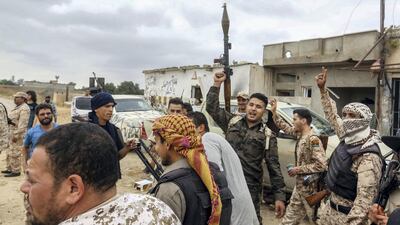
Fighters loyal to the Libyan internationally-recognised Government of National Accord (GNA) are pictured near the frontline during clashes against forces loyal to Khalifa Haftar, on June 1, 2019, in al-Sawani area, south of the Libyan capital Tripoli. AFP -
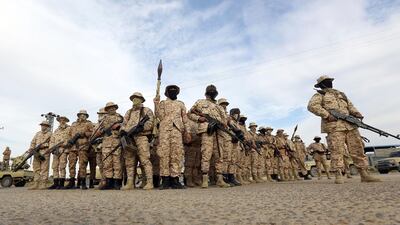
Members of the Tripoli Protection Force, an alliance of militias from the capital city, patrol an area south of the Libyan capital on January 18, 2019, during clashes with the Seventh Brigade group from the town of Tarhuna. Two days of clashes between rival militias near Libya's capital Tripoli have left 10 people dead and 41 wounded, the health ministry said on January 17. Fighting between armed groups erupted Wednesday despite a truce deal four months ago that had halted deadly battles in the city. AFP -
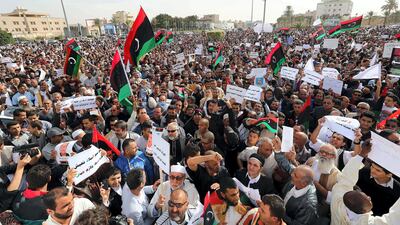
Libyans demonstrate in a street in the capital Tripoli to demand the withdrawal of all armed militias from the capital on November 22, 2013. Residents of Libya's capital were turning out Friday to press militias remaining in the city to follow others and withdraw, aiming to keep up the momentum following deadly clashes last weekend. Many of the groups have long rejected government calls to lay down their arms or integrate into the armed forces, triggering the frustration of Libyans who once hailed them as heroes for toppling Kadhafi. AFP


“This is mainly attributed to the lack of required budgets for the purchase of equipment, operational materials and spare parts for regular maintenance," it said.
"Suppliers are also struggling to open bank credits in hard currency to import equipment from outside the country."
Libya has been torn apart by civil war since an uprising, which was later backed by Nato, removed dictator Muammar Qaddafi from power in 2011.
Since 2014, the country has been divided between two rival administrations that agreed on a ceasefire last October.
Unicef said most of the country's citizens used cesspits that polluted underground reserves.
Most waste water is emptied directly into the sea without any form of filtering, leading to more extensive pollution.
The country’s general company for water and wastewater was subject to “disastrous conditions” that resulted in losses of more than 50 per cent.
After UN-led talks in Geneva between the rivals, Mohamed Menfi was named as head of the Presidency Council of a new interim government, with Abdul Hamid Dbeibah as its prime minister.
In light of this progress, Unicef called on the Libyan government and international organisations to give priority to water, sanitation and hygiene.
“The urgent provision of necessary funds to carry out maintenance will ensure continuity of adequate water supply and sanitation services,” said Unicef's special representative in Libya, AbdulKadir Musse.
“Communities will be able to practise daily healthy hygiene to limit the transmission of the coronavirus, and thus avoid a humanitarian disaster that would impact more than four million people, including 1.5 million children.”

