A mask-clad man waits to receive medication from the pharmacy of the Amel NGO in Lebanon's southern coastal city of Tyre. AFP

Psychiatric medicine runs out in Lebanon amid mounting demand


Fatima Al Mahmoud
  • English
  • Arabic

The sixth of the Lebanese population who take psychiatric drugs will soon have to search outside the country for their medicine, healthcare professionals said.

They sounded the alarm over a shortage in the country of seven million people after receiving repeated calls and messages from patients complaining none of their prescribed medicines were available.

Medical supplies started to run dry a few months ago.

“They took away my sanity, and now they’re taking away what I need to keep whatever’s left of it,” tweeted Sara, a young woman on antidepressants.

Lebanon’s economic meltdown, political instability, the pandemic and Beirut port blast have left the country’s people drained.

“There are nearly one million in Lebanon who are on some form of antidepressants, antipsychotics, tranquillisers or other medications from this family,” estimated Dr Joseph El Khoury, associate professor of psychiatry at the American University of Beirut. “This is a full-fledged crisis.”

In the past few years, Dr El Khoury was able to handle occasional supply disruptions by prescribing alternatives. "That choice is no longer available, which sets a dangerous precedent," he told The National.

With no substitutes, patients are forced to abruptly cut off their medication. Withdrawal symptoms, psychosis and suicidal thoughts are among the dangers of quitting medicine abruptly, without a plan.

For patients with Alzheimer’s disease and dementia, stopping antidepressants is a “slow death”, said private nurse Sahar Saridar.

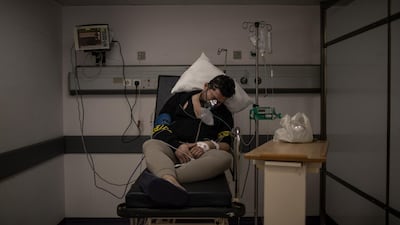
  • A Lebanese person sleeps inside a room for COVID-19 patients inside Rafik Hariri University Hospital, in southern Beirut, Lebanon. Getty Images
    A Lebanese person sleeps inside a room for COVID-19 patients inside Rafik Hariri University Hospital, in southern Beirut, Lebanon. Getty Images
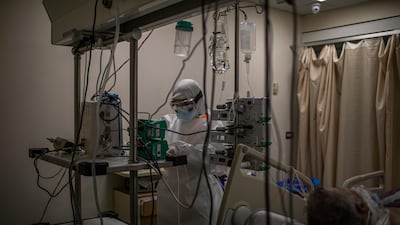
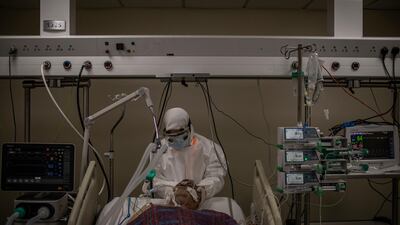
  • A Lebanese nurse takes care of a COVID-19 patient inside the Intensive Care Unit of Rafik Hariri University Hospital. Getty Images
    A Lebanese nurse takes care of a COVID-19 patient inside the Intensive Care Unit of Rafik Hariri University Hospital. Getty Images
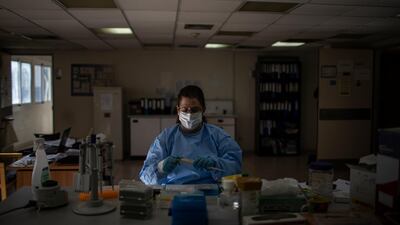
  • A Lebanese doctor conducts PCR test results inside the laboratory of the Rafik Hariri University Hospital. Getty Images
    A Lebanese doctor conducts PCR test results inside the laboratory of the Rafik Hariri University Hospital. Getty Images
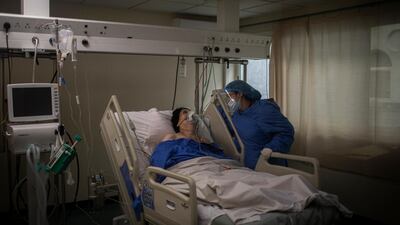
  • A Lebanese woman takes care of her mother with COVID-19 inside the Intensive Care Unit of Rafik Hariri University Hospital. Getty Images
    A Lebanese woman takes care of her mother with COVID-19 inside the Intensive Care Unit of Rafik Hariri University Hospital. Getty Images
  • Lebanese nurses take care of COVID-19 patients inside the Intensive Care Unit of Rafik Hariri University Hospital. Getty Images
    Lebanese nurses take care of COVID-19 patients inside the Intensive Care Unit of Rafik Hariri University Hospital. Getty Images
  • A Lebanese nurse takes care of a patient inside the Intensive Care Unit of Rafik Hariri University Hospital. Getty Images
    A Lebanese nurse takes care of a patient inside the Intensive Care Unit of Rafik Hariri University Hospital. Getty Images
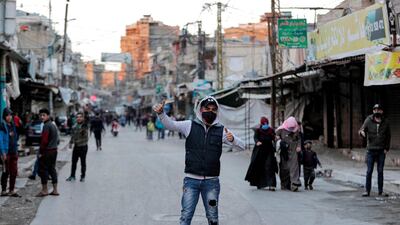
  • A mask-clad man gestures as he stands in the middle of a street while behind people walk past shuttered shops and stalls in Souk Sabra in the southern suburbs of the Lebanon's capital Beirut, despite a national total lockdown as a measure against the COVID-19 coronavirus pandemic. AFP
    A mask-clad man gestures as he stands in the middle of a street while behind people walk past shuttered shops and stalls in Souk Sabra in the southern suburbs of the Lebanon's capital Beirut, despite a national total lockdown as a measure against the COVID-19 coronavirus pandemic. AFP
  • Lebanese army soldiers patrol as they try to enforce a total lockdown as a measure against the COVID-19 coronavirus pandemic, in Souk Sabra in the southern suburbs of the Lebanon's capital Beirut. AFP
    Lebanese army soldiers patrol as they try to enforce a total lockdown as a measure against the COVID-19 coronavirus pandemic, in Souk Sabra in the southern suburbs of the Lebanon's capital Beirut. AFP
  • A woman argues with policemen as Lebanese army soldiers (green berets) and policemen (grey berets) try to enforce a total lockdown as a measure against the COVID-19 coronavirus pandemic, in Souk Sabra in the southern suburbs of the Lebanon's capital Beirut. AFP
    A woman argues with policemen as Lebanese army soldiers (green berets) and policemen (grey berets) try to enforce a total lockdown as a measure against the COVID-19 coronavirus pandemic, in Souk Sabra in the southern suburbs of the Lebanon's capital Beirut. AFP
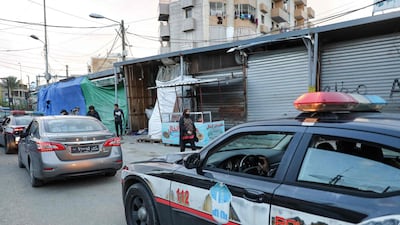
  • People walk past Lebanese police patrol cars, as authorities try to enforce a total lockdown as a measure against the COVID-19 coronavirus pandemic, in Souk Sabra in the southern suburbs of the Lebanon's capital Beirut. AFP
    People walk past Lebanese police patrol cars, as authorities try to enforce a total lockdown as a measure against the COVID-19 coronavirus pandemic, in Souk Sabra in the southern suburbs of the Lebanon's capital Beirut. AFP
  • A mask-clad woman and boy walk past shuttered shops and stalls in Souk Sabra in the southern suburbs of the Lebanon's capital Beirut, despite a national total lockdown as a measure against the COVID-19 coronavirus pandemic. AFP
    A mask-clad woman and boy walk past shuttered shops and stalls in Souk Sabra in the southern suburbs of the Lebanon's capital Beirut, despite a national total lockdown as a measure against the COVID-19 coronavirus pandemic. AFP
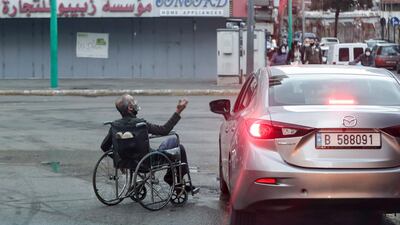
  • A wheelchair-bound beggar is seen next to a car stopping at a red light, in Lebanon's capital Beirut, despite a total lockdown due to the COVID-19 coronavirus pandemic. AFP
    A wheelchair-bound beggar is seen next to a car stopping at a red light, in Lebanon's capital Beirut, despite a total lockdown due to the COVID-19 coronavirus pandemic. AFP
  • A woman argues with policemen trying to enforce a total lockdown as a measure against the COVID-19 coronavirus pandemic, in Souk Sabra in the southern suburbs of the Lebanon's capital Beirut. AFP
    A woman argues with policemen trying to enforce a total lockdown as a measure against the COVID-19 coronavirus pandemic, in Souk Sabra in the southern suburbs of the Lebanon's capital Beirut. AFP
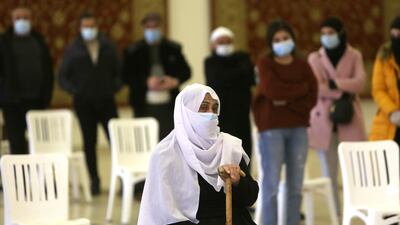
  • A woman sits as she waits to get tested for the coronavirus disease in the town of Hasbaya, Lebanon. Reuters
    A woman sits as she waits to get tested for the coronavirus disease in the town of Hasbaya, Lebanon. Reuters
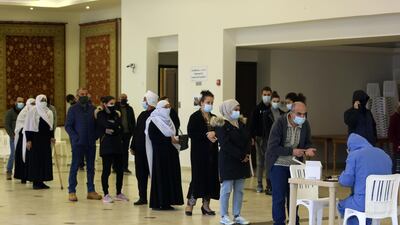
  • People wait in line to get tested for the coronavirus disease in the town of Hasbaya, Lebanon. Reuters
    People wait in line to get tested for the coronavirus disease in the town of Hasbaya, Lebanon. Reuters
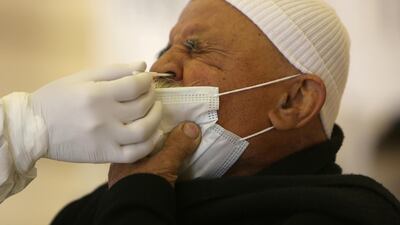
  • A health worker takes a swab from a man to be tested for the coronavirus disease in the town of Hasbaya, Lebanon. Reuters
    A health worker takes a swab from a man to be tested for the coronavirus disease in the town of Hasbaya, Lebanon. Reuters

In severe cases, patients who quit their treatment may require hospital stays after quitting their medication, which sets an even bigger challenge for health workers already facing Covid-19.

Overflowing wards and overwhelmed medical staff  make it hard to accommodate other admissions.

“Patients who [experience] a breakdown cannot be hospitalised unless they have a negative PCR. This is problematic because patients should usually be admitted within a two-hour time frame. Meanwhile, obtaining a PCR result and finding a hospital bed is now a timely process,” Dr El Khoury said.

Afraid to go through similar withdrawal symptoms, a patient who chose to remain anonymous reported having to fight with pharmacies for a box of his antianxiety medicine.

He recalled going from one pharmacy to another with a prescription of every possible medication and a full list of alternatives in the hopes of finding what he needed, only to be turned down every time.

The patient's uncle, a 72-year-old man who "never used medication in his lifetime", is now on antidepressants, he told The National.

“After the Beirut blast, he lost his home and had to withdraw his deposits in Lebanese pounds, then convert them to US dollars to cover repair costs,” he said. “This slashed his savings by more than 80 per cent due to the devaluation of the local currency.”

“He told me he would never be the same person again after what he had gone through.”

Lebanon’s economic crisis, deemed one of the worst in the country’s history, has been a major trigger for worsening mental health in the country, said Mia Atoui, co-founder of Embrace, a non-profit organisation raising awareness on mental health.

“There is no mental health if the basic needs of living are not secured. Access to food, shelter, education, employment and health services is crucial for a stable life and mental health, but it’s now out of reach for many vulnerable families,” she said.

Embrace Lifeline (1564) received more than 6,100 calls to its hotline in 2020 compared with 2019, when it received about 2,500 calls.

“This highlights more levels of distress, more need for support, and also more awareness on mental health and its importance, especially post-Covid-19 and post-Beirut blast,” Ms Atoui said.

According to a Post Beirut Blast Update Report that Embrace assembled between August and November 2020, more than 60 per cent of callers reported feeling emotionally distressed and 28 per cent had thought about suicide.

The report said 12 per cent of calls were related to the Beirut explosion while 7 per cent cited socioeconomic worries, and 6 per cent had Covid-19 concerns.

A pharmacist shows medicine that are currently used by Lebanese to fight depression, 22 February 2007. AFP

With the shortage of medication, physicians are forced to switch to alternatives, which in turn negates any progress and leads to relapse, said Dr Nabil Naja, medical director at Dar Al Ajaza Al Islamia Hospital and geriatrician at Clemenceau Medical Centre.

“For the 50 per cent of Alzheimer’s patients who respond to treatment, cutting off their medication will make their state worse. It affects the quality of their life, and that of their families,” Dr Naja said.

As with other crises currently gripping Lebanon, there is no solution in sight.

“We have no answers,” Dr El Khoury said. “We were promised by health ministry officials that medication would be available around October, but four months later we still have nothing.”

Embrace Lifeline can be reached within Lebanon on 1564

Sole survivors
  • Cecelia Crocker was on board Northwest Airlines Flight 255 in 1987 when it crashed in Detroit, killing 154 people, including her parents and brother. The plane had hit a light pole on take off
  • George Lamson Jr, from Minnesota, was on a Galaxy Airlines flight that crashed in Reno in 1985, killing 68 people. His entire seat was launched out of the plane
  • Bahia Bakari, then 12, survived when a Yemenia Airways flight crashed near the Comoros in 2009, killing 152. She was found clinging to wreckage after floating in the ocean for 13 hours.
  • Jim Polehinke was the co-pilot and sole survivor of a 2006 Comair flight that crashed in Lexington, Kentucky, killing 49.
How does ToTok work?

The calling app is available to download on Google Play and Apple App Store

To successfully install ToTok, users are asked to enter their phone number and then create a nickname.

The app then gives users the option add their existing phone contacts, allowing them to immediately contact people also using the application by video or voice call or via message.

Users can also invite other contacts to download ToTok to allow them to make contact through the app.


Company%C2%A0profile
%3Cp%3E%3Cstrong%3ECompany%20name%3A%20%3C%2Fstrong%3ELeap%0D%3Cbr%3E%3Cstrong%3EStarted%3A%20%3C%2Fstrong%3EMarch%202021%0D%3Cbr%3E%3Cstrong%3EFounders%3A%3C%2Fstrong%3E%20Ziad%20Toqan%20and%20Jamil%20Khammu%0D%3Cbr%3E%3Cstrong%3EBased%3A%3C%2Fstrong%3E%20Dubai%0D%3Cbr%3E%3Cstrong%3ESector%3A%20%3C%2Fstrong%3EFinTech%0D%3Cbr%3E%3Cstrong%3EInvestment%20stage%3A%20%3C%2Fstrong%3EPre-seed%0D%3Cbr%3E%3Cstrong%3EFunds%20raised%3A%3C%2Fstrong%3E%20Undisclosed%0D%3Cbr%3E%3Cstrong%3ECurrent%20number%20of%20staff%3A%20%3C%2Fstrong%3ESeven%3C%2Fp%3E%0A
Racecard

6.35pm: American Business Council – Maiden (PA) Dh80,000 (Dirt) 1,600m 

7.10pm: British Business Group – Maiden (TB) Dh82,500 (D) 1,200m 

7.45pm: CCI France UAE – Handicap (TB) Dh87,500 (D) 1,400m 

8.20pm: Czech Business Council – Rated Conditions (TB) Dh105,000 (D) 1,400m 

8.55pm: Netherlands Business Council – Rated Conditions (TB) Dh95,000 (D) 1,600m 

9.30pm: Indian Business and Professional Council – Handicap (TB) Dh95,000 (D) 1,200m  

Racecard

6pm: The Pointe - Conditions (TB) Dh82,500 (Turf) 1,400m

6.35pm: Palm West Beach - Maiden (TB) Dh82,500 (T) 1,800m

7.10pm: The View at the Palm - Handicap (TB) Dh85,000 (Dirt) 1,400m

7.45pm: Nakeel Graduate Stakes - Conditions (TB) Dh100,000 (T) 1,600m

8.20pm: Club Vista Mare - Handicap (TB) Dh95,000 (D) 1,900m

8.55pm: The Palm Fountain - Handicap (TB) Dh95,000 (D) 1,200m

9.30pm: The Palm Tower - Handicap (TB) Dh87,500 (T) 1,600m

What is dialysis?

Dialysis is a way of cleaning your blood when your kidneys fail and can no longer do the job.

It gets rid of your body's wastes, extra salt and water, and helps to control your blood pressure. The main cause of kidney failure is diabetes and hypertension.

There are two kinds of dialysis — haemodialysis and peritoneal.

In haemodialysis, blood is pumped out of your body to an artificial kidney machine that filter your blood and returns it to your body by tubes.

In peritoneal dialysis, the inside lining of your own belly acts as a natural filter. Wastes are taken out by means of a cleansing fluid which is washed in and out of your belly in cycles.

It isn’t an option for everyone but if eligible, can be done at home by the patient or caregiver. This, as opposed to home haemodialysis, is covered by insurance in the UAE.

UAE currency: the story behind the money in your pockets
MEYDAN%20RACECARD
%3Cp%3E%3Cstrong%3E6pm%20%3C%2Fstrong%3EArabian%20Adventures%20%E2%80%93%20Maiden%20(TB)%20Dh82%2C500%20(Dirt)%201%2C200m%0D%3Cbr%3E%3Cstrong%3E6.35pm%20%3C%2Fstrong%3EEmirates%20Sky%20Cargo%20%E2%80%93%20Handicap%20(TB)%2087%2C500%20(D)%202%2C000m%0D%3Cbr%3E%3Cstrong%3E7.10pm%20%3C%2Fstrong%3EEmirates%20Holiday%20%E2%80%93%20Maiden%20(TB)%20Dh82%2C500%20(D)%201%2C400m%0D%3Cbr%3E%3Cstrong%3E7.45pm%20%3C%2Fstrong%3EEmirates%20Skywards%20%E2%80%93%20Handicap%20(TB)%20Dh87%2C500%20(D)%201%2C400m%0D%3Cbr%3E%3Cstrong%3E8.20pm%3C%2Fstrong%3E%20Emirates%20Airline%20%E2%80%93%20Handicap%20(TB)%20Dh105%2C000%20(D)%201%2C600m%0D%3Cbr%3E%3Cstrong%3E8.55pm%20%3C%2Fstrong%3EEmirates%20Airline%20%E2%80%93%20Handicap%20(TB)%20Dh105%2C000%20(D)%201%2C900m%0D%3Cbr%3E%3Cstrong%3E9.30pm%20%3C%2Fstrong%3EEmirates.com%20%E2%80%93%20Handicap%20(TB_%20Dh87%2C500%20(D)%201%2C200m%3C%2Fp%3E%0A
This is an info box
  • info goes here
  • and here
  • and here

Expert input

If you had all the money in the world, what’s the one sneaker you would buy or create?

“There are a few shoes that have ‘grail’ status for me. But the one I have always wanted is the Nike x Patta x Parra Air Max 1 - Cherrywood. To get a pair in my size brand new is would cost me between Dh8,000 and Dh 10,000.” Jack Brett

“If I had all the money, I would approach Nike and ask them to do my own Air Force 1, that’s one of my dreams.” Yaseen Benchouche

“There’s nothing out there yet that I’d pay an insane amount for, but I’d love to create my own shoe with Tinker Hatfield and Jordan.” Joshua Cox

“I think I’d buy a defunct footwear brand; I’d like the challenge of reinterpreting a brand’s history and changing options.” Kris Balerite

 “I’d stir up a creative collaboration with designers Martin Margiela of the mixed patchwork sneakers, and Yohji Yamamoto.” Hussain Moloobhoy

“If I had all the money in the world, I’d live somewhere where I’d never have to wear shoes again.” Raj Malhotra