On August 8, 2020, Rony Tabet’s world was turned upside down.
The 20-year-old Lebanese athlete lost his right eye to a rubber bullet, only days after surviving unscathed the deadly blast that shook Lebanon's capital.
The explosion, which involved a huge stockpile of chemicals stored at Beirut port, killed more than 200 people and injured thousands.
Mr Tabet, like thousands of other Lebanese, took to the streets of downtown Beirut days later.
Protesters were demanding justice for victims of the blast. Many said the government's negligence and rampant corruption across state institutions had caused the disaster.
Mr Tabet was among dozens of protesters who suffered serious injuries after being assaulted by unidentified people and security forces tasked with guarding Parliament.
-
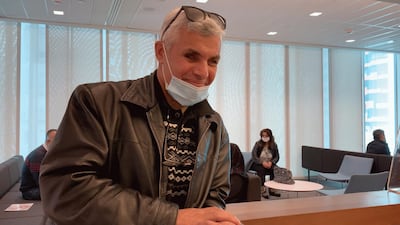
Abdullah El Hajj before going into his eyeball replacement surgery. Mahmoud Rida/ The National -

Banner in support of Abdullah's eye loss, reading 'We are all your eye'. Mahmoud Rida / The National -

Abdullah El Hajj with his family after the first operation. Courtesy Abdullah El Hajj -

Ali Solh and Abdullah El Hajj at the hospital right before Abdullah's surgery. Mahmoud Rida/ The National -

Abdullah El Hajj at the hospital after being shot in the eye. Courtesy Abdullah El Hajj -
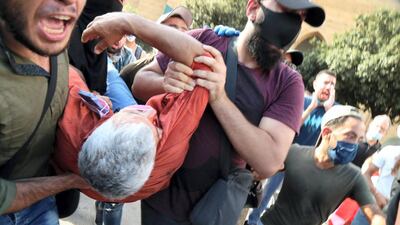
Abdullah El Hajj following his injury. Courtesy Abdullah El Hajj -
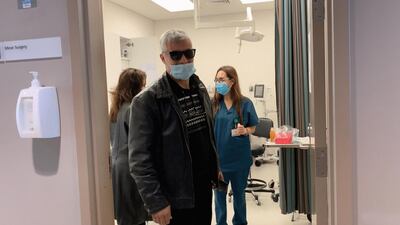
Abdullah El Hajj after eye surgery. Mahmoud Rida/ The National -
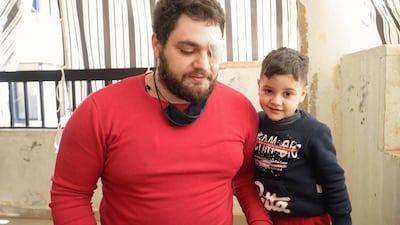
Ali Solh with his youngest child. Mahmoud Rida/ The National


"I was standing with my back to Mohamad Al Amine mosque, some 150 to 200 meters from where the scuffles were occurring at the time, when I was struck with a rubber bullet," Mr Tabet told The National.
Over the previous four days, Mr Tabet had been assisting in relief efforts across the capital, where thousands of people were displaced after their properties were damaged.
“Around 5pm on that day, I decided to stop and grab something to eat. But as I was about to leave the shop, I spotted demonstrators marching towards downtown Beirut and spontaneously decided to join them,” he says.
Mr Tabet says he doesn't regret that decision, though he fears the injuries he and others sustained were in vain with Lebanon's ruling class refusing to take responsibility for the blast.
While the investigation limps on, bogged down by delays and disputes, it is ordinary Lebanese who have been left to suffer the consequences.
-
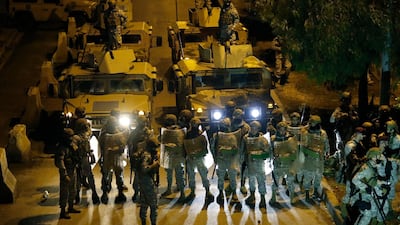
Lebanese soldiers prepare to move protesters from streets, during a protest against deteriorating living conditions and strict coronavirus lockdown measures, in Tripoli, Lebanon. AP Photo -

Lebanese soldiers take their position as they clash with protesters, during a protest against deteriorating living conditions and strict coronavirus lockdown measures, in Tripoli, Lebanon. AP Photo -
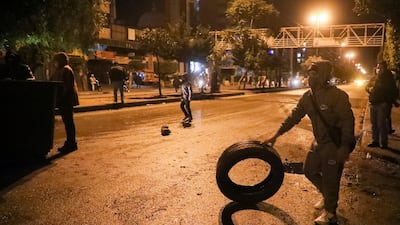
A demonstrator holds a tire during a protest against the lockdown and worsening economic conditions, amid the spread of the coronavirus disease (COVID-19), in Tripoli, Lebanon. Reuters -
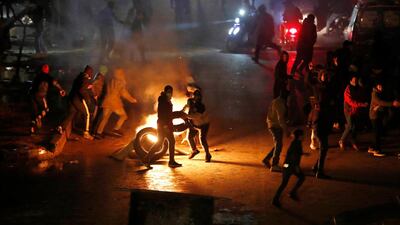
Protesters burn tires to block the road in front of Lebanese soldiers, during a protest against deteriorating living conditions and strict coronavirus lockdown measures, in Tripoli, Lebanon. AP Photo -
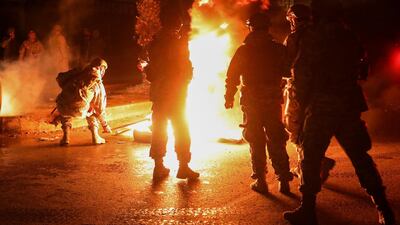
Members of the Lebanese army stand near burning tires during a protest against the lockdown and worsening economic conditions, amid the spread of the coronavirus disease (COVID-19), in Tripoli, Lebanon. Reuters -
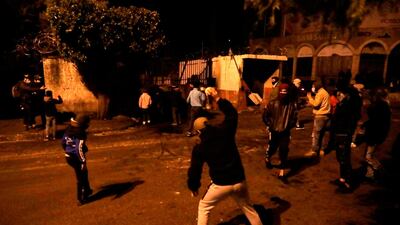
Lebanese anti-government protesters hurl rocks at the municipality building in the northern city of Tripoli. AFP -
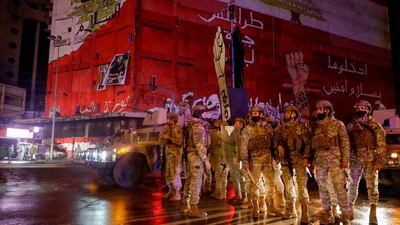
Lebanese security forces stand guard in Al-Nour square in the northern city of Tripoli. More than 400 people have been wounded in northern Lebanon this week in clashes between security forces and protesters angered by a coronavirus lockdown they say is starving them. AFP -

Lebanese security forces dire tear-gas during clashes with anti-government protesters in the northern city of Tripoli. AFP -

A woman crosses a street with her child during clashes between security forces and anti-government protesters in the northern city of Tripoli. AFP -
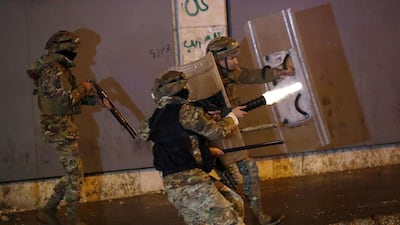
A Lebanese soldier fires tear gas, as they clash with protesters during a protest against deteriorating living conditions and strict coronavirus lockdown measures, in Tripoli, Lebanon. AP Photo


“I lost many of my students simply because they cannot afford to stop training for six months,” Mr Tabet says, recalling how he rushed outside the gym along with around 20 of his students in the seconds that led to the major explosion after hearing what he said sounded like fighter jets.
His tragedy is not unique. Videographer Abdullah El Hajj, 54, also lost his right eye during the demonstrations.
He recalls facing the security agent as he raised his weapon and asking, “What threat do I pose to you,” before being shot in the eye.
Since then, Mr Abdullah, a father of two, has lost his job. But like the thousands of victims who had sustained injuries in the blast or during the demonstrations that followed, he is still awaiting justice.
His lawyer Ayman Raad said the security forces were still investigating the identities of those responsible for the crackdown that left over 700 people injured and at least 153 in need of hospitalisation, according to Human Rights Watch.
“Those in power don’t care for citizens. The ruling class only cares for its interests,” said Mr Raad.
Mr Abdullah has been a vocal critic of the ruling class and an active member of the October 17 movement that spawned nationwide demonstrations demanding radical reforms and an end to decades of corruption that has plunged the country into financial and economic crisis.
Despite the explosion, the movement has since lost momentum, gradually fading following the Covid-19 pandemic.
Ali Solh, a 30-year-old salesman who joined a support group created by Abdallah to help victims of the blast, however, remains hopeful.
“We are inspired by your strength and courage,” Mr Solh, who also lost an eye that day, told Mr Abdallah as the latter drove to pursue his months-long treatment at the American University of Beirut Medical Center.

