


Lebanon's public administration workers started a two-week strike on Monday, calling for urgent action to address their devalued salaries and demand a transport allowance increase.
Public sector employees are paid in the local currency, the Lebanese pound, which has lost about 98 per cent of its value since an economic meltdown began in 2019, resulting in the steep depreciation of salaries.
“The whole of public administration in Lebanon is closed,” Ibrahim Nahal, member of the League of Public Administration Employees told The National.
Workers are demanding an increase in salaries to “live in dignity”, a fair and just transportation stipend and the return of healthcare coverage and social benefits so public workers “don't have to die at the entrance of hospitals”, Mr Nahal said.
The pound's value against the dollar continues to fall amid rapid depletion of Lebanon's central bank reserves.
“The general administration employees are left with only two choices: either death or leaving their job,” the league said.
“Why? The general administration is the pillar and backbone of the public sector, the fundamental corner of the welfare state, the safe haven for citizens.”
In April, Lebanon’s caretaker cabinet raised public sector salaries and the nation's minimum wage in a bid to address growing discontent.
The salaries of public sector workers were increased fourfold, but the increase was capped at 50 million Lebanese pounds (approximately $530) a month.
The cabinet also took steps to address the transportation issue, with costs often exceeding salaries.
The measures were considered disappointing as they were not pegged to the dollar. A volatile exchange rate makes any increase in the local currency almost worthless.
-

Retired members of the Lebanese security forces and other protesters scuffle with Lebanese soldiers during a protest in Beirut demanding better pay and living conditions. AP -

A Lebanese demonstrator waves his country's national flag. AFP -
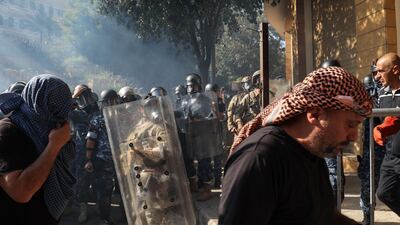
Lebanese security forces fire tear gas at protesters. AFP -
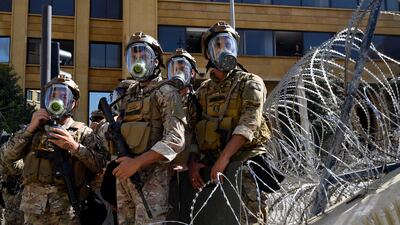
Lebanese Army soldiers stand guard. EPA -
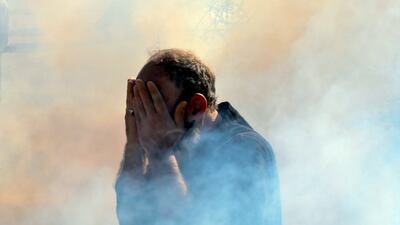
A retired member of the Lebanese security forces reacts as riot police fire gas canisters. EPA -
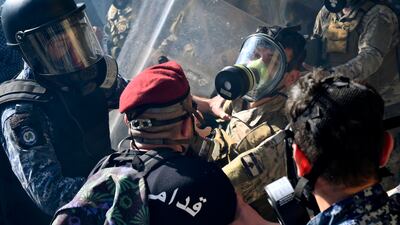
Retired members of the lebanese security forces clash with army soldiers. EPA -
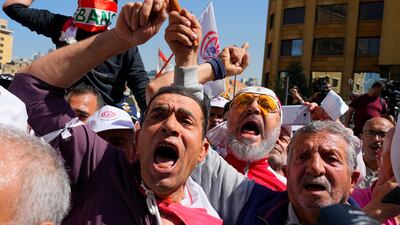
Protesters shout slogans. AP Photo -

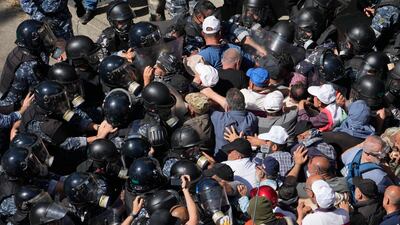
Lebanese Army soldiers scuffle with retired members of the Lebanese security forces and other protesters. AP Photo -

A retired member of the Lebanese security forces holds a fired tear gas canister. AP Photo -
Lebanon's Parliament voted to postpone municipal elections that had been planned for May 2023 by up to a year. AP Photo -

Protesters run away from tear gas. AP Photo -
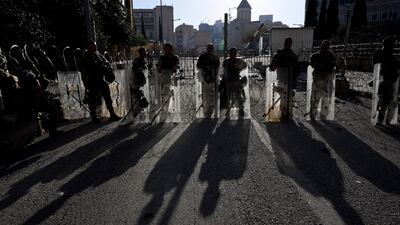
Lebanese Army soldiers stand guard. EPA


“This is not even enough to cover transportation fees, let alone pay for the food and medication,” Mr Nahal said of the cabinet's measures.
“The actions of the state have left us with no choice but to go on strike.”
The government “exploited” workers “acquiring our efforts, hard work, expertise and qualifications at the lowest prices”, he said.
“It is no longer a secret that the main reason is not the lack of funding, as there are many sources of funding, but they are wasted and misappropriated,” he said.
“It seems that the government is reluctant to reclaim them.”
Protests by civil servants and retired soldiers have become frequent in the country due to worsening living conditions.
Lebanon has experienced month-long strikes, including in public schools, which are facing intermittent closures.
The walkouts have further strained public institutions already reeling from a three-year crisis.
State power only provides a few hours of electricity per day and government hospitals are grappling with shortages of essential medicines.

