

Iran will send fuel to energy-deprived Lebanon within a week or two to help power the country's ailing power plants, Tehran's embassy in Beirut said.
The Lebanese Energy Ministry said they were unaware whether a deal had been agreed upon, but said “any gift from anywhere is welcome”.
A Lebanese delegation is in Iran to discuss enhanced energy cooperation.
Iranian officials told the Lebanese delegation on Tuesday that Iran could offer 600,000 tonnes of fuel over five months, Reuters reported.
Lebanon and Iran are also discussing the construction of new power plants and upgrading electrical power networks, the embassy told Al Manar.
If such a fuel deal would go through, it would be Iran's first directly to the Lebanese state after it previously sent some to its ally Hezbollah, the Lebanese armed group and political party that holds significant sway in Lebanon.
-

Mohammad Chehab sits under a solar panel he installed at his home in the coastal town of Khaldeh, south of Beirut. Reuters -
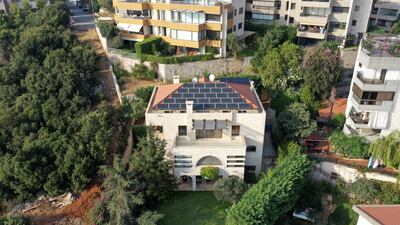
With the fuel crisis worsening across Lebanon, solar panels are becoming a common sight, as seen atop a building in the town of Sehayleh, north of Beirut. Reuters -
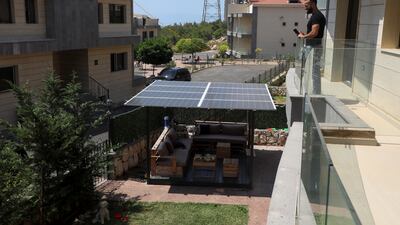
Mohammad Chehab, of the coastal town of Khaldeh, has installed a solar panel in his house to ensure uninterrupted electricity. Reuters -
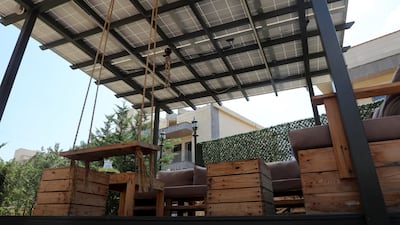
More and more Lebanese, such as Mohammad Chehab from the town of Khaldeh, are resorting to alternative source of power such as solar energy. Reuters -

Mohammad Chehab is among the many in Lebanon exploring alternative solutions to fuel shortages. Reuters -
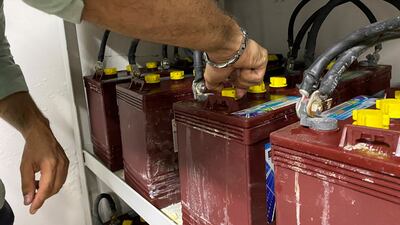
Elias Daou, operation manager at Mectric Engineers, checks batteries linked to solar panels, in the Lebanese town of Sehayleh, 25 kilometres north of Beirut. Reuters -

A solar panel installed on a building in the Lebanese coastal town of Khaldeh, south of Beirut. Reuters


Lebanon has struggled with power cuts for years, a problem made far worse by the 2019 economic collapse. There are widespread fuel shortages.
State electricity provides only one or two hours of power a day — if that — forcing those who can afford it to turn to expensive private generators.
Since the financial crisis first emerged, there have also been countrywide shortages in basic supplies including bread, water and medicines.
Earlier this year, Lebanon signed a deal under which it would import gas from Egypt via Syria, adding about four hours a day to the Lebanese power grid.
But the agreement is awaiting the approval of the US to ensure it does not violate sanctions on Syria, as well as promised financial backing from the World Bank.

