
Follow live Lebanese election coverage here
Partial results announced by Lebanon's Interior Ministry from Sunday's parliamentary elections suggest allies of Hezbollah have lost seats, with the Christian Lebanese Forces and independent candidates expected to make up unprecedented ground.
The Lebanese Forces, long-time critics of Hezbollah and Iran’s influence in Lebanon, have gained 10 confirmed seats so far, mostly at the expense of their Christian rival, the Free Patriotic Movement (FPM).
Lebanese Forces spokesman Marc Saad told The National that he expects the party to win at least 20 seats. In 2018, the party secured 15 seats.
If confirmed, that would mean the Lebanese Forces will have overtaken the Hezbollah-allied FPM as the biggest Christian party in the 128-seat Lebanese Parliament.
-

An electoral worker sits next to ballot boxes, at the Justice Palace, in Jdeideh. Reuters -

A soldier stands guard as ballots are counted at the Justice Palace. Reuters -
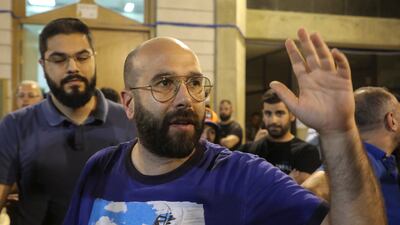
Jad Ghosn, an opposition candidate, gestures as people wait for the announcement of official election results, in Jdeideh. Reuters -
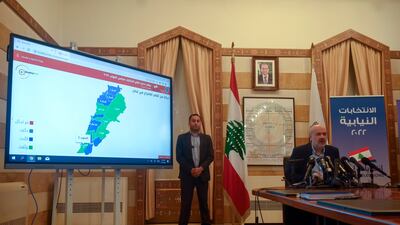
Lebanese Interior Minister Bassam Mawlawi announces the final results for some districts. EPA -

Opposition candidate Yassin Yassin gestures as he is greeted by supporters in Jeb Jennin, West Bekaa. Reuters -
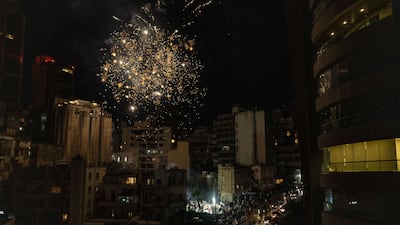
Supporters of the Lebanese Forces take to the streets during parliamentary elections in the Ashrafieh district of Beirut. Bloomberg -
Lebanon headed to the polls with its economy in the grip of hyperinflation. Bloomberg -
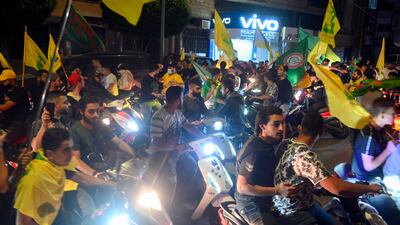
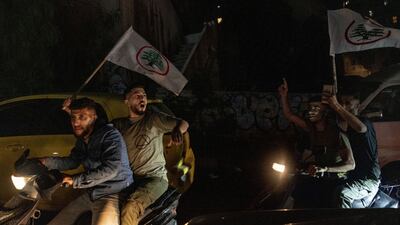
Lebanese youths supporting Hezbollah and Amal movement wave their party flags after parliamentary elections in a suburb of Beirut. EPA -
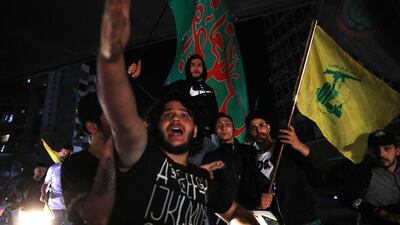
Supporters of Lebanon's Shiite groups Hezbollah and Amal lift their flags during a motorbike rally after voting. AFP -

Children swim in an inflatable pool that supporters of former prime minister Saad Hariri installed to illustrate their intention to boycott parliamentary elections in Beirut, Lebanon. AP Photo -
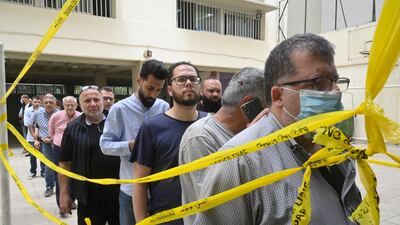
Voters queue to place their vote in parliamentary elections in Beirut, Lebanon. EPA -

Nabih Berri, Speaker of the Lebanese Parliament, stands in a polling booth to vote in Tebnin. Reuters -

Voters register at a polling station in Beirut. Bloomberg -
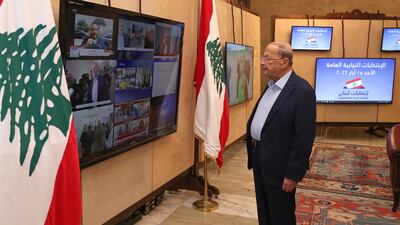
Lebanese President Michel Aoun follows the parliamentary elections on screens from the Presidential Palace in Beirut. AP -

A Lebanese woman shows her inked finger after she cast her vote at a polling station in Beirut. AP -
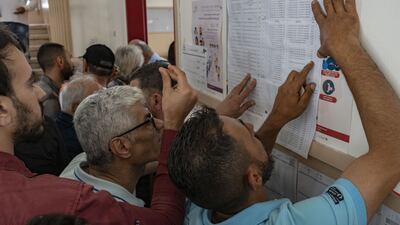
Voters look at a list of candidates at a polling station in Beirut. Bloomberg -

Lebanese policemen help a voter into a polling station in Beirut. AP -
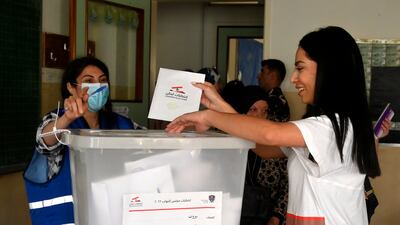
A Lebanese voter casts her ballot paper in Beirut. EPA -
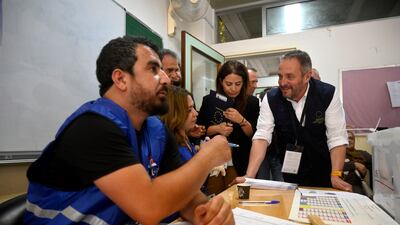
Gyorgy Holvenyi (R), chief observer of the European Union election observation mission, visits a polling station in Beirut. EPA -
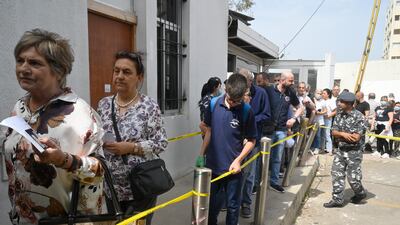
Lebanese people wait to vote during parliamentary elections in the capital city. EPA -
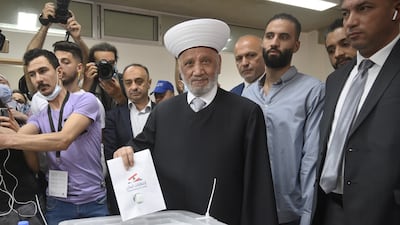
Sheikh Abdul Latif Derian, Grand Mufti of Lebanon, casts his ballot paper during parliamentary elections in Beirut. EPA -
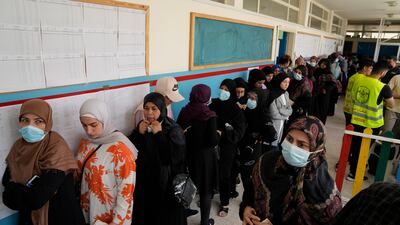
People queue to cast their votes in the Lebanese capital. AP -
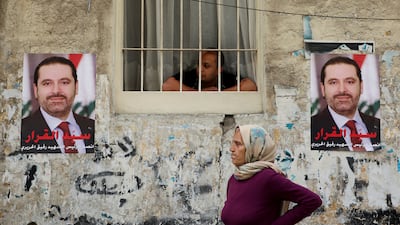
Posters in Al Tariq Al Jadida, Beirut, depict Lebanon’s former prime minister Saad Hariri. Reuters -
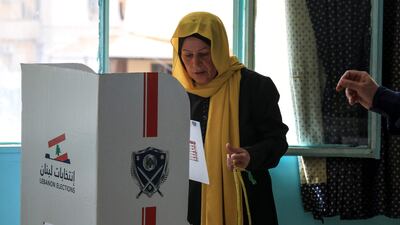
A woman prepares her ballot at a polling station in a southern suburb of Beirut. AFP -
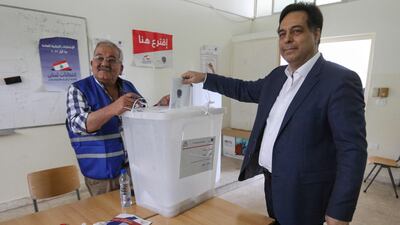
Former prime minister Hassan Diab, who succeeded Saad Hariri, casts his ballot in Beirut. AFP -

A voter checks lists for the parliamentary election at a polling station in the Lebanese capital Beirut. AFP -
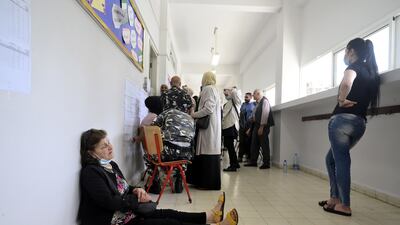
A woman waits to vote in Beirut. EPA -
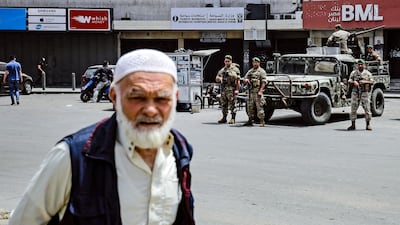
Security forces stand guard at Nur Square on the southern entrance of the northern Lebanese port city Tripoli. AFP -
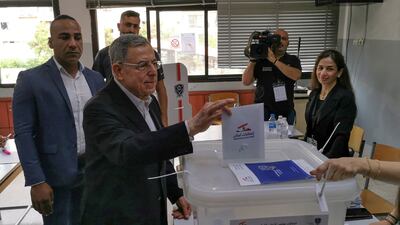
Former Lebanese prime minister Fouad Siniora casts his vote at a polling station during the parliamentary election, in Sidon, southern Lebanon. Reuters -
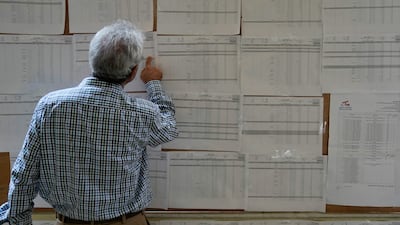
A man check voters' lists in the capital Beirut. AP -
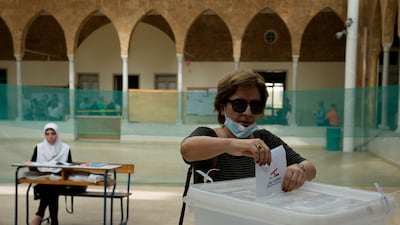
A woman votes in Lebanon's parliamentary elections in Beirut. AP -
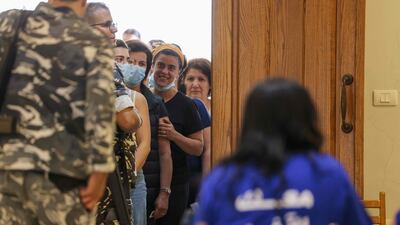
Police check the ID of voters outside a polling station near the Lebanese coastal city of Byblos (Jbeil), north of Beirut. AFP -
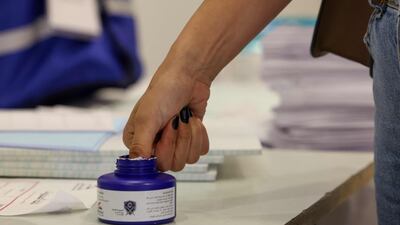
A voter dips her finger in ink after casting her ballot in the parliamentary election at a polling station near Byblos. AFP -
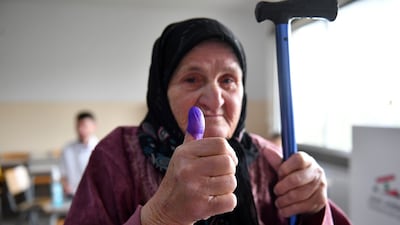
A Lebanese woman shows her ink-marked thumb after voting in Shmustar, Bekaa valley. EPA -
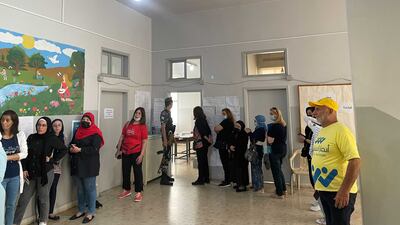
People queueing to vote at Ras El Nabeh Public School for Girls. Fatima Al Mahmoud/ The National


The FPM has taken at least 16 seats, down from 18 in 2018, Sayed Younes, head of the party's electoral machine, told Reuters. Monday's partial results indicate that they have obtained at least seven seats.
While he has urged supporters to wait for final results, Gebran Bassil, head of the FPM, has already blamed Israel and the US for undermining his campaign and accused the Lebanese Forces of buying votes.
The FPM has been the biggest Christian party in Parliament since its founder and the father-in-law of Mr Bassil, President Michel Aoun, returned from exile in France in 2005.
Simon Abi Ramia, an FPM member of Parliament who was re-elected in Mount Lebanon, told The National that “maybe because we have the president of the republic and were the bigger bloc, people are putting the responsibility upon us because of the terrible economic situation and their suffering”.
Mr Abi Ramia was referring to Lebanon's economic meltdown that started in 2019.
The UN's special rapporteur on extreme poverty and human rights recently blasted Lebanon's ruling elite for causing the crisis and doing little to find solutions.
“Political leadership is completely out of touch with reality, including with the desperation they’ve created by destroying people’s lives,” rapporteur Olivier De Schutter said last week.
Election turnout was only 41 per cent — eight points lower than in 2018 — suggesting that the traditional sectarian parties that have shared power for decades failed to mobilise their supporters.
First opposition MP to be elected in south Lebanon
Elsewhere, eye surgeon Elias Jradeh, 55, is set to become the first opposition MP elected in south Lebanon, taking the Orthodox Christian seat in a region dominated by Hezbollah and its ally Amal.
Mr Jradeh was running against Asaad Hardan, a Hezbollah ally and head of the Syrian Social Nationalist Party who has been in Parliament since 1992. His supporters celebrated at his home on Sunday evening, chanting slogans such as “revolution” and “Hasbaya, rise up”, in reference to Mr Jradeh's home region.
The chants echoed slogans used during months-long nationwide protests in 2019 triggered by the country's economic woes.
The campaign manager of Firas Hamdan, a Druze candidate on Mr Jradeh's opposition list, told The National that they also expected a win but were waiting for official results to be announced for their district.
Monday's results confirmed that several prominent Parliament members had lost their seats, including deputy speaker Elie Ferzli, who is backed by Hezbollah. He was first elected in 1992, when Lebanon held its first parliamentary election after the 1975-1990 civil war.
-

Druze opposition candidate Firas Hamdan greets members of the sect in a hall in the village of Kfeir in South Lebanon. All Photos: Oliver Marsden for The National -
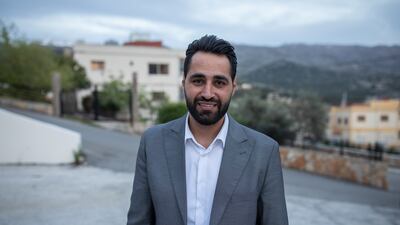
Mr Hamdan is running for the first time in parliamentary elections scheduled for next month. -
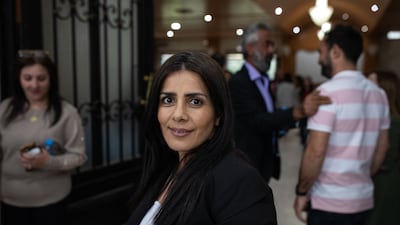
Hweida Al Halabi, who works in a medical laboratory, stands outside the hall in Kfeir after a meeting with Mr Hamdan. -
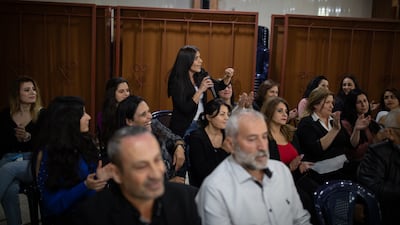
Ms Al Halabi is applauded as she poses a question to Mr Hamdan. -
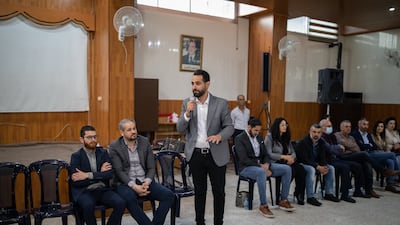
Mr Hamdan answers questions from the audience. -
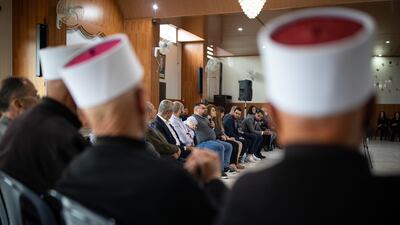
This is the first year that such a meeting has taken place in the area before an election. -

Men of the Druze sect gather at the hall in the village of Kfeir. -
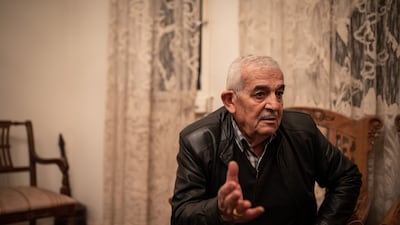
Retired teacher and member of the Druze Progressive Socialist Party Faysal Naoufal explains why he will be voting for the opposition in this year’s elections.


Talal Arslan, a Hezbollah-backed Druze politician who heads the Lebanese Democratic Party, also lost the seat he has held for 30 years to one of the new opposition candidates, a Hezbollah official and the newcomer's campaign manager told Reuters, citing preliminary results.
Media reports indicate that Mr Arslan was defeated by University professor Marc Daou, member of newly founded nonsectarian political party Takaddom.
Despite the setback, Hezbollah and Amal could well retain all 27 Shiite Parliament seats.
Sunday's parliamentary election was under intense scrutiny both in Lebanon and abroad. It came after the 2019 protests against Lebanon’s ruling classes, the economic collapse of the same year and the August 2020 Beirut port blast that killed more than 200 people.
Saad Hariri boycotts vote
Missing from this year's elections was two-time prime minister Saad Hariri and his Future Movement, long seen as a bastion of the Sunni community in Lebanon.
Mr Hariri’s withdrawal of himself and his party from the election led to some supporters abstaining and holding a pool party to publicise their abstention. A video of people playing in the pool went viral on Twitter.
Mr Hariri tweeted on Monday that his decision to boycott Sunday’s parliamentary election was “correct”. The withdrawal, however, left a void in the Sunni-dominated Tripoli, Lebanon’s second-largest city.
The former prime minister withdrew from politics in late January, blaming political compromise for his failures, including accepting the election of Mr Aoun, who is allied with Hezbollah.
Preliminary results for the North ll region show that the two front-runners were lists led by Dignity Movement leader Faisal Karami — although it appeared Mr Karami himself could miss out on a seat — and former Hariri rival and ex-Internal Security Forces chief Ashraf Rifi.
“I’m feeling a lot of responsibility on a national level and I’m hoping I’m at the same level of this responsibility,” Mr Rifi told The National, as he appeared to be closing in on victory on Sunday night.
“The first priority is to relieve Lebanon from the domination of Iran and Hezbollah. The second is to provide the youth in Tripoli with jobs and better opportunities.”
But the former security chief was forced to take to the streets to calm some of his supporters as they fired automatic weapons into the air in celebration.

