Dr Tedros Adhanom Ghebreyesus, director general of the World Health Organisation. EPA

‘No country in a crisis like Lebanon,’ says WHO’s Tedros in Beirut


Ahmed Maher
  • English
  • Arabic

Lebanon's economic meltdown and other crises are causing an “alarming brain drain” and shortages of supplies that mean hospitals are operating at 50 per cent of their capacity, World Health Organisation head Dr Tedros Adhanom Ghebreyesus said on Sunday.

After a visit to Lebanon to see the "dire" situation, he said the former Middle Eastern medical centre faced the problem of doctors, nurses and medical staff moving overseas and was short on essential resources and medicine.

Dr Tedros said the country of 6 million, including more than 1 million Syrian refugees, needed emergency and development support.

“A brain drain is occurring at an alarming speed," he said. "Almost 40 per cent of skilled medical doctors and almost 30 per cent of registered nurses have already left the country either permanently or temporarily."

Hospitals have been warning for months that a shortage of staff would exacerbate the crisis already ravaging the medical sector.

“Just today, we were told that two open-heart surgeries were cancelled because of limited fuel at the facility where they were planned to take place," Dr Tedros said.

"Basic and life-saving medicines are in short supply, with restrictions in foreign currency severely limiting importation of medicines and medical goods."

For months, pharmacy shelves have been bare, hit by panic buying, hoarding or price gouging and a lack of imports.

Banks have suspended international payments, the value of the national currency dropped more than 90 per cent and the government has run low on foreign reserves for imports.

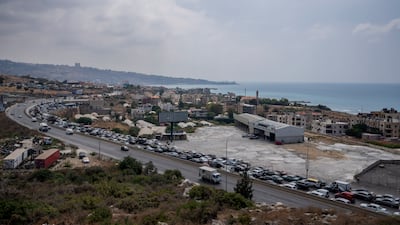
  • A crowded petrol station on the main road that links Beirut to south Lebanon. AP
    A crowded petrol station on the main road that links Beirut to south Lebanon. AP
  • Drivers come from every direction to fill their tanks with fuel. AP
    Drivers come from every direction to fill their tanks with fuel. AP
  • Chronic fuel shortages have plagued the country in recent months, with long queues at petrol stations a common sight. AP
    Chronic fuel shortages have plagued the country in recent months, with long queues at petrol stations a common sight. AP
  • Last month, central bank governor Riad Salameh announced that fuel imports would no longer be subsidised. AP
    Last month, central bank governor Riad Salameh announced that fuel imports would no longer be subsidised. AP
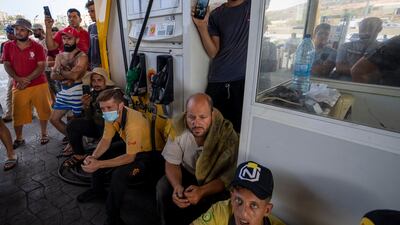
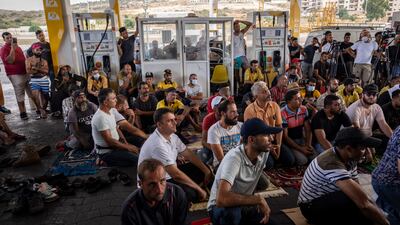
  • Worshippers listen as cleric Ali Al Hussein delivers a sermon during Friday prayers at a fuel station to protest against the severe shortages. AP
    Worshippers listen as cleric Ali Al Hussein delivers a sermon during Friday prayers at a fuel station to protest against the severe shortages. AP
  • People listen to Al Hussein's sermon in the coastal town of Jiyeh, south of Beirut. AP
    People listen to Al Hussein's sermon in the coastal town of Jiyeh, south of Beirut. AP

On Friday, Dr Tedros visited a rebuilt WHO warehouse in Karantina, an area of Beirut devastated by a huge port explosion last year.

The warehouse, which stored drugs and medical supplies, was destroyed in the blast and rebuilt with donor assistance.

At least 214 people were killed and about 6,500 others wounded on August 4 last year when a shipment of ammonium nitrate carelessly stocked at the Beirut port for years ignited and caused the blast.

Dr Tedros said the Lebanese people were not only struggling with the financial and political crises but also with the impact of the port explosion and the coronavirus pandemic.

“This is heavy. This is very heavy,” he said. “I don’t know if there is any country in such a situation, which is really dire.”

Lebanon has been without a fully functioning government for more than a year. A new government was named last week.

It pledged to make a priority of talks with the International Monetary Fund, which could open doors to assistance from donors.


'Cheb%20Khaled'
%3Cp%3E%3Cstrong%3EArtist%3A%20%3C%2Fstrong%3EKhaled%3Cbr%3E%3Cstrong%3ELabel%3A%20%3C%2Fstrong%3EBelieve%3Cbr%3E%3Cstrong%3ERating%3A%3C%2Fstrong%3E%204%2F5%3C%2Fp%3E%0A
Marathon results

Men:

 1. Titus Ekiru(KEN) 2:06:13 

2. Alphonce Simbu(TAN) 2:07:50 

3. Reuben Kipyego(KEN) 2:08:25 

4. Abel Kirui(KEN) 2:08:46 

5. Felix Kemutai(KEN) 2:10:48  

Women:

1. Judith Korir(KEN) 2:22:30 

2. Eunice Chumba(BHR) 2:26:01 

3. Immaculate Chemutai(UGA) 2:28:30 

4. Abebech Bekele(ETH) 2:29:43 

5. Aleksandra Morozova(RUS) 2:33:01  

BUNDESLIGA FIXTURES

Friday (UAE kick-off times)

Cologne v Hoffenheim (11.30pm)

Saturday

Hertha Berlin v RB Leipzig (6.30pm)

Schalke v Fortuna Dusseldof (6.30pm)

Mainz v Union Berlin (6.30pm)

Paderborn v Augsburg (6.30pm)

Bayern Munich v Borussia Dortmund (9.30pm)

Sunday

Borussia Monchengladbach v Werder Bremen (4.30pm)

Wolfsburg v Bayer Leverkusen (6.30pm)

SC Freiburg v Eintracht Frankfurt (9on)

Ten tax points to be aware of in 2026

1. Domestic VAT refund amendments: request your refund within five years

If a business does not apply for the refund on time, they lose their credit.

2. E-invoicing in the UAE

Businesses should continue preparing for the implementation of e-invoicing in the UAE, with 2026 a preparation and transition period ahead of phased mandatory adoption. 

3. More tax audits

Tax authorities are increasingly using data already available across multiple filings to identify audit risks. 

4. More beneficial VAT and excise tax penalty regime

Tax disputes are expected to become more frequent and more structured, with clearer administrative objection and appeal processes. The UAE has adopted a new penalty regime for VAT and excise disputes, which now mirrors the penalty regime for corporate tax.

5. Greater emphasis on statutory audit

There is a greater need for the accuracy of financial statements. The International Financial Reporting Standards standards need to be strictly adhered to and, as a result, the quality of the audits will need to increase.

6. Further transfer pricing enforcement

Transfer pricing enforcement, which refers to the practice of establishing prices for internal transactions between related entities, is expected to broaden in scope. The UAE will shortly open the possibility to negotiate advance pricing agreements, or essentially rulings for transfer pricing purposes. 

7. Limited time periods for audits

Recent amendments also introduce a default five-year limitation period for tax audits and assessments, subject to specific statutory exceptions. While the standard audit and assessment period is five years, this may be extended to up to 15 years in cases involving fraud or tax evasion. 

8. Pillar 2 implementation 

Many multinational groups will begin to feel the practical effect of the Domestic Minimum Top-Up Tax (DMTT), the UAE's implementation of the OECD’s global minimum tax under Pillar 2. While the rules apply for financial years starting on or after January 1, 2025, it is 2026 that marks the transition to an operational phase.

9. Reduced compliance obligations for imported goods and services

Businesses that apply the reverse-charge mechanism for VAT purposes in the UAE may benefit from reduced compliance obligations. 

10. Substance and CbC reporting focus

Tax authorities are expected to continue strengthening the enforcement of economic substance and Country-by-Country (CbC) reporting frameworks. In the UAE, these regimes are increasingly being used as risk-assessment tools, providing tax authorities with a comprehensive view of multinational groups’ global footprints and enabling them to assess whether profits are aligned with real economic activity. 

Contributed by Thomas Vanhee and Hend Rashwan, Aurifer

if you go
%20Ramez%20Gab%20Min%20El%20Akher
%3Cp%3E%3Cstrong%3ECreator%3A%3C%2Fstrong%3E%20Ramez%20Galal%3C%2Fp%3E%0A%3Cp%3E%3Cstrong%3EStarring%3A%3C%2Fstrong%3E%20Ramez%20Galal%3C%2Fp%3E%0A%3Cp%3E%3Cstrong%3EStreaming%20on%3A%20%3C%2Fstrong%3EMBC%20Shahid%3C%2Fp%3E%0A%3Cp%3E%3Cstrong%3ERating%3A%20%3C%2Fstrong%3E2.5%2F5%3C%2Fp%3E%0A
The%C2%A0specs%20
%3Cp%3E%3Cstrong%3EEngine%3A%3C%2Fstrong%3E%204-cylinder%202.0L%20TSI%0D%3Cbr%3E%3Cstrong%3ETransmission%3A%3C%2Fstrong%3E%20Dual%20clutch%207-speed%0D%3Cbr%3E%3Cstrong%3EPower%3A%3C%2Fstrong%3E%20320HP%20%2F%20235kW%0D%3Cbr%3E%3Cstrong%3ETorque%3A%3C%2Fstrong%3E%20400Nm%0D%3Cbr%3E%3Cstrong%3EPrice%3A%20%3C%2Fstrong%3Efrom%20%2449%2C709%20%0D%3Cbr%3E%3Cstrong%3EOn%20sale%3A%3C%2Fstrong%3E%20now%3C%2Fp%3E%0A
The 12 breakaway clubs

England

Arsenal, Chelsea, Liverpool, Manchester City, Manchester United, Tottenham Hotspur

Italy
AC Milan, Inter Milan, Juventus

Spain
Atletico Madrid, Barcelona, Real Madrid

Company Profile:

Name: The Protein Bakeshop

Date of start: 2013

Founders: Rashi Chowdhary and Saad Umerani

Based: Dubai

Size, number of employees: 12

Funding/investors:  $400,000 (2018) 

Updated: September 19, 2021, 11:19 PM