

Sadrist bloc politicians in Iraq's Parliament resigned on Sunday after their leader, powerful Shiite cleric Moqtada Al Sadr, asked them to amid a prolonged stalemate over forming a government.
Mr Sadr's party was the biggest winner in the October general election, increasing the number of seats it held in Parliament to 73.
Political disagreements among parties have hindered the Parliament from electing a president and forming a government.
Mr Al Sadr's victory in the election had raised the possibility that he could sideline his Iranian-backed rivals who had dominated politics in Iraq for years.
"Sadr reached to the point that he accepted the bitter reality that it's nearly impossible to form a government away from the Iranian-backed groups," said Ali Moussawi, a former Shiite politician and a political researcher at Baghdad University.
Moqtada Al Sadr: from warlord to political leader - in pictures
-
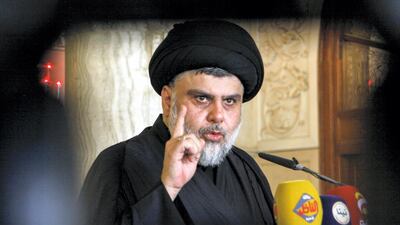
Iraqi Shiite cleric Moqtada Al Sadr delivering a speech to his supporters following Friday prayers, in September 2018. AFP -
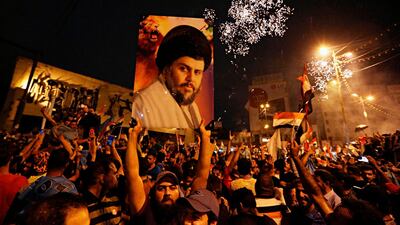
Supporters of Mr Al Sadr, who has gained popularity as a nationalist voice, campaigning against corruption. AP -
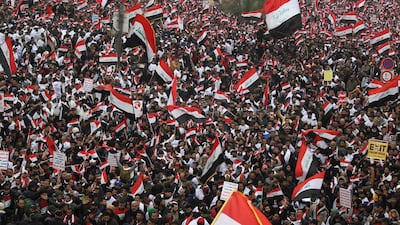
Thousands of Iraqis gathered in Baghdad on January 24, 2020, for a march called by the Shiite cleric Moqtada Al Sadr to demand that US troops leave Iraq. AFP -
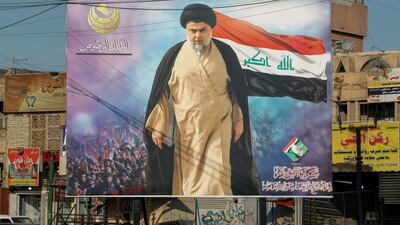
A poster of Mr Al Sadr in the Sadr City district of Baghdad. Reuters -
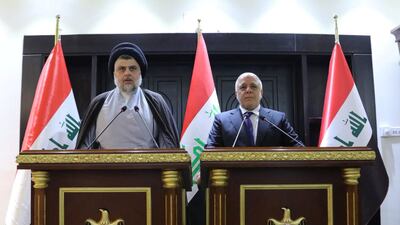
Mr Al Sadr, left, speaking at a news conference with Iraqi Prime Minister Haider Al Abadi, in Baghdad. Reuters -
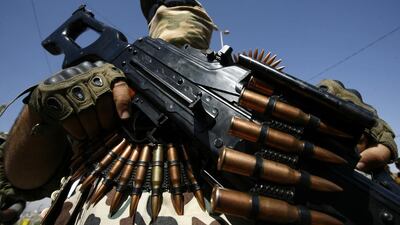
An Iraqi fighter from the Saraya AL Salam (Peace Brigades), a group formed by Mr Al Sadr, takes part in a parade in the central city of Kufa. AFP -
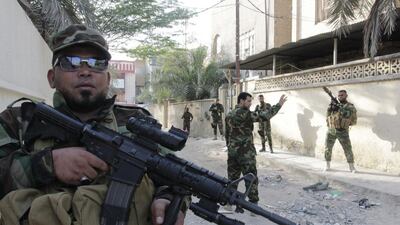
Mehdi Army fighters loyal to Shiite cleric Moqtada Al Sadr training in Basra in 2014, as Iraqi forces were massing north of Baghdad to strike back at Sunni Islamists. Reuters


Even though his withdrawal is a setback, Mr Al Sadr, whose supporters fought US occupation forces, still has firepower with hundreds of thousands of followers who can stage protests, Mr Moussawi said.
Mr Al Sadr, a populist who is a staunch opponent of Iran and the US, said in a handwritten statement that his request for politicians to resign was "a sacrifice from me for the country and the people to rid them of the unknown destiny".
Soon after, the parliamentary Speaker, Mohammed Al Halbousi, accepted the resignations, which was shown in a video on Iraq's state news agency Ina.

