

The Iraqi army says it has gained control of the northern Iraqi town of Sinjar following a military operation against a Yazidi militia in the town.
Sinjar, the population of which is largely made up of members of the Yazidi ethnic minority, was taken over by ISIS in 2014.
“We imposed security and law and opened all roads. There was no damage to civilian facilities, nor to civilians,” said Lt Gen Abdul Amir Al Shamari, the deputy commander of the Iraqi Joint Operations Command.

Since the town’s liberation from ISIS in November 2015, a series of armed groups have controlled the area.
At least one Iraqi soldier and 12 Yazidi fighters were killed in the operation, the Iraqi army said.
Militia control
The town made headlines when ISIS took over much of Iraq and Syria in 2014 and conducted a campaign of genocide against minority groups, with a particular focus on the Yazidis. The UN said ISIS killed at least 5,000 members of the minority group and forced Yazidi women into sexual slavery.
As ISIS consolidated control, Turkish-Kurdish separatists of the Kurdistan Workers' Party (PKK) helped to evacuate thousands of Yazidi civilians from the area.
-

Mourners carry the remains of 104 Yazidis killed by ISIS for burial in the northern Iraqi village of Kocho on February 6, 2021. Reuters -
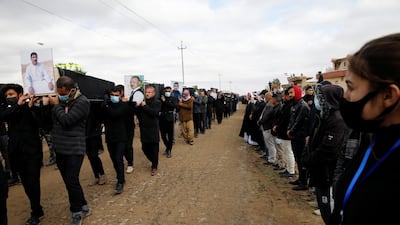
Members of the Yazidi religious minority gather in Kocho, northern Iraq for the burial of 104 members whose remains were identified after being exhumed from ISIS mass graves. Reuters -
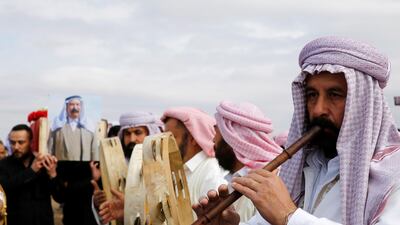
Yazidi musicians play during the funeral of ISIS victims in Kocho. Reuters -
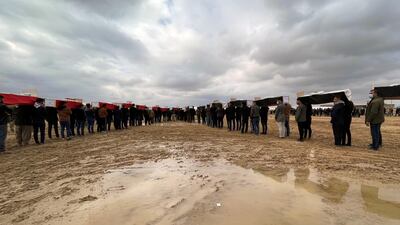
Mourners gather for the burial of the remains of 104 Yazidi victims of ISIS in Kocho, Iraq. REUTERS -
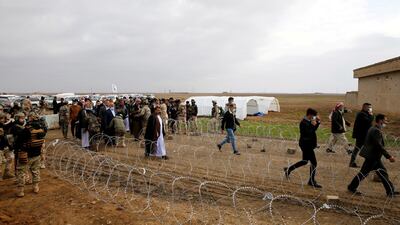
Security forces check attendees before the funeral. Reuters -

Mourners line the route as coffins holding the remains of Yazidis slain by ISIS are taken for burial. Reuters -

A member of the security forces stands guard in front of the graves dug for victims of ISIS in Kocho village in northern Iraq. Reuters -
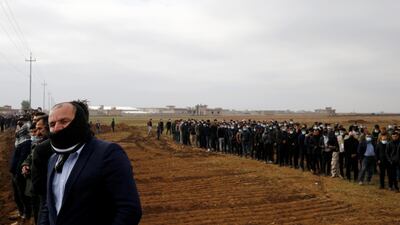
Mourners attend the funeral of 104 Yazidis from the village of Kocho who were killed by ISIS and buried in mass graves before their remains were exhumed and identified. Reuters


The PKK were assisting a Yazidi militia group from Sinjar, formed to fight against ISIS, The militia is known as the Sinjar Resistance Units, or YBS.
The Iraqi government and the semi-autonomous Kurdish Regional Government signed an agreement with UN oversight in October 2020 to remove militias from the town and form a state-sanctioned local defence force. But militias have remained in the area.
Since ISIS was driven out, Turkish armed forces have fought against PKK fighters and attacked the YBS in Sinjar.
This has brought both groups into opposition with the powerful Kurdish Democratic Party (KDP), which is aligned with Turkey, and the Iraqi government, which has been trying to control armed groups in the area.
“We strongly support the operations of the Iraqi army to extend the state's control over the Sinjar district against the terrorist groups of the intrusive Turkish Kurdistan Workers' Party, which took the district and its Yazidi residents hostage,” Hoshyar Zebari, a veteran KDP politician, said on Twitter.
“The Sinjar Agreement must be implemented to normalise the situation, local administration and the return of the displaced,” he said, referring to the October 2020 deal.
Meanwhile, the Iraqi government, led by Prime Minister Mustafa Al Kadhimi, who has remained in power amid a stalled process to form a new government, has tried to push back against Iran-backed militias in the Popular Mobilisation Forces (PMF).
The PMF are a collection of militias linked to Iran-backed political parties that are opposed to Mr Al Kadhimi and the KDP.
The US said in its latest assessment of counter-terrorism operations in Iraq that some of the Iran-backed groups, which have attacked Kurdish oil infrastructure and have been angered by Turkish incursions, are co-operating with the PKK.
Some PMF groups “continue to co-ordinate with the Kurdistan Workers’ Party, a US-designated foreign terrorist organisation, in response to Turkish air and UAV (drone) strikes on PKK positions", the report said.

