

On a cracked dry spot in Iraq’s historic marshlands, Raheem Noor Dawood watched helplessly as his water buffaloes fell sick and died.
“We went through tough years before but the drought and the high temperature that we have seen this year were unparalleled,” Mr Dawood, 57, told The National.
A few years ago, Mr Dawood enjoyed a stable life.
His 35-member extended family had settled in an area where freshwater was abundant for their buffaloes — the main source of livelihood for Marshland Arabs — as well as fish and birds.
“But the drought this year has turned our life upside down,” Mr Dawood said. “We have been moving from one place to another seeking fresh water and grass for our cattle.”
Iraq is facing its worst environmental crisis, with acute water shortages and climate change affecting food security and the daily life of Iraqis, adding to the nation’s endemic woes.
-
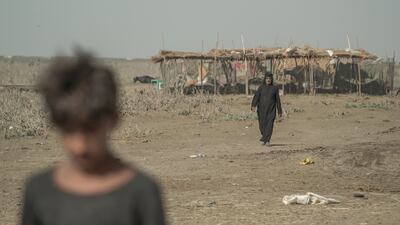
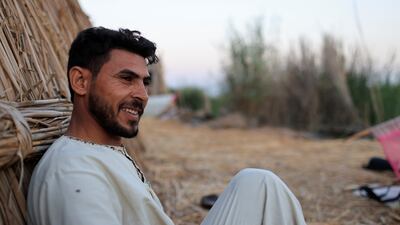
Raheem Noor Dawood and his son at home in the Chabayech Marshes in southern Iraq. Haider Husseini for The National -
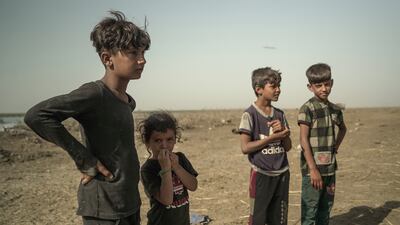
Mr Dawood's children and grandchildren stand in the oasis in the middle of the desert. Haider Husseini for The National -
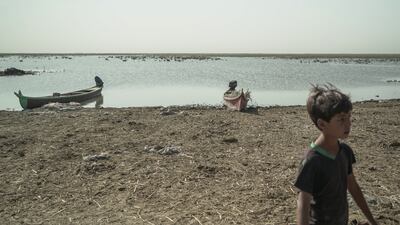
Drinking water is sourced from the centre of the marshes. Haider Husseini for The National -
Iraq's 2020-2021 rainfall season was the second driest in 40 years, the UN says. Sabah Thamer Al Baher is struggling to feed his animals as a result. Reuters -
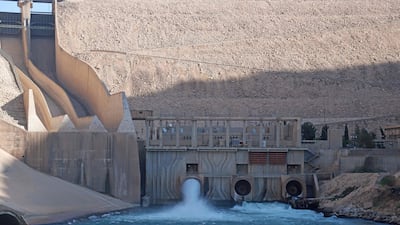
Darbandikhan Dam's water level has fallen by 7. 5 metres in only one year. AFP -
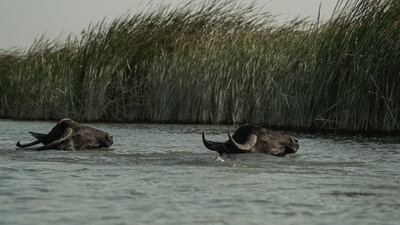
The Chabayech Marshes are a vital water source. Haider Husseini for The National -
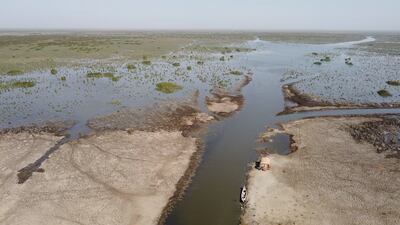
Low water levels are evident. Haider Husseini for The National -
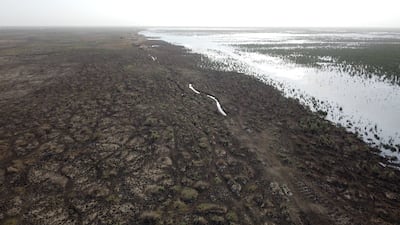
What was once a healthy water supply is shrinking fast. Haider Husseini for The National -
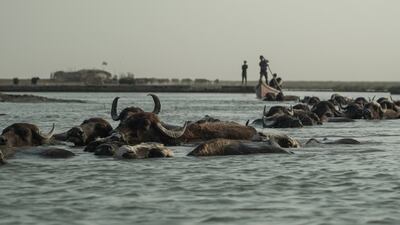
Water buffalo swim in the Chabayech Marshes. Haider Husseini for The National -
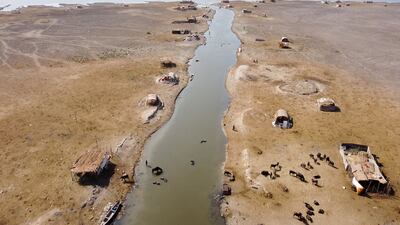
This aerial view shows the dry parts of the marshes. Haider Husseini for The National -
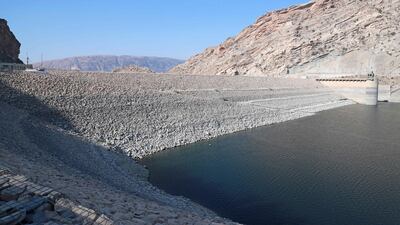
Iraqi officials have said the drastic drop in water levels is due to low rainfall and dam-building in neighbouring Iran. AFP -
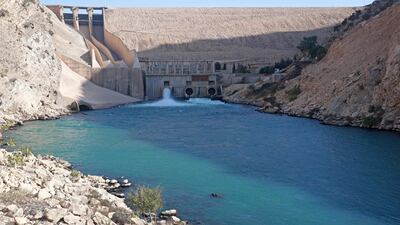
The Sirwan River begins in Iran, flowing to Darbandikhan Dam in north-eastern Iraq before going through the rural province of Diyala and joining the Tigris. AFP


The shock waves reverberate across the country, with farmers struggling with scarcity of water and rising salinity in soil and water as a result of consecutive heatwaves during the summer when temperatures hovered around 50°C for days.
The country is expected to record a 2ºC increase in temperatures and a further 9 per cent decline in rainfall by 2050, according to the Climate Change Knowledge Portal, a hub for climate-related information, data, and tools for the World Bank Group.
Vulnerable communities who rely on agriculture, livestock and fishing bear the brunt of the effects when there is no support from the government.
Iraq’s wetlands inhabitants are among the communities hardest hit.
Environmental activist Ayad Al Assadi blamed poor rainfall, soaring temperatures that have led to unprecedented levels of evaporation and upstream dams in Turkey and Iran for the drought in the marshlands.
Since the end of April, the wetlands in southern and south-eastern Iraq have lost 60 centimetres in depth and about 34 per cent of the total area, about 4,000 square kilometres, has been hit by the drought, affecting the biodiversity and livelihood, Mr Al Assadi said.
In some areas, the water contains an estimated 12,000 milligrams of total dissolved solids, a measure of salinity, affecting people and animals, he said. The acceptable level is 2,400 to 2,600.
“The drought has brought us sad and painful scenes,” he told The National, standing in a sprawling arid area in the central marshes in the town of Chebayesh, which was fully covered with water before April.
In 2016, the marshes, thought to be the biblical Garden of Eden, were named a Unesco world heritage.
For Mr Dawood, this is not the first time he has been affected by drought.
During the 1980-1988 war with Iran, Saddam Hussein drained the marshes to facilitate the movement of the military, and in the 1990s the regime initiated another campaign after accusing Marsh Arabs of supporting a 1991 Shiite uprising.
Then, Mr Dawood moved north with his cattle, outside the city of Kirkuk and to areas in central Iraq before heading back to his homeland, which was reflooded after the 2003 US-led invasion that toppled Hussein’s regime.
He has so far lost five of his buffaloes to the lack of grass and high salinity. He makes daily trips to the nearby city to buy potable water and fodder.
“This drought has knocked us down to zero,” he said, as a result, he plans to move to another place soon.
-
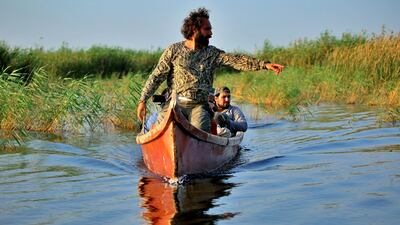
Iraqi environmentalist Omar Al Sheikhly leads a team into the marshes in search of endangered animals, in Chibayish. Without quick action, Mr Al Sheikhly fears the delicate underwater ecology of the Unesco-protected site will be disrupted. AP Photo -

A water buffalo walks on the remnants of an old military road built in the marshes by Saddam Hussein during the Iran-Iraq war, in Chibayish, Iraq. AP Photo -
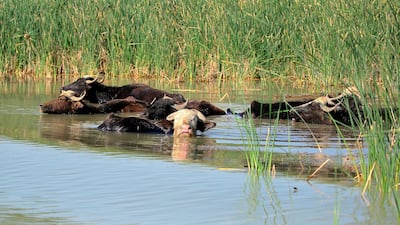
Water buffalos wade in the waters of the marshes after feeding on grass in Chibayish, Iraq. Conservationists issued a stark warning that without quick remedial action, the Unesco-protected site could wither away. AP Photo -
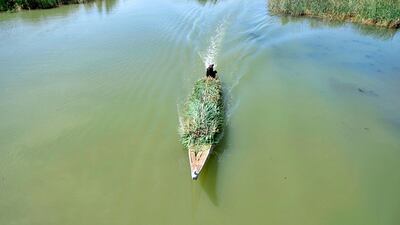
A member of Iraq's marsh communities collects reeds, which are typically sold or used locally in Chibayish, Iraq. Conservationists fear the Unesco-protected site could wither away without timely action. AP Photo -
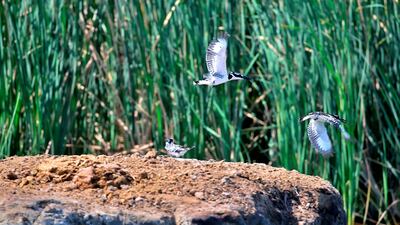
Pied Kingfisher birds take flight from a marshland where the number of many bird species are on the decline, in Chibayish, Iraq. AP Photo -

Pied Kingfisher birds rest on trees extending from the marshes in Chibayish, Iraq. AP Photo -
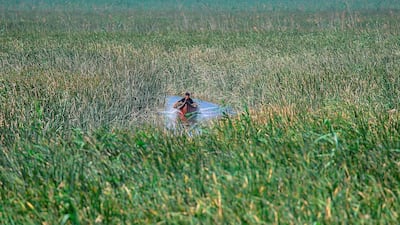
A man collects reeds from the wetlands that will later be sold or used for domestic use, in Chibayish, Iraq. AP Photo -
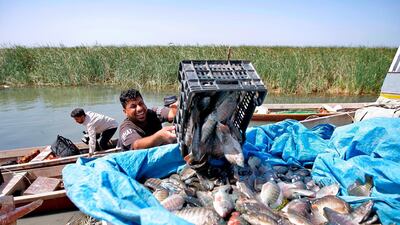
Fishermen unload the day's catch from the marshes on to vehicles in Chibayish, Iraq. AP Photo


The rainfall and water availability in Iraq’s 2020-2021 winter season are the second-lowest on record in 40 years, according to a report issued this month by the Food and Agriculture Organisation, the World Food Programme, the World Bank and the International Fund for Agricultural Development.
At the regional level, lack of rainfall exacerbated existing tensions over the management of water resources, the report says.
The report analysed the period between November 2020 and May 2021 to determine the impact of the Covid-19 pandemic on food security in Iraq, with a special section on water shortages.
“Water shortages have caused below normal vegetation development, and are affecting crop yields,” the report says, citing an FAO estimation that by the end of the season, wheat production will be 70 per cent lower and barley production negligible in volume.
The expected economic effects of the below-average cereal production in 2021, it adds, are: loss of income, increased feed prices of barley and other livestock feed products for livestock producers; and increased import requirements.
Abbas Hameed Hashim lost eight of his 20 buffaloes this summer.
“Without any government move to subsidise the fodder, all our cattle will be gone this winter,” Mr Hashim, 30, said.
“It’s highly likely the situation will get worse,” the father of nine said.

