

Twenty-six US senators have joined Ted Cruz in demanding President Biden allow them a voice in Vienna negotiations with Iran.
The letter said that if Mr Biden did not allow input, the senators would work to block US re-entry into a deal.
Mr Cruz, along with the 26 others, wrote: “We are committed to using the full range of options and leverage available to United States Senators to ensure that you meet those obligations and that the implementation of any agreement will be severely, if not terminally, hampered if you do not”.
The senators suggested Mr Biden was unwilling to present a nuclear agreement to the senate because he knew the agreement would not be robust enough.
“Furthermore, genuinely robust nuclear agreement with Iran would be compelling enough to secure assent from two-thirds of the Senate — and the only reason not to present it for a resolution of ratification is that it is too weak to pass muster,” they said.
Republican senators have long been against a nuclear deal with Iran and largely worked to block the original nuclear deal, the Joint Comprehensive Plan of Action (JCPOA) back in 2015.
At the time of the JCPOA's implementation, Ted Cruz and his Republican allies decried the nuclear agreement for not placing stringent controls on Iran's nuclear activities, saying it would eventually allow Iran to ramp up nuclear enrichment.
Mr Cruz and other senators pushed for president Donald Trump to exit the JCPOA in 2018, a decision regarded by many as a political and diplomatic blunder. Since the US exit from the deal, Iran ramped up its uranium enrichment, pushing well past the point it was at during the JCPOA.
-
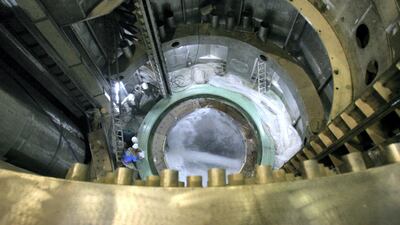
Russian contractors work at the Bushehr nuclear reactor site in 2007. The plant opened four years later. Bloomberg -
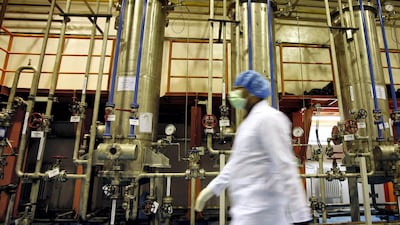
An Iranian technician at the International Atomic Energy Agency inspects the country's Isfahan plant in 2007. Tehran is no longer co-operating with the agency at nuclear sites across the country. EPA -

Workers wait to begin constructing a second reactor at the Bushehr nuclear power plant in 2019. AFP -
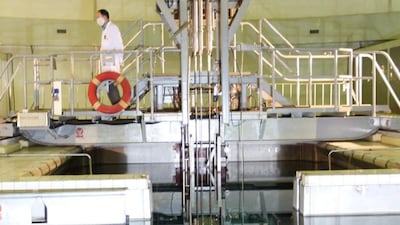
A metal-encased rod with 20 per cent enriched nuclear fuel is inserted into a reactor in Tehran in 2012. AFP -
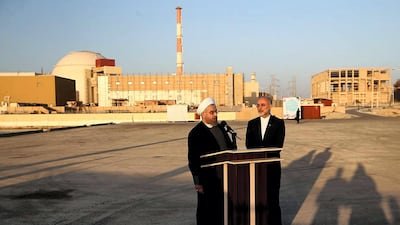
Fomer Iranian President Hassan Rouhani and the country's Atomic Energy Organisation chief Ali Akbar Salehi speak at the Bushehr nuclear site in 2015. AFP -
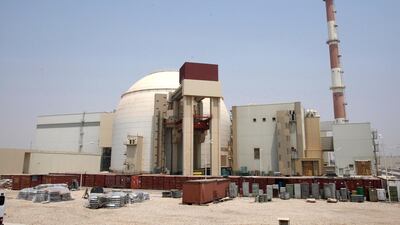
Iran's Bushehr nuclear plant has been restarted. EPA -
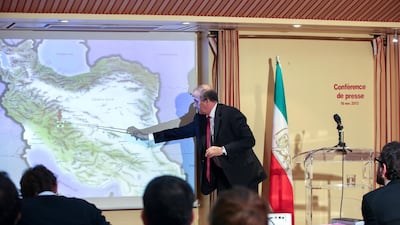
Mehdi Abrichamtchi, chairman of the Peace and Security Committee at the National Council of Resistance of Iran, shows journalists the location of a secret nuclear site in Iran in 2013. AFP -
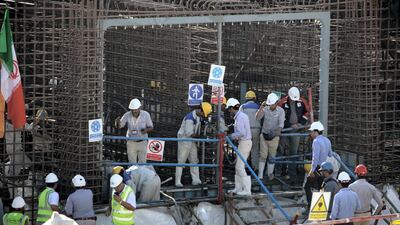
Workers prepare to begin the construction of a second reactor at the Bushehr site. AFP


Iran's increased nuclear capabilities have led the US to acknowledge the prior guardrails of the JCPOA are no longer achievable. Iran has moved to enrich uranium much more quickly than anticipated, cutting the breakout period — the time required for enough highly enriched uranium to build a nuclear device, to below one year.
While the Biden administration is unlikely to take seriously the demands of the letter, he will have to send the text of any new agreement with Iran to congress within five days of reaching a deal, following the Iran Nuclear Agreement Review Act of 2015, which requires any deal to be put before congress.
Once that step has been taken, 60 senators must vote to stay in the nuclear pact. Although it is not clear how many senators will vote to stay in a new deal, the 26 signatories of Mr Cruz's letter indicate support for his stance has waned since the original JCPOA.
Iran's nuclear programme has long been a focus of US presidents' foreign policy but with a looming conflict between Ukraine and Russia, the need for de-escalation with Iran will be seen as more critical than ever.
Negotiators from Iran, the US, the European Union, Russia, China, France, Germany and the UK are once again gathering in Vienna on Tuesday hoping to get a new deal on the table.
In a show of goodwill, last week Mr Biden restored sanctions waivers for Iran, allowing it to work with other countries on nuclear co-operation projects. The gesture was taken as an indication a new deal could be on the horizon.
No deadline or specific timeline has been set by those in Vienna.

