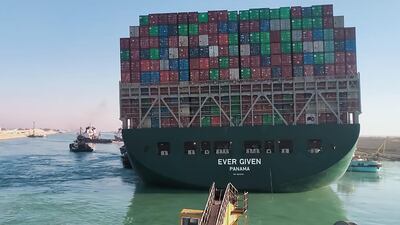

Observers from around the world have looked on as expert teams worked to free the Ever Given cargo ship from its position blocking the Suez Canal.
After the skyscraper-sized craft was sent on its way, some wondered what it is actually like to sail the narrow channel.
There are few people more qualified to explain than Dr Mohamed El Wakeel, a former ship captain.
He says he has “passed through the Suez Canal more than my own living room”.
A typical day on the canal
Any ship going through the canal, whether Egyptian or foreign, must notify the Suez Canal Authority 48 hours before its arrival, so that it may be given a place in the queue.
Last year, an average of fifty ships per day made the journey, despite the global pandemic.
The vessel informs canal authorities about the ship’s size, the kind of cargo its carrying and ultimately, what kind of help it will require from the Suez Canal Authority.
Based on these points, each ship is given an estimated time of arrival.
“Crossing priority is generally given to passenger ships, followed by cargo ships. However, ships carrying oil or natural gas are usually given the unique opportunity of crossing the canal alone, with no other ships crowding them,” says Mr El Wakeel.
"Once a ship arrives at the canal, it is no longer under the control of its captain. A ship pilot boards the ship as it enters and stays on board until it leaves the canal. Pilots know the ins and outs of the canal and their expertise is essential," a military colonel stationed at the Suez Canal told The National.
-
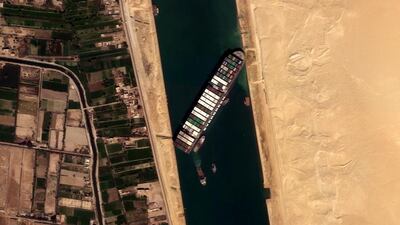
The 'Ever Given' container ship blocked the Suez Canal for six days. Reuters -
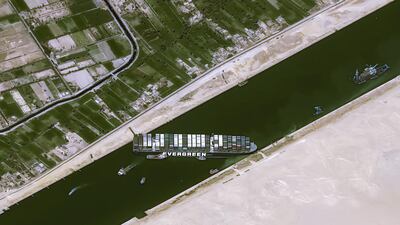
The ship became grounded during high winds. Airbus Space -
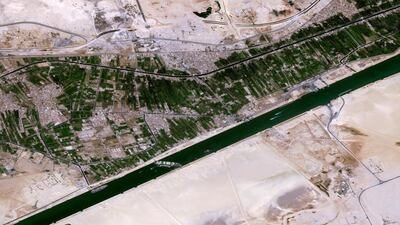
The incident cost the Suez Canal Authority up to $15 million in revenue. Airbus Space -
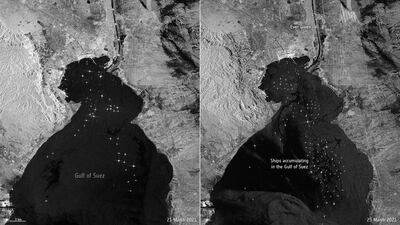
Left, the canal on March 21; right, traffic waits to enter the canal on March 25. Reuters -
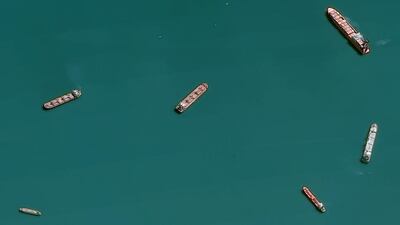
Vessels wait to pass through the canal after the 'Ever Given' ran aground. Airbus Space -
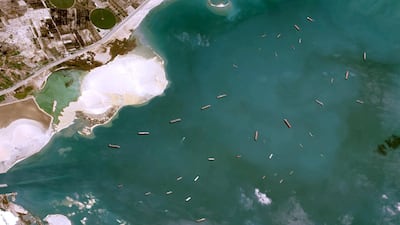
The incident caused a queue of vessels at the mouth of the canal. Airbus Space -
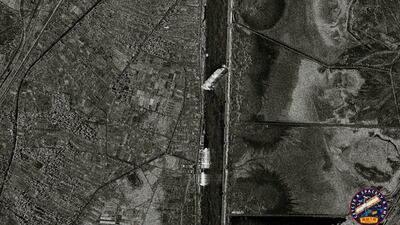
It took six days to free the 'Ever Given'. Research Institute of China Electronics Technology Group Corporation -
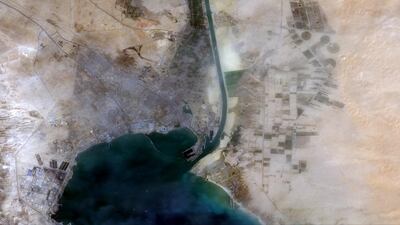
An image captured by the European Space Agency Copernicus Sentinel-2 satellite shows the canal during the blockage. Reuters -
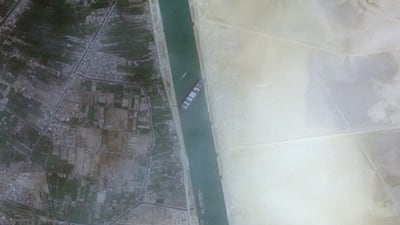
The 200,000-tonne cargo ship caused damage to the vital waterway. Reuters -
Egypt initially claimed $900m in compensation over the incident. Reuters -
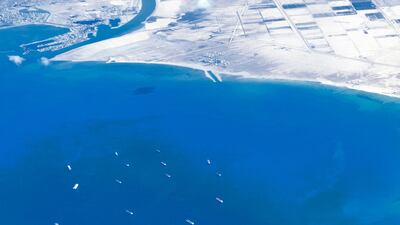
An image captured from a commercial plane shows traffic waiting to travel through the canal. AFP -
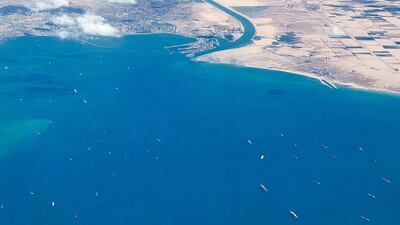
The 'Ever Given' will be released by the Egyptian authorities on Wednesday. AFP -
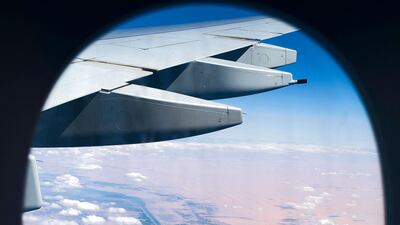
The 'Ever given' was stuck for six days and caused damage to the canal. AFP -
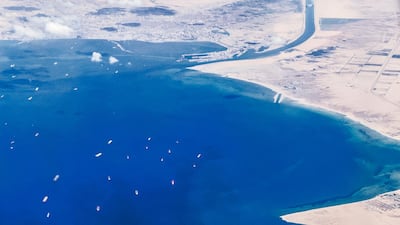
The blockage cost the canal authority millions of dollars because cargo ships were unable to pass. AFP


Ships crossing the canal in both directions are instructed by the authority to anchor in one of the many ports along the canal, and wait there until their turn comes to continue crossing.
Only one ship is allowed to enter the canal at one time. The rest must wait their turn, either at one of the ports, such as Port Said on the Mediterranean side or the Gulf of Suez on the Red Sea side.
“There is only one lane in the canal, it’s not like a highway where multiple cars can drive side by side, one ship enters and another follows,” continues Dr El Wakeel.
The next ship in the queue must leave a distance of around half a mile between it and the previous ship in the canal, according to Mr Al Wakeel.
Depending on traffic conditions, ships also wait for their turn at one of several lakes, including the famous Great Bitter Lake, located around the city of Al Ismailiyah.
But there are still a number of things that can go wrong with what has often been a smooth operation.
"There are a million details to consider, and many things that can go wrong, especially when you're dealing with a ship the size of the Ever Given, which is similar in size to a floating apartment building," said the colonel.
Everything from changing weather conditions to power blackouts on board the ship can have an effect on the flow of traffic through the canal, he said, adding that both of these circumstances were the main causes of the Ever Given running aground last week.
“When you’re dealing with a waterway that is as narrow as the Suez Canal, and as shallow in places as it is, the situation becomes infinitely more tricky to navigate,” he added.
“The middle of the canal is the sweet spot. Any passing ship must remain strictly in the middle so it doesn’t run aground. If you stand on deck and look out on either side of the canal, you can see with your eye how shallow the banks are,” explains Mr El Wakeel.
“The sides of the canal start at a depth of 1 metre and it gets steadily deeper until it reaches the maximum depth of 28m at the midpoint,” the colonel adds.
Ship pilots and tugboats
Due to the small margin for error, specialist pilots are required to steer the boats safely.
“Each ship is boarded by two ship pilots, who work in shifts to get the ship through the canal. It takes between 20-24 hours to get one ship through the canal,” said Mr El Wakeel.
Ships are not allowed to exceed a speed of 5 knots while navigating the waterway.
“Whenever I took pilots on board my ship as we passed through the canal, I could see that they were visibly anxious to get ships through, the process can be very emotionally taxing for them,” said Mr El Wakeel.
As an additional measure, one or two tugboats escort any vessel on its way through the canal, sailing ahead of the ship and correcting minor imbalances in the ship’s course. But if the ship’s course shifts too much, "tugboats can do very little" the colonel says.
"Especially a ship as massive as the Ever Given".
Responsibility for accidents
Even though pilots perform an active role in getting the ship through, if there are any judgement calls needed as a vessel crosses the canal, the ship’s captain outranks the pilot and his judgement is more important.
“For the duration of the journey through the canal, pilots become temporary members of its crew, and they must listen to the captain’s orders. Captains are advised to listen to a pilot’s counsel, but the final decision is the captain’s to make. This is mandated by Egyptian maritime law,” explains Mr El Wakeel.
Should something go wrong, it is usually clear whose responsibility it was. But in cases where things aren’t so cut and dry, investigations are launched.
“Ships, like planes, have a black box on board that records all relevant data, in addition to conversations in the control room. Investigations usually open these boxes and through the recordings inside they are able to determine what exactly happened and who is to
blame,” elaborates the colonel.

