
People whose homes were swept away by flooding in Libya's eastern city of Derna a week ago faced the dilemma on Sunday of whether to stay despite a lack of fresh water or flee through areas where landmines have been displaced by the torrents.
Thousands of people are feared to have died after two dams above Derna broke on September 10, bringing down residential blocks lining a usually dry river bed as people slept.
Many bodies were washed out to sea and more than 1,000 have already been buried in mass graves, the UN reported.
Sunrise on Sunday revealed a scene of quiet devastation, with piles of rubble cleared to the sides of empty roads along with tangled metal including pieces of wrecked cars.
Hamad Awad, a resident, sat on a blanket on an empty street with a bottle of water and bedding alongside him.
"I am staying in our area trying to clean it and trying to verify who is missing," he said. "Thank God for giving us patience."
Entire districts of Derna, with an estimated population of at least 120,000, were swept away or buried in mud. State media said on Sunday at least 891 buildings had been destroyed in the city, whose mayor has said 20,000 people may have died.
Another resident said people were at a loss over what to do next.
"We still do not know anything, we are hearing rumours, some are trying to reassure us, others are saying you need to leave the city or stay here. We have no water and no resources," said the resident, who gave just one name, Wasfi.
A report by the UN's Office for the Coordination of Humanitarian Affairs (OCHA) said Libyan authorities had detected at least 55 children poisoned from drinking polluted water in Derna, where the homeless were surviving in makeshift shelters, schools or packed into the houses of relatives or friends.
Floodwaters had shifted landmines and other ordnance left over from years of conflict, posing an extra risk to the thousands of displaced people on the move, it said.
Aid organisations have flown in emergency aid and some countries have sent supplies, although international aid officials say much more help is needed.
"People came with aid from all over, and this made it easier on us, and we felt that we are not alone," said Derna resident Hassan Awad as civil protection workers from Algeria searched the rubble of multistorey buildings in the city for survivors.
Awad pointed to a rusty pole stretched between two buildings and said clinging to it was how his family had survived the flood which tore through their home, covering everything in mud.
"We found dead bodies of neighbours, friends and loved ones. I cannot explain it," he said.
-
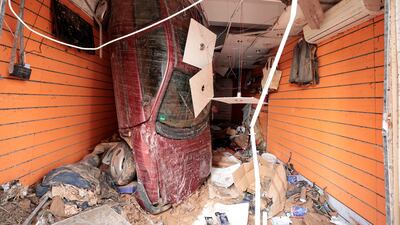
An upturned car inside a shop where it was carried by a torrent of floodwater in Derna, Libya. Reuters -
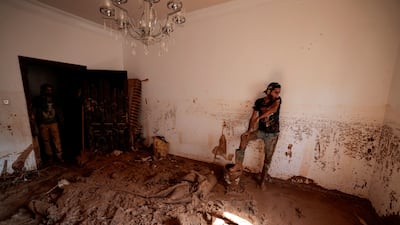
A flood survivor takes a breather from removing mud from his home in the aftermath of deadly floods in Derna. Reuters -
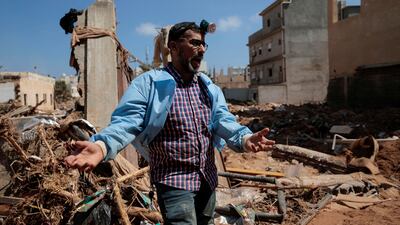
Mohammed Fathallah Al Hassi lost his mother and sister in Derna when dams collapsed, flooding the city, after heavy rainfall and a powerful storm hit eastern Libya. Reuters -
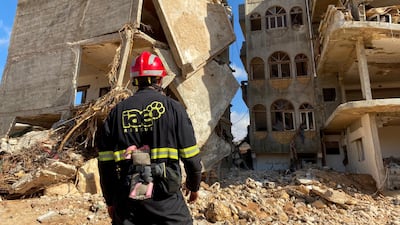
A Spanish rescue worker in Derna where authorities have been struggling to cope with thousands of flood victims' bodies washing up or decaying under rubble. Reuters -
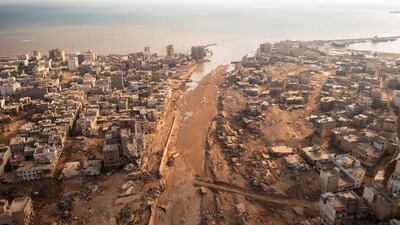
The destruction in the aftermath of the floods in Derna, Libya, as seen from the air. Reuters -

A view of Derna in the aftermath of the floods. Reuters -
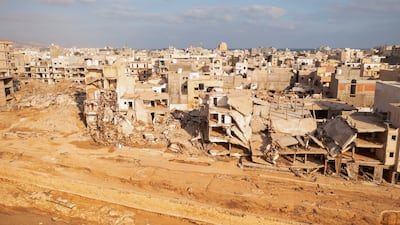
The aftermath of the floods in Derna. Libyan authorities said access to some areas had become impossible. Reuters -
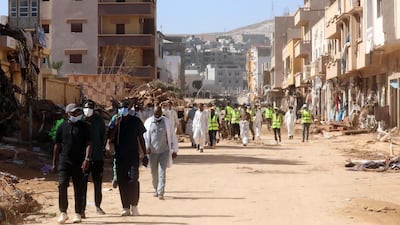
Volunteers amid the ruins and damaged homes after the Mediterranean Storm Daniel hit Libya's eastern city of Derna. AFP -
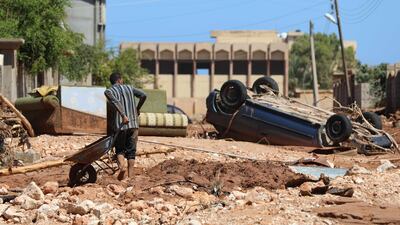
A rubble-strewn street in Libya's eastern city of Soussa. AFP -

People view areas damaged in the flooding in Derna, Libya. Reuters -
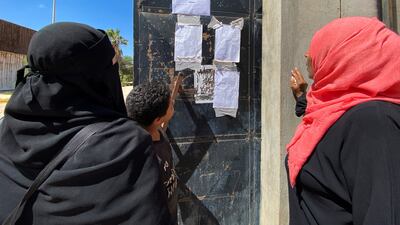
Locals view a list of the missing following the floods in Derna. Reuters -
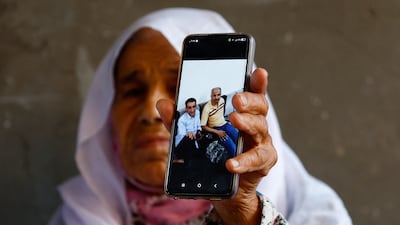
A Palestinian woman in the Gaza Strip displays a picture of her relatives, who had been living in Libya, that were among the victims of the flooding. Reuters -
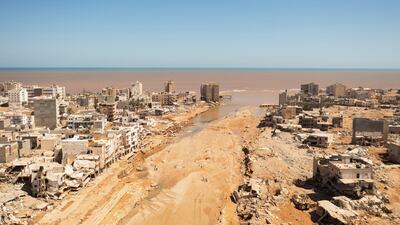
Libya's port city of Derna, days after floods swept away entire communities after two dams collapsed amid heavy rain. Reuters -
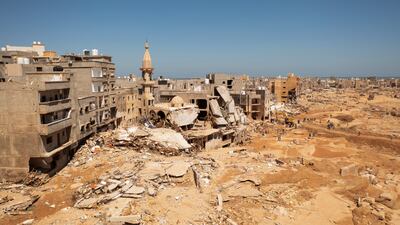
The dams collapsed causing a huge flash flood that killed thousands of people. Reuters -
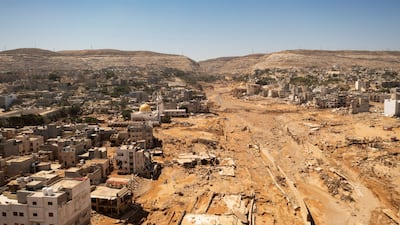
Thousands were still missing while more than 30,000 were displaced. Reuters -
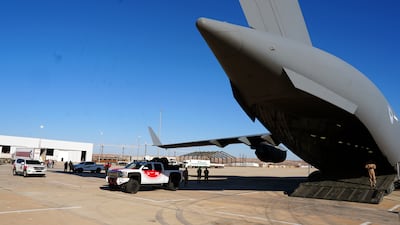
Five Emirati planes arrived in Benghazi carrying three rescue teams, urgent relief and medical aid, as part of UAE efforts to provide relief to the Libyan people. Wam -
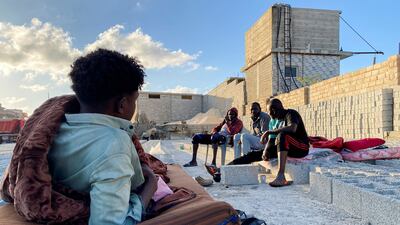
Sudanese workers who lost family members and friends during the disaster sit outside a tile factory in Derna. Reuters -
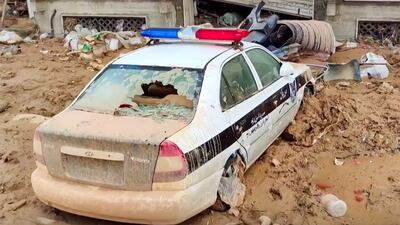
A police vehicle washed away by floods lies on a street in Derna. AFP -

A militiaman directs vehicles on along a muddy road after deadly floods caused by Storm Daniel hit Derna, forcing two dams to collapse. AFP -
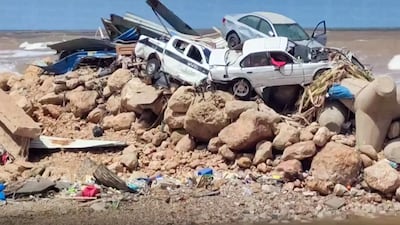
Vehicles washed away by the floods are piled up on the outskirts of Derna. AFP -
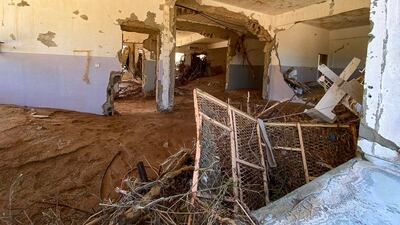
A school damaged by the floods in Derna. Reuters -
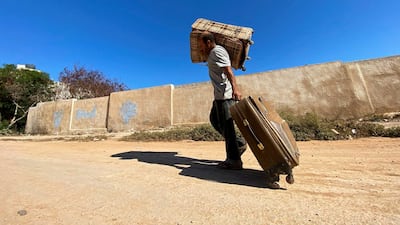
A man carries his belongings, in the aftermath of floods in Derna. Reuters -
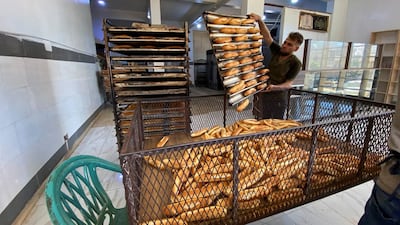
A worker puts bread in a box at a bakery, in the aftermath of the floods in Derna. Reuters -
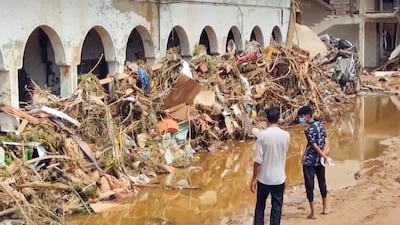
The trail of destruction left by the floods that hit Derna. AFP


In Al Badya, a coastal settlement west of Derna, the hospital was treating victims from Derna as well as its own. Doctors built makeshift dams in the street when the flooding hit to try to hold back the water, but it rose within the building.
"This affected machinery and the infrastructure of the lower level of the hospital," the hospital's head, Abdel Rahim Mazek, said.
Elsewhere in the town, volunteers handed out clothing and food.
"People left their houses with nothing, they didn't even have their underwear," said one of the initiative's supervisors, Mohammad Shaheen.
Volunteer Abdulnabi said the team came from Al Ajaylat, around 800 miles (1,200km) away in western Libya, divided from the east by more than a decade of on and off conflict.
"People are coming together to help those impacted," he said.
The country of 7 million people has lacked a strong central government since a Nato-backed uprising that toppled Muammar Qaddafi in 2011 and its oil wealth is dispersed among competing groups.
Analysts said the disaster had brought some level of co-ordination between the internationally-backed administration in Tripoli in the West and the rival administration in the east but that reconstruction efforts would likely reopen faultlines.
'No specific number' of people missing
The OCHA report said at least 11,300 people had died and more than 10,000 people were missing in Derna after Storm Daniel swept over the Mediterranean and into the city and other coastal settlements, but officials disputed the figures.
A spokesman for the Libyan Red Crescent, which OCHA cited for the data, said it had not published a toll and referred Reuters to government spokespeople, saying "figures are changing and the Red Crescent is not responsible for this."
An official from the administration that runs eastern Libya, Dr Osama Al Fakhry, said: "The number of dead so far is 3,252, and they are those who were buried".
He said 86 people had been pulled from the rubble and operations were continuing.
"There is no specific number regarding the missing, because there are entire families who have died and no one came to report them, in addition to the fact that there is duplication of registration in various hospitals," said Dr Al Fakhry, office manager for the health minister in the east.
Other Libyan officials have previously citied a death toll of more than 5,000.
OCHA said more than 40,000 people had been displaced, cautioning that the figure was likely much higher since access had been restricted to the worst-affected areas such as Derna.

