


After the flooding that has killed more than 5,000 people in Libya and left thousands more missing, the country could be hit by potentially fatal disease outbreaks.
There is an increased risk of waterborne diseases as well as of infections spread by mosquitoes, doctors say.
Health services may have been damaged in some areas, making it more likely those that continue to operate become overwhelmed with ill or injured patients.
“In a crisis on a major scale, like in Libya, we have the breakdown of sanitation, we have the breakdown of water [supplies] and we have a lot of deaths – animals as well as humans,” Dr Bharat Pankhania, a senior clinical lecturer at the University of Exeter Medical School in the UK, said.
“Therefore there’s every possibility of infections spreading into, for example, the water supply.”
Libya was already in turmoil after more than a decade of civil war when, at the weekend, Storm Daniel engulfed parts of the country with more than 400mm of rain in 24 hours.
The port city of Derna in the north-east was particularly heavily hit after two dams burst and unleashed tsunami-like floodwaters.
Paul Hunter, an infectious diseases specialist and professor in medicine at the University of East Anglia in the UK, who has previously researched the health effects of floods, said that one of the most obvious concerns was the threat of waterborne diarrhoeal diseases, including cholera.
“All the [faeces] in the pit latrines gets washed out,” he said. “If people drink that water, because there’s no other water, and they cannot sterilise it, they can pick up illnesses.”
-
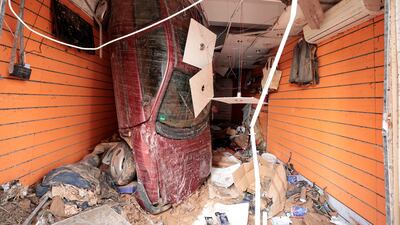
An upturned car inside a shop where it was carried by a torrent of floodwater in Derna, Libya. Reuters -
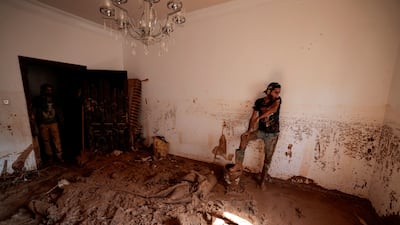
A flood survivor takes a breather from removing mud from his home in the aftermath of deadly floods in Derna. Reuters -
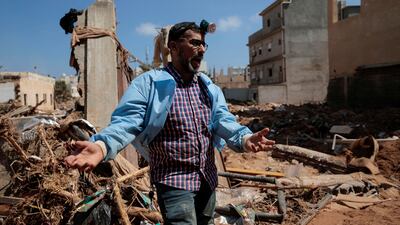
Mohammed Fathallah Al Hassi lost his mother and sister in Derna when dams collapsed, flooding the city, after heavy rainfall and a powerful storm hit eastern Libya. Reuters -
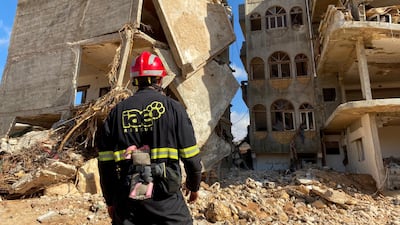
A Spanish rescue worker in Derna where authorities have been struggling to cope with thousands of flood victims' bodies washing up or decaying under rubble. Reuters -
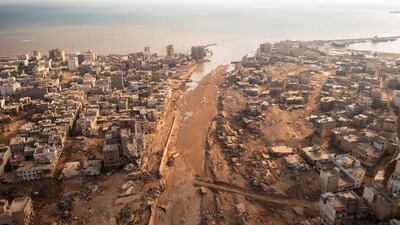
The destruction in the aftermath of the floods in Derna, Libya, as seen from the air. Reuters -

A view of Derna in the aftermath of the floods. Reuters -
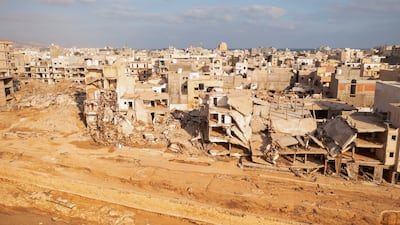
The aftermath of the floods in Derna. Libyan authorities said access to some areas had become impossible. Reuters -
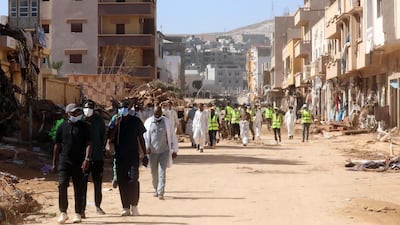
Volunteers amid the ruins and damaged homes after the Mediterranean Storm Daniel hit Libya's eastern city of Derna. AFP -
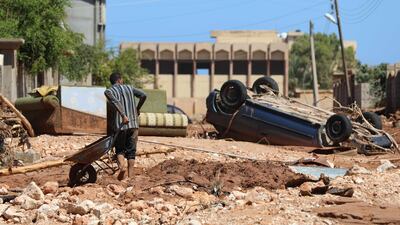
A rubble-strewn street in Libya's eastern city of Soussa. AFP -

People view areas damaged in the flooding in Derna, Libya. Reuters -
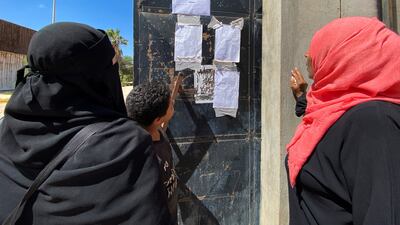
Locals view a list of the missing following the floods in Derna. Reuters -
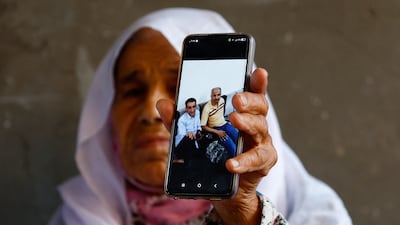
A Palestinian woman in the Gaza Strip displays a picture of her relatives, who had been living in Libya, that were among the victims of the flooding. Reuters -
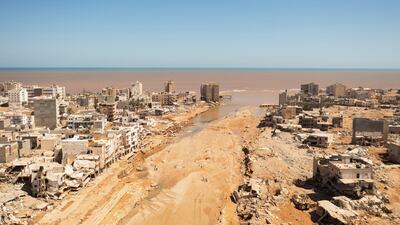
Libya's port city of Derna, days after floods swept away entire communities after two dams collapsed amid heavy rain. Reuters -
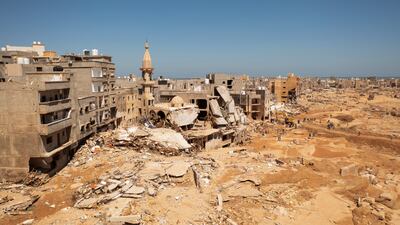
The dams collapsed causing a huge flash flood that killed thousands of people. Reuters -
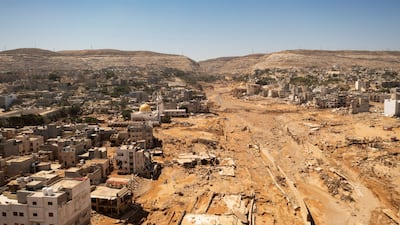
Thousands were still missing while more than 30,000 were displaced. Reuters -
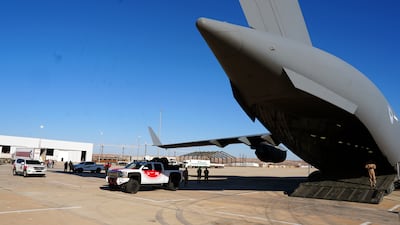
Five Emirati planes arrived in Benghazi carrying three rescue teams, urgent relief and medical aid, as part of UAE efforts to provide relief to the Libyan people. Wam -
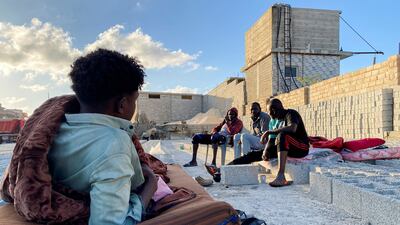
Sudanese workers who lost family members and friends during the disaster sit outside a tile factory in Derna. Reuters -
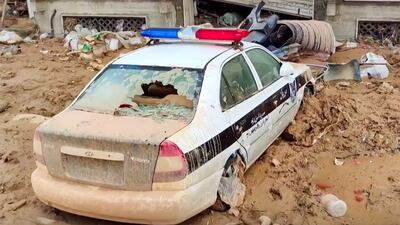
A police vehicle washed away by floods lies on a street in Derna. AFP -

A militiaman directs vehicles on along a muddy road after deadly floods caused by Storm Daniel hit Derna, forcing two dams to collapse. AFP -
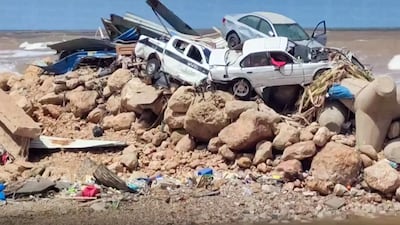
Vehicles washed away by the floods are piled up on the outskirts of Derna. AFP -
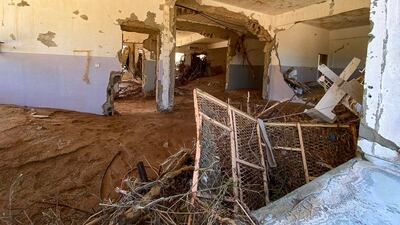
A school damaged by the floods in Derna. Reuters -
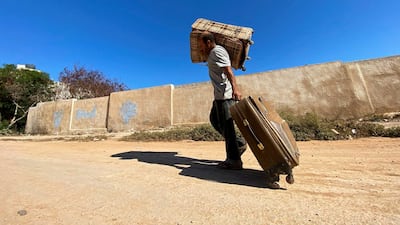
A man carries his belongings, in the aftermath of floods in Derna. Reuters -

A worker puts bread in a box at a bakery, in the aftermath of the floods in Derna. Reuters -
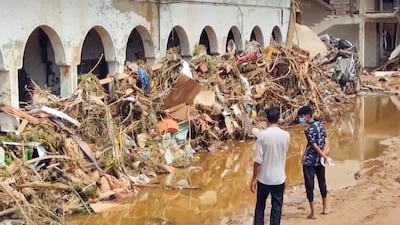
The trail of destruction left by the floods that hit Derna. AFP


Thousands died after Haiti was badly hit by a cholera outbreak that emerged in late 2010, the same year that the country suffered a devastating earthquake.
Cholera outbreaks, while a possibility, are not inevitable after flooding, Prof Hunter said, with the risk depending on the existing prevalence of the bacteria that causes the disease.
Vector-borne diseases, such as those spread by mosquitoes, could also spike.
“Anything that lays its eggs in water will have a field day for a short period of time,” Ian Jones, a professor of virology at the University of Reading in the UK, said.
Polio-like viral infections that do not cause paralysis but are associated with gastrointestinal problems and diarrhoea could increase, Prof Jones added.
Among the other viral infections that may emerge in greater numbers, Prof Hunter said, are dengue fever and Hepatitis E, which can be fatal, particularly in pregnant women.
An infection known as aspiration pneumonia may result from near-drowning episodes of the kind that can happen with flooding.
“What happens is that you breathe dirty water into your lungs and that can cause infection,” Prof Hunter said.
Wound injuries are more likely to result in an infection because water is dirty from the flooding, while incidents of broken bones and heart attacks are also likely to have increased.
Devastation of the kind that parts of Libya have experienced also increases the risk of chemical contamination of the water supply, Dr Pankhania said.
There have been widespread reports of Libya’s health system struggling as a result of the civil war that has raged for more than a decade. Extreme events can worsen the situation by destroying healthcare facilities and leaving those that remain overwhelmed.
In these circumstances, Prof Hunter said, normal standards of hygiene in hospitals are harder to maintain, making the spread of disease even more likely.

