


The Israeli army declared the end of a two-day large-scale military operation in the occupied West Bank on Wednesday after 12 Palestinians and one Israeli soldier were killed.
The operation focused on the northern West Bank city of Jenin, a centre for several armed Palestinian groups. It involved hundreds of troops, drone strikes and armoured bulldozers.
A funeral procession for those killed in Jenin drew thousands of Palestinian mourners, and militants fired guns into the air as the crowd chanted: “With our souls and blood, we will sacrifice for you, martyr!”
Amid the days of violence, a Palestinian attacker in Tel Aviv on Tuesday wounded seven Israelis in a car-ramming and stabbing incident before an armed civilian shot him dead.
Overnight, Israel carried out air strikes on targets inside the blockaded Gaza Strip in response to rocket fire from the Palestinian coastal enclave, but no deaths were reported.
As the army pulled out of Jenin, much of the city's crowded refugee camp was left charred and destroyed, with the incursion displacing at least 3,000 residents.
“All this bloodshed is considered a sacrifice for the homeland and for our cause. All this destruction can be fixed, God willing,” a resident of Jenin camp told AFP as crowds of people holding Palestinian and militant flags marched through the city during the funerals.
Late on Wednesday, Israeli Prime Minister Benjamin Netanyahu vowed to launch more operations if needed.
“It's not, by no means, the last action that we will take,” he said during a visit to an air force base.
“From the ground, from the air, with superb intelligence, we will do what we can to fight the terrorists.”
Jenin conflict – in pictures
-
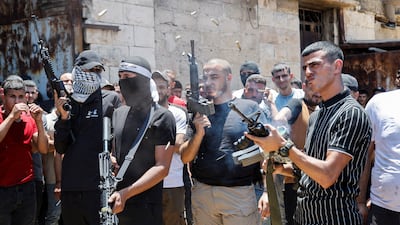
A gunman shoots into the air during the funeral of Palestinians killed during an Israeli raid, in Jenin in the Israeli-occupied West Bank. Reuters -
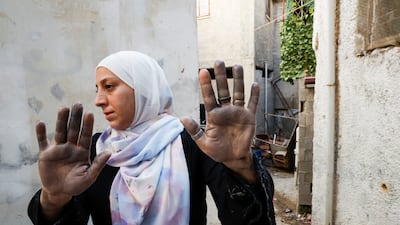
Palestinian Samah Sabagh shows her hands after the two-day Israeli raid in Jenin. Reuters -

Jenin residents flee as tear gas is fired. Reuters -
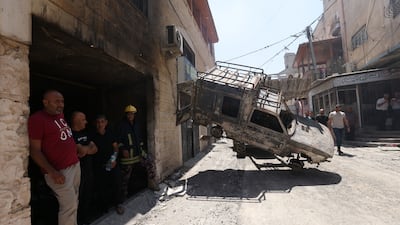
A damaged vehicle left in the street in Jenin. EPA -
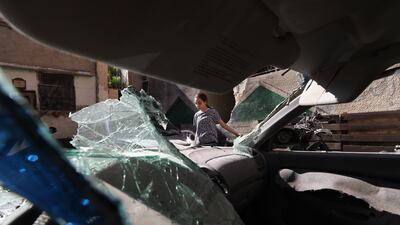
It was Israel’s biggest West Bank incursion in two decades. EPA -

A Palestinian woman surveys the damage after the Israeli army's withdrawal from Jenin. Reuters -
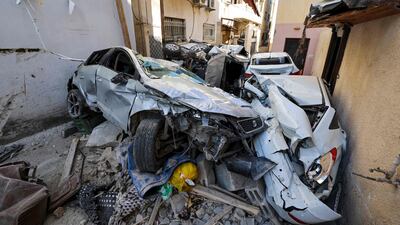
Wrecked cars in an alleyway in the occupied West Bank city. AFP -
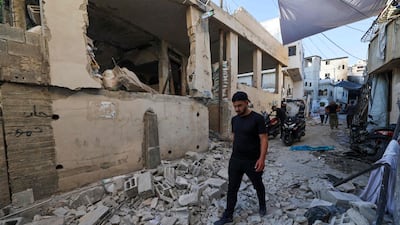
The Israeli army has declared the end of a two-day military operation in the area. AFP -
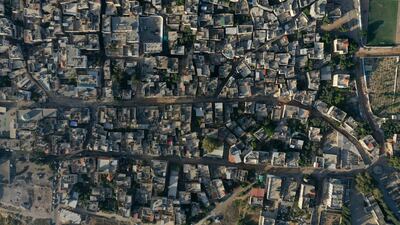
Jenin from above after the Israeli raid. EPA -
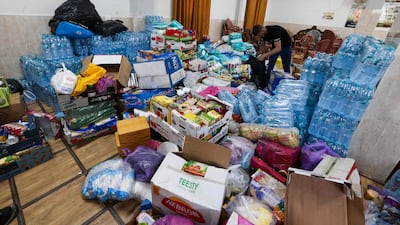
A Palestinian sorts through aid donations. AFP -
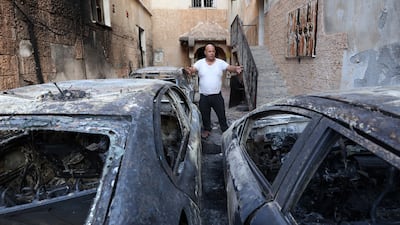
Vehicles destroyed during the raid. EPA -
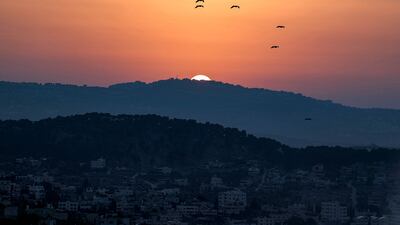
The sun sets after a violent day. AFP -
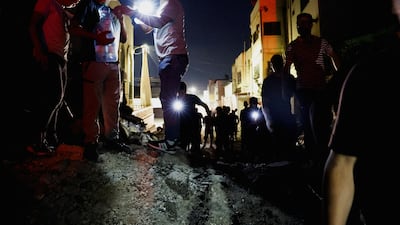
Water is handed out to people in Jenin. Reuters -

An emergency services vehicle passes by as Israeli troops start withdrawing from Jenin, in the occupied West Bank. Reuters -

Smoke rises above coloured lanterns. EPA -
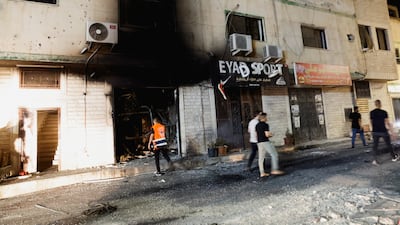
A burnt-out building after the Israeli assault. Reuters -
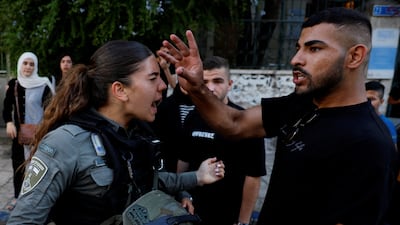
An Israeli police officer shouts at a Palestinian. Reuters -
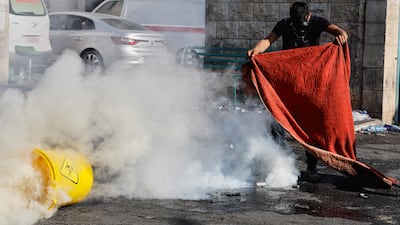
A man wears a mask for protection from tear gas. Reuters


About 300 people have been arrested and several explosives-manufacturing centres were destroyed during the operation, he said.
The Jenin camp, a small urban area home to about 18,000 people, has long been a stronghold of militant groups including the Islamic Jihad and Hamas.
Among the dead Palestinians was unarmed Abdulrahman Hassan Ahmed Hardan, 16, who was shot in the head by Israeli forces on Tuesday, according to the non-government group Defence for Children International.
The army has yet to comment on the group's claim.
Islamic Jihad praised its fighters on Wednesday for what it labelled a “heroic” victory and vowed that, for Israel, “Jenin and its camp will remain a terror that haunts you”.
Jenin residents inspected the widespread destruction in the camp, where gaping holes were torn into buildings, cars were crushed and the ground was littered with bullet casings and broken glass.
Mr Netanyahu has labelled Jenin's refugee camp a “terrorist nest”, while the Palestinians labelled the escalation an act of “open war against the people of Jenin”.
Israel has occupied the West Bank since the 1967 Arab-Israeli war and built many settlements, considered illegal under international law, in the area Palestinians regard as the core of the independent state they are seeking.
Excluding annexed East Jerusalem, the territory is home to about 490,000 Israelis living in settlements.
The Palestinians want Israel to withdraw from all land seized in 1967 and to dismantle all Jewish settlements.
Mr Netanyahu, however, has pledged to “strengthen settlements” and has expressed no interest in reviving peace talks, which have been moribund since 2014.
The army, after a number of deadly attacks early last year inside Israel, started to launch almost daily raids in the West Bank.
The violence further escalated since Mr Netanyahu's government took over late last year, with clashes concentrated in the northern West Bank.
During this week's raid, the army said it had uncovered militant hideouts, arms depots and bomb-making centres.
The army said troops had also “confiscated” a large sum of “terrorist funds” during its operation.
The Jenin clashes sparked renewed international concern, and the UN decried the violence in both Tel Aviv and Jenin.
Hamas, which controls the Gaza Strip, called the Tel Aviv attack “an initial response to crimes against our people in the Jenin camp”.
Medical charity Doctors Without Borders condemned Israeli forces for firing tear gas inside Jenin's Khalil Suleiman hospital.
Palestinian Health Minister Mai Al Kaila accused the army of shooting at Palestinians in the Jenin public hospital courtyard, saying this had marked a moment when “Israel's aggression reached its climax”.
The army said reports on the incident are “not currently known to security forces” and charged that “terrorist organisations have exploited civilian areas as a hideout”.
At least 190 Palestinians, 26 Israelis, one Ukrainian and one Italian have been killed this year, according to an AFP tally compiled from official sources from both sides.
They include, on the Palestinian side, combatants and civilians, and on the Israeli side, mostly civilians and three members of the Arab minority.
Thousands of Israelis block motorway to support police chief
Meanwhile, thousands of protesters blocked Tel Aviv's main motorway and major roads and intersections across Israel on Wednesday in a spontaneous outburst of anger following the forced resignation of the city's popular police chief.
Ami Eshed announced late on Wednesday that he was leaving the Israeli police force under what he said was political pressure.
Mr Eshed has regularly clashed with the country's hardline national security minister, Itamar Ben-Gvir, who has demanded that police take a tougher stance against months of anti-government protests.
“I am paying an intolerably heavy personal price for my choice to avert a civil war,” Mr Eshed said.
Thousands of people blocked the Ayalon motorway, halting traffic on the normally busy road.
The protesters, many holding blue and white Israeli flags, blew horns, danced in the street and lit bonfires. Police, some mounted on horseback, attempted to push back the crowds, at times using a water cannon.
During a live news broadcast, a motorist drove his car through a crowd of protesters, striking one man and sending him crumpling to the ground. The driver was reportedly arrested.
Mr Ben-Gvir responded to the resignation by saying that politics had “infiltrated the most senior ranks” of the police force and that Mr Eshed had made a “complete surrender” to leftist politicians.
Tens of thousands of Israelis have taken to the streets since Mr Netanyahu's government announced plans in January to overhaul the country's judicial system.
The protests have blocked roads, disrupted the country's main airport and thronged major cities.
Mr Netanyahu and his allies came to power after November’s election, Israel’s fifth in under four years, all of which were largely referendums on the long-time leader’s fitness to serve while facing corruption charges.
The Prime Minister, whose corruption trial has dragged on for about three years, and his allies in his nationalist religious government say the overhaul is needed to rein in an "interventionist" judiciary and restore power to elected officials.
Critics say the plan would upend Israel’s delicate system of checks and balances and push the country towards dictatorship by concentrating power in the hands of Mr Netanyahu and his allies.
Mr Netanyahu suspended the overhaul in March after mass protests erupted when he tried to fire his defence minister for challenging the plan.
But talks with the political opposition fizzled last month, and Mr Netanyahu's allies have begun moving ahead with the plan again.

