

Israel struck targets in the Gaza Strip on Thursday night after a day of rocket fire from the Palestinian territory and Lebanon.
The Israeli military said its fighter jets struck terrorist's tunnels in Beit Hanoun and Khan Younis as part of “Guardian of the Walls”.
The two tunnels did not cross into Israeli territory and did not pose a threat to its civilians, the army said.
It said it struck two weapons factories belonging to Hamas, the militia and rulers of Gaza, in the northern and central Gaza Strip.
The military said the strike was a response to the security breaches by Hamas in the past few days.
It said it held Hamas responsible for any attack coming from the Gaza Strip.
After the air strikes, Gaza's Ministry of Health issued a statement.
“We are following the field developments as a result of the Israeli escalation in the Gaza Strip, and we confirm that no injuries have reached the hospitals of the Gaza Strip until now,” the ministry said.
The attacks were followed by several missiles fired from Gaza towards Israel.
The air strikes came as Israeli Prime Minister Benjamin Netanyahu met his Security Cabinet to discuss the rocket fire.
Following the nearly three-hour meeting, Mr Netanyahu's office put out a short statement saying a series of decisions had ben made.
“le response, tonight and beyond, will extract a heavy price from our enemies,” the statement said.
It did not elaborate.
On Thursday, Israel hit southern Lebanon with artillery fire after rockets were launched across the border, in what could be the biggest escalation between the two nations in a decade.
Israel immediately accused Palestinian groups of firing the barrage of cross-border rockets.
“We will hit back at our enemies and they will pay the price for every act of aggression,” Mr Netanyahu said before the Security Cabinet meeting on Thursday evening.
“Our enemies will learn again that during times of war, Israeli citizens stand together and united, and support the actions of the IDF [Israel Defence Forces] and the rest of the security forces to protect our country and our citizens.”
Mr Netanyahu said there was no intention to change the status quo at Jerusalem's holy sites and called for calm.
Israel would act firmly against extremists who are using violence, he said.
“The internal debate among us will not prevent us from acting against them anywhere and at any time,” he said, referring to continuing protests against his government's proposed judicial reforms.
“We are all — with no exception — united on this.”
Israeli forces intercept rocket from Lebanon — in pictures
-
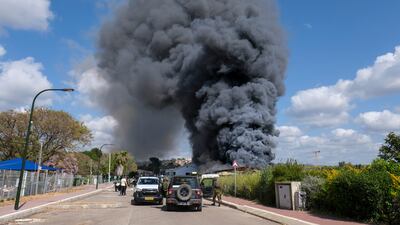
Smoke rises from a fire after rockets fired from Lebanon struck Bezet, northern Israel. Militants in Lebanon have fired a heavy barrage of rockets at Israel, the Israeli military said. AP -
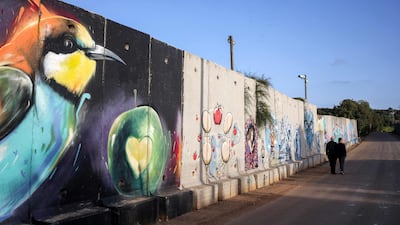
People walk along the concrete barrier forming Israel's northern border with Lebanon near the village of Shtula. AFP -
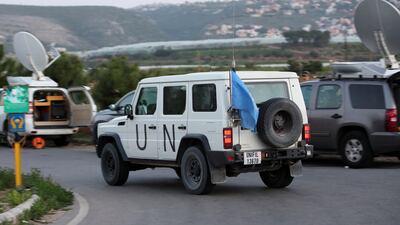
A UN peacekeeper vehicle drives in Qlaileh in southern Lebanon. Reuters -
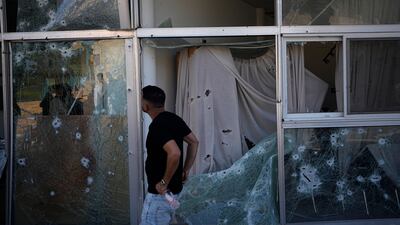
A man inspects damage to a shopping centre from an intercepted rocket fired from Lebanon in Shlomi, northern Israel. AP -
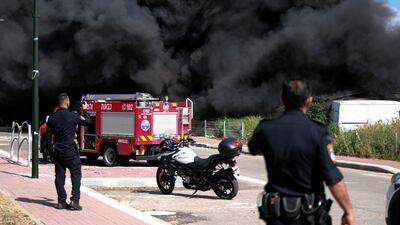
Israeli policemen stand near a fire caused by rockets fired from Lebanon, in Bezet. Reuters -
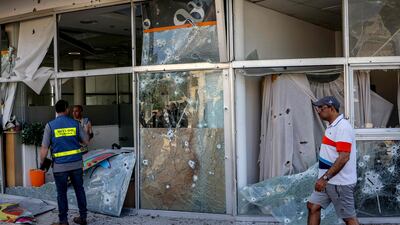
People view the damaged glass facade of a building following rocket fire from Lebanon in the northern Israeli town of Shlomi. AFP -

Damage from rocket fire in Shlomi. AP -

Police remove the remains of an intercepted rocket fired from Lebanon in Shlomi, northern Israel. AP -
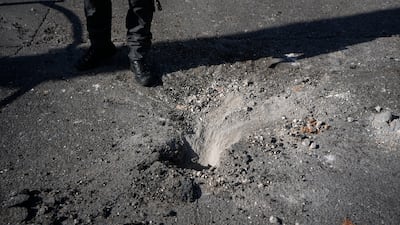
Israeli air defences intercepted the missile. AP -

It was not immediately clear who was behind the rocket. AP -
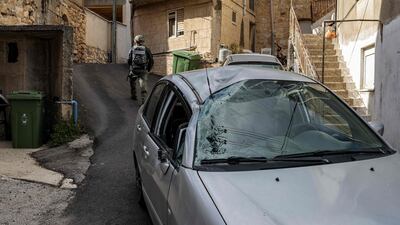
But the Israeli military said it had been fired from Lebanon. AFP -

An Israeli police officer removes debris. AP -
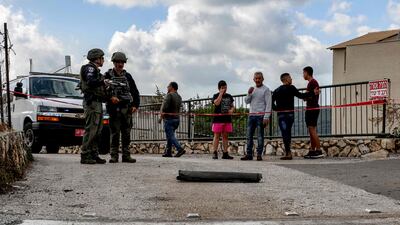
A bomb disposal unit was called. AFP -
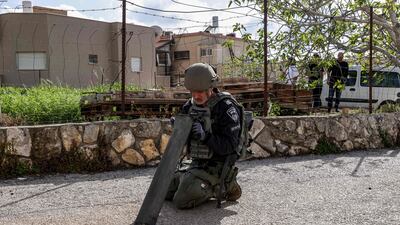
Parts of a shell are inspected. AFP -

Debris from the intercepted rocket. AP -
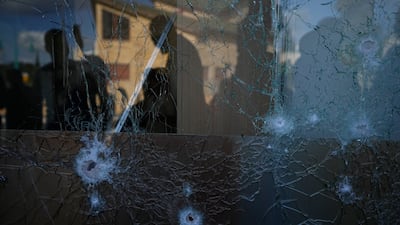
A shopping centre was damaged. AP -
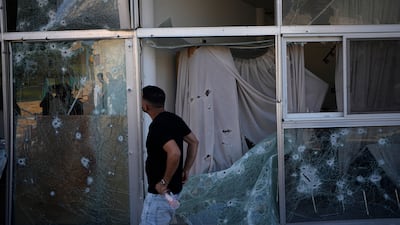
Windows were broken. AP -
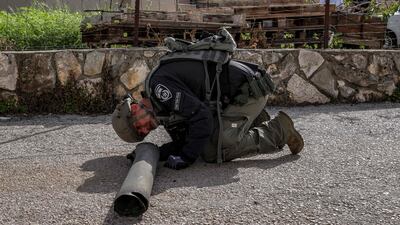
The analysis begins. AFP -
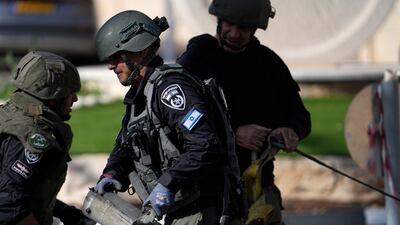
Police at the scene. AP -
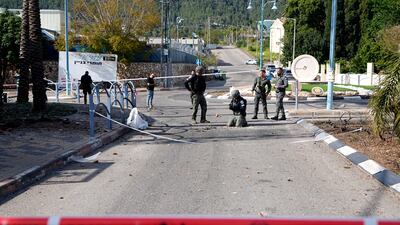
A cordon was put in place. AP -

A Lebanese army unit found missile launchers and a number of rockets intended for launch in the vicinity of the towns of Zibqin and Qlaileh, and work is under way to dismantle them. Photo: Lebanese Army -
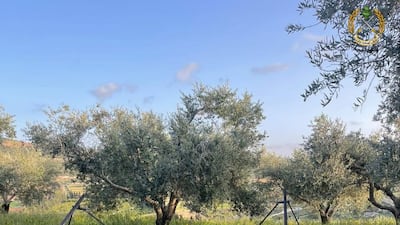
Missile launchers and a number of rockets intended for launch. Photo: Lebanese Army -
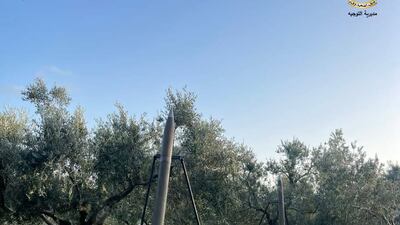
Missile launchers and rockets discovered by the military. Photo: Lebanese Army


Earlier on Thursday, several shells were fired by Israel from the border, towards the outskirts of the two villages of Qlaileh and Maaliyeh in the south of Lebanon, the Lebanese National News Agency reported.
The Lebanese Army later said that “a number of rockets” had been launched towards the area in the district of Sour, before tweeting that one of its units had discovered missile launchers and rockets in Zibqin and Qlaileh.
A Lebanese security source confirmed the retaliation to The National, saying: “Yes, they fired at us”.
Israeli media reported that 30 rockets had been fired within 15 minutes — the most significant security incident in southern Lebanon in years — after initially claiming 100 had been fired.
Lebanese security sources played down the claim, saying 100 rockets was an exaggeration.
A resident of a village about a 20-minute drive inland from Sour said that members of his family had heard the Israeli response, but were uninjured.
“It’s been like this [for] 50 years. It’s normal for us,” the resident, who spends weeknights in Beirut, told The National.
Israel said it had “identified 34 rockets that were fired from Lebanese territory into Israeli territory” and that 25 had been intercepted by Israeli air defences.
“Five rockets landed in Israeli territory. Regarding the four additional launches, the information about their location is under review. The statistics are not final,” the Israeli military said.
Israel's army said it had “identified 34 rockets that were fired from Lebanese territory into Israeli territory” — the largest escalation along the frontier since Israel and Hezbollah fought a 34-day war in 2006.
Twenty-five rockets were intercepted by Israeli air defences, while “five rockets landed in Israeli territory,” added the army statement.
The attack was not immediately claimed by any group.
But Israeli army spokesman Lt Col Richard Hecht blamed Palestinian groups.
“We know for sure it's Palestinian fire,” he told reporters. “It could be Hamas, it could be Islamic Jihad, we are still trying to finalise, but it wasn't Hezbollah.
“We assume Hezbollah knew about it, and Lebanon also has some responsibility. We are also investigating whether Iran was involved.”
This is the moment Israel intercepts rockets from Lebanon — video
The attacks came as Jews mark Passover and after clashes between Israeli police and Palestinians at Al Aqsa Mosque, Islam's third-holiest site, prompted warnings of retaliation from across the region.
Eli Cohen, Israel's Foreign Minister, said the timing of the inbound rockets was “not a coincidence”.
“First day of Passover. As we sit at the holiday table, family and friends, Israel is facing rockets from south and north … No one should test us, we will take all necessary measures to defend our country and people,” he wrote on Twitter.
Lebanon's caretaker prime minister Najib Mikati said he rejected any “escalation” from his country after the rocket attack.
The barrage came after Israeli police drew widespread condemnation from around the region for clashing early on Wednesday with Palestinians inside Jerusalem's Al Aqsa Mosque.
Israeli emergency services reported one man lightly wounded by shrapnel and a woman injured while running to a shelter during the attack.
Warning sirens sounded in the town of Shlomi and in Moshav Betzet and the Galilee in northern Israel, the army said.
The UN Interim Force in Lebanon, which patrols the border area between the two countries that are technically still at war, urged restraint.
“The current situation is extremely serious,” said the force. “Unifil urges restraint and to avoid further escalation.”
The Israeli military denied to AFP that it had retaliated “thus far”, in response to reports from Lebanon's National News Agency that Israel had struck targets in southern Lebanon.
According to the Lebanon report, Israeli artillery fired “several shells from its positions on the border” towards the outskirts of two villages after the launch of “several Katyusha-type rockets” at Israel.
Defence Minister Yoav Gallant “completed a situation assessment with senior officials in Israel's defence establishment”, after which he instructed “to prepare all the possible responses to recent events,” a statement said.
Inspecting his damaged office in the town of Shlomi, 46-year-old Shlomi Naaman told AFP: “I heard the siren, I heard the boom, I was in my home, it was very very scary.”
Also from Shlomi, Noy Atias, 21, said: “It's not something so special … this is the reality in Israel.”
“Security is the most important thing in life, nothing else matters,” she said, accusing political leaders of being preoccupied by “things that are not important”.
Israeli riot police had on Wednesday stormed the prayer hall of Al Aqsa Mosque in a pre-dawn raid aiming to dislodge “law-breaking youths and masked agitators” they said had barricaded themselves inside.
The violence, during both the Jewish Passover and the Muslim holy month of Ramadan, sparked an exchange of rockets and air strikes with militants in the Gaza Strip.
The US on Thursday blocked the adoption of a UN Security Council statement condemning recent Israeli raids on Al Aqsa Mosque, diplomats said.
A UN official told The National that there was initial widespread agreement among the 15 council members to issue a joint statement after Israeli police raided Al Aqsa twice during Ramadan.
But the US pulled back after 34 rockets were fired from Lebanon towards Israel.
Any UN Security Council press statement must be agreed to by consensus.
When asked why Washington blocked the formal statement, Robert Wood, the US deputy ambassador to the UN, told reporters that “there is a lot of very serious, quiet diplomacy going on in the region trying to calm the tensions”.
Washington condemned the launch of rockets from Lebanon and earlier strikes from Gaza, and said Israel had the right to defend itself.
UN chief Antonio Guterres also condemned the rocket fire, calling on “all actors to exercise maximum restraint”.
France condemned what it called “indiscriminate rocket fire targeting Israeli territory from Gaza and southern Lebanon”.
Lebanon's Iran-backed armed movement Hezbollah had warned earlier Thursday it would support “all measures” that Palestinian groups may take against Israel after the clashes.
“Hezbollah forcefully denounces the assault carried out by the Israeli occupation forces against the Al-Aqsa mosque compound,” the group said in a statement.
The Lebanese group has close ties with the Islamist movement Hamas, which rules Gaza, and with the Islamic Jihad militant group, which is also based in the coastal enclave.
The rockets came a day after Hamas leader Ismail Haniyeh arrived in Lebanon for a visit.
Haniyeh late on Thursday said the Palestinians would not “sit with their arms crossed” in the face of Israeli “aggression” against Al Aqsa.
He called in a statement on “all Palestinian organisations to unify their ranks and intensify their resistance against the Zionist occupation [Israel]".
The last rocket fired from Lebanon into Israel was in April 2022.
Meanwhile, families were out walking in the Lebanese town of Sour on Thursday night, enjoying a typical Ramadan evening.
Anwar, a Palestinian restaurant worker, shrugged off Israel’s threats to retaliate harshly against Lebanon.
“People here are already dead,” said Anwar, who was relaxing by the seaside with a shisha.
“It can't get worse. I'm not scared.
“Even if Israel retaliated, they won't dare to start war as long as Hezbollah is here. They're too scared.”

