
In the southern Turkish city of Adana, traumatised earthquake survivors are refusing to return to their apartments despite being told by government engineers that the structures are safe.
In a community space usually used for markets, 200 tents house those caught up in the February 6 earthquake, which has killed more than 46,000 in Turkey and Syria.
Serhat Guvel, 48, a father of two, is now resident in one of the 16-square-metre tents.
His family is divided over returning home to their undamaged apartment block. So far they have made only one three-hour visit, last Wednesday, to shower and gather belongings.
-

A woman walks among destroyed buildings in Hatay, Turkey. Getty Images -
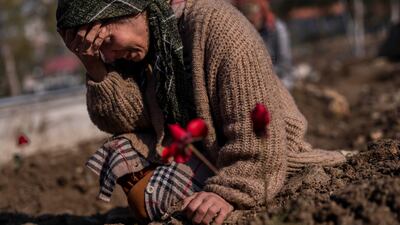
A woman mourns a relative during the burial of one of the earthquake victims in Antakya, southeastern Turkey. AP Photo -
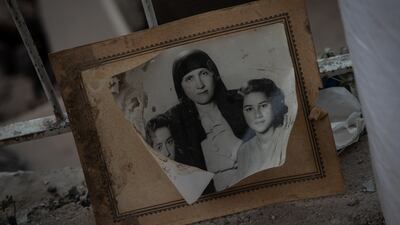
A family photo is seen amid the rubble in Hatay. Getty Images -
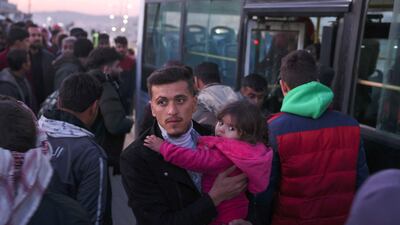
Syrian refugees in Turkey return to their home country following the deadly earthquake. AFP -

Members of NGOs Deathcare Embalming Team and Turkish Kurt-Ar inspect the bucket of an excavator as they search for bodies in Kahramanmaras, Turkey. AP Photo -
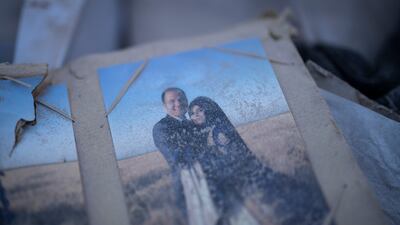
Dust covers a family photo album found in Antakya. AP Photo -
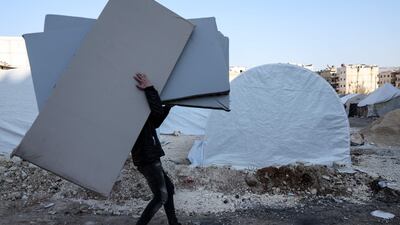
A man made homeless by the 7.8-magnitude quake carries mattresses distributed by an NGO at a makeshift camp in Afrin, in Syria's Aleppo province. AFP -
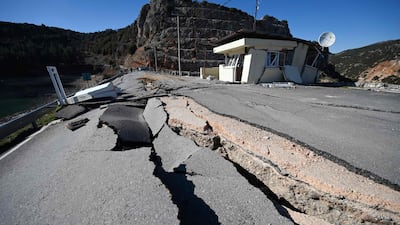
A cracked road near the quake’s epicentre in Kahramanmaras, Turkey. AFP -
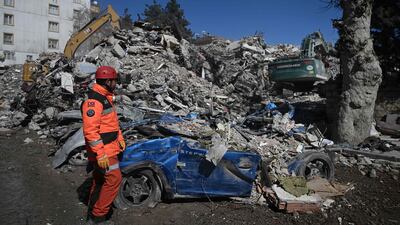
A rescuer stands near the site where Aleyna Olmez, 17, was rescued from the rubble of a collapsed building in Kahramanmaras, about 10 days after the quake struck. AFP -
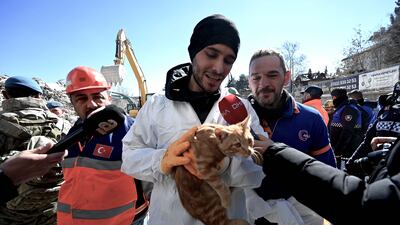
A rescuer holds a cat after it was rescued from the ruins of a collapsed building in Kahramanmaras. AFP -

Quake survivors queue for food amid the rubble in Kahramanmaras. Reuters -
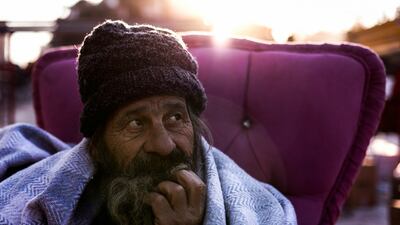
Bedran, a local resident who lost his house in the earthquake, keeps warm in Antakya, Turkey. Reuters -

A girl carries a box of water bottles next to a damaged mosque in Antakya. Reuters -
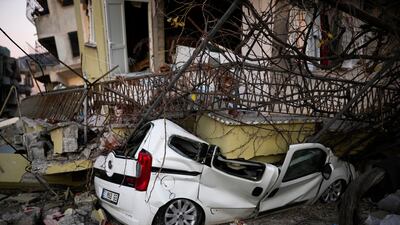
A car lies crushed by parts of a badly damaged building in Samandag, Turkey. AP -
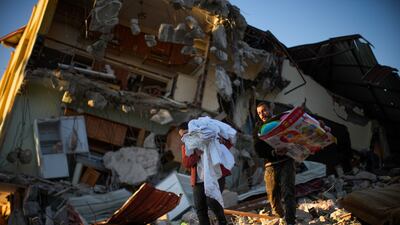
Residentes remove their belongings from their destroyed house in Samandag. AP -
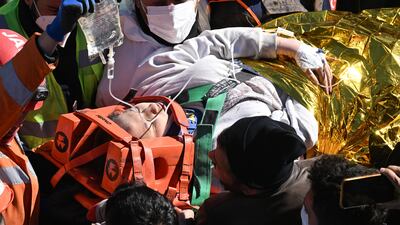
Aleyna Olmez, 17, is rescued after being trapped for 10 days in Kahramanmaras. Getty -
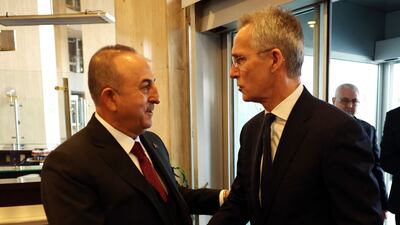
Turkish Foreign Minister Mevlut Cavusoglu, left, with Nato Secretary General Jens Stoltenberg in Ankara. AFP -
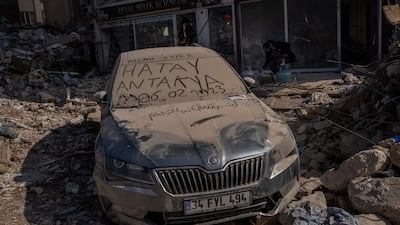
A message scrawled on a car covered in dust from collapsed buildings in Antakya, Turkey. AP -
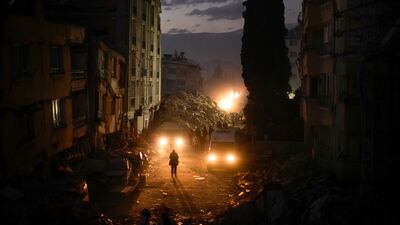
Destruction in Antakya. AP -

A cracked road leads to a flooded area in Antakya. AP -
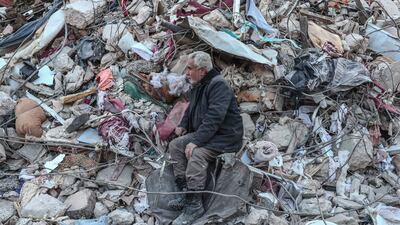
A man looks bewildered at the site of collapsed buildings in Hatay, Turkey. EPA -
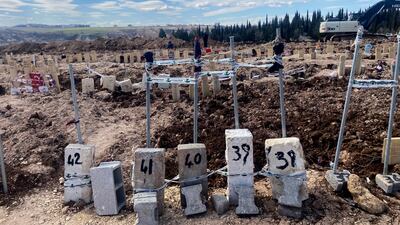
Numbered stones near graves of earthquake victims at a cemetery in Adiyaman, Turkey. EPA -

A makeshift camp set up amid the rubble in Antakya, south of Hatay. AFP -
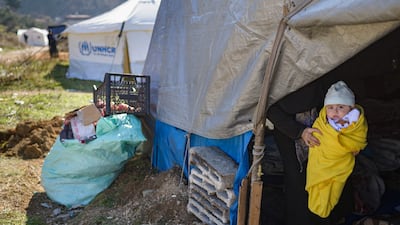
A woman holds her baby inside a tent in a camp in Antakya, Hatay. AFP -
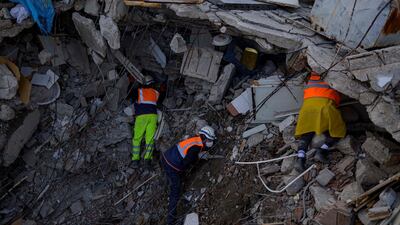
Greek and Turkish rescuers are at work to extract bodies of victims from the rubble in Antakya. AFP -
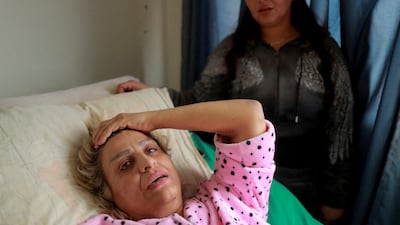
Samar Hamouda, 44, recalls her experience of the earthquake destroying her home, at Tishreen Hospital in Latakia, Syria. Reuters -
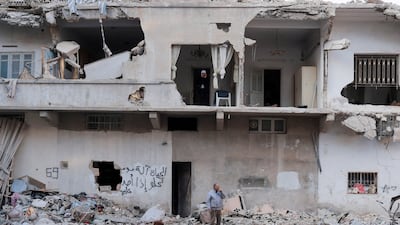
A damaged house in Jableh, Syria. Reuters -
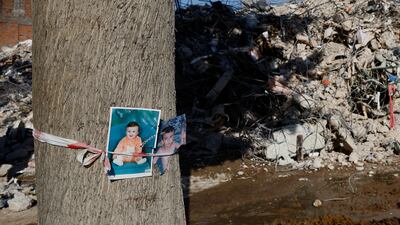
Photos of missing children left in hope in Kahramanmaras, Turkey. Reuters -
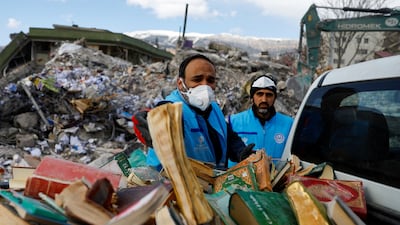
People collect copies of holy books from the rubble in Kahramanmaras. Reuters -
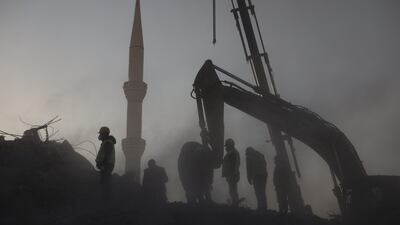
Rescuers search for survivors under the rubble of a collapsed building in Kahramanmaras. Reuters -

People carry a bodybag as residents wait for their relatives to be pulled out from the rubble in Hatay. AFP -
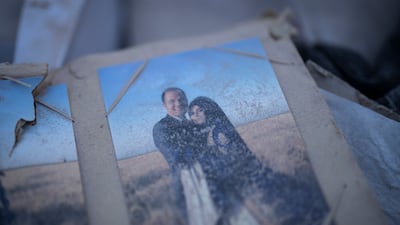
Dust covers a family photo album found in the debris of a building in Antakya. AP -
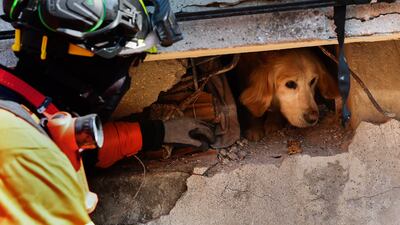
Portuguese rescue team members try to free the dog named Tarcin from the rubble in Antakya in Hatay. EPA -
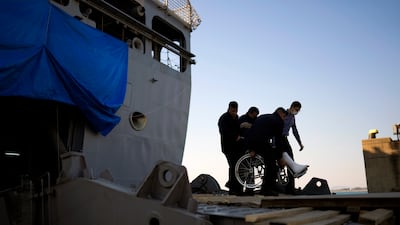
An injured survivor at a makeshift hospital set up at Turkish Bayraktar warship anchored near Iskenderun city, southern Turkey. AP -
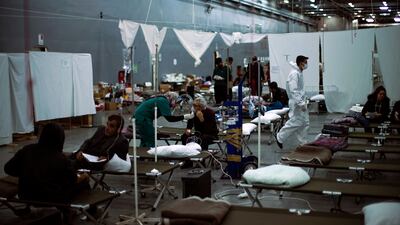
A makeshift hospital set up at Turkish Bayraktar warship anchored near Iskenderun city, southern Turkey. AP -

Britain's King Charles III (C) meets with members of the Turkish diaspora community who have been collecting, packaging and organising the transportation of food, blankets and warm clothing for people who have recently been affected by the earthquakes in Turkey and Syria, during a visit to the West London Turkish Volunteers, in Hounslow, greater London. AFP -
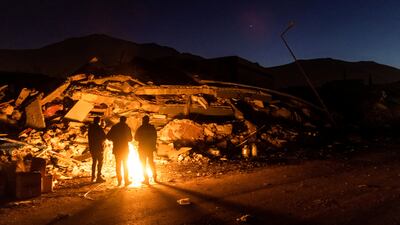
People stand by the fire next to the ruins of a collapsed building in Elbistan, Turkey. Reuters -
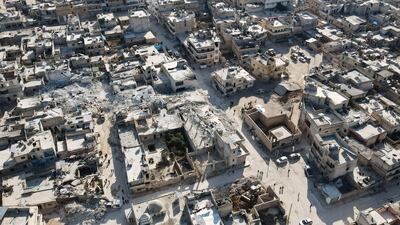
Destroyed buildings in Syria's rebel-held village of Atarib, in the north-western Aleppo province. AFP -

Rescuers carry Fatma, 15, who was pulled out from the rubble in Hatay, Turkey. Reuters -

A displaced woman receives food inside a stadium in Kahramanmaras, Turkey. Reuters -
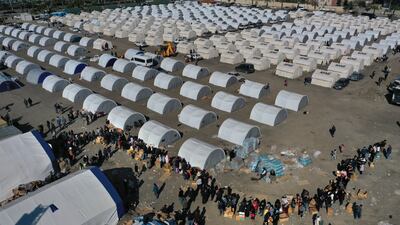
People lineup to receive aid supplies at a makeshift camp in Iskenderun city in southern Turkey. AP -
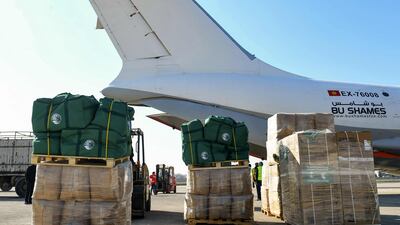
Humanitarian aid provided by Saudi Arabia for survivors of the February 6 earthquake are unloaded at Aleppo Airport in northern Syria. AFP -

Turkish President Recep Tayyip Erdogan addresses the World Government Summit in Dubai via video link. Antonie Robertson/The National -

A man walks between trains being using as shelters in Iskenderun, southern Turkey. AP Photo -
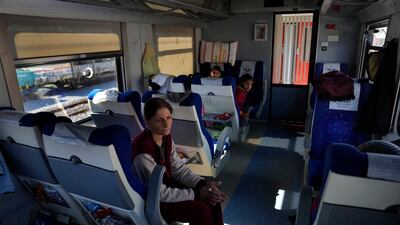
A woman and children inside a train being used as shelter after the earthquake, in Iskenderun. AP Photo -

Tents erected in a school yard for Syrians who have lost their homes after the deadly quake, in the rebel-held town of Harem in Syria. Reuters -
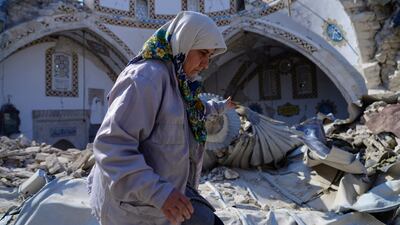
A woman walks by the destroyed Habib-i Neccar mosque in the historic southern city of Antakya in Hatay, Turkey. AFP -
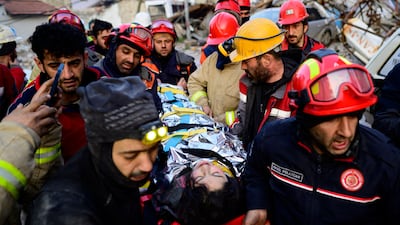
Rescuers pull out a 12-year-old Syrian girl, Cudi, from the rubble in Hatay. AFP -
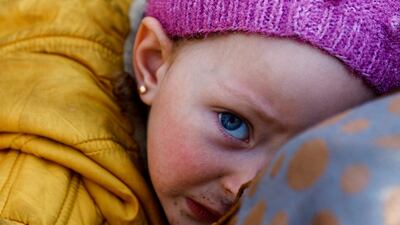
Amar, a Syrian refugee living in Turkey, looks on as search for survivors continues in Kahramanmaras. Reuters -
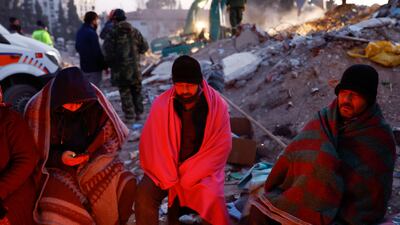
Displaced people keep warm by a fire in Kahramanmaras, Turkey. Reuters -
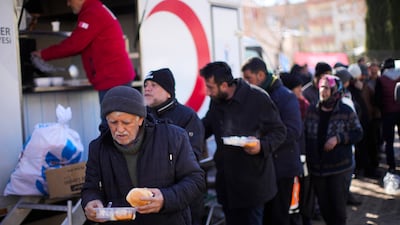
Earthquake survivors receive distributed meals in Golbasi, Turkey. AP -
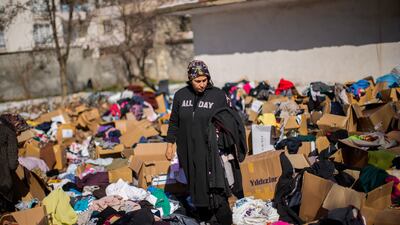
A woman stands amid boxes of donated clothes in Golbasi, Turkey. AP -
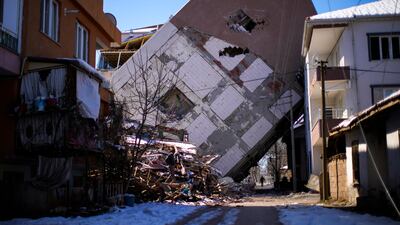
A man walks near a damaged building that leans on a neighbouring house in Golbasi, Turkey. AP -
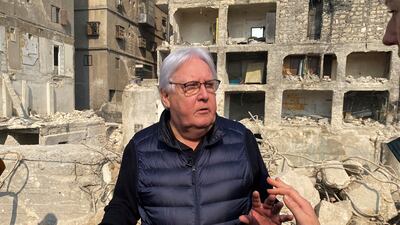
UN emergency relief co-ordinator Martin Griffiths stands amid quake-damaged buildings in Aleppo, Syria. Reuters -

Delegates observe a moment of silence for the Turkey–Syria earthquake before the start of the World Government Summit in Dubai. Pawan Singh / The National -
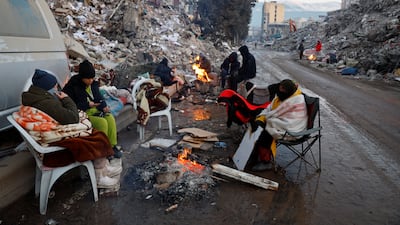
People keep warm by a fire as the search for survivors continues a week after the earthquake in Kahramanmaras, Turkey. Reuters -

A child receives food in Kahramanmaras, Turkey. Reuters -

A dog is seen through a glass door in Kahramanmaras, Turkey. Reuters -
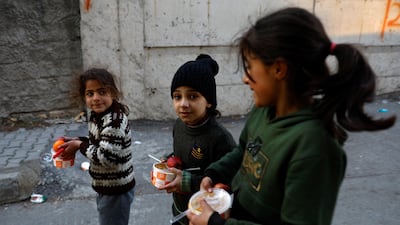
Children walk in the street with food boxes in Kahramanmaras, Turkey. Reuters -

A minaret stands as the sun rises over the earthquake-hit city of Kahramanmaras, Turkey. Reuters


The trip was unsettling.
Mr Guvel said entering the flat felt like experiencing the earthquake all over again.
“Even though I am a calm person, when I went to the house and sat on the balcony, I felt that everything around me was shaking,” he said.
The night the 7.8-magnitude earthquake hit, one building near the Guvel family's apartment block collapsed.
A few hours later, the second 7.5-magnitude aftershock pancaked two other buildings facing theirs.
“We were right in the middle of it all. That’s why my wife and daughter won’t go home,” said Mr Guvel.
The Guvels and several close relatives, including some from the nearby town of Hatay, have taken refuge in what locals call a “tent city”. There are 17 of them scattered around Adana.
When The National visited, Mr Guvel and his sisters-in-law were playing with their young daughters in the nearby park in an effort to distract them.
The visit occurred before another earthquake of 6.4-magnitude hit the region on Monday night, killing at least eight more people in Turkey and Syria.
Psychologists said the continuous aftershocks are compounding people's fear and misery.
"Even if [the latest earthquake] wasn't as strong as on February 6, most of us are not OK," said Sergen Ant, a psychologist from Adana.
"We are heavily damaged psychologically," said Mr Ant, who has volunteered with the local Rotary Club to help affected people.

For many, staying in tents is the safest option, yet living conditions are difficult.
Mr Guvel said that his daughter stayed inside the tent without engaging with the rest of the family and dislikes the life in tents.
The tents have no electricity. People stay warm with open fires burning in steel drums in a region where temperatures drop below zero at night. Every day, they queue for food distributed by volunteers.
Mr Guvel’s daughter wants the family to move to a new house in Adana’s southern suburbs where there are fewer high-rise buildings, said her father, but he cannot afford it.
Psychologists have encouraged families to return home during the day for short periods of time for showers or meals. Many refuse to sleep at home because the earthquake happened during the night.
“We are planning to soon remove the tent city from this area. We aim to help people go back to their normal lives. And after that we are going to focus on helping them cope with trauma,” said Anil, a volunteer psychologist.
“Some children don’t want to go home because they heard screams under the rubble,” added Anil, who asked for his family name to not be used because he had not received government permission to speak to the media.

“We’re trying to make this environment as liveable as possible for kids, but we don’t want it to turn into a playground for them either. Otherwise, they will dissociate from their normal lives and never want to return,” he said.
A bustling city of close to 2 million people surrounded by the snowy Taurus mountains, Adana is located over 200km from the epicentre of the earthquake.
Locals say that it caused 20 buildings to collapse, killing hundreds.
Adana: A safe haven
Yet Adana continues to operate relatively normally, with busy roads, open shops and stable supplies of water and electricity.
This is why thousands of survivors from the region have flocked here. They come from cities a few hours’ drive away like Antakya, Kahramanmaras and Adiyaman, which all suffered extensive damage.
But most people living in Adana’s tent cities are locals like the Guvels. In many cases, their flats have been inspected by government engineers and declared safe.
“Our building is not heavily damaged. The columns are solid,” said Mr Guvel. “But my wife and daughter are psychologically devastated.”
The apparent randomness of the devastation has also compounded fear.
The National visited a neighbourhood where one of two identical 12-storey apartment blocks collapsed following. Standing just a few metres away, the other building remained upright, with little visible damage.
Whether this is an anomaly or the fallen building had alterations made after construction, the locals do not know. It is safer to stay away.
On the rubble, people have placed objects belonging to the deceased: shoes extracted from the debris, photos, medals and toys.
An engineer working the Adana branch of the Ministry of Environment and Urbanism said that social media has played an important role in stoking fear.
He said videos had circulated deriding the inspection work conducted by government engineers after the earthquake.
“People with bad intentions broadcast a few seconds of the videos showing engineers tapping walls with hammers to make it seem like that’s all they do,” said the engineer. “That creates fear.”
The engineer showed The National a video of colleagues checking the soundness of walls with hammers, sometimes breaking through layers of plaster.
Around 800 buildings that are still standing will be demolished because they are structurally unsafe.
The National is not using the engineer’s name because he had not received prior permission to speak to the media.
Criticism of the government is widespread in Turkey as reports emerge that many deaths could have been avoided if building regulations had been respected.
Displaced people like Mr Guvel know that they will eventually have to go home.
Locals expect the tents to be dismantled in the coming days. Those who have no home to return to will be moved to temporary housing, including university dormitories and containers.
“We need to trust the engineers’ assessments,” said Mr Guvel. “There are some people who are more in need of these tents than we are.”

