



Follow the latest on the earthquake in Turkey
The 7.8-magnitude earthquake that hit Turkey in the early hours of Monday morning is not the first to cause devastation in the country.
Much of Turkey lies on fault lines meaning that small and moderate earthquakes are common.
Monday’s quake brought down at least 6,000 buildings across the 10 provinces of Turkey, including hospitals and other public premises. The true scale of the damage and death toll is still being assessed.
But the threat has been well-known for years.
Earthquake researchers say there is a 95 per cent chance that an earthquake of magnitude 7.0 or stronger will strike Istanbul within the next 70 years. Such an event, they warn, would be likely to destroy at least 194,000 buildings and leave at least 10 per cent of the city’s 15 million inhabitants homeless.
Following Turkey’s last major earthquake, which hit Izmir in 1999, killed over 17,000 people, left another 50,000 injured and 500,000 homeless, Recep Tayyip Erdogan, who was then prime minister and is now President, took action.
Turkey's government passed legislation in 2004 mandating that all new construction met modern earthquake-proof standards.
Mr Erdogan made strong construction a political priority after another quake struck the Aegean coast in 2020, killing 114 people.
And yet experts say that the years of rapid, loosely-overseen development since the laws were passed means they may not have been enforced. That is on top of those built before they came into force.
The construction of buildings was also not “really adequate for an area that's susceptible to large earthquakes”, Roger Musson, honorary research associate at the British Geological Survey, told AFP.
Joanna Faure Walker, head of the University College London's Institute for Risk and Disaster Reduction, called for Turkey to check whether the legislation had been adhered to in light of the latest disaster.
She also urged Turkey to review “whether there is the possibility to improve the safety of older buildings”.
Carmen Solana, a volcanologist at the UK's Portsmouth University, said that because earthquakes cannot be predicted, tremor-resistant buildings are crucial in affected areas.
“The resistant infrastructure is unfortunately patchy in southern Turkey and especially Syria, so saving lives now mostly relies [on efforts to rescue survivors],” she said.
In Istanbul, Tayfun Kahraman, then head of the municipality’s Earthquake Risk Management Department, told Reuters in 2020 that “we do not believe that building regulations were applied correctly in Istanbul in the past”. However, he insisted that was changing.
“If strengthening the structures is determined to be a practical intervention, then this will be offered as a solution,” he said at the time.
So what can be done to prevent a building from collapsing?
In Japan, all buildings — even temporary ones — must be able to withstand powerful earthquakes. Building codes stipulate that smaller quakes shouldn’t damage buildings — they must be able to move and dissipate energy.
One way is using shock absorbers in the base, usually rubber blocks under the foundations and in the internal structures. Designing the buildings using regular columns and spacing helps prevent them from collapsing as does ensuring the materials are of sufficient standards and no corners are being cut.
This can be expensive, but not always.
World's deadliest earthquakes — in pictures
-
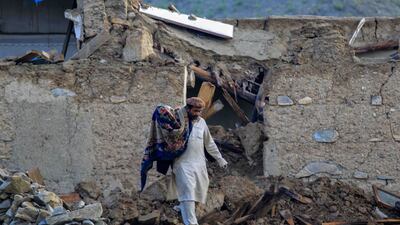
People wait for relief in Afghanistan after a 5.9 magnitude earthquake killed more than 1,100 people and injured more than 6,000 in June 2022. All photos: EPA -
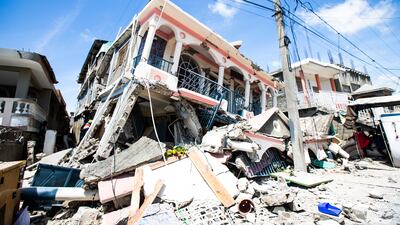
Damaged buildings in Los Cayos, Haiti, after a 7.2 magnitude quake struck in August 2021, killing more than 2,200 -

A village in Palu after 7.5 magnitude quake and a series of powerful aftershocks hit Indonesia's Central Sulawesi province in September 2018, killing at least 4,300 -
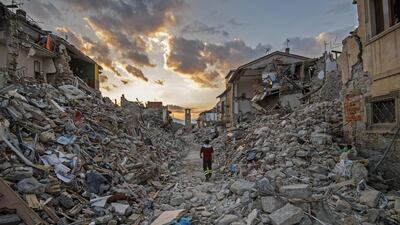
Rescue teams continue their operations in the rubble of the largely destroyed Lazio mountain village of Amatrice, Italy, after a devastating 6.0 magnitude earthquake struck in August 2016, leaving 299 -
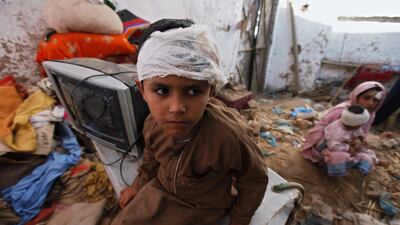
An injured boy sits in a damaged house in Peshawar, Pakistan, after a7.6 magnitude earthquake struck in October 2015, killing 86,000 -
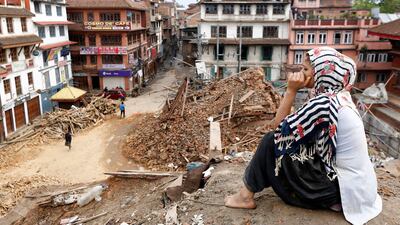
A woman sits on the top of a damaged temple in Kathmandu as she watches rescue workers search for victims of a 7.8 magnitude quake that struck in April 2015, killing more than 8,900 in Nepal, India, China and Bangladesh -
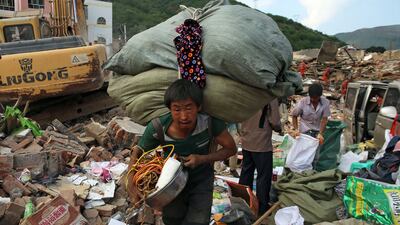
A survivor carries his belongings in Longtoushan, in China's Yunnan province, after an earthquake shook the country's south-west in August 2014, killing several hundreds -
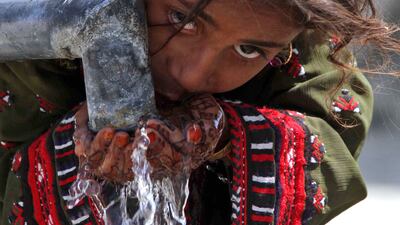
A girl drinks water from a community tap in Pakistan's Balochistan province after a 7.7 magnitude quake struck in September 2013, killing more than 820 people and injuring hundreds -
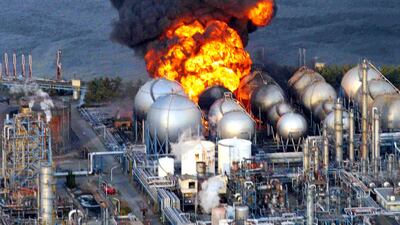
A fire rages at an oil refinery in Chiba city after an 8.8 magnitude quake hit northern Japan in March 2011 -
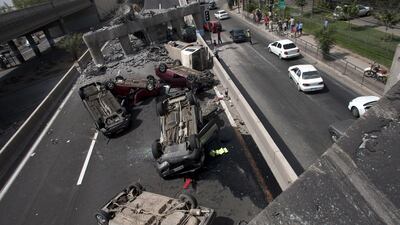
Overturned cars on a road in Santiago, Chile, after an 8.8 magnitude quake shook the country in February 2010 -
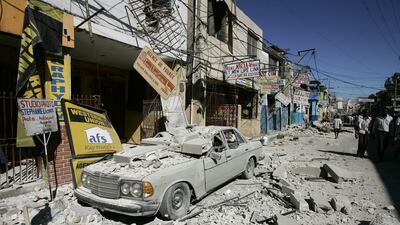
Haitians walk past damaged buildings in Puerto Principe after a quake with a magnitude of 7.0 struck in January 2010, killing more than 100,000 people -
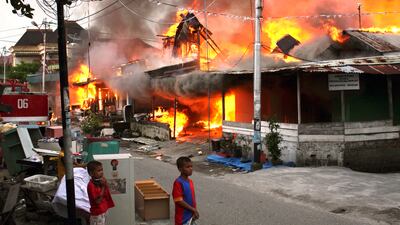
A house burns in Padang after a 7.6 magnitude earthquake struck off the west coast of Indonesia's Sumatra island in September 2009, killing about 200 -
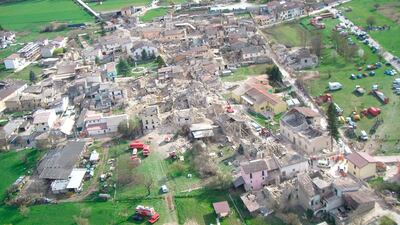
The quake-ravaged village of Onna, in Italy's L'Aquila province, after an earthquake struck in April 2009, killing 90 -

A man surveys the destruction in Shifang city, in China's Sichuan province, in May 2008 after an 8.0 magnitude earthquake killed more than 69,000, injured more than 374,000 and left 18,222 missing -
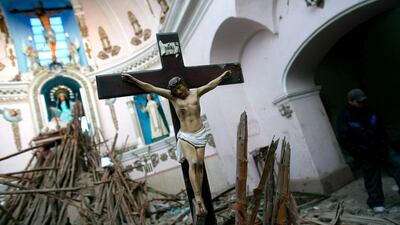
The interior of a collapsed church in Ica, Peru, after an 7.9 magnitude earthquake hit the country in August 2007, killing 595 people -
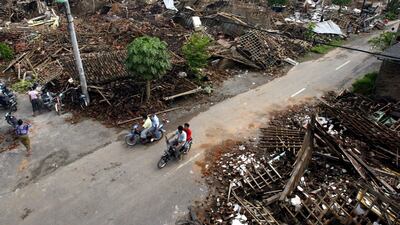
A devastated area in Bawuran village in Bantul, Yogyakarta, after a 6.4 magnitude earthquake struck in May 2006, killing more than 5,700 -
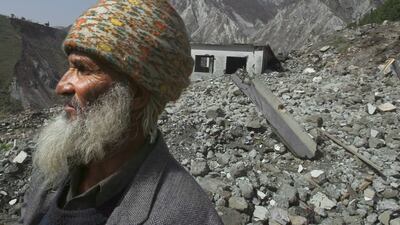
A man stands next to debris in Pakistani-administered Kashmir after an earthquake with a magnitude of 7.6 struck in March 2006, killing more than 86,000 -
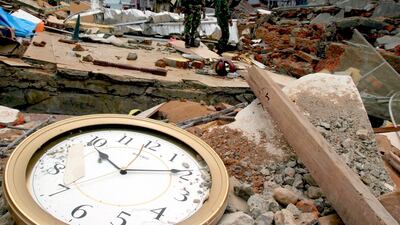
Rescue workers survey the destruction caused by an 8.7 magnitude earthquake that shook Indonesia's Sumatra island in March 2005, killing 915 people -

The trail of destruction in the Indonesian town of Banda Aceh, which was flattened by a tsunami triggered by an undersea earthquake that struck near the west coast of northern Sumatra. The tsunami killed 227,898 people in 14 countries -
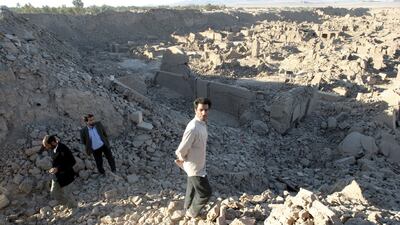
Arg'e Bam, a 2,000-year-old historical attraction in southern Iran, was destroyed by a 6.3 magnitude quake that struck in December 2003, killing at least 34,000 -
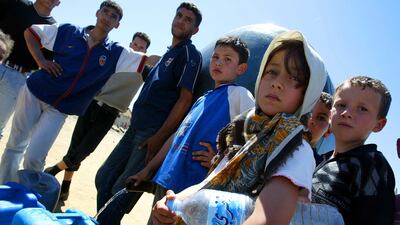
Survivors line up for water at a make-shift camp in Bordl Manaiel, Algeria, after a 6.8 magnitude quake rocked the North African country in May 2003, killing more than 2,630 -
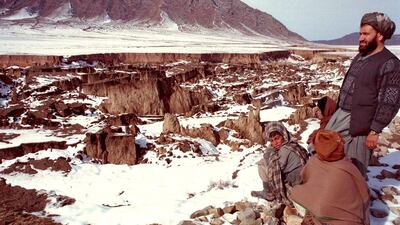
Afghans survey the damage after two powerful quakes, with magnitudes of 7.4 and 6.1, struck the country's Hindu Kush mountain range three weeks apart in March 2002, killing more than 2,160 people -
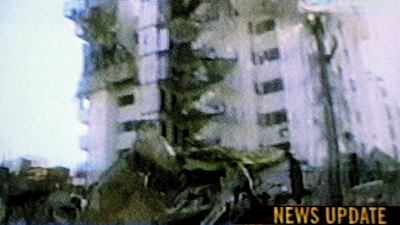
A building damaged by a 6.9 magnitude quake that rocked India's western Gujarat state in January 2001, killing between 13,000 and 20,000 people


Using the appropriate strength of concrete and rebar steel in a building is important and straightforward. Even without additional measures, ensuring that the basic fabric of the structure is well-built is key.
That can be applied in middle-income and developing countries.
When an 8.2 magnitude quake hit Chile in 2014, only six people were killed and nine injured.
Experts attributed the small toll to tight building regulations.
“They’re a seismically active region of the world and they are very good at implementing their building codes, similar to California,” John Bellini, a Denver-based geophysicist at the US Geological Survey, told CNN at the time.
The country also had up-to-date planning. They evacuated over a million people from the city of Coquimbo within hours of the first quake, to save people from tsunamis. It meant that there was a much lower risk of casualties if aftershocks brought down buildings that were already damaged.
However, experts all agree that preparing for earthquakes is only half the battle. Looking at what worked and learning from mistakes after major quakes, as well as sharing best practices between at-risk countries, helps engineers find the best design to mitigate devastation.

