



Live updates: follow the latest news on the Turkey and Syria earthquake
Turkey on Tuesday announced a three-month state of emergency and the World Health Organisation warned 23 million people could have been affected by Monday's earthquake that has now killed more than 5,000 people.
The organisation also issued a stark warning that the death toll could surpass 20,000.
The toll from the 7.8-magnitude earthquake that has left widespread devastation across eastern Turkey and northern Syria continued to rise sharply on Monday, with the UN saying “thousands” of children may have been among those killed.
By Tuesday evening, Turkey said at least 3,400 people have been killed while in Syria at least 1,600 are dead.
“It is now a race against time,” said WHO director general Dr Tedros Adhanom Ghebreyesus. The UN health agency was sending urgently required aid to the area, he added.
“We're mobilising emergency supplies and we have activated the WHO network of emergency medical teams to provide essential health care for the injured and most vulnerable,” he said.
International support was pouring in on Tuesday, with many countries sending teams of specialist rescuers and equipment as well as financial support for the relief effort. President Sheikh Mohammed ordered $100 million of aid to be split between Turkey and Syria.
-
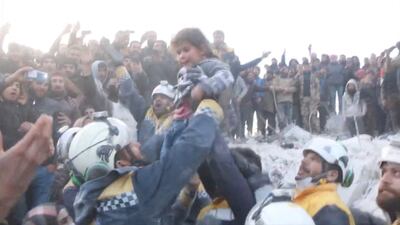
A child being rescued from the rubble in this screengrab obtained from social media, in Bisnia in Syria. Reuters -

A rescued boy is given water in a bottle cap in Hatay, Turkey. Reuters -
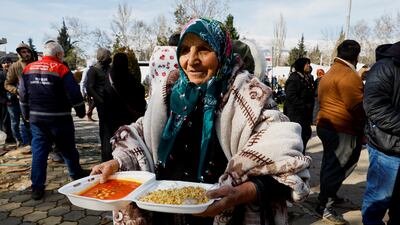
A woman carries a box of food in Kahramanmaras, Turkey. Reuters -
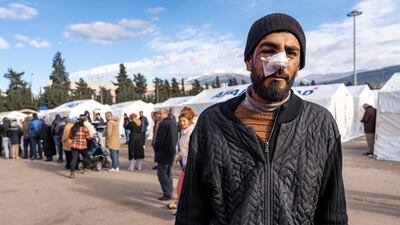
'We were screaming for help until people came to help us and they took us to the hospital', said Hamid from Homs who was injured in a building collapse. Matt Kynaston / The National -
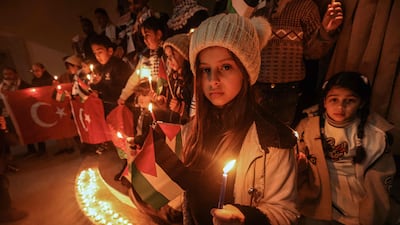
Palestinians attend a vigil to exress solidarity with the people of Turkey and Syria in Khan Yunius in the southern Gaza Strip. AFP -
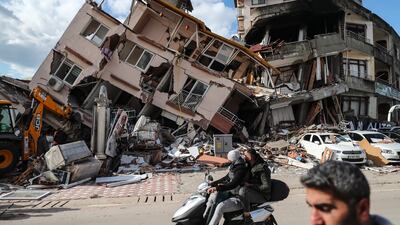
A collapsed building in Hatay, Turkey after a major earthquake struck southern Turkey and northern Syria on February 6. EPA -
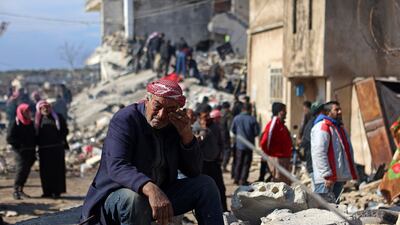
A Syrian man cries as he sits on the rubble of a collapsed building in the rebel-held town of Jindayris. AFP -
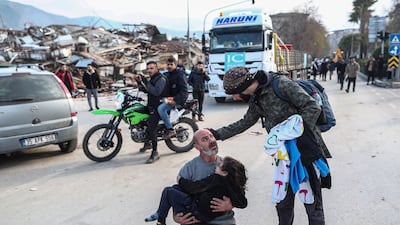
A man carries a girl who was rescued from the rubble of a collapsed building in Hatay. EPA -
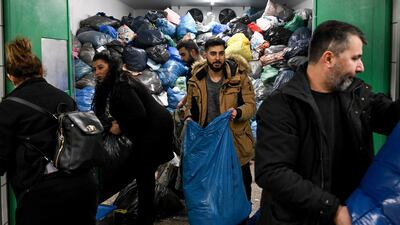
Members of the Turkish community in Berlin gather humanitarian aid. EPA -
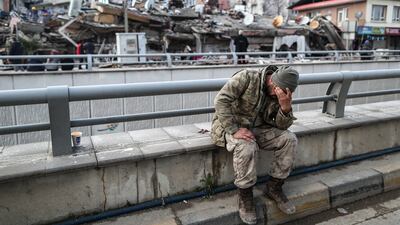
A Turkish soldier in front of a collapsed building in Hatay. EPA -
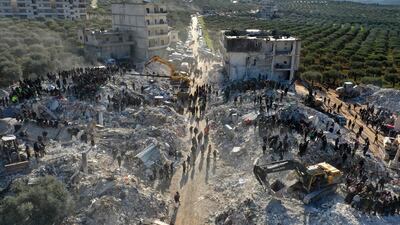
The rubble of buildings in the village of Besnaya in Syria's Idlib province. AFP -
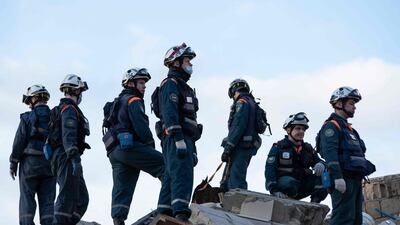
Russian rescuers search for survivors in the town of Jableh in Syria's Latakia province. AFP -
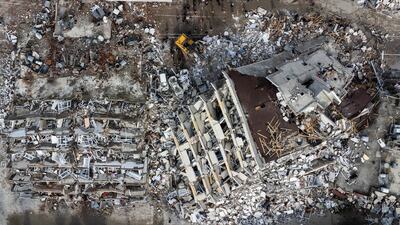
A photo taken with a drone shows an aerial view over collapsed buildings after an earthquake in Hatay, Turkey. EPA -
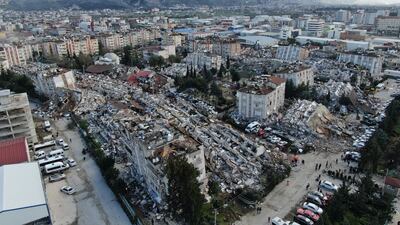
Destruction in Hatay city centre. AP -
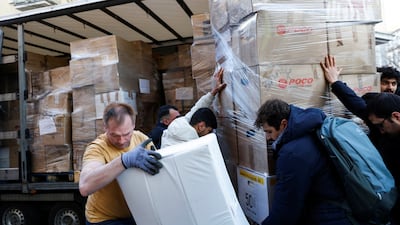
Members of the Turkish community in Berlin collect aid to support victims. Reuters -
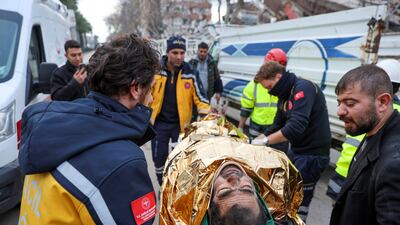
An injured man is carried to an ambulance after being rescued from the rubble in Hatay. Reuters -
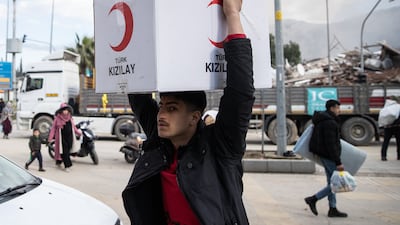
A man carries an aid box in Hatay. Getty -
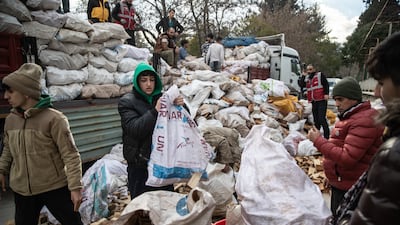
Bags of wood for fires are distributed in Hatay Turkey. Getty -
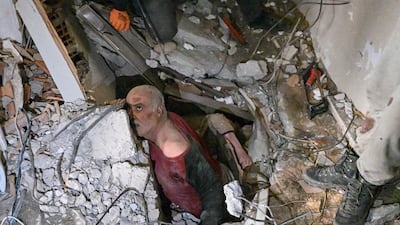
A man trapped in rubble waits while debris is removed in Hatay. AFP -
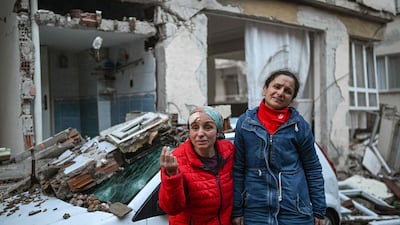
Residents look for their relatives in Hatay. AFP -
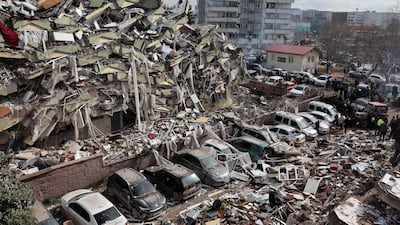
Rescuers look for survivors under the rubble of collapsed buildings in Kahramanmaras, close to the quake's epicentre. AFP -
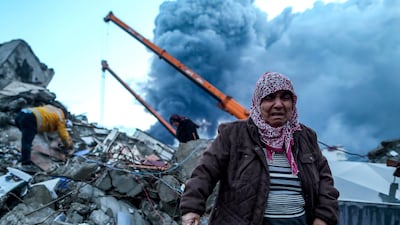
Emergency personnel search for victims at the site of a collapsed building in the city of Iskenderun. EPA -
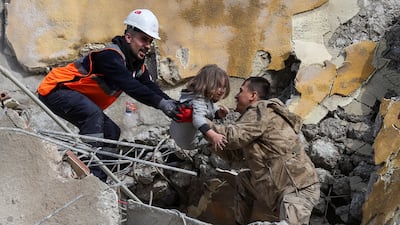
Muhammet Ruzgar, five, is carried by rescuers from the site of a damaged building in Hatay. Reuters -
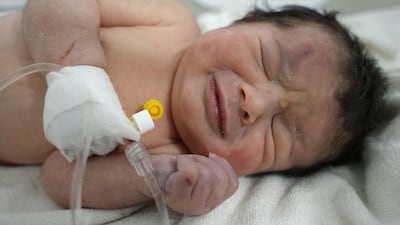
A newborn found attached by her umbilical cord to her mother and pulled alive from the rubble of a home in northern Syria receives care at a clinic in Afrin. AFP -
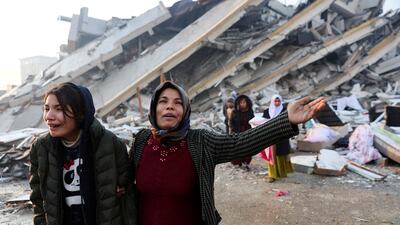
Women grieve in Hatay, Turkey. Reuters -
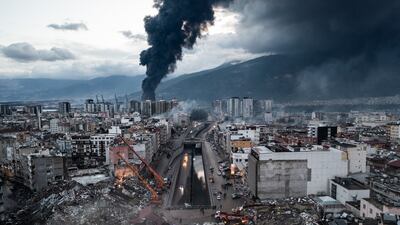
Smoke billows at the site of a collapsed building in Iskenderun, Turkey. Getty -
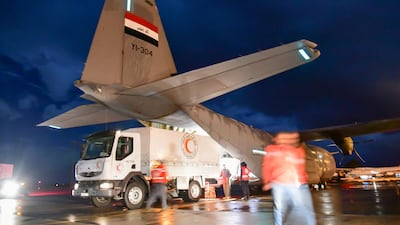
An Iraqi plane offloads aid at Damascus airport in Syria. Reuters -

Two people cry near rubble in Turkey's Hatay province. Reuters -
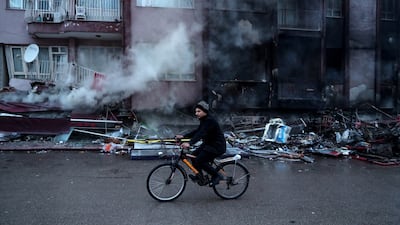
A damaged building in Iskenderun. EPA -
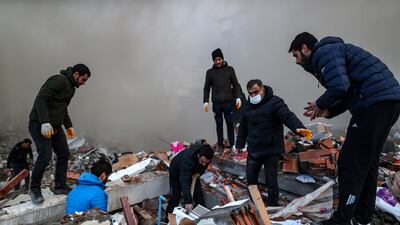
Rescuers search for survivors at the site of a collapsed building in Iskenderun. EPA -
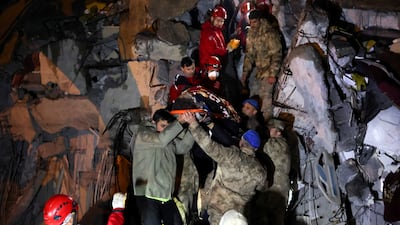
Cennet Sucu is rescued from beneath the rubble of collapsed hospital in Iskenderun. Reuters -
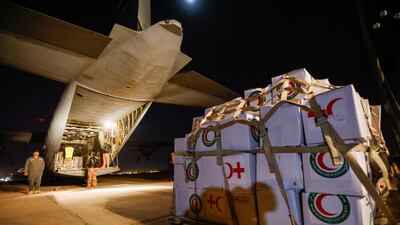
Security forces load Red Crescent aid on to a plane destined for Syria at a military base in Baghdad, Iraq. Reuters -
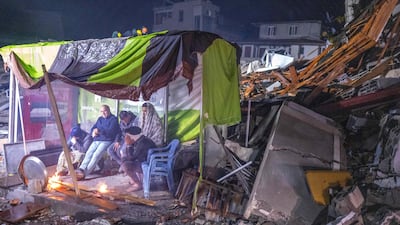
People rest next to fire amid the rubble in Hatay, after a 7. 8-magnitude earthquake struck Turkey's south-east. AFP -
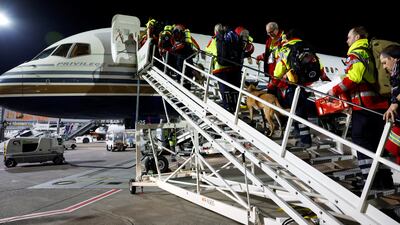
Rescuers board a charter plane in Cologne, Germany, as they head to Turkey to assist in the search for find survivors of the quake. Reuters -
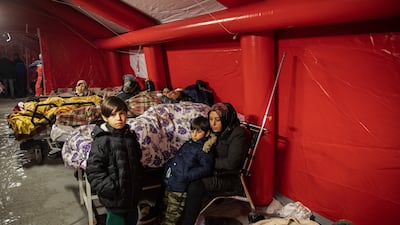
Injured survivors wait to be treated at a field hospital in Iskenderun,Turkey. Getty -
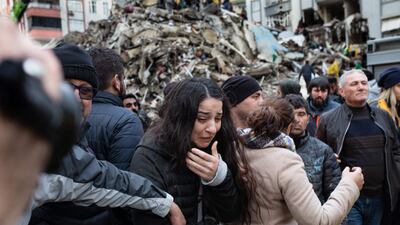
Residents of Turkish city Adana gather at the scene of a collapsed building. The death toll in Turkey and Syria has risen to more than 2,000 after the region's strongest quake in nearly a century. AFP -
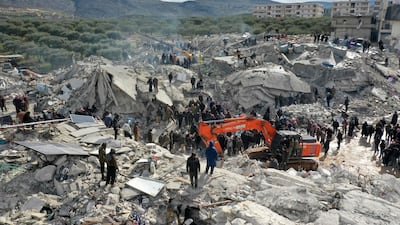
Residents search for survivors amid the rubble of collapsed buildings in the village of Besnia, in Syria's north-western Idlib province. AFP -
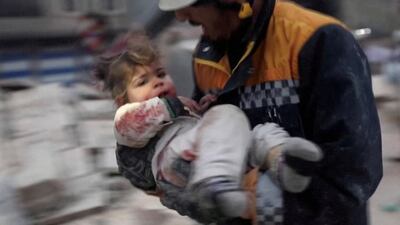
A rescuer carries a Syrian toddler, Raghad Ismail, away from the rubble of a building. Reuters -
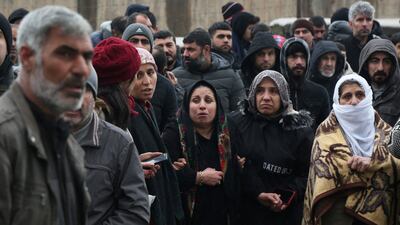
Residents wait anxiously as rescue operations take place in Diyarbakir, Turkey. Reuters -
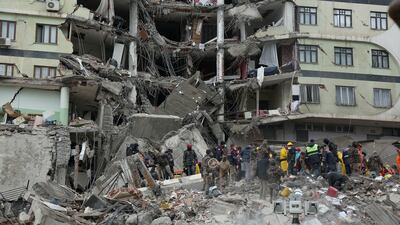
Rescue workers search for survivors under the rubble in Diyarbakir. Reuters -
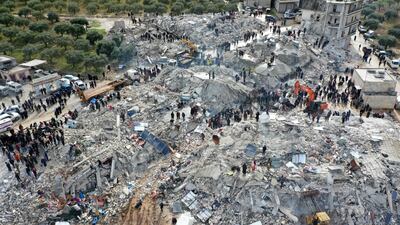
Residents search for survivors in Besnia, Syria. AFP -
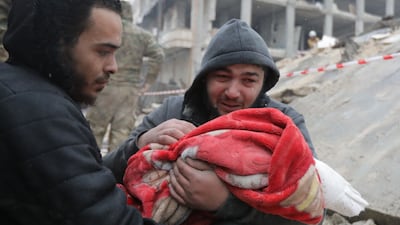
A Syrian man weeps as he carries the body of his son who was killed in an earthquake in the town of Jandaris. AFP -
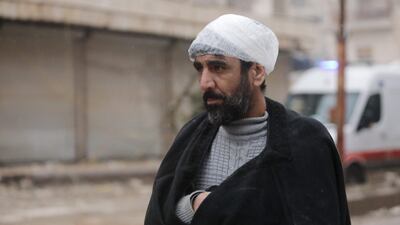
A wounded man in Jandaris. AFP -
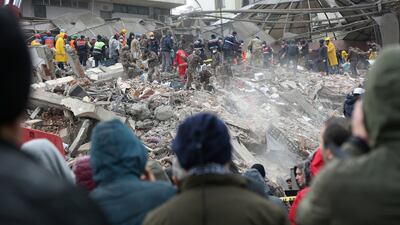
Rescue workers search for survivors in Diyarbakir, Turkey. Reuters -
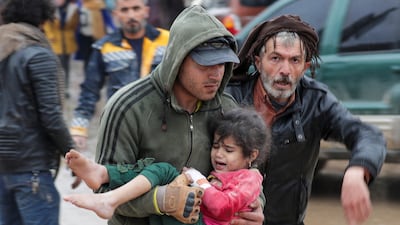
A man carries a girl to safety following the earthquake, in Jandaris, Syria. Reuters -
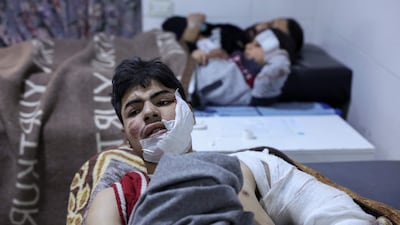
People receive treatment at Al Rahma hospital in the Syrian town of Darkush. AFP -
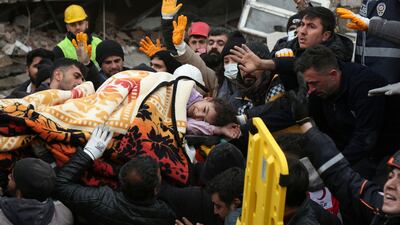
Rescuers carry a girl from a collapsed building, in Diyarbakir, Turkey. Reuters -
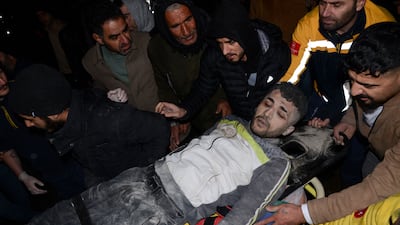
A survivor is extracted from the rubble in Diyarbakir. AFP -
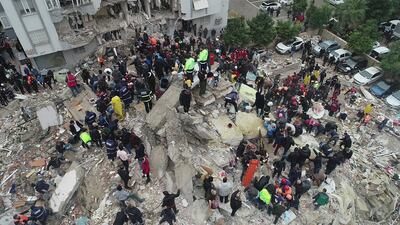
The aftermath of the 7.8-magnitude earthquake on February 6 in Adana, Turkey. Reuters -
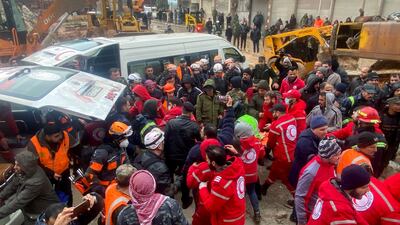
Rescuers work near the site of a collapsed building in Hama, Syria. Reuters -

Turkish sweet vendors at Dubai Waterfront Market watch earthquake updates on a phone. Victor Besa / The National -
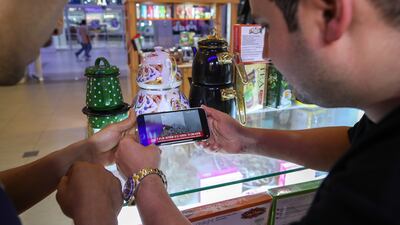
Hayri Aggül and Ismet Guven watch the latest news on the disaster. Victor Besa / The National -

Syrian President Bashar Al Assad (C) leads an emergency cabinet meeting in the capital, Damascus. EPA -

Hundreds of people were killed as they slept. Abd Almajed Alkarh for The National -
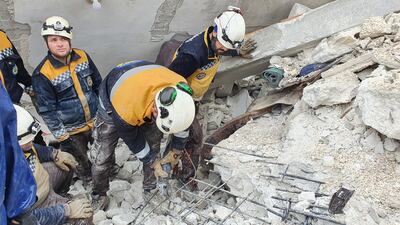
Rescue teams search for survivors in Idlib, Syria. Abd Almajed Alkarh for The National -
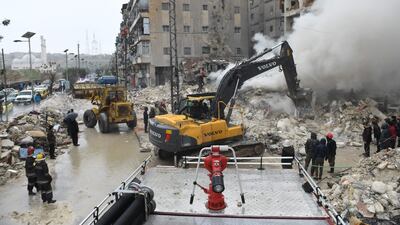
Rescue teams look for survivors under the rubble of a collapsed building in the northern Syrian city of Aleppo. AFP -
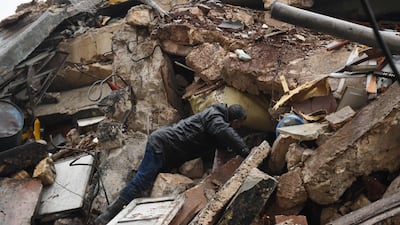
A desperate search for survivors in Aleppo. AFP -
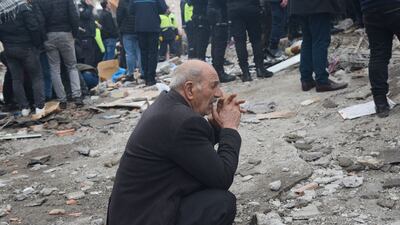
Despair in Diyarbakir, south-eastern Turkey. AFP -
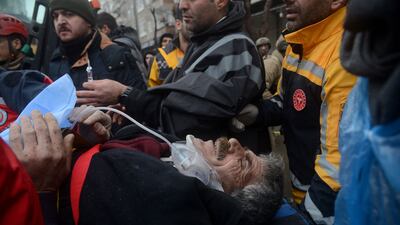
An injured survivor is pulled from the rubble in Diyarbakir. AFP -
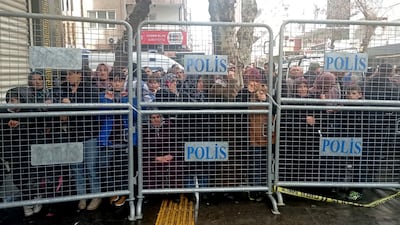
Relatives face an anxious wait as emergency teams search for survivors in Diyarbakir. EPA -
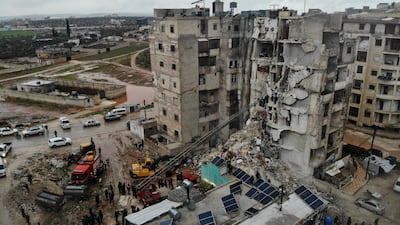
Damage caused by the earthquake in Idlib, north-western Syria. Moawia Atrash for The National -
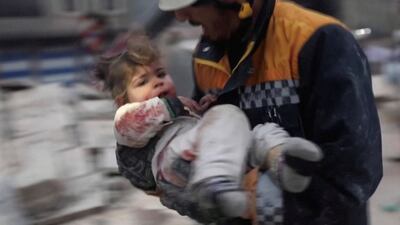
An injured child is plucked from the rubble of a building following the earthquake in rebel-held Azaz, Syria. Reuters -
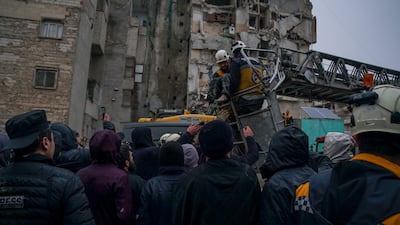
A Syrian Civil Defence team recovering victims of the earthquake in Idlib. Moawia Atrash for The National -
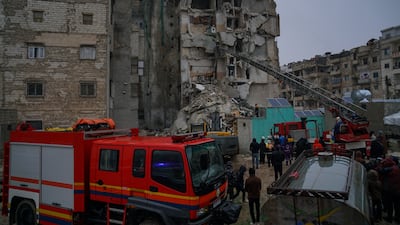
Tremors were felt as far away as Cyprus, Egypt and Iraq. Moawia Atrash for The National -
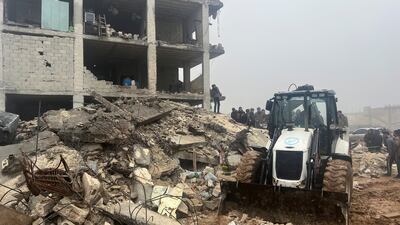
Destruction in the rebel-held town of Jandaris, Syria. Reuters -
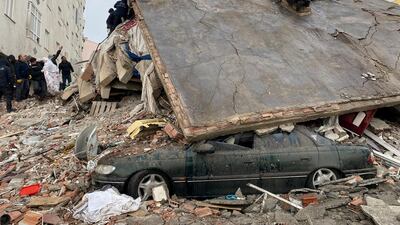
People search through rubble in Diyarbakir, Turkey. Reuters -
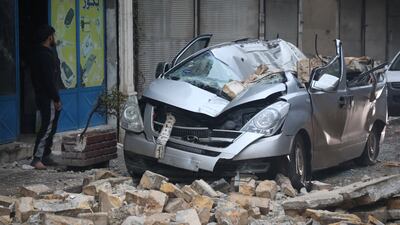
A car is smashed up by fallen debris in Azaz. Reuters -
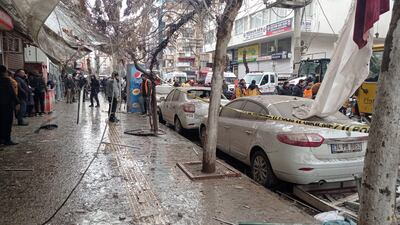
Damaged vehicles after the powerful earthquake in Diyarbakir. EPA -
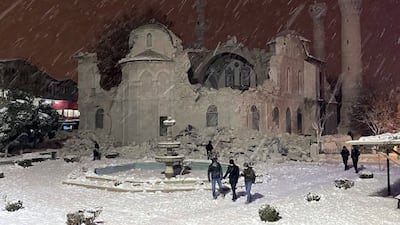
Severe damage to a mosque in Malatya, Turkey. AP -
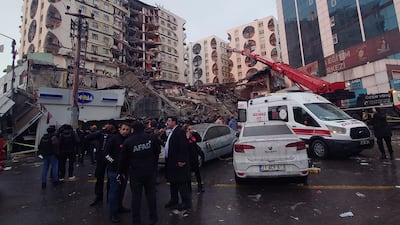
Several buildings collapsed, trapping many people underneath the rubble. AP -
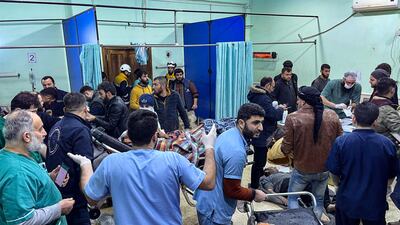
Hospitals in north-eastern Syria were full of injured people. AFP -
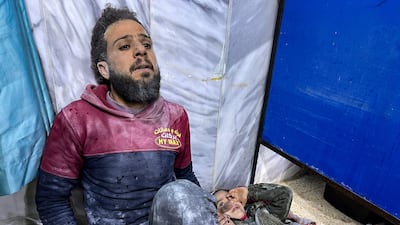
An injured man waits for treatment at Bab Al Hawa hospital in Syria's Idlib province. AFP -

A car is buried underneath the rubble of a collapsed building in Azmarin, a town in Syria's Idlib province. AP -
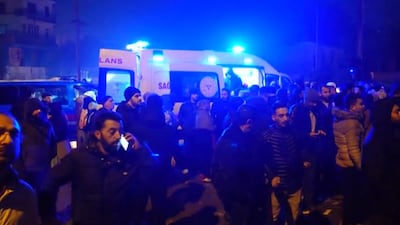
Rescuers search for victims as an ambulance waits. AFP -
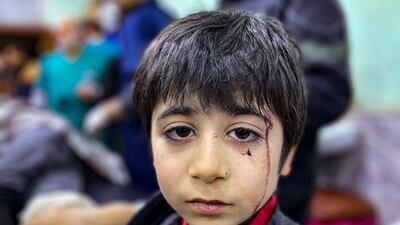
An injured child awaits treatment at Bab Al Hawa hospital. AFP -
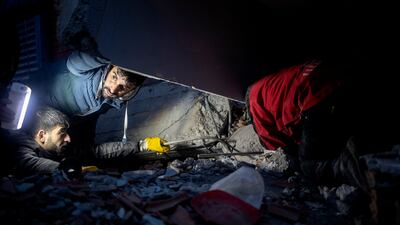
Rescuers search through the rubble for survivors. EPA -
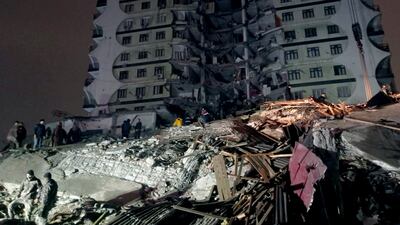
The US Geological Survey said the quake began at 4.17am local time. EPA -
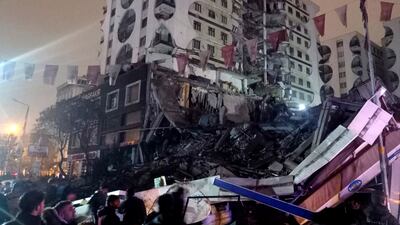
People at the site of a collapsed building. EPA -
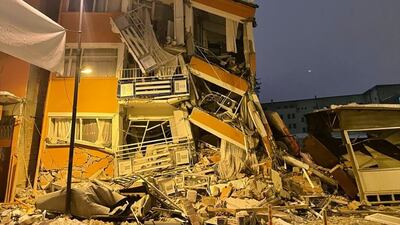
The earthquake in Turkey caused widespread destruction. AP -
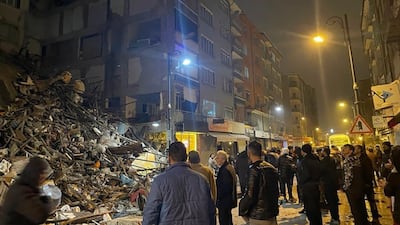
People gather around a collapsed building in Pazarcik, in Turkey's Kahramanmaras province. AP -
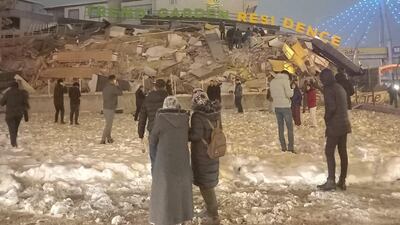
At least 130 buildings collapsed in the Turkish city of Malatya. Reuters -
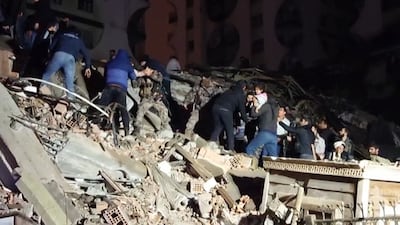
Rescuers search for victims in Diyarbakir. AFP -
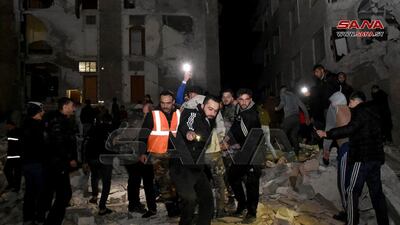
Rescuers carry a victim at the site of a collapsed building in Hama, Syria. AFP -
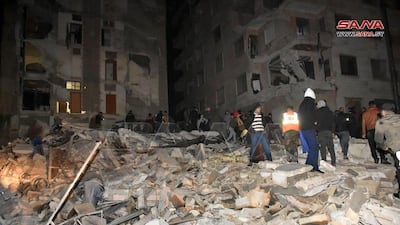
Rescuers search for survivors in Hama. AFP -
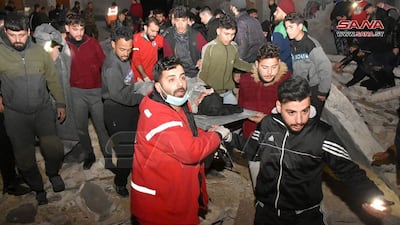
Rescuers carry a victim pulled out from under the rubble of an eight-storey building. AFP -

Damaged buildings in Hama. The aftershocks of the quake were felt in Syria and other neighbouring countries. Reuters -

A Syrian Civil Defence representative said the situation in the city was catastrophic. Reuters -

The death toll is expected to rise in Turkey and Syria. Reuters


The situation is particularly dire in northern Syria, which has already been decimated by years of civil war.
“This is a crisis on top of multiple crises in the affected region,” said Adelheid Marschang, WHO senior emergency officer at the organisation's board meeting in Geneva.
However, the sole border crossing used to shuttle life-saving aid from Turkey was itself “a disaster zone”, the UN said.
A representative said UN aid to north-western Syria was temporarily halted.
“Some roads are broken, some are inaccessible. There are logistical issues that need to be worked through,” Madevi Sun-Suon of the UN Office for the Co-ordination of Humanitarian Assistance told Reuters.
The scale of damage to infrastructure was also becoming clear on Tuesday, as hundreds of shipping containers continued to burn at Turkey's Iskenderun Port, shutting down operations and forcing freight liners to divert vessels to other ports.
Turkey's maritime authority said that the port, located on the Mediterranean coast in the southern province of Hatay, was damaged due to the earthquake that struck Turkey and neighbouring Syria. Iskenderun is home to heavy industries such as steel and is one of the two major container hubs on Turkey's southeastern shores.
While rescue teams from 70 countries fly in to bolster the 24,400 emergency personnel now working on the ground in Turkey, in Syria people continued to dig through the debris with bare hands.
Syria's volunteer opposition rescue workers, known as the White Helmets, have appealed for heavy machinery to help.
“There are a lot of efforts by our teams but they are unable to respond to the catastrophe and the large number of collapsed buildings,” the group's head Raed Al Saleh told Reuters.
Without urgent aid, expert rescue teams and better access, the death toll could continue to rise sharply.
“The earthquakes that hit southern Turkey and northern Syria early yesterday morning may have killed thousands of children,” Unicef spokesman James Elder said in a press briefing on Tuesday.
Cities of eastern Turkey before the earthquake — in pictures
-

The Pool of Abraham and Rizvaniye Mosque in the city of Sanliurfa. Turkey's south-eastern cities are home to beautiful architecture. All photos: Getty -

Mevlid-i Halil Camii mosque in Sanliurfa -
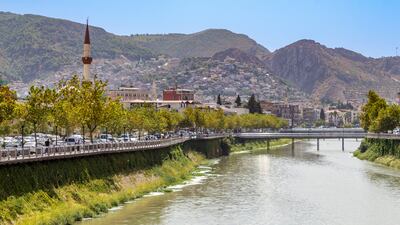
The Asi river flowing through Hatay city centre -
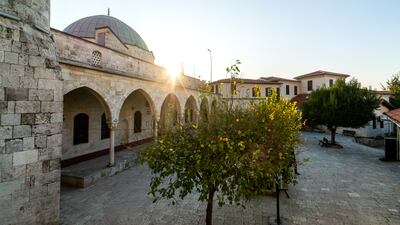
Habibi Neccar Mosque in Hatay -
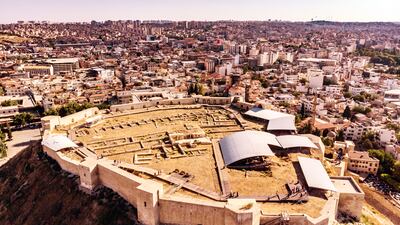
The city of Gaziantep -

A market street in Gaziantep -
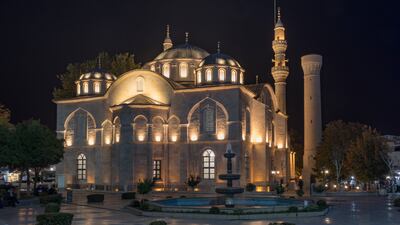
The Haci Yusuf Mosque in Malatya -
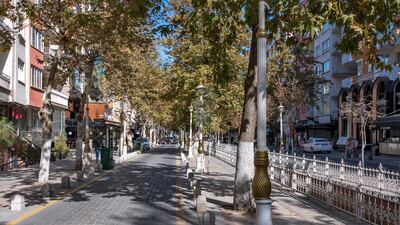
Views from Malatya City Centre in Eastern Anatolia -

The inner yard of the Ulu Camii (The Great Mosque) in Diyarbakır


Almost 6,000 buildings have been destroyed in Turkey. Bodies continue to be removed from under rubble in both countries.
In the impoverished rebel-held north-western regions of Syria, resources for assistance are scarce, in a country that is in its 12th year of war.
The WHO said it was “especially concerned” about areas in Turkey and Syria where communication is difficult.
Aside from the rising death toll, Dr Tedros said plummeting temperatures are making matters worse.
“Numbers do not tell us about the perilous situation that many families now face, having lost everything, forced to sleep outside in the middle of winter,” he said.
Nine hours after the first quake, another 7.5-magnitude aftershock hit Turkey, one of more than 200 aftershocks recorded since the initial disaster.
“More aftershocks are certainly expected, given the size of the main shock,” said Alex Hatem, a US Geological Survey research geologist.
“We expect aftershocks to continue in the coming days, weeks and months.”
Damage to infrastructure, roads and communication lines “continues to hamper access and other search and rescue efforts”, Dr Tedros said.
In Syria, Abdelrazzaq Al Nahban said his younger brother died after being alive under rubble for 15 hours without medical assistance.
“There was nobody to take him to the hospital. We are incapable of doing anything,” he wrote on Facebook.
Many more like him shared their plight as aid became increasingly difficult to bring through from Turkey.
So far, 17 EU countries have offered assistance to Turkey in the form of search and rescue and medical emergency teams. More than 1,100 rescuers and 72 search dogs are heading to Turkey, with the first batch arriving on Monday.
Russia, China and India are also sending assistance in the form of rescuers and humanitarian aid, while Ukraine's Foreign Minister Dmytro Kuleba said his country was looking for spare capacity to assist, despite the war in the country.
Lebanon and Palestine have offered assistance despite their own dire finances.
Israel is also dispatching aid to Turkey. Prime Minister Benjamin Netanyahu also said he was ready to send aid to Syria, although Damascus denied that it had asked for help. Syria and Israel have no official diplomatic relations. Iran and Iraq have also sent aid shipments.

