


An Egyptian ship has inflicted large damage to the coral reef in the Gulf of Aqaba after running aground, Jordanian state television said on Tuesday.
It is the second incident within weeks to cause environmental damage in Aqaba, Jordan’s only port and an important regional diving centre.
State-owned Al Mamlaka television quoted an unidentified source as saying that "large damage has been sustained by the coral as a result of the ship running aground in the Gulf of Aqaba".
An official in Aqaba, speaking on condition of anonymity, identified the vessel as the Lotus, a general cargo ship built in 1990.
Witnesses said the ship ran aground in the Aqaba Marine Reserve, which comprises almost half of Jordan's 26-kilometre coastline.
The International Register of Shipping showed that the 108-metre Lotus is operated by Sea Gate Management, an Egyptian company.
It also operates the Flower of Sea, a similar type of ship that Jordanian authorities said spilt at least 11 tonnes of fuel oil in the Gulf of Aqaba last month. The August spill contaminated parts of the coral reef and local divers described it as the worst spill in decades.
-
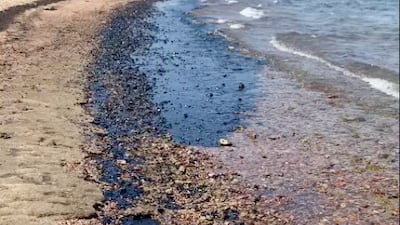
Oil on the southern shore of the Jordanian port city of Aqaba after a spill Jordanian authorities say came from an Egyptian-owned ship moored in the port. The National -
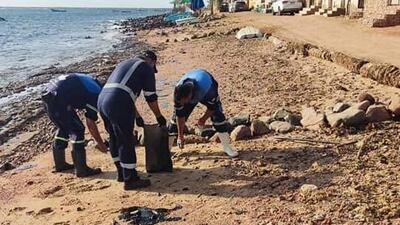
Egyptian workers clean a beach in the Red Sea resort town of Dahab following a spill near the Jordanian city of Aqaba. Photo: Egypt's Ministry of Environment -
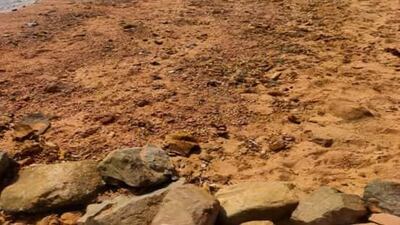
A beach in the Egyptian Red Sea beach town of Dahab. Photo: Egypt's Ministry of Environment -

The Flower of Sea moored in Aqaba waters. Jordanian authorities say the Egyptian-owned ship was behind an oil spill on August 14 that affected large parts of Aqaba's Red Sea coast. The National -
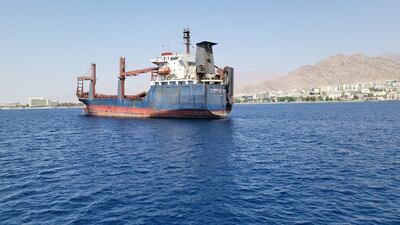
The Flower of Sea moored in Aqaba waters. The National


Jordanian authorities said the spill also spread to neighbouring countries.
The official said the Lotus was towed on Tuesday to the Aqaba port and the incident will be investigated.
“No one is allowed to come near to the ship pending the investigation,” he added.
The official Jordanian news agency said that divers had been sent to the site to “assess the environmental damage” after the ship was towed away.
Video footage taken by an Aqaba resident on Tuesday morning showed the Lotus in shallow waters next to the Aqaba Marine Science Station shortly after the ship ran aground.
The marine reserve was carved out over the past few years to try to protect local fish and the coral reef after decades of construction and pollution in the area.
Aqaba has had a thriving diving industry and is a gateway to archaeological sites in the interior of Jordan, mainly the Nabataean city of Petra.
But diving instructors say there has been a significant reduction in the number of visiting divers since the fuel oil spill last month.
In June, Aqaba experienced its worst port accident in living memory when a cylinder containing about 25 tonnes of chlorine gas, destined for export to Djibouti, fell from a crane and exploded, killing 13 people.

