

Egypt has unveiled a major new archaeological find of 250 sarcophagi, 150 small bronze statues of gods and goddesses and other antiquities at the Saqqara necropolis.
Mostafa Waziri, secretary general of Egypt's Supreme Council of Antiquities, displayed part of the cache, including 35 of the painted wooden coffins, in a televised event on Monday at the Unesco Heritage site south of Cairo.
Dating back more than 2,500 years to the Late Period, the sarcophagi are in good condition and all included mummies inside.
This is the largest number of coffins and bronze statues to be unearthed by the Egyptian archaeological mission at the site near the famous Step Pyramid of Djoser.
“I'm very proud that the discovery was made by Egyptians, and this will not be the last discovery here,” Mr Waziri said.
The find is one of several made at Saqqara, the necropolis of the ancient capital of Memphis, in recent years.
The Egyptian mission has completed its fourth excavation of the site since April 2018 and will conduct a fifth in September after the hot summer months.
A “rare” papyrus scroll, expected to measure about nine metres, was also found and could be a depiction of a chapter of the Book of the Dead, a tradition of funerary manuscripts dating back to the Old Kingdom, Mr Waziri said.
The statuettes, displayed in a large glass case, include deities such as Anubis, Amun, Hathor, Isis, Min, Nefertum, Osiris and Bastet — the “protector” of the area in the form of a cat. Mr Waziri highlighted the headless statue of Imhotep, the chief architect of Pharaoh Djoser who ruled ancient Egypt between 2630BC and 2611BC.
Also on display were two larger statues of the goddesses Isis and Nephthys with gilded faces, wailing in mourning.
Among the other antiquities discovered, dating back more than 3,200 years to the New Kingdom, were cosmetic items such as combs, bracelets, necklaces, small pots and a mirror.
-
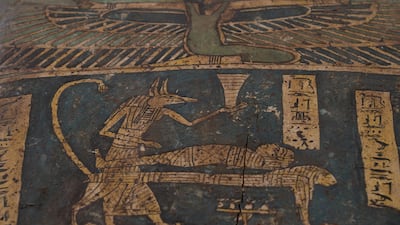
Sarcophagi dating back 2,500 years have been discovered. Mahmoud Nasr / The National -
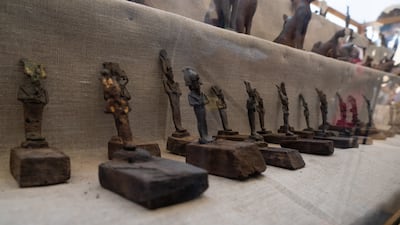
They were found near Egypt's Saqqara necropolis. Mahmoud Nasr / The National -
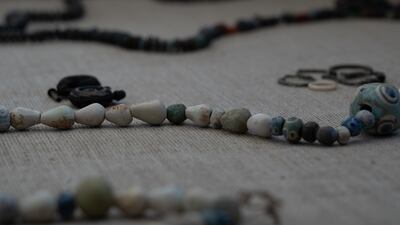
The finds, including necklaces, were displayed in a televised event on Monday at the Unesco Heritage site south of Cairo. Mahmoud Nasr / The National -
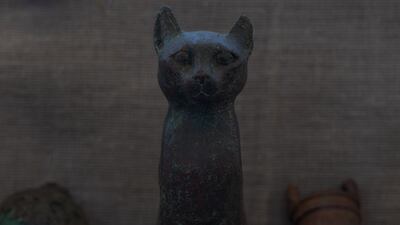
The small statues on display included deities such as Isis, Osiris and Bastet — the "protector" of the area in the form of a cat. Mahmoud Nasr / The National -
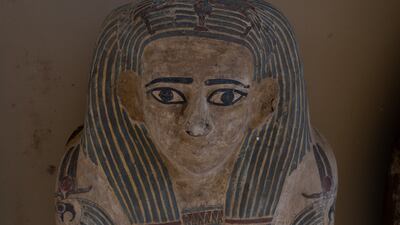
The discovery is one of several made at Saqqara, the necropolis of the ancient capital of Memphis, in recent years. Mahmoud Nasr / The National -
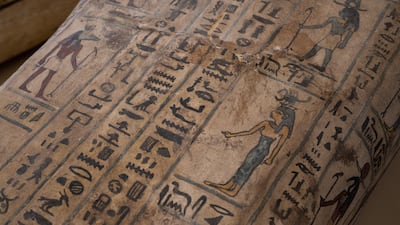
A "rare" papyrus scroll, expected to measure about 9 metres, was also found and could be part of the Book of the Dead. Mahmoud Nasr / The National -
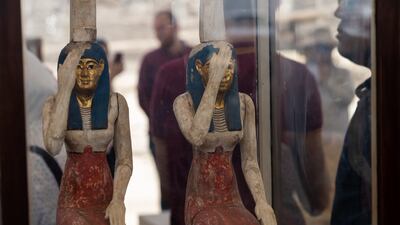
This is the largest number of coffins and bronze statues to be unearthed by the Egyptian mission at the site near the famous Step Pyramid of Djoser. Mahmoud Nasr / The National -
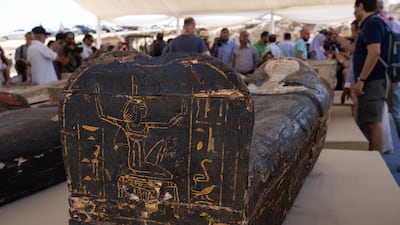
An Egyptian archaeological mission has completed its fourth excavation of the site since April 2018 and will conduct a fifth in September after the hot summer months. Mahmoud Nasr / The National -
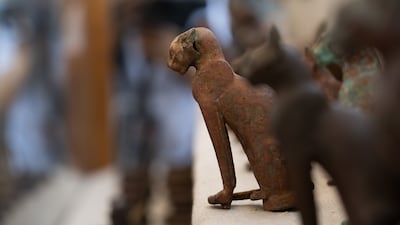
All of the items will be transported to the Grand Egyptian Museum, which is scheduled to be completed by September. Mahmoud Nasr / The National -
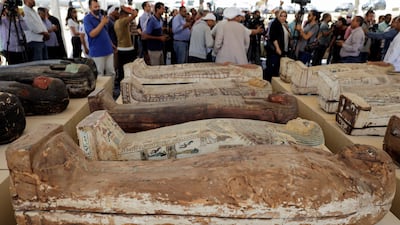
Sarcophagi dating from around 2,500 years ago, at a presentation in Giza, Egypt. Reuters -
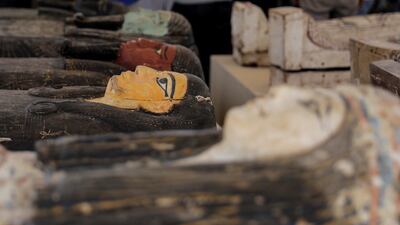
The newly discovered burial site is near Egypt's Saqqara necropolis, in Giza governorate. Reuters -
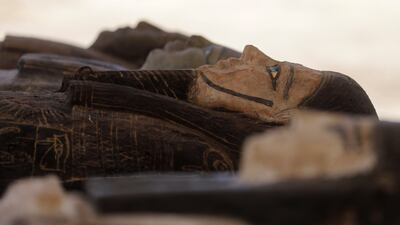
The major archaeological find includes 250 sarcophagi, 150 small bronze statues of gods and goddesses and other antiquities. Reuters -
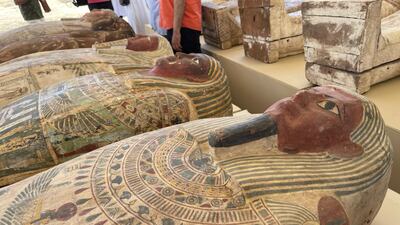
Some of the discoveries, including 35 painted wooden sarcophagi, put on display at the Unesco heritage site south of Cairo. Mahmoud Nasr / The National -
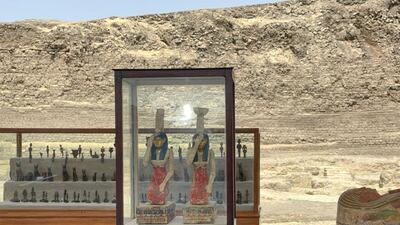
The discovery is one of several made at Saqqara, the necropolis of the ancient capital of Memphis, in recent years. Mahmoud Nasr / The National -
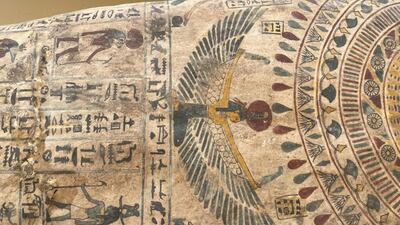
This was the Egyptian archaeological mission's fourth excavation of the site since 2018. The team will return there in the autumn. Mahmoud Nasr / The National


All of the items will be transported to the Grand Egyptian Museum, which is scheduled to be completed by September, or the Egyptian Museum in Tahrir, to be studied before deciding on where they will be displayed permanently.
Saqqara has proved a treasure trove for human and animal mummies, sarcophagi, statues and other items from ancient Egypt.
When Egyptian archaeologists began excavation at the site in 2018, they discovered the tomb of a priest that had been untouched for 4,400 years, which then became the subject of the 2020 Netflix documentary Secrets of the Saqqara Tomb.
In the autumn of 2020, the team unveiled 59 sealed sarcophagi of priests and clerks from Egypt's 26th Dynasty, followed by more than 100 ancient coffins in what was the biggest find of the year.
In January last year, the tourism and antiquities ministry announced the discovery of more than 50 wooden sarcophagi and a five-metre papyrus depicting a chapter of the Book of the Dead.
More recently, in March, five well-preserved tombs dating back to the Old Kingdom were unearthed.
Mr Waziri said there were “many surprises to come” and that he hoped the mission would find the grave of Imhotep “who changed architecture” by building what is believed to be the oldest still-standing large-scale stone monument.
Egypt hopes the archaeological discoveries and media attention will help spur tourism, which struggled to rebound in the aftermath of the 2011 uprising and has since been hit by the coronavirus pandemic, as well as the Russia-Ukraine war this year. Russia and Ukraine normally account for a big chunk of the country's tourists.
As part of its PR blitz, last year Egypt hosted a globally watched pharaonic parade of mummies and sarcophagi through central Cairo to transfer 22 mummies – 18 kings and four queens – to the National Museum of Egyptian Civilisation. The mummies included the famous King Ramses II, as well as Queen Hatshepsut.
The Grand Egyptian Museum, whose opening has been delayed several times, is a central element to the new tourism promotion strategy as the country hopes to lure back visitors.
Egypt welcomed just 3.6 million tourists in 2020, less than a quarter of the number who visited in 2019, as the pandemic wiped out $17.6 billion from Egypt’s economy and caused the loss of 844,000 travel and tourism jobs that year. However, numbers have picked up as travel resumed around the world with health protocols.
Five ancient tombs discovered at Egypt's Saqqara necropolis — in pictures
-

Egyptian archaeologists have announced the discovery of five decorated tombs, more than 4,000 years old, near Cairo. Mahmoud Nasr / The National -

The tombs are in the Saqqara necropolis, about 20 kilometres south-west of the capital. Mahmoud Nasr / The National -

Mostafa Waziri, one of the country’s top Egyptologists and secretary general of its Supreme Council of Antiquities, conducted a televised tour. Mahmoud Nasr / The National -

Decorations inside one of the five tombs discovered near Cairo. Mahmoud Nasr / The National -

The walls are markedly well-preserved for their age, archaeologists say. Mahmoud Nasr / The National -

Some of the walls show colourful depictions of the afterlife. Mahmoud Nasr / The National -

Wooden statues found inside the tomb of Pepi Nefhany who was the supervisor of the great house, at the Saqqara area, in Giza. Mahmoud Nasr / The National -

Saqqara is one of the most important archaeological areas in Egypt. Mahmoud Nasr / The National -

The unveiling ceremony was open to tourists, many of whom were in attendance during Mr Waziri's demonstration. Mahmoud Nasr / The National -

An Egyptian archaeological worker is lowered inside tombs at Saqqara. EPA -

One of the tombs belong to a woman that could be the wife of a man named Yaret. EPA -

Figurines stand inside the tomb of a man named Henu. EPA -

Reporters prepare to enter a recently discovered tomb near the famed Step Pyramid, in Saqqara. AP -

More work and studies will be carried out to reveal the secrets of these tombs, authorities said. Reuters



