• A severe economic downturn in Turkey is making life difficult for the country's population of 3.7 million Syrian refugees. All photos: AFP
    A severe economic downturn in Turkey is making life difficult for the country's population of 3.7 million Syrian refugees. All photos: AFP
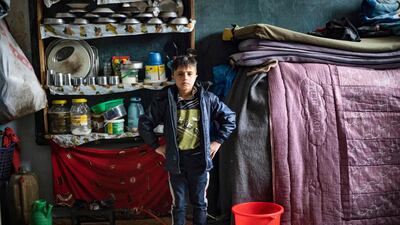
  • Syrian refugee Ahmad Ibrahim, 31, poses inside his textile shop in Sanliurfa, Turkey. Inflation has surged and the value of the Turkish lira has dropped.
    Syrian refugee Ahmad Ibrahim, 31, poses inside his textile shop in Sanliurfa, Turkey. Inflation has surged and the value of the Turkish lira has dropped.
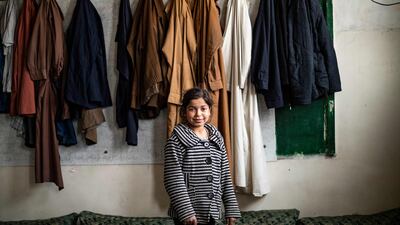
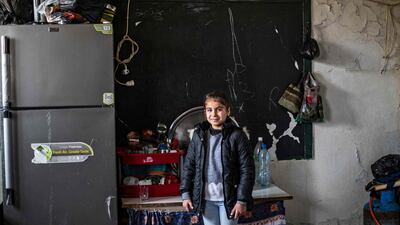
  • Samira, 43, hears the same message from Turkish politicians on television day and night: Syrian refugees like her must return home. But her home near Damascus is still not safe, she says.
    Samira, 43, hears the same message from Turkish politicians on television day and night: Syrian refugees like her must return home. But her home near Damascus is still not safe, she says.
  • Refugees fear they will be used as a scapegoat for Turkey's problems in the 2023 electoral campaign, as President Recep Tayyip Erdogan faces rising public anger over their presence.
    Refugees fear they will be used as a scapegoat for Turkey's problems in the 2023 electoral campaign, as President Recep Tayyip Erdogan faces rising public anger over their presence.
  • Despite pressure from opposition parties, Mr Erdogan has promised that Turkey will not force Syrian refugees back and 'will not throw them into the lap of murderers'. But his assurances are not allaying their fears.
    Despite pressure from opposition parties, Mr Erdogan has promised that Turkey will not force Syrian refugees back and 'will not throw them into the lap of murderers'. But his assurances are not allaying their fears.
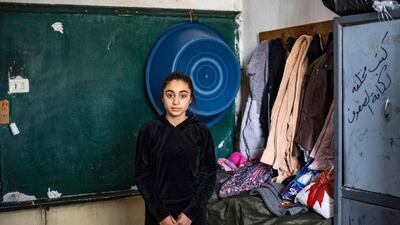
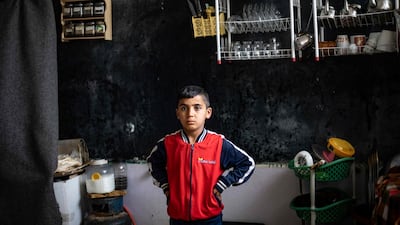
  • Fatima Ibrahim, in her early 30s, married a Syrian refugee after fleeing to Turkey nine years ago. The economic fallout is hitting them equally as hard as the Turks, she said. 'Employers pay us less, so locals are annoyed, blaming us for accepting a wage less than theirs,' she said, sitting next to her three young sons.
    Fatima Ibrahim, in her early 30s, married a Syrian refugee after fleeing to Turkey nine years ago. The economic fallout is hitting them equally as hard as the Turks, she said. 'Employers pay us less, so locals are annoyed, blaming us for accepting a wage less than theirs,' she said, sitting next to her three young sons.
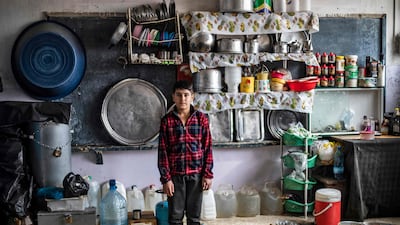
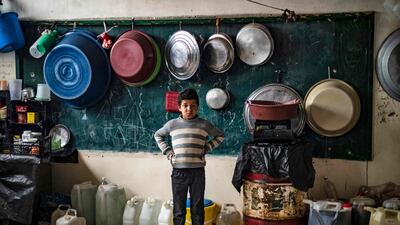
  • Haifa, 39, English teacher from Aleppo, is fluent in Turkish after nine years here, and avoids speaking Arabic in public so as not to attract attention. 'I want to keep myself safe. Political issues affect us more than the economy,' she said.
    Haifa, 39, English teacher from Aleppo, is fluent in Turkish after nine years here, and avoids speaking Arabic in public so as not to attract attention. 'I want to keep myself safe. Political issues affect us more than the economy,' she said.
  • Since 2016, the Turkish army has launched military operations in Syria, battling outlawed Kurdish militants and ISIS extremists.
    Since 2016, the Turkish army has launched military operations in Syria, battling outlawed Kurdish militants and ISIS extremists.
  • Haifa said: 'Some people tell us 'go back to your country, you're having fun while our soldiers are dying there. You think it is easy to leave everything behind you? Your memories, your house, everything. You cannot even visit your mother or father's grave.'
    Haifa said: 'Some people tell us 'go back to your country, you're having fun while our soldiers are dying there. You think it is easy to leave everything behind you? Your memories, your house, everything. You cannot even visit your mother or father's grave.'

Syrian refugees in Turkey left in anguish over their future


  • English
  • Arabic

Samira hears the same message from Turkish politicians on the television day and night: Syrian refugees like her must return home. But her home near Damascus is still not safe, she says.

The 44-year-old from Ghouta is one of the hundreds of thousands of refugees in Turkey's Sanliurfa province, which shares a long border with Syria.

Civil war in Samira's homeland is estimated to have killed nearly half a million people and displaced millions since it began with a brutal crackdown of anti-government protests in 2011.

Turkey has fervently opposed Syrian President Bashar Al Assad, backing rebels calling for his removal and opening its doors to refugees.

But a new wave of economic turbulence, which has caused inflation to surge and made the value of the lira drop, has put Turkey's 3.7 million Syrian population under enormous strain.

Samira said she has never felt so much pressure since she fled to Turkey in 2019.

"I don't think about going back, they destroyed our house. The situation is bad over there," she told AFP from her modest ground floor flat in the city of Sanliurfa, which is home to about half a million Syrian refugees ― a quarter of the province's population.

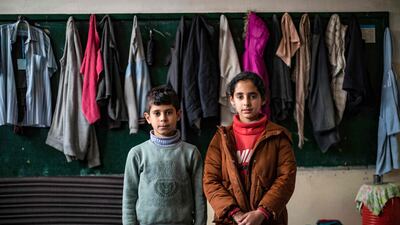
  • Twins Maha, right, and Mohammad Al Obaid, 11, were born in 2011, the year the Syrian war started. Displaced from Ras Al Ain in north-east Syria three years ago, they are pictured at a school on the outskirts of north-eastern city Hassakeh. All photos: AFP
    Twins Maha, right, and Mohammad Al Obaid, 11, were born in 2011, the year the Syrian war started. Displaced from Ras Al Ain in north-east Syria three years ago, they are pictured at a school on the outskirts of north-eastern city Hassakeh. All photos: AFP
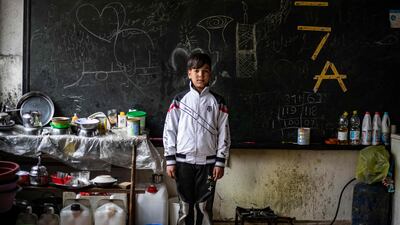
  • Nimr Alaywi, 11, who was also displaced from Ras Al Ain three years ago, at a school near Hassakeh.
    Nimr Alaywi, 11, who was also displaced from Ras Al Ain three years ago, at a school near Hassakeh.
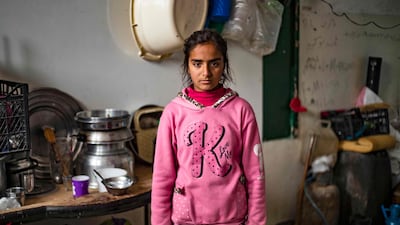
  • Amani Mahmud, 11, whose family fled Ras Al Ain, pictured at the school near Hassakeh. According to some estimates, 13.3 million Syrians have fled their homes since the civil war began on March 15, 2011.
    Amani Mahmud, 11, whose family fled Ras Al Ain, pictured at the school near Hassakeh. According to some estimates, 13.3 million Syrians have fled their homes since the civil war began on March 15, 2011.
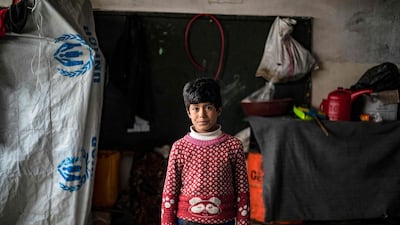
  • Mohammad Issa, 11, who was also displaced from Ras Al Ain, at the school near Hassakeh.
    Mohammad Issa, 11, who was also displaced from Ras Al Ain, at the school near Hassakeh.
  • Assil Alaywi, 11, whose family also fled Ras Al Ain for Hassakeh three years ago. Ras Al Ain was the scene of heavy fighting for much of the conflict.
    Assil Alaywi, 11, whose family also fled Ras Al Ain for Hassakeh three years ago. Ras Al Ain was the scene of heavy fighting for much of the conflict.
  • Yazan Khodr, 11, at the school near Hassakeh, after his family fled Ras Al Ain. Various groups, including Syrian government forces, extremists and Kurdish fighters, vied for control of Ras Al Ain.
    Yazan Khodr, 11, at the school near Hassakeh, after his family fled Ras Al Ain. Various groups, including Syrian government forces, extremists and Kurdish fighters, vied for control of Ras Al Ain.
  • Liana Ali, 11, in the school building on the outskirts of Hassakeh.
    Liana Ali, 11, in the school building on the outskirts of Hassakeh.
  • Manaf Mahmud, 11, pictured at the school near Hassakeh. Around four million people, at least half of them displaced, now live in the northern region.
    Manaf Mahmud, 11, pictured at the school near Hassakeh. Around four million people, at least half of them displaced, now live in the northern region.
  • Ahmad Abderrazzak, 11, at the school near Hassakeh.
    Ahmad Abderrazzak, 11, at the school near Hassakeh.
  • Fatima Barkal, 11, at the school near Hassakeh.
    Fatima Barkal, 11, at the school near Hassakeh.
  • Ammar Al Khodr, 11, at the school near Hassakeh.
    Ammar Al Khodr, 11, at the school near Hassakeh.
  • Majd Hassan, 11, at the school near Hassakeh, north-east Syria.
    Majd Hassan, 11, at the school near Hassakeh, north-east Syria.

Refugees fear they will be used as a scapegoat for Turkey's problems in the 2023 electoral campaign, as President Recep Tayyip Erdogan faces rising public anger over their presence.

The main opposition, the Republican People's Party (CHP), has promised to send them back to Syria, while the leader of the far-right Victory Party has admitted funding a viral social media video aimed at scaring Turks about a "silent invasion" of migrants.

Earlier this month, Mr Erdogan said Ankara was aiming to encourage a million Syrian refugees to return to "safe zones" on the Turkey-Syria border by building them housing and local infrastructure.

"'Send Syrians back, send Syrians back!' This is what we hear on television from morning to evening," said Samira, sitting on a cushion on the floor. She did not want to use her full name.

"Why don't they like us? We try to build a life here, we try to stand on our own feet. Politicians use us as election campaign material," she said.

Despite pressure from opposition parties, Mr Erdogan has pledged that Turkey will not force Syrian refugees back and "will not throw them into the lap of murderers".

Members of a Syrian refugee family sit outside their home at the Boynuyogun refugee camp in Hatay, Turkey. Getty Images

But his assurances are not allaying their fears.

A few metres from Samira's house, Umm Mohamed, 43, who runs a grocery store selling Syrian bread, fava and olives, cannot understand the turn of the tide in society.

"We are very scared", she said, standing behind the counter, her eyes looking timid beneath a black veil.

"We feel the pressure. As foreigners, we have to be polite all the time."

Umm Mohamed's husband defected from Mr Al Assad's army. "We can't go back," she said. "They would kill us."

Fatima Ibrahim, in her early 30s, married a Syrian refugee after fleeing to Turkey nine years ago. The economic fallout is hitting them just as hard as the Turks, she said.

Her husband lost his job as a blacksmith during the Covid pandemic. Two weeks ago he found a job as a farmer in central Konya province ― 700 kilometres from Sanliurfa.

"Employers pay us less, so locals are annoyed, blaming us for accepting a wage less than theirs," she said, sitting next to her three young sons.

"Sometimes we hear from the locals that we should go back, that we have caused them to lose their jobs," she said.

"Some people tell us, 'Syria is better now, why don't you go back? Everything gets so expensive because of you.' That makes me feel so bad."

But returning to Syria is not a possibility for Ms Ibrahim.

"I will never go back. I will either stay here or flee to Europe. There's no third option," she said.

The Boynuyogun refugee camp, which houses about 8,500 refugees from northern Syria, in Hatay. Getty Images

Ms Ibrahim said she maintains a low profile in public to avoid trouble, keeping contact with locals to a minimum.

"I don't visit my neighbours, and they don't visit my home. We don't mingle," she said.

Haifa, 39, an English teacher from Aleppo, has fluent Turkish after nine years here, and avoids speaking Arabic in public so as not to attract attention.

"I want to keep myself safe," she told AFP, referring to the time when she was exposed to verbal assaults on the street.

"Political issues affect us more than the economy," she said.

Since 2016, the Turkish army has launched military operations in Syria, battling outlawed Kurdish militants and ISIS extremists.

Haifa said: "Some people tell us 'go back to your country, you're having fun while our soldiers are dying there'".

"You think it is easy to leave everything behind you? Your memories, your house, everything. You cannot even visit your mother or father's grave."


Fifa%20World%20Cup%20Qatar%202022%20
%3Cp%3E%3Cstrong%3EFirst%20match%3A%20%3C%2Fstrong%3ENovember%2020%0D%3Cbr%3E%3Cstrong%3EFinal%2016%20round%3A%20%3C%2Fstrong%3EDecember%203%20to%206%0D%3Cbr%3E%3Cstrong%3EQuarter-finals%3A%20%3C%2Fstrong%3EDecember%209%20and%2010%0D%3Cbr%3E%3Cstrong%3ESemi-finals%3A%20%3C%2Fstrong%3EDecember%2013%20and%2014%0D%3Cbr%3E%3Cstrong%3EFinal%3A%20%3C%2Fstrong%3EDecember%2018%3C%2Fp%3E%0A
BMW M5 specs

Engine: 4.4-litre twin-turbo V-8 petrol enging with additional electric motor

Power: 727hp

Torque: 1,000Nm

Transmission: 8-speed auto

Fuel consumption: 10.6L/100km

On sale: Now

Price: From Dh650,000

Company%20profile
%3Cp%3E%3Cstrong%3EName%3A%3C%2Fstrong%3E%20WallyGPT%3Cbr%3E%3Cstrong%3EStarted%3A%20%3C%2Fstrong%3E2014%3Cbr%3E%3Cstrong%3EFounders%3A%20%3C%2Fstrong%3ESaeid%20and%20Sami%20Hejazi%3Cbr%3E%3Cstrong%3EBased%3A%3C%2Fstrong%3E%20Dubai%3Cbr%3E%3Cstrong%3ESector%3A%20%3C%2Fstrong%3EFinTech%3Cbr%3E%3Cstrong%3EInvestment%20raised%3A%20%3C%2Fstrong%3E%247.1%20million%3Cbr%3E%3Cstrong%3ENumber%20of%20staff%3A%3C%2Fstrong%3E%2020%3Cbr%3E%3Cstrong%3EInvestment%20stage%3A%20%3C%2Fstrong%3EPre-seed%20round%3C%2Fp%3E%0A
WOMAN AND CHILD

Director: Saeed Roustaee

Starring: Parinaz Izadyar, Payman Maadi

Rating: 4/5

Saturday's schedule at the Abu Dhabi Grand Prix

GP3 race, 12:30pm

Formula 1 final practice, 2pm

Formula 1 qualifying, 5pm

Formula 2 race, 6:40pm

Performance: Sam Smith

Updated: May 24, 2022, 11:24 AM