



For millions of Muslims around the globe, Ramadan has been upended for two years running by the Covid-19 pandemic.
But this year, amid regional conflicts and price rises, people across the Middle East say they have bigger concerns.
“This Ramadan, no one’s thinking about Covid,” construction worker Ahmed El Gizawy told The National in Cairo. "What is on everyone’s minds are the rising prices nationwide. Even bread is expensive now. Many people, me included, are really struggling under this strain."
In Baghdad, Iraq, Ahmed Ali, a government employee, emerged from a hypermarket carrying one small plastic bag.
“All prices are up and we are just weeks ahead of Ramadan,” the government employee said.
War in Ukraine and currency crunches send prices skywards
The war in Ukraine has sparked a rise in prices of basic goods, particularly those made with wheat or oil.
The price of bread in Egypt has increased by up to 50 per cent in light of the Russia-Ukraine war. This Ramadan, the largest loaves will cost about 1.5 Egyptian pounds, up from 1 pound last year.
“Many Egyptians, particularly the lower classes, forgot about Covid-19 long ago. I think they began treating it like it was the will of God and they continued with their lives. It was only a big problem for people during the lockdown, when they couldn’t work or feed their families.”
Mr El Gizawy said that rising fuel prices had delayed a lot of construction projects. He was been at home, waiting for the construction site where he works to start back up again, with colleagues constantly calling him in fear of losing their jobs.
In Jordan, 14 litres of cooking oil has soared in from $24 to $32 in the past month. A 10-kilogram bag of rice rose in price by $3, to $15.
Lina, a Jordanian mother of two, said her extended family had been buying extra rice, meat, sugar and oil, and stocking up on gas cylinders for cooking.
Iraq
“This is the first Ramadan since Covid where families can eat together, so people are buying more,” she said.
The recent currency devaluation due to significant decline in oil revenue pushed Iraq into a budget deficit by the end of 2020. This combined with the war in Ukraine, has forced the price of some food items up by as much as 50 per cent.
“The soaring in prices has badly hit those with limited income and the middle-class, while the well-off people don’t feel it,” Ahmed Ali, 30, said.
Since late 2020, anger has mounted among the public since the Iraqi dinar fell by about 23 per cent against the dollar. Iraq imports most of its items, food and otherwise.
“We have felt the pinch,” Mr Ali said. “I can estimate the impact on my budget at about 30 per cent and that will be reflected in what I’m going to buy.”
Lebanon braces for the worst Ramadan in decades
-

Ukrainians in Lebanon hold placards and chant slogans during a protest against Moscow's attack on their country, outside the Russian embassy in Beirut, Lebanon. AP Photo -

A Ukrainian child stamps her red-painted hand on the Ukrainian flag. EPA -

The Ukrainian community protested to denounce Russia's military operation in Ukraine. EPA -
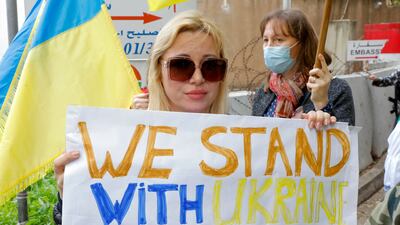
A Ukrainian woman carries a placard. EPA -

Russian troops have launched a major military operation on Ukraine. EPA -
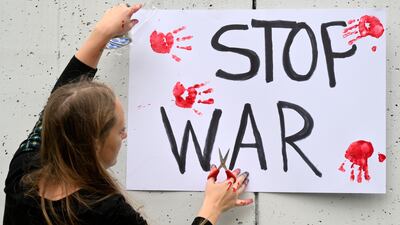
Russia carried out attacks in Ukraine for a third day. EPA -

Lebanese and Ukrainians living in Lebanon stand together and protest against the conflict. Reuters


Few nations in the region are in as much trouble as Lebanon. It is suffering from the problems affecting other nations, plus the impact of years of economic meltdown.
In Ramadan 2021, the average cumulative monthly cost of iftar for a family of five was two and a half times the country’s monthly minimum wage, the American University of Beirut’s Crisis Observatory Unit found.
”The most basic dishes that we can prepare for Ramadan this year will be crazy-expensive,” said Sawsan Ramadan, an office manager.
“Even hosting or attending gatherings this month will be a financial burden on many.”
Almost 80 per cent of Lebanon’s population lives in poverty, according to the UN. The Lebanese lira has lost more than 90 per cent of its value since October 2019, leaving essentials unaffordable to many.
A raging storm amid electricity shortages are making it difficult for families to keep warm, and exorbitant fuel prices have made transport a luxury.
“If we talk about food and iftar preparations, this year it is very costly and unaffordable. Hosting is not even a thought, because I personally cannot think of having festive season for Ramadan while people are dying of hunger,” Aida Fakhoury, a clinical quality specialist, told The National.
Governments act to reassure citizens

Jordanian officials have offered reassurance that the country is well stocked for basic goods, despite high unemployment and a stagnant economy.
A Syrian owner of a large restaurant in Amman with a middle-class clientele said he did not expect much improvement in business this Ramadan, because the past nine months had been slow despite the easing of coronavirus restrictions.
“The economy is in the doldrums and people in general are not spending except on basic goods,” he said.
The Iraqi government has suspended customs duties on food products, basic consumer goods and construction materials for two months. It has said it will pay civil servants and pensioners whose income does not exceed one million dinars (almost $700) a monthly allowance of about $70.
Last week, the Iraqi Trade Ministry said it was in the process of distributing seven-item Ramadan food baskets as part of its subsidy programme. Each hamper contains rice, sugar, cooking oil, tomato paste, beans, lentils and chickpeas. They will be handed out three times over the course of the holy month.
Egypt this week announced a multibillion-pound relief package including tax breaks, wage rises and pensions, as well as a widened state support programme for poor families. The government has also created a special fund of 130 billion Egyptian pounds to mitigate the effects of the Ukraine war on the Egyptian economy.
Covid-19 almost forgotten
Antique shop salesman Omar Ibrahim, 37, doesn’t feel there is any worry over Covid-19 or that any expected restrictions will hamper Ramadan traditions in the Egyptian capital, Cairo.
After peaking in early February with a record 2,301 infections, Egypt’s daily coronavirus cases have been on the decline. The country’s health ministry recently announced its Covid-19 updates would be reduced in frequency from daily to weekly.
“For me this year, Ramadan feels a little different. It’s right around the corner, but there isn’t the usual excitement, because everyone’s attention is on Russia’s war with Ukraine and how it’s making prices here skyrocket “ Mr Ibrahim said.

