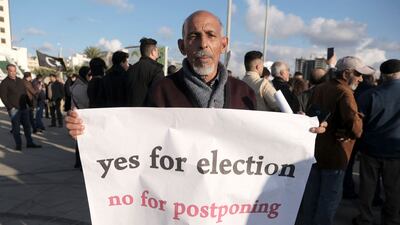
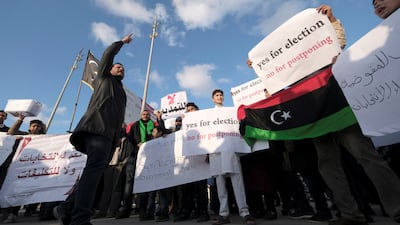
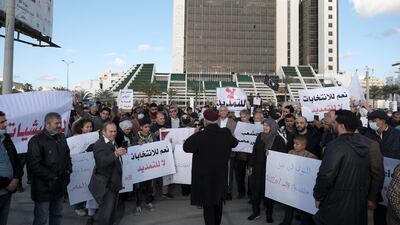
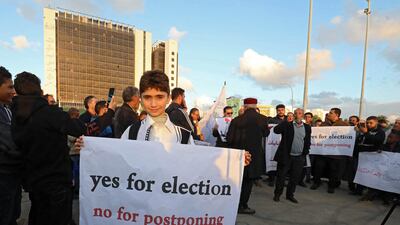
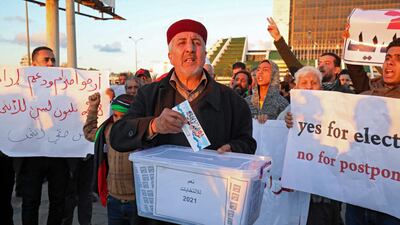
Libyan activists in Tripoli's Martyrs Square demonstrate against the postponement of presidential elections. AFP

Parallel governments loom large in Libya


Ahmed Maher
  • English
  • Arabic

The long-standing dispute over the mandate of the current government in Libya risks creating a new parallel administration and a power vacuum, political experts say.

The delay to presidential and legislative polls has exposed a deep mistrust among the major political powers, who have locked horns over whether to deliver the vote first or form a new transitional government.

“We are going down a rabbit hole,” Libyan political analyst Fathi Omar Al Turbi told The National. “I can see the country descending into chaos and disorder after a few months of a ceasefire and fragile unity.”

Nearly a month after the missed deadline to hold the vote, there are more serious political challenges and rivalries in store.

On Tuesday, parliamentary speaker Aguila Saleh called for the termination of the interim national unity government on the grounds that its mandate expired on December 24.

That was the date when the elections were delayed because of disputes over the laws governing the electoral process and the candidacy of some figures.

Hours later, Prime Minister Abdul Hamid Dbeibah on his public Facebook page criticised what he considered attempts to marginalise the government voice in running the country’s affairs.

He announced that the Central Bank had transferred an overdue household grant for children under 18 – about $22 for each child – to the bank accounts of the registered families, ignoring the naysayers and sending a clear message to his opponents that he was still in charge.

Opting for elections would be the most efficient route, said Hamish Kinnear, Middle East and North Africa analyst at Verisk Maplecroft, an international risk consultancy.

“Creating a new interim government is just adding another complication,” Mr Kinnear told The National. “The longer elections are pushed back, the more the legitimacy of the current national unity government will come under attack. If no political solution can be found, a renewed conflict will become more likely.”

Borderline candidates

Ten years after the Nato-backed overthrow of Muammar Qaddafi that plunged Libya into civil war, unity is an elusive commodity in the country.

In 2014, a parallel government emerged in the east to compete for leverage against an internationally-backed government in the west.

Each government had its own political and financial institutions and claimed legitimacy.

The warring parties agreed to a ceasefire, mediated by the UN in October 2020, which led to the formation of the incumbent interim national unity government.

The military hostilities ended but both sides remain wary of each other and failed to agree on a legal framework for the long-awaited presidential and legislative elections.

The rival politicians should agree to hold the legislative polls before the presidential elections, said Abdel Qadir Al Huwaili, a senior member of the State Council, an advisory body.

“You can’t put the cart before the horse,” Mr Al Huwaili, a supporter of the Dbeibah executive and a vocal critic of the current election laws, told The National.

“We should launch overdue sweeping reforms to the election laws and change the members of the High Election Commission for the sake of transparency and credibility.”

Mr Al Huwaili was particularly critical of borderline candidates.

“I haven’t heard of any country where the speaker of parliament decides all of a sudden to [contest] the presidential race, then he presides over parliamentary sessions when the election is delayed," he said, referring to Mr Saleh. "This is a farce.”

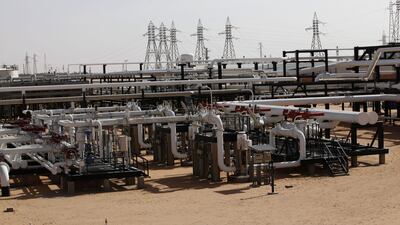
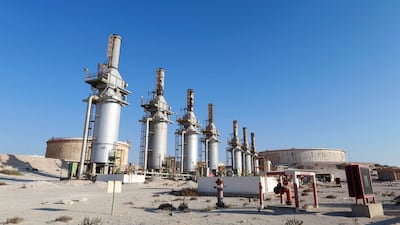
  • Libya's National Oil Corporation said armed militias had stormed Al Sharara oilfield on Saturday. Reuters
    Libya's National Oil Corporation said armed militias had stormed Al Sharara oilfield on Saturday. Reuters
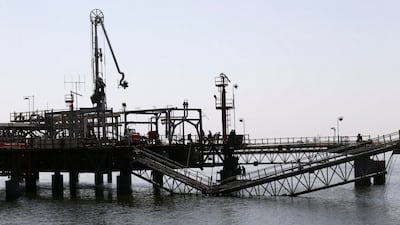
  • Libya’s oil production returned to about 1 million barrels a day earlier this month. Reuters
    Libya’s oil production returned to about 1 million barrels a day earlier this month. Reuters
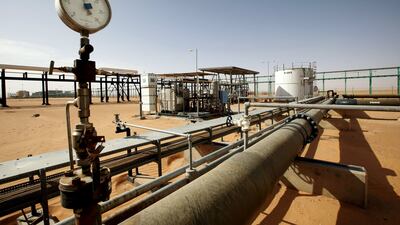
  • Al Sharara oilfield pumps out about 350,000 barrels per day. Reuters
    Al Sharara oilfield pumps out about 350,000 barrels per day. Reuters
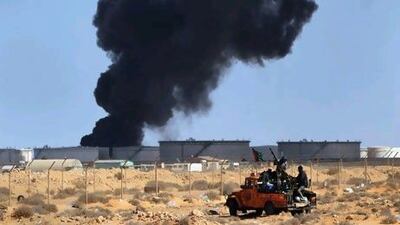
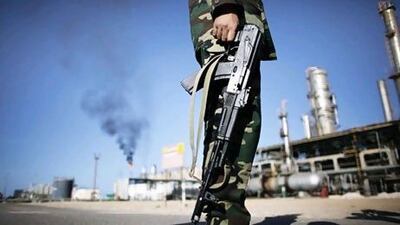
  • Smoke from a damaged oil facility darkens the sky in Ras Lanuf, Libya. The country's oil facilities were damaged during the civil war. Getty Images
    Smoke from a damaged oil facility darkens the sky in Ras Lanuf, Libya. The country's oil facilities were damaged during the civil war. Getty Images
  • After Libya's civil war, experts were pessimistic about the recovery of its oil sector. AFP
    After Libya's civil war, experts were pessimistic about the recovery of its oil sector. AFP
  • A Libyan oil worker at a refinery inside the Brega oil complex in Libya.
    A Libyan oil worker at a refinery inside the Brega oil complex in Libya.
  • A pipeline at the Zueitina oil terminal, west of Benghazi. Reuters
    A pipeline at the Zueitina oil terminal, west of Benghazi. Reuters

Fears of renewed conflict

Libya has never elected a president democratically nor had a parliamentary election since 2014.

Mr Al Turbi said the growing stalemate paints a very problematic picture for the country.

“Every Libyan must be aware that Libya has been a failed state for years," he said. "Today, the politicians are arguing whether to hold the elections first or to form a new government, while they are unable to provide the very basic necessities of everyday services to the people.”

Amid the political and economic chaos, it is hard to accurately gauge poverty levels.

Data supplied over the past years by the rival entities are contradictory and it is almost impossible to get an independent audit of the country’s finances.

The economy is crippled by the conflict and there are recurrent blockades and closures of vital oil fields, the main source of income.

Households still struggle with food insecurity, poverty, and poor public service delivery, according to the latest review by the World Bank.

Businesses and people struggle to carry out basic financial transactions or bank transfers because of the divisions, and the existing stand-off between the governor of the Central Bank in the west and his deputy in the east.

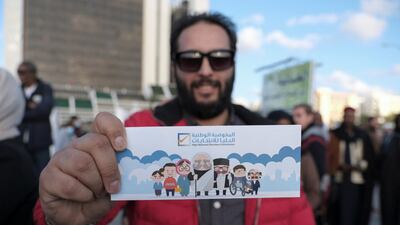
  • A man shows his electoral card during a protest against the postponement of the Libyan presidential election initially planned for December 24, 2021, in Benghazi, Libya. Reuters
    A man shows his electoral card during a protest against the postponement of the Libyan presidential election initially planned for December 24, 2021, in Benghazi, Libya. Reuters
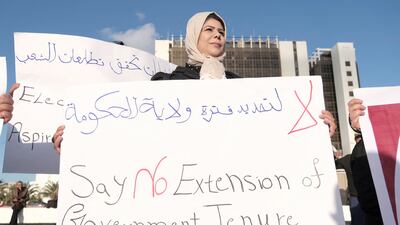
  • A woman holds a banner during a protest against the delay to the Libyan presidential election, in Benghazi, Libya, on December 24, 2021. Reuters
    A woman holds a banner during a protest against the delay to the Libyan presidential election, in Benghazi, Libya, on December 24, 2021. Reuters
  • A man protests against the postponement of the Libyan presidential election, in Benghazi, Libya. Reuters
    A man protests against the postponement of the Libyan presidential election, in Benghazi, Libya. Reuters
  • A demonstration against the postponement of the Libyan presidential election, in Benghazi, Libya. Reuters
    A demonstration against the postponement of the Libyan presidential election, in Benghazi, Libya. Reuters
  • A protest in Benghazi, Libya, against the delaying of the presidential election. Reuters
    A protest in Benghazi, Libya, against the delaying of the presidential election. Reuters
  • Libyans in Benghazi demonstrate against the postponement of elections. AFP
    Libyans in Benghazi demonstrate against the postponement of elections. AFP
  • Libyans demonstrate against the postponement of elections, in the city of Benghazi. AFP
    Libyans demonstrate against the postponement of elections, in the city of Benghazi. AFP

UN advisers, who held talks with key regional backers this month, including Egypt and Turkey, are calling on the parliament to focus on delivering the vote rather than appointing a new transitional administration.

The delayed vote also threatens to create a power vacuum, and major western players led by the US and the UK have urged the transitional government to remain in power in Libya until the vote is held.

Adding to the political complexity, the parliament already passed in September a vote of no confidence in the government. It is still operational nevertheless.


The%20specs
%3Cp%3E%3Cstrong%3EEngine%3A%3C%2Fstrong%3E%201.5-litre%204-cylinder%3Cbr%3E%3Cstrong%3ETransmission%3A%20%3C%2Fstrong%3ECVT%3Cbr%3E%3Cstrong%3EPower%3A%20%3C%2Fstrong%3E119bhp%3Cbr%3E%3Cstrong%3ETorque%3A%20%3C%2Fstrong%3E145Nm%3Cbr%3E%3Cstrong%3EPrice%3A%20%3C%2Fstrong%3EDh%2C89%2C900%20(%2424%2C230)%3Cbr%3E%3Cstrong%3EOn%20sale%3A%20%3C%2Fstrong%3Enow%3C%2Fp%3E%0A
Company%20profile
%3Cp%3E%3Cstrong%3EName%3A%3C%2Fstrong%3E%20WallyGPT%3Cbr%3E%3Cstrong%3EStarted%3A%20%3C%2Fstrong%3E2014%3Cbr%3E%3Cstrong%3EFounders%3A%20%3C%2Fstrong%3ESaeid%20and%20Sami%20Hejazi%3Cbr%3E%3Cstrong%3EBased%3A%3C%2Fstrong%3E%20Dubai%3Cbr%3E%3Cstrong%3ESector%3A%20%3C%2Fstrong%3EFinTech%3Cbr%3E%3Cstrong%3EInvestment%20raised%3A%20%3C%2Fstrong%3E%247.1%20million%3Cbr%3E%3Cstrong%3ENumber%20of%20staff%3A%3C%2Fstrong%3E%2020%3Cbr%3E%3Cstrong%3EInvestment%20stage%3A%20%3C%2Fstrong%3EPre-seed%20round%3C%2Fp%3E%0A
Key facilities
  • Olympic-size swimming pool with a split bulkhead for multi-use configurations, including water polo and 50m/25m training lanes
  • Premier League-standard football pitch
  • 400m Olympic running track
  • NBA-spec basketball court with auditorium
  • 600-seat auditorium
  • Spaces for historical and cultural exploration
  • An elevated football field that doubles as a helipad
  • Specialist robotics and science laboratories
  • AR and VR-enabled learning centres
  • Disruption Lab and Research Centre for developing entrepreneurial skills
The%20specs
%3Cp%3E%3Cstrong%3EEngine%3A%3C%2Fstrong%3E%201.8-litre%204-cyl%20turbo%0D%3Cbr%3E%3Cstrong%3EPower%3A%20%3C%2Fstrong%3E190hp%20at%205%2C200rpm%0D%3Cbr%3E%3Cstrong%3ETorque%3A%3C%2Fstrong%3E%20320Nm%20from%201%2C800-5%2C000rpm%0D%3Cbr%3E%3Cstrong%3ETransmission%3A%20%3C%2Fstrong%3ESeven-speed%20dual-clutch%20auto%0D%3Cbr%3E%3Cstrong%3EFuel%20consumption%3A%3C%2Fstrong%3E%206.7L%2F100km%0D%3Cbr%3E%3Cstrong%3EPrice%3A%3C%2Fstrong%3E%20From%20Dh111%2C195%0D%3Cbr%3E%3Cstrong%3EOn%20sale%3A%20%3C%2Fstrong%3ENow%3C%2Fp%3E%0A
What the law says

Micro-retirement is not a recognised concept or employment status under Federal Decree Law No. 33 of 2021 on the Regulation of Labour Relations (as amended) (UAE Labour Law). As such, it reflects a voluntary work-life balance practice, rather than a recognised legal employment category, according to Dilini Loku, senior associate for law firm Gateley Middle East.

“Some companies may offer formal sabbatical policies or career break programmes; however, beyond such arrangements, there is no automatic right or statutory entitlement to extended breaks,” she explains.

“Any leave taken beyond statutory entitlements, such as annual leave, is typically regarded as unpaid leave in accordance with Article 33 of the UAE Labour Law. While employees may legally take unpaid leave, such requests are subject to the employer’s discretion and require approval.”

If an employee resigns to pursue micro-retirement, the employment contract is terminated, and the employer is under no legal obligation to rehire the employee in the future unless specific contractual agreements are in place (such as return-to-work arrangements), which are generally uncommon, Ms Loku adds.

Korean Film Festival 2019 line-up

Innocent Witness, June 26 at 7pm

On Your Wedding Day, June 27 at 7pm

The Great Battle, June 27 at 9pm

The Witch: Part 1. The Subversion, June 28 at 4pm

Romang, June 28 at 6pm

Mal Mo E: The Secret Mission, June 28 at 8pm

Underdog, June 29 at 2pm

Nearby Sky, June 29 at 4pm

A Resistance, June 29 at 6pm 


Types of bank fraud

1) Phishing

Fraudsters send an unsolicited email that appears to be from a financial institution or online retailer. The hoax email requests that you provide sensitive information, often by clicking on to a link leading to a fake website.

2) Smishing

The SMS equivalent of phishing. Fraudsters falsify the telephone number through “text spoofing,” so that it appears to be a genuine text from the bank.

3) Vishing

The telephone equivalent of phishing and smishing. Fraudsters may pose as bank staff, police or government officials. They may persuade the consumer to transfer money or divulge personal information.

4) SIM swap

Fraudsters duplicate the SIM of your mobile number without your knowledge or authorisation, allowing them to conduct financial transactions with your bank.

5) Identity theft

Someone illegally obtains your confidential information, through various ways, such as theft of your wallet, bank and utility bill statements, computer intrusion and social networks.

6) Prize scams

Fraudsters claiming to be authorised representatives from well-known organisations (such as Etisalat, du, Dubai Shopping Festival, Expo2020, Lulu Hypermarket etc) contact victims to tell them they have won a cash prize and request them to share confidential banking details to transfer the prize money.

How to apply for a drone permit
  • Individuals must register on UAE Drone app or website using their UAE Pass
  • Add all their personal details, including name, nationality, passport number, Emiratis ID, email and phone number
  • Upload the training certificate from a centre accredited by the GCAA
  • Submit their request
What are the regulations?
  • Fly it within visual line of sight
  • Never over populated areas
  • Ensure maximum flying height of 400 feet (122 metres) above ground level is not crossed
  • Users must avoid flying over restricted areas listed on the UAE Drone app
  • Only fly the drone during the day, and never at night
  • Should have a live feed of the drone flight
  • Drones must weigh 5 kg or less
Updated: January 20, 2022, 3:03 PM