How Sudan's tribes transformed their camel business to keep Gulf buyers


Ahmed Maher
  • English
  • Arabic

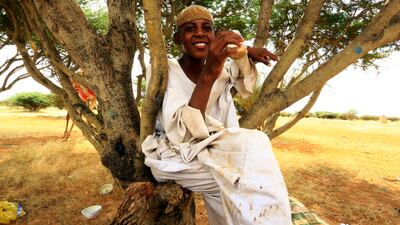
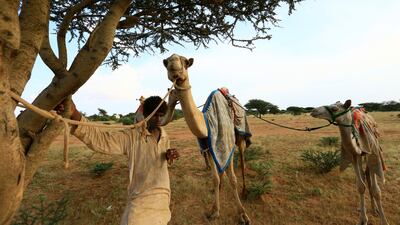
East of the Sudanese capital Khartoum, in the shadow of a huge gum tree, the elders of Al Bashareen tribe gathered around a young man to learn how the internet could help to sell their pedigree camels.

Asem Abul Qasim, 33, showed the eager septuagenarians in Abu Geira posts on his private Instagram page.

Scrolling through artful photos of the animals, accompanied by their statistics – origin, age, health records, diet, racing distance and awards – he tells the men he has a selective network of followers and brokers in the Gulf and neighbouring Egypt.

“We are dealing with freelance professional producers and picture editors and everything is being done on our closed Facebook groups, Instagram and WhatsApp,” Mr Abul Qasim told The National, while handling a camel called Thuraya, Arabic for a constellation of stars.

“We have tailored groups for every Gulf country.”

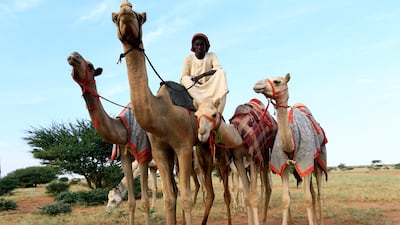
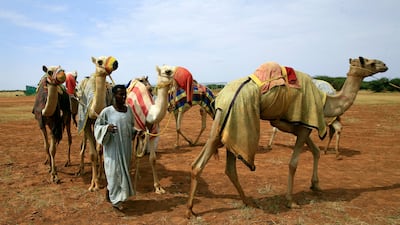
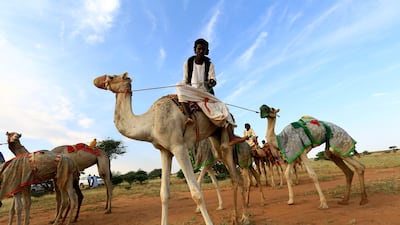
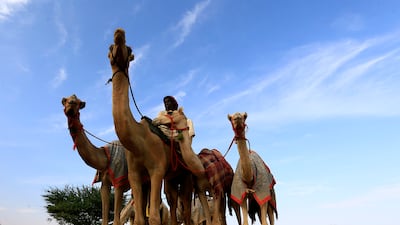
Thuraya and her companions are not reared for meat or milk, but to be sold in the Gulf to take part in races and beauty pageants.

Mr Abul Qasim sold four camels in the past 12 months. His latest sale was a 5-year-old named after North Korean leader Kim Jong-un and bought by a person from Al Gharamsha tribe in Egypt’s Sinai for $70,000.

The more camels win in local races, the higher the price they can fetch. The achievements are measured by the number of swords they are awarded with after the races.

The sword is a symbol of power, dignity and pride in the Arab culture and every race is held under the auspices of a prominent figure in the area, who presents the winner with a silver or gold sword.

“Kim Jong has won 13 swords from races in Kasala, Omdurman, Sidon and Shandi,” said Mr Abul Qasim, referring to some of cities in the east and north.

An ancient trade under threat

The political crisis of Sudan’s transition to civilian rule after the removal of longtime dictator Omar Al Bashir more than two years ago, and the coronavirus pandemic, have forced Mr Abul Qasim and his tribe, Al Bashareen, to change the way they function in the lucrative camel industry.

In the four months it ruled alone after the removal of Al Bashir in April 2019, a transitional military council imposed a temporary halt to the export of racing camels to regulate the industry and crack down on smugglers.

For them, quality is critical as well as the reputation. The camel tribes in eastern and southern Sudan are very trusted and well-respected in the market, but more importantly the foreign customers prefer our camels because they are the best in the world.
Asem Abul Qasim,
camel trader

The decision is still in effect and has badly affected the vast majority of licensed camel traders and keepers.

Compounding this issue, Covid-19 hit air travel and shipments hard. Most Sudanese airlines have been grounded for nearly two years, so young tribal men have resorted to social media and video calls to get around the ban.

Racing camels are not reared for human consumption but to be sold in the Gulf to take part in races and beauty pageants. Mohamed Nureldin / The National

“The businessmen in the Gulf usually ask camel experts to act as a go-between to see our footage, photos and negotiate the price,” Mr Abul Qasim said.

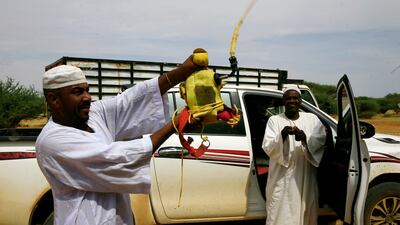
“If a deal is cut, we transport the camels by road in pickups to neighbouring countries like Egypt. Then we pay the official air shipping fees out there to ship them to the country of the customer.”

An officer at the semi-official Sudanese Camel Union said it was impossible to control the porous borders of Africa's third-largest country, and the military would not challenge the tribes anyway.

“The military wouldn't pick up a fight with the armed tribes and open a new front. It's already mired in a political crisis,” he said.

More important than food

Demand for Sudanese camels has never dropped in Arab countries.

Bred on farms that spring up mainly in the deserts of the eastern and southern states, the camels are among the fastest in the world, reaching speeds of about 64kph when they mature about the age of five or six. They retire at nine.

Arabian camels, also known as dromedaries, have only one hump that stores fat to give the camel energy when water and food are not available.

Race distances in the Arab world can range from about 4km for young camels to 10km for older animals.

Instead of human riders, robots have been used for the past decade to guide the camels, operated from four-wheel drive vehicles that follow the camels as they run.

Last year, Unesco included camel racing in the UAE and Oman on its list of the Intangible Cultural Heritage of Humanity.

“For the buyers, quality is critical as well as the reputation,” Mr Abul Qasim said.

“The camel tribes in eastern and southern Sudan are very trusted and well-respected in the market, but more importantly the foreign customers prefer our camels because they are the best in the world.”

He said Sudanese state coffers lost millions of dollars by stopping exports, as the authorities used to charge about $10,000 in shipping and transit fees for each camel.

“We have proved innovative and resilient in marketing our camels,” Mr Abul Qasim said.

“You can’t deal as such with a popular sport and legal trade that has nothing to do with politics and represents the sole source of livelihood for many tribes.

“The state is the big loser. As we have a dysfunctional government competing against one another, we won’t sit on our hands and wait for them until they sort out their political rivalries.”

Sudan has more than 107 million head of livestock, making the country dependent on it as one of the main sources of the already scarce foreign currency.

Livestock production revenue contributes more than 20 per cent of Sudan's GDP.

The tribes breeding the beasts lead a Bedouin lifestyle based on herding and seasonal agriculture. But it is not cheap to keep the animals in good shape and attractive for potential buyers.

“Camels are more important than our food,” says Othman Hassan, 61, head of the Abu Daleek Camel Racing Club.

“The foreign buyers and investors can sell our camels later for up to $1 million per camel and also produce hybrid camels thanks to our strong and great male camels.”

Camel breeding is a family business, and one Mr Hassan is working with Mr Abul Qasim to modernise.

Head of the Abu Daleek Camel Racing Club, Othman Hassan. “Camels are more important than our food,” he says. Photo: Mohamed Nureldin

“My first camel shipment was to Qatar in 1990,” he said. “I exported 50 camels in one plane from Khartoum airport to Doha.

“But I was unlucky as it happened few weeks before [former Iraqi dictator] Saddam Hussein invaded Kuwait.

“The invasion had triggered a severe economic impact on the camel industry and left us counting the cost of losses.”

Mr Abul Qasim bought a cow last year for $2,500 just to feed two camels. The daily diet of one camel includes 10 litres of milk and dates, which are rich in iron.

They also have honey at least three days a week. It costs him about $50 a day to provide for just one camel.

“We stop the milk and dates seven days before a race,” Mr Abul Qasim said. “They just eat fodder and corn.”

The camels are also subject to exercise regimens.

“Mature camels should walk twice a day; around 10 to 15km in the morning and 3km in the afternoon after eating,” Mr Abul Qasim said.

“This is the smartest animal, who knows his friend. They are never fooled by those who pretend to be your friend.”


UAE tour of Zimbabwe

All matches in Bulawayo
Friday, Sept 26 – UAE won by 36 runs
Sunday, Sept 28 – Second ODI
Tuesday, Sept 30 – Third ODI
Thursday, Oct 2 – Fourth ODI
Sunday, Oct 5 – First T20I
Monday, Oct 6 – Second T20I

Mercer, the investment consulting arm of US services company Marsh & McLennan, expects its wealth division to at least double its assets under management (AUM) in the Middle East as wealth in the region continues to grow despite economic headwinds, a company official said.

Mercer Wealth, which globally has $160 billion in AUM, plans to boost its AUM in the region to $2-$3bn in the next 2-3 years from the present $1bn, said Yasir AbuShaban, a Dubai-based principal with Mercer Wealth.

Within the next two to three years, we are looking at reaching $2 to $3 billion as a conservative estimate and we do see an opportunity to do so,” said Mr AbuShaban.

Mercer does not directly make investments, but allocates clients’ money they have discretion to, to professional asset managers. They also provide advice to clients.

“We have buying power. We can negotiate on their (client’s) behalf with asset managers to provide them lower fees than they otherwise would have to get on their own,” he added.

Mercer Wealth’s clients include sovereign wealth funds, family offices, and insurance companies among others.

From its office in Dubai, Mercer also looks after Africa, India and Turkey, where they also see opportunity for growth.

Wealth creation in Middle East and Africa (MEA) grew 8.5 per cent to $8.1 trillion last year from $7.5tn in 2015, higher than last year’s global average of 6 per cent and the second-highest growth in a region after Asia-Pacific which grew 9.9 per cent, according to consultancy Boston Consulting Group (BCG). In the region, where wealth grew just 1.9 per cent in 2015 compared with 2014, a pickup in oil prices has helped in wealth generation.

BCG is forecasting MEA wealth will rise to $12tn by 2021, growing at an annual average of 8 per cent.

Drivers of wealth generation in the region will be split evenly between new wealth creation and growth of performance of existing assets, according to BCG.

Another general trend in the region is clients’ looking for a comprehensive approach to investing, according to Mr AbuShaban.

“Institutional investors or some of the families are seeing a slowdown in the available capital they have to invest and in that sense they are looking at optimizing the way they manage their portfolios and making sure they are not investing haphazardly and different parts of their investment are working together,” said Mr AbuShaban.

Some clients also have a higher appetite for risk, given the low interest-rate environment that does not provide enough yield for some institutional investors. These clients are keen to invest in illiquid assets, such as private equity and infrastructure.

“What we have seen is a desire for higher returns in what has been a low-return environment specifically in various fixed income or bonds,” he said.

“In this environment, we have seen a de facto increase in the risk that clients are taking in things like illiquid investments, private equity investments, infrastructure and private debt, those kind of investments were higher illiquidity results in incrementally higher returns.”

The Abu Dhabi Investment Authority, one of the largest sovereign wealth funds, said in its 2016 report that has gradually increased its exposure in direct private equity and private credit transactions, mainly in Asian markets and especially in China and India. The authority’s private equity department focused on structured equities owing to “their defensive characteristics.”

Who's who in Yemen conflict

Houthis: Iran-backed rebels who occupy Sanaa and run unrecognised government

Yemeni government: Exiled government in Aden led by eight-member Presidential Leadership Council

Southern Transitional Council: Faction in Yemeni government that seeks autonomy for the south

Habrish 'rebels': Tribal-backed forces feuding with STC over control of oil in government territory

Reading List

Practitioners of mindful eating recommend the following books to get you started:

Savor: Mindful Eating, Mindful Life by Thich Nhat Hanh and Dr Lilian Cheung

How to Eat by Thich Nhat Hanh

The Mindful Diet by Dr Ruth Wolever

Mindful Eating by Dr Jan Bays

How to Raise a Mindful Eaterby Maryann Jacobsen

UAE currency: the story behind the money in your pockets
The more serious side of specialty coffee

While the taste of beans and freshness of roast is paramount to the specialty coffee scene, so is sustainability and workers’ rights.

The bulk of genuine specialty coffee companies aim to improve on these elements in every stage of production via direct relationships with farmers. For instance, Mokha 1450 on Al Wasl Road strives to work predominantly with women-owned and -operated coffee organisations, including female farmers in the Sabree mountains of Yemen.

Because, as the boutique’s owner, Garfield Kerr, points out: “women represent over 90 per cent of the coffee value chain, but are woefully underrepresented in less than 10 per cent of ownership and management throughout the global coffee industry.”

One of the UAE’s largest suppliers of green (meaning not-yet-roasted) beans, Raw Coffee, is a founding member of the Partnership of Gender Equity, which aims to empower female coffee farmers and harvesters.

Also, globally, many companies have found the perfect way to recycle old coffee grounds: they create the perfect fertile soil in which to grow mushrooms. 

Why are asylum seekers being housed in hotels?

The number of asylum applications in the UK has reached a new record high, driven by those illegally entering the country in small boats crossing the English Channel.

A total of 111,084 people applied for asylum in the UK in the year to June 2025, the highest number for any 12-month period since current records began in 2001.

Asylum seekers and their families can be housed in temporary accommodation while their claim is assessed.

The Home Office provides the accommodation, meaning asylum seekers cannot choose where they live.

When there is not enough housing, the Home Office can move people to hotels or large sites like former military bases.

Scoreline

Arsenal 3
Aubameyang (28'), Welbeck (38', 81')
Red cards: El Neny (90' 3)

Southampton 2
Long (17'), Austin (73')
Red cards: Stephens (90' 2)

WHAT IS A BLACK HOLE?

1. Black holes are objects whose gravity is so strong not even light can escape their pull

2. They can be created when massive stars collapse under their own weight

3. Large black holes can also be formed when smaller ones collide and merge

4. The biggest black holes lurk at the centre of many galaxies, including our own

5. Astronomers believe that when the universe was very young, black holes affected how galaxies formed

The specs

Engine: 3.5-litre twin-turbo V6

Power: 380hp at 5,800rpm

Torque: 530Nm at 1,300-4,500rpm

Transmission: Eight-speed auto

Price: From Dh299,000 ($81,415)

On sale: Now

Updated: October 21, 2021, 9:42 AM