


Follow the latest updates on Afghanistan here
As the chaos in Afghanistan continues to unfold, Turkey has emerged as a possible bridge between the new Taliban regime and the international community.
Before the fall of Kabul at the weekend, Ankara had proposed a role for itself in securing the Afghan capital’s international airport after the US and Nato withdrawal.
Although the Taliban’s unexpectedly rapid advance seemed to scupper the plan, Turkish Foreign Minister Mevlut Cavusoglu said on Wednesday it was “too early” to say whether it remained a possibility.
A day earlier, he welcomed the Taliban’s statement calling for peaceful relations and pledging not to allow its territory to be used for attacks on other countries.
Mr Cavusoglu said Turkey was in talks with “all sides, including the Taliban”.
Turkey announced its willingness to operate and secure Hamid Karzai International Airport during a meeting between President Recep Tayyip Erdogan and US President Joe Biden in June, though the announcement was met initially with hostility from the Taliban.
Rhetoric between the Islamist militants and Ankara has mellowed in recent weeks, however, suggesting Turkey could hold the key to ensuring Afghanistan does not return to the international isolation it faced before 2001, when it harboured Al Qaeda.
-

A man waves Afghanistan's national flag in Kabul, as the country marks its 102nd Independence Day on Thursday, August 20. This commemorates the country regaining full independence from British influence in 1919. AFP -
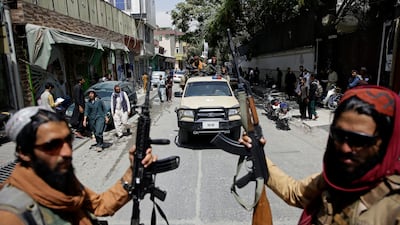
Taliban fighters patrol in Kabul. AP Photo -
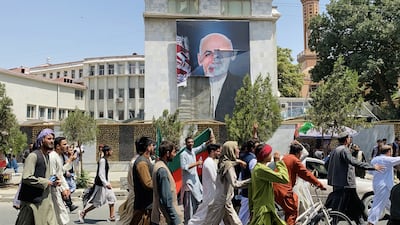
Afghans pass by the poster of Afghan President Ashraf Ghani who fled the country after Taliban took over, as they celebrate the Independence Day in Kabul. EPA -
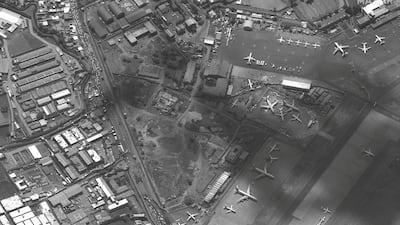
Cars and crowds are seen near the airport in Kabul. Reuters -
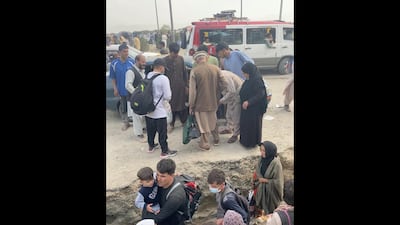
People gather round the scene of a shooting outside Kabul airport, while others move away from the incident. Reuters -

A Taliban fighter sitting on a vehicle guards the route of an Ashura procession in western city Herat. AFP -
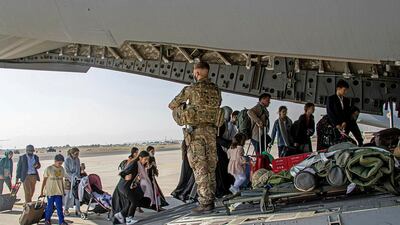
British and dual nationality citizens living in Afghanistan board a military plane at Kabul airport. Reuters -
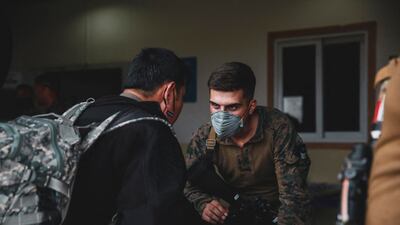
A US Marine processes an evacuee at Kabul's Hamid Karzai International Airport. AFP -

Afghan President Ashraf Ghani on his first video address since Taliban takeover. Facebook -
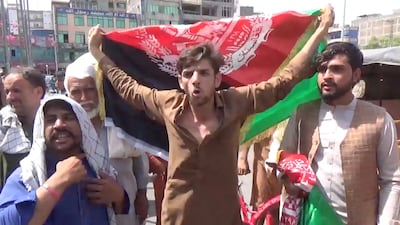
People carry Afghan flags as they take part in an anti-Taliban protest in Jalalabad, Afghanistan. Reuters -
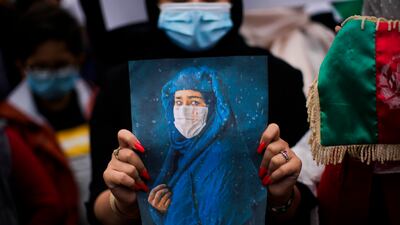
A woman holds a photograph during a protest to raise awareness of the situation in Afghanistan, outside EU headquarters in Brussels. AP Photo -
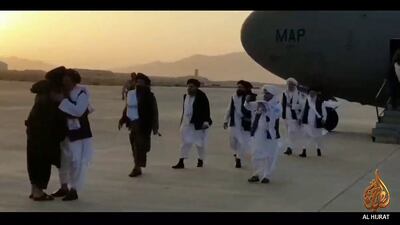
Senior Taliban figure Abdul Ghani Baradar arrives in Afghanistan on Tuesday, August 17, 2021. AFP -
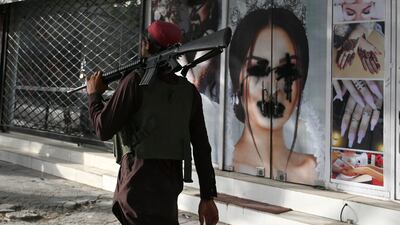
A Taliban fighter walks past a beauty saloon where images of women have been defaced, in Shahr-e Naw neighbourhood in north-west Kabul. AFP -
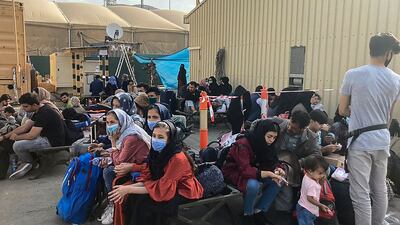
People wait to be evacuated from Kabul's Hamid Karzai International Airport, following the Taliban takeover of the capital. AFP -

Afghans make their way into Pakistan at the Chaman border crossing. AFP -

Khairullah Khairkhwa, right, a former governor of western Herat province and now a member of the Taliban's political office in Qatar, speaks to the media after arriving in Kandahar, southern Afghanistan. EPA -
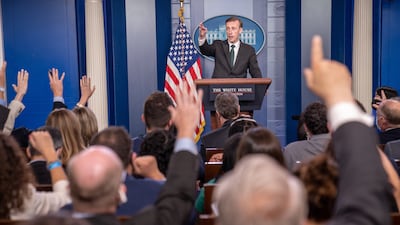
US National Security Adviser Jake Sullivan takes questions on events in Afghanistan, at a White House press briefing in Washington. EPA -

Taliban forces guard a checkpoint in Kabul. Reuters -
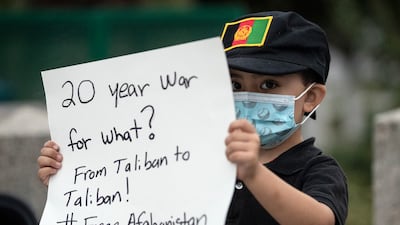
A young demonstrator attends a vigil in support of Afghanistan outside the West Los Angeles Federal Building, Los Angeles. EPA -

Taliban spokesman Zabihullah Mujahid, centre, holds the group's first press conference in Kabul since the insurgents took the capital. AFP -
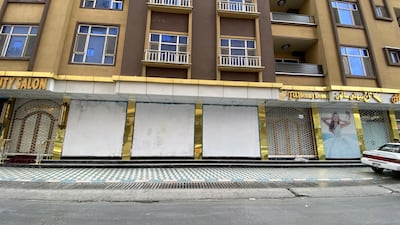
Images of glamorous women displayed outside a beauty salon in Kabul have been painted over since the Taliban took control. EPA -
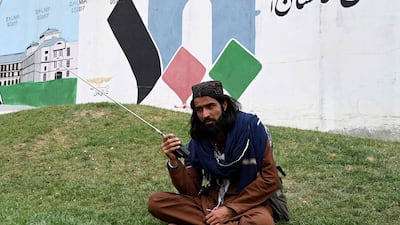
A Taliban fighter in Afghan capital Kabul, where the group has told government staff to return to work. AFP -
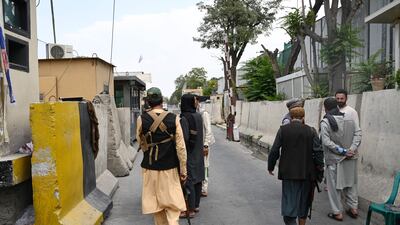
Taliban fighters on patrol in Kabul. AFP -

Taliban fighters in an Afghan government forces pickup patrol the streets of Kabul. AFP -

Taliban fighters pass a poster of Afghan President Ashraf Ghani in Kabul. AFP -

People queue outside Kabul airport as they try to leave Afghanistan following the Taliban takeover. Reuters -
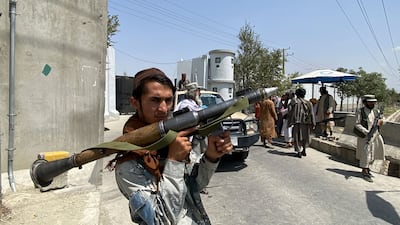
A Taliban fighter keeps watch outside the Interior Ministry in Kabul. AFP -
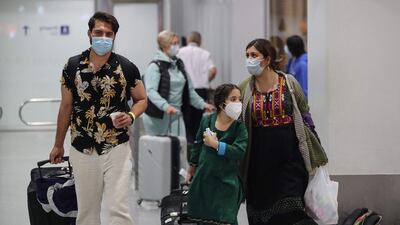
Some of the first people flown out of Kabul after the Taliban takeover arrive at Frankfurt International Airport in Germany. AFP -
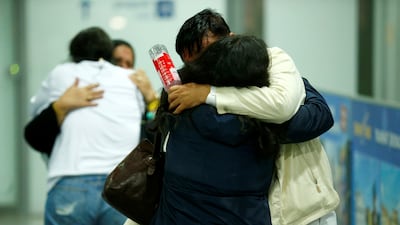
People have arrived in Frankfurt after fleeing the Afghan capital. AFP -
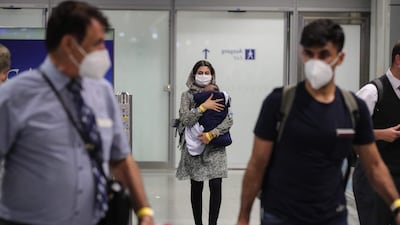
Western countries have been flying citizens and Afghans out of Kabul since it was seized by the Taliban. AFP


At the end of last month, Mr Erdogan provoked domestic criticism when he said Turkey had “nothing against [the Taliban’s] beliefs”.
Last week, he suggested a face-to-face meeting with the group’s leadership.
“We want good relations with Turkey,” Taliban spokesman Zabihullah Mujahed told Turkish state-run broadcaster TRT last month. “Turkey is our brother; we share many common issues based on belief.”
Ankara’s initial offer to run the Kabul airport was seen widely as a bid to repair relations with Washington by keeping a diplomatic lifeline open for the Western-backed government that has now been forced to flee.
“Turkey’s intention to use the Afghanistan card – including sending Turkish troops to play a bigger role in Afghanistan after the withdrawal of allied forces – is very much linked to its intention to improve relations with the West, especially the US,” said Emre Caliskan, a research fellow at the London-based Foreign Policy Centre.
“Erdogan has a difficult relationship with the West and this was a way to establish a direct channel with the Biden administration and show Turkey as a reliable partner again in the international arena.”
Turkey could provide the Taliban with legitimacy and credibility on the world stage by recognising the regime, mediating with the West and inviting it to participate in international and regional politics, said Eyup Ersoy, international relations faculty member at Turkey’s Ahi Evran University.
“Turkey is one of the most influential Muslim countries capable of performing diplomatic initiatives in different regions,” he said.
“The Turkish military has not taken part in military operations against the Taliban as a fighting force and there is a good measure of sympathy among the Afghan populace towards Turkey.
“The Taliban’s engagement with Turkey would not encounter serious domestic opposition and would arguably increase its standing in the Afghan public opinion.”
Turkey, which has Nato’s second-largest military after the US, has had troops in Afghanistan since 2001. It has about 650 soldiers in the country, some of whom are on duty at Kabul airport, helping to organise the speedy departure of Afghans and foreigners, including Turkish citizens.
Aykan Erdemir, senior director of the Turkey programme at the Foundation for Defence of Democracies in Washington, said Mr Erdogan has greater freedom to act overseas than his Nato allies.
“The ability to deploy troops rapidly and continue with overseas missions despite mounting Turkish casualties ... has until now given the Erdogan government a unique bargaining power in bilateral and multilateral relations,” Dr Erdemir said.
While Turkey has past experience of acting as a go-between with difficult regimes, such as Saddam Hussein’s Iraq and Syrian leader Bashar Al Assad during the early stages of the Arab uprisings, it has had limited relations with the Taliban.
However, its allies Pakistan and Qatar are close to the group and could facilitate Ankara’s involvement.
“It’s very much linked to how Turkey is going to work with Pakistan and Qatar,” Mr Caliskan said. “Turkey doesn’t have any expertise or knowledge about the different groups in Afghanistan while the Pakistanis have been working with the Taliban for 40 years.”
Stabilising Afghanistan could potentially ease domestic pressure on Mr Erdogan over Afghan refugees crossing Iran to reach Turkey, where anti-migrant sentiment has erupted into riots on the streets of Ankara.
Opposition leader Kemal Kilicdaroglu has accused Mr Erdogan of striking a deal with the US to accept Afghans fleeing the Taliban, something the Turkish government and the US embassy in Ankara deny.
However, there are risks for Turkey in cosying up to the Taliban, whose recent claims of softening its attitude on issues such as women’s rights remain to be tested and could present Turkey with “difficult choices,” Dr Ersoy said, such as “being silent on the human rights abuses of the Taliban”.
“The international community would [also] attribute responsibility to Turkey for the unforeseen, impetuous, immoral or criminal actions of the Taliban in its interactions with the international community,” he said.

