The no-wash or low-wash movement calls upon people to not launder clothes until absolutely essential. Getty Images

World Water Day 2024: Not every day has to be laundry day


  • English
  • Arabic

“Rule of thumb, if you don’t absolutely have to clean anything, don’t clean it.” So said British fashion designer Stella McCartney in 2019, kicking off the “no-wash” movement. Sometimes called the “low-wash” movement, it rose in popularity on the back of social media, aiming to save money in the short term and the planet in the long term.

It flies in the face of decades-long marketing campaigns from the cleaning industry that have conditioned most of us to believe that a clean laundry basket translates into better personal hygiene. Often this means clothes are tossed into the laundry bin even after just a few hours of light wear.

The dirt on the no-wash movement

Charles Bergh, former chief executive of Levi Strauss, says he has not washed his jeans in over 10 years. Getty Images

The no-wash movement advocates doing the bare minimum when it comes to personal laundry management. Several factors come into play here, from the polluting chemicals contained in laundry detergents and fabric softeners, to the shortened lifespan of frequently washed clothes.

The longer I wear my denims, the better they look and feel
Shiv Desai,
communications expert and committed non-washer

Mark Sumner, a lecturer in sustainable fashion at the University of Leeds School of Design, says routine laundering isn’t really the best thing as it could lead a garment to “shrink, fade, become misshapen, or pill”.

Apart from being harmful to clothes – thus shortening their life and leading to new purchases – Sumner lists other problems: the use of detergents, water and energy, as well as the laundering of textile fabrics being “a significant source of microfibre marine pollution”.

Spilling the jeans

Pangaia's seaweed fibre tees are treated with peppermint oil to keep them fresher longer. Photo: Pangaia

These concerns have led to numerous start-ups across the world designing clothes that need less laundering. Unbound Merino creates wool travel clothes that can go weeks without being washed, while Pangaia offers seaweed fibre T-shirts treated with peppermint oil to keep them fresher longer between washes.

Wool & Prince’s range, from boxers to shirts, is designed to be washed infrequently, while sister brand Wool & offers dresses meant to be worn for 100 days straight without washing.

And then of course there are the denim fans who believe less is always more when it comes to washing jeans. Leading from the front is former Levi Strauss chief executive Charles Bergh, a committed non-washer.

“True denim heads will tell you to never put your denim into a washing machine. So that’s what I do,” said the man who hasn’t washed his jeans in over 10 years in an interview last year.

There are many who swear by the no-wash dictum, especially when it comes to jeans. “I think the longer I wear my denims, the better they look and feel. I bought a pair of jeans at the beginning of last year and am yet to toss it in the wash,” says Shiv Desai, a communications expert from London.

How to keep clothes clean without washing

Airing clothes out under the sun is one way to eliminate odours and germs without washing. Getty Images

The new ways of clothing care are driven by the belief that frequent laundering is unnecessary to maintain clean, odour-free garments. Desai believes a large number of people “wrongly and unnecessarily” wash their clothes after every wear.

Instead of turning to the washing machine, he suggests other ways to care for garments, such as exposing them to sunlight, airing them overnight, or using clothing mists and textile sprays.

Influencers and sustainability bloggers have their own take. TikTok content creator Stanley Dru’s no-wash tip for jeans involves popping denims into a bag and freezing overnight to ensure the cold kills off any bacteria and leave your jeans fresh.

Bergh suggests spot-cleaning and washing denim by “keeping jeans on in the shower and covering them in soap as you would your body”. Sustainability blogger Tiina Nyman’s way to keep sweaters clean involves steaming to kill bacteria and remove odour, and then spraying a “laundry vinegar” to keep any garment “fresh as a wash”.

The lesser washing you do, the better it is for the environment, the lower your energy bills will be, and the longer your clothes will last
Dr Rebecca Van Amber,
senior lecturer, RMIT University, Melbourne

In a podcast titled The Rise of the No-Wash Movement, Dr Rebecca Van Amber, a senior lecturer in the School of Fashion & Textiles at RMIT University, Melbourne, says the movement is largely driven by the cost-of-living crisis. “The pandemic led to casualisation of clothing, change in personal values, and an increased focus on sustainability,” she says, adding that laundering choices differ from person to person.

“Typically outerwear, jackets, blazers, jumpers, jeans and other such items need less washing. But it depends on the kind of item, the material it’s made of, the weather, and if it’s being worn next to skin.”

Clean is not always green

Wool & Prince’s shirts can to be worn for 100 days straight without washing. Photo: Wool & Prince

“Our use of water is unlimited, but the resource is not – overuse will run our environment completely dry. Adopting a low or no-wash policy can help cut down consumption,” Desai says.

Consumption is definitely on the rise. The Ellen MacArthur Foundation, which endorses waste reduction, states we’re currently buying 60 per cent more garments than we did a decade ago, and are only keeping each item for half as long. Treating the contents of our wardrobe with more care and a greater sense of circularity can help break this cycle.

In a 2023 paper published in Nature, environmental scientist Laura Scherer writes that a transition from fast to slow fashion demands changes in product design and marketing, but also consumer behaviour. She said consumers can make a significant change as “buying fewer clothes and washing less frequently are undoubtedly beneficial. And it even saves you money.”

When it comes to overwashing, statistics back the laundry logjam across the world. According to the US EPA, washing machines account for 17 per cent of home water usage, while Australian washing machine company AEG estimates that 90 per cent of washed clothes “aren’t actually dirty enough to be laundered”.

According to the Plastic Soup Foundation, an average of nine million [plastic] microfibres are released into the environment every time we wash our clothes, while a Fashion Revolution report from 2017 found that 25 per cent of the carbon footprint of a garment comes from cleaning it.

Of course, location is a key factor in how easy or not it is to follow the trend. If you live in a hot country where it’s hard to avoid perspiring, what you do, the fabric type, the wear, and the weather can be deciding factors when it comes to laundering your clothes.

In such a case, it might be better – and easier – to commit to limited cold washes. According to the American Cleaning Institute, about 90 per cent of the energy a washing machine uses goes towards heating the water. If a household switches to cold water washing, it can eliminate about 1,600 pounds of carbon dioxide a year.

The sniff test, too, may help you decide how often you should wash your clothes. But as Van Amber put it, one thing’s clear, “the less washing you do, the better it is for the environment, the lower your energy bills will be, and the longer your clothes will last”.

  • Watering vegetables in Taguig City, Philippines. Authorities say about 40 million Filipinos still lack access to a formal water supply while 74 million of the population have access to piped and potable water. World Water Day is observed annually on March 22, to highlight the global need for access to safe and clean water. EPA
    Watering vegetables in Taguig City, Philippines. Authorities say about 40 million Filipinos still lack access to a formal water supply while 74 million of the population have access to piped and potable water. World Water Day is observed annually on March 22, to highlight the global need for access to safe and clean water. EPA
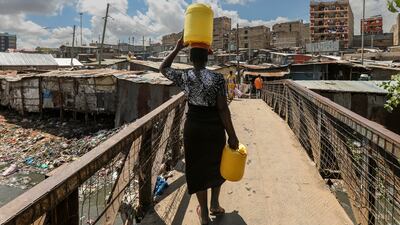
  • Fetching water in the Mathare slums of Nairobi, Kenya. Middlemen exploit shortages to sell water at exorbitant prices. PA
    Fetching water in the Mathare slums of Nairobi, Kenya. Middlemen exploit shortages to sell water at exorbitant prices. PA
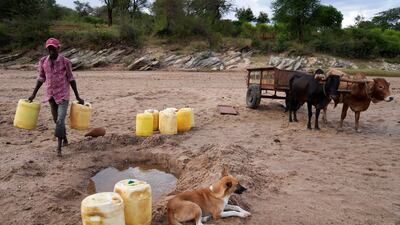
  • Drawing water from a hole in a sandy riverbed in Makueni County, Kenya. There have been fatal clashes between clans in the country who dispute each other’s access to water and pasturelands. AP
    Drawing water from a hole in a sandy riverbed in Makueni County, Kenya. There have been fatal clashes between clans in the country who dispute each other’s access to water and pasturelands. AP
  • Residents bathe in a dam of the Unda river in Klungkung, Indonesia. AP
    Residents bathe in a dam of the Unda river in Klungkung, Indonesia. AP
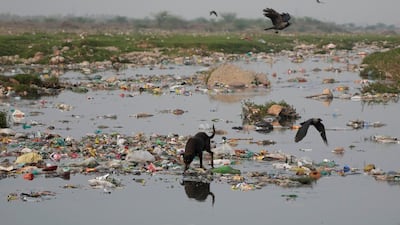
  • The polluted waters of the Tawi river in Jammu, India. AP
    The polluted waters of the Tawi river in Jammu, India. AP
  • A water lorry worker fills tanks at houses in the Pamplona Alta area in Lima, Peru. Residents buy water for drinking, cooking and cleaning from private suppliers. AP
    A water lorry worker fills tanks at houses in the Pamplona Alta area in Lima, Peru. Residents buy water for drinking, cooking and cleaning from private suppliers. AP
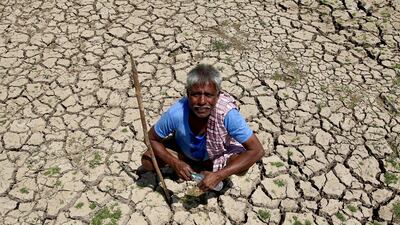
  • The dried Bheeman Lake bed on the outskirts of Bengaluru, India. EPA
    The dried Bheeman Lake bed on the outskirts of Bengaluru, India. EPA
  • An internally displaced Palestinian girl carrying containers on the way to fetch water, in Khan Younis, southern Gaza Strip. EPA
    An internally displaced Palestinian girl carrying containers on the way to fetch water, in Khan Younis, southern Gaza Strip. EPA
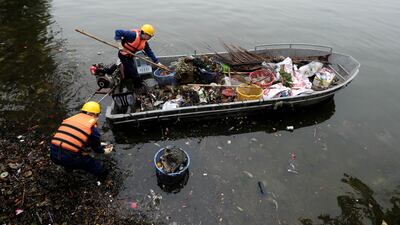
  • Workers remove waste from West Lake in Hanoi, Vietnam. EPA
    Workers remove waste from West Lake in Hanoi, Vietnam. EPA
  • A communal well in Peshawar, Pakistan. EPA
    A communal well in Peshawar, Pakistan. EPA
  • Mimoun Nadori tastes the water of the Moulouya River to check its salinity, in Nador, north of Morocco. Where the river once flowed from the mountains into the Mediterranean, it now sits stagnant, allowing seawater to creep inland and turning water from a source of life to a deadly poison. AP
    Mimoun Nadori tastes the water of the Moulouya River to check its salinity, in Nador, north of Morocco. Where the river once flowed from the mountains into the Mediterranean, it now sits stagnant, allowing seawater to creep inland and turning water from a source of life to a deadly poison. AP
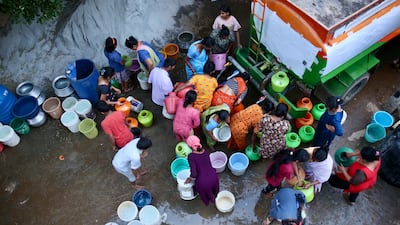
  • Residents collect clean drinking water from a free distribution water tanker in Rajarajeshwari Nagar, Bengaluru. EPA
    Residents collect clean drinking water from a free distribution water tanker in Rajarajeshwari Nagar, Bengaluru. EPA
  • Fred Imfeld dumps water into a bowl for his chickens, in Corning, California. The US state is notorious for droughts and water shortages. AP
    Fred Imfeld dumps water into a bowl for his chickens, in Corning, California. The US state is notorious for droughts and water shortages. AP
  • Thousands of South Africans are lining up for water as the country's largest city, Johannesburg, confronts an unprecedented collapse of its water system affecting millions of people. AP
    Thousands of South Africans are lining up for water as the country's largest city, Johannesburg, confronts an unprecedented collapse of its water system affecting millions of people. AP
  • Mexico's pools of Poza de la Becerra. The 170 cactus-ringed pools contain important species of fish, snails, turtles, bacteria and unique living rock structures that offer important clues to life on Earth millions of years ago. Reuters
    Mexico's pools of Poza de la Becerra. The 170 cactus-ringed pools contain important species of fish, snails, turtles, bacteria and unique living rock structures that offer important clues to life on Earth millions of years ago. Reuters
  • A vessel cruises over the river Main in Frankfurt, Germany. AP
    A vessel cruises over the river Main in Frankfurt, Germany. AP
  • Boats at Cardo Beach in Rio de Janeiro, Brazil. Reuters
    Boats at Cardo Beach in Rio de Janeiro, Brazil. Reuters
  • The polluted Dahisar River, passing through a residential district in Mumbai, India. EPA
    The polluted Dahisar River, passing through a residential district in Mumbai, India. EPA
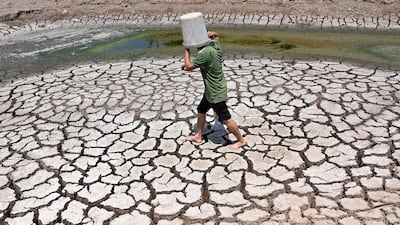
  • A dried-up pond in Vietnam's southern Ben Tre province. A blazing month-long heatwave has brought drought, parching the land in the region. AFP
    A dried-up pond in Vietnam's southern Ben Tre province. A blazing month-long heatwave has brought drought, parching the land in the region. AFP
Three trading apps to try

Sharad Nair recommends three investment apps for UAE residents:

  • For beginners or people who want to start investing with limited capital, Mr Nair suggests eToro. “The low fees and low minimum balance requirements make the platform more accessible,” he says. “The user interface is straightforward to understand and operate, while its social element may help ease beginners into the idea of investing money by looking to a virtual community.”
  • If you’re an experienced investor, and have $10,000 or more to invest, consider Saxo Bank. “Saxo Bank offers a more comprehensive trading platform with advanced features and insight for more experienced users. It offers a more personalised approach to opening and operating an account on their platform,” he says.
  • Finally, StashAway could work for those who want a hands-off approach to their investing. “It removes one of the biggest challenges for novice traders: picking the securities in their portfolio,” Mr Nair says. “A goal-based approach or view towards investing can help motivate residents who may usually shy away from investment platforms.”
Ten tax points to be aware of in 2026

1. Domestic VAT refund amendments: request your refund within five years

If a business does not apply for the refund on time, they lose their credit.

2. E-invoicing in the UAE

Businesses should continue preparing for the implementation of e-invoicing in the UAE, with 2026 a preparation and transition period ahead of phased mandatory adoption. 

3. More tax audits

Tax authorities are increasingly using data already available across multiple filings to identify audit risks. 

4. More beneficial VAT and excise tax penalty regime

Tax disputes are expected to become more frequent and more structured, with clearer administrative objection and appeal processes. The UAE has adopted a new penalty regime for VAT and excise disputes, which now mirrors the penalty regime for corporate tax.

5. Greater emphasis on statutory audit

There is a greater need for the accuracy of financial statements. The International Financial Reporting Standards standards need to be strictly adhered to and, as a result, the quality of the audits will need to increase.

6. Further transfer pricing enforcement

Transfer pricing enforcement, which refers to the practice of establishing prices for internal transactions between related entities, is expected to broaden in scope. The UAE will shortly open the possibility to negotiate advance pricing agreements, or essentially rulings for transfer pricing purposes. 

7. Limited time periods for audits

Recent amendments also introduce a default five-year limitation period for tax audits and assessments, subject to specific statutory exceptions. While the standard audit and assessment period is five years, this may be extended to up to 15 years in cases involving fraud or tax evasion. 

8. Pillar 2 implementation 

Many multinational groups will begin to feel the practical effect of the Domestic Minimum Top-Up Tax (DMTT), the UAE's implementation of the OECD’s global minimum tax under Pillar 2. While the rules apply for financial years starting on or after January 1, 2025, it is 2026 that marks the transition to an operational phase.

9. Reduced compliance obligations for imported goods and services

Businesses that apply the reverse-charge mechanism for VAT purposes in the UAE may benefit from reduced compliance obligations. 

10. Substance and CbC reporting focus

Tax authorities are expected to continue strengthening the enforcement of economic substance and Country-by-Country (CbC) reporting frameworks. In the UAE, these regimes are increasingly being used as risk-assessment tools, providing tax authorities with a comprehensive view of multinational groups’ global footprints and enabling them to assess whether profits are aligned with real economic activity. 

Contributed by Thomas Vanhee and Hend Rashwan, Aurifer

The National's picks

4.35pm: Tilal Al Khalediah
5.10pm: Continous
5.45pm: Raging Torrent
6.20pm: West Acre
7pm: Flood Zone
7.40pm: Straight No Chaser
8.15pm: Romantic Warrior
8.50pm: Calandogan
9.30pm: Forever Young

COMPANY%20PROFILE
%3Cp%3E%3Cstrong%3ECompany%3A%20%3C%2Fstrong%3EGrowdash%0D%3Cbr%3E%3Cstrong%3EStarted%3A%20%3C%2Fstrong%3EJuly%202022%0D%3Cbr%3E%3Cstrong%3EFounders%3A%20%3C%2Fstrong%3ESean%20Trevaskis%20and%20Enver%20Sorkun%0D%3Cbr%3E%3Cstrong%3EBased%3A%20%3C%2Fstrong%3EDubai%2C%20UAE%0D%3Cbr%3E%3Cstrong%3EIndustry%3A%20%3C%2Fstrong%3ERestaurant%20technology%0D%3Cbr%3E%3Cstrong%3EFunding%20so%20far%3A%3C%2Fstrong%3E%20%24750%2C000%0D%3Cbr%3E%3Cstrong%3EInvestors%3A%20%3C%2Fstrong%3EFlat6Labs%2C%20Plus%20VC%2C%20Judah%20VC%2C%20TPN%20Investments%20and%20angel%20investors%2C%20including%20former%20Talabat%20chief%20executive%20Abdulhamid%20Alomar%2C%20and%20entrepreneur%20Zeid%20Husban%3C%2Fp%3E%0A
What the law says

Micro-retirement is not a recognised concept or employment status under Federal Decree Law No. 33 of 2021 on the Regulation of Labour Relations (as amended) (UAE Labour Law). As such, it reflects a voluntary work-life balance practice, rather than a recognised legal employment category, according to Dilini Loku, senior associate for law firm Gateley Middle East.

“Some companies may offer formal sabbatical policies or career break programmes; however, beyond such arrangements, there is no automatic right or statutory entitlement to extended breaks,” she explains.

“Any leave taken beyond statutory entitlements, such as annual leave, is typically regarded as unpaid leave in accordance with Article 33 of the UAE Labour Law. While employees may legally take unpaid leave, such requests are subject to the employer’s discretion and require approval.”

If an employee resigns to pursue micro-retirement, the employment contract is terminated, and the employer is under no legal obligation to rehire the employee in the future unless specific contractual agreements are in place (such as return-to-work arrangements), which are generally uncommon, Ms Loku adds.

Living in...

This article is part of a guide on where to live in the UAE. Our reporters will profile some of the country’s most desirable districts, provide an estimate of rental prices and introduce you to some of the residents who call each area home.

Updated: March 22, 2024, 7:42 AM