
The Eiffel Tower, Louvre Museum, Montmartre – Paris is known for its many stunning landmarks, and perhaps none is more famous than the Champs-Elysees.
The avenue in the eighth arrondissement of France’s capital stretches 1.9 kilometres, boasting theatres, cafes and plenty of luxury stores. It’s where the annual Bastille Day military parade is usually held, and where the Tour de France cycling race concludes.
The name translates to Elysian Fields, which is the resting place of gods and heroes in Greek mythology.
It’s often referred to as the “most beautiful avenue in the world” and yet Parisians have increasingly been staying away from what they view as a tired landmark with cracked pavements and far too much traffic.
-

The Champs-Elysees has become overrun by traffic in recent years. AFP -
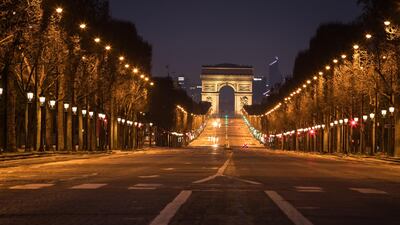
Street lights illuminate a deserted Champs-Elysees leading to the Arc de Triomphe monument in central Paris on March 21, 2020. AFP -

The avenue is the final destination of the Tour de France race. AFP -
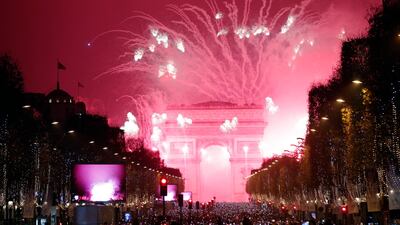
Fireworks illuminate the Arc de Triomphe during New Year's Eve celebrations on the Champs-Elysees in 2017. AP -
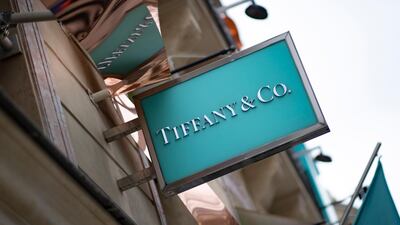
The Champs-Elysees is known for its high-end stores. EPA


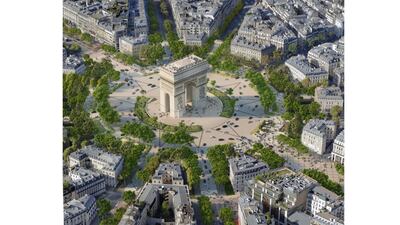
Following a two-year campaign for a major redesign of the avenue, in order to restore it to its former glory, plans for a €250 million ($304,000) makeover were unveiled last year. Now, Anne Hidalgo, the mayor of Paris, has confirmed that these ambitions plans will go ahead, turning this stretch of road in the centre of the city into an “extraordinary garden”.
The plans include reducing the number of cars on the street by half, creating tunnels of trees to improve air quality and pedestrianising roads.

It also includes redesigning Place de la Concorde, which is located at the south-east end of the avenue.
“The legendary avenue has lost its splendour during the last 30 years,” the Champs-Elysees committee said in a statement that welcomed Hidalgo’s announcement.
“It has been progressively abandoned by Parisians and has been hit by several successive crises: the gilets jaunes, strikes, health and economic.”
"It's often called the world's most beautiful avenue, but those of us who work here every day are not at all sure about that," Jean-Noel Reinhardt, president of the committee, told The Guardian in 2019.
“The Champs-Elysees has more and more visitors and big-name businesses battle to be on it, but to French people it’s looking worn out.”
While the plans are now confirmed, the boulevard’s complete transformation will not happen before the city hosts the 2024 Summer Olympics. The aim is to finish by 2030.
Hidalgo told Le Journal du Dimanche that this project was just one of several given the go-ahead to transform the city before the big sporting event. This also includes transforming the area surrounding the Eiffel Tower into an "extraordinary park at the heart of Paris".

