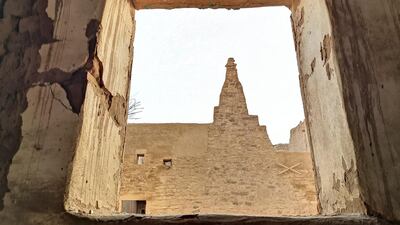
• Al Ula Old Town is the starting point of the Journey Through Time. All images courtesy The Royal Commission for AlUla (RCU)
    Al Ula Old Town is the starting point of the Journey Through Time. All images courtesy The Royal Commission for AlUla (RCU)
  • The Wadi of Hospitality will offer immersive experiences.
    The Wadi of Hospitality will offer immersive experiences.
  • The Cultural Oasis is the green spine of the Journey Through Time at Al Ula.
    The Cultural Oasis is the green spine of the Journey Through Time at Al Ula.
  • Visitors can hop on and hop off the low-carbon tramway running across the Journey Through Time.
    Visitors can hop on and hop off the low-carbon tramway running across the Journey Through Time.
  • The plan covers five districts, with visitors expected to spend five to seven nights in the area once its completed.
    The plan covers five districts, with visitors expected to spend five to seven nights in the area once its completed.
  • The Perspective Galleries in Al Ula Old Town ,- district 1.
    The Perspective Galleries in Al Ula Old Town ,- district 1.
  • Dadan District is the second stop on the journey.
    Dadan District is the second stop on the journey.
  • The Kingdoms Institute in Dadan
    The Kingdoms Institute in Dadan
  • Al Ula's Journey Through Time is a tourism master plan set to position the ancient region of Saudi Arabia as one of the most unique heritage destinations in the world.
    Al Ula's Journey Through Time is a tourism master plan set to position the ancient region of Saudi Arabia as one of the most unique heritage destinations in the world.
  • Jabal Ikmah District - Jabal Ikmah Interpretive Centre.
    Jabal Ikmah District - Jabal Ikmah Interpretive Centre.
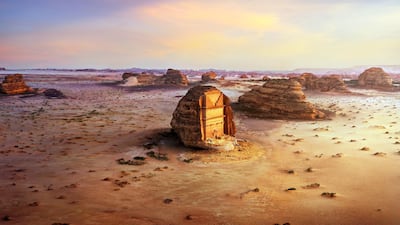
  • An overview of the Nabatean District.
    An overview of the Nabatean District.
  • Open-air performances will take place at the Nabataean Theatre in the Nabataean District.
    Open-air performances will take place at the Nabataean Theatre in the Nabataean District.
  • The Nabataean District's Hegra Museum.
    The Nabataean District's Hegra Museum.
  • The season runs from October to April with plans ot make it a year-round destination.
    The season runs from October to April with plans ot make it a year-round destination.
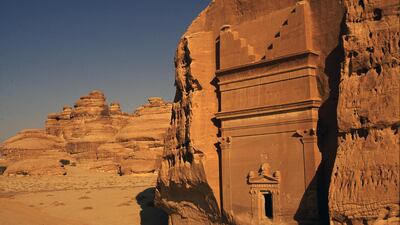
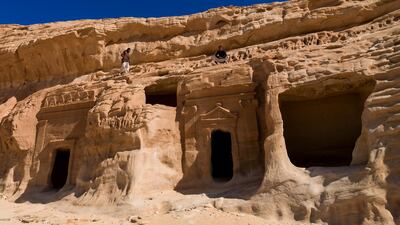
  • Nabatean Tombs in District 4.
    Nabatean Tombs in District 4.
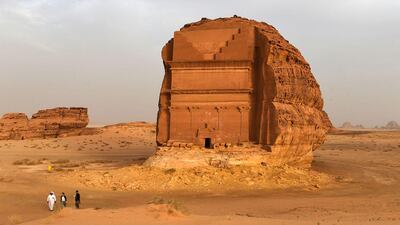
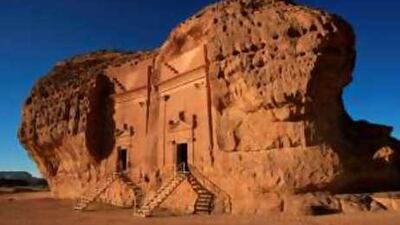
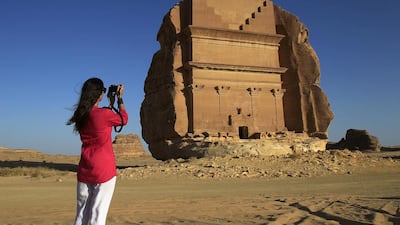
  • The tomb of Lihyan son of Kuza at Hegra.
    The tomb of Lihyan son of Kuza at Hegra.

Al Ula masterplan: everything you need to know about Saudi Arabia's Journey Through Time


Hayley Skirka
  • English
  • Arabic

On Wednesday, Saudi Arabia's Crown Prince Mohammed bin Salman announced an exciting new master plan set to transform Al Ula into a must-visit destination for travellers across the world.

Encompassing five distinct districts interconnected by a low-carbon tramway, the Journey Through Time project offers culture, art, history, adventure and more in north-west Saudi Arabia.

While the kingdom is not currently accepting international travellers due to the global pandemic, the parts of Al Ula that are already open have been enjoying a surge in popularity, driven by demand from Saudis who cannot travel abroad.

Phillip Jones, chief destination marketing officer of the Royal Commission for Al Ula (RCU), tells The National that "because of the lack of international travel in Saudi Arabia, we've become quite the popular destination for domestic travellers".

"We've seen 24,000 visitors over the past couple of months and are at 100 per cent occupancy in all our existing hotels."

We've seen 24,000 visitors over the past couple of months and are at 100 per cent occupancy in all our existing hotels.

Capitalising on that demand, the destination is set to play host to the first performance at Unesco World Heritage Site Hegra on Thursday, April 8, with Italian opera tenor Andrea Bocelli as the star.

When borders do open to international travellers, the new master plan will ensure Al Ula "becomes a top heritage site that will rival any other in the world", says Jones.

If you're thinking a visit to one of the world's most historical sites might be in your travel future, here's a guide to what you need to know before setting off on Saudi Arabia's Journey Through Time.

What is the Journey Through Time? 

Al Ula's Journey Through Time spans five districts across the historical area in Saudi Arabia. Courtesy RCU

Essentially, the Journey Through Time is a route that spans five districts across the Al Ula region. Starting at Al Ula's Old Town in the south, it winds on towards Dadan and up to Jabal Ikmah, before taking in the Nabataean Horizon. The fifth and final point of the journey is Hegra, the southern capital of the Nabataean civilisation and Saudi Arabia's first Unesco World Heritage Site.

The plan follows the framework of Saudi Vision 2030 and was developed under the leadership of the Crown Prince and the guidance of Prince Badr, Saudi Arabia's Minister of Culture and governor of the RCU.

The plan is designed to showcase a place of harmonious co-existence between nature and humans, preserving the cultural legacy of Al Ula and providing development opportunities and sustainable economic growth.

When completed, the project hopes to attract two million visitors every year to the historic region.

How do I get there?

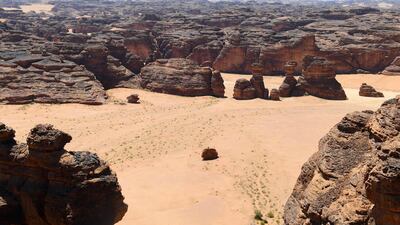
A view above Al Ula; the region is the same size as Belgium.

Travellers who want to experience the Journey Through Time can fly directly to Prince Abdul Majeed bin Abdulaziz airport in Al Ula, which has been expanded to receive international flights.

The airport has the capacity to handle 400,000 passengers a year and it's less than a 30-minute drive from the airport to Al Ula Old Town. Travellers can also fly into Prince Mohammad bin Abdulaziz International Airport in Madinah, from where it's about a five-hour drive to Al Ula.

Where can I stay?

Shaden Desert Resort in Al Ula. Reem Mohammed / The National

Positioning itself as a luxury destination, Al Ula is set to have 5,000 hotel rooms by 2030. Right now, there's a little less to choose from.

The Shaden Resort is open for visitors and offers 121 rooms and villas, all of which have a private terrace or balcony looking out to the surrounding rock formations. Sahary Al ula Resort is also accepting guests. It has 80 secluded tent-style suites, an indoor pool and a garden area.

Several more hotels are set to open as part of the Journey Through Time master plan with properties spread throughout the five districts. "Our focus right now is the Ashar Valley where we have two hotels opening in August," says Jones.

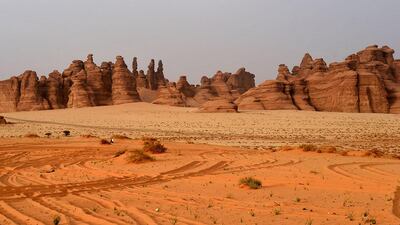
  • The canyon area of Sharaan in AlUla, Saudi Arabia, has been designated as a nature reserve. All photos: Swedish Press Agency
    The canyon area of Sharaan in AlUla, Saudi Arabia, has been designated as a nature reserve. All photos: Swedish Press Agency
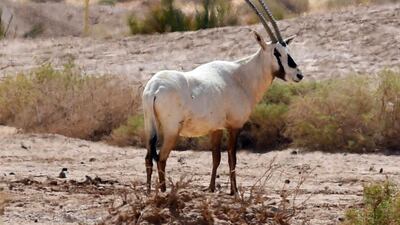
  • An Arabian oryx at Sharaan Nature Reserve
    An Arabian oryx at Sharaan Nature Reserve
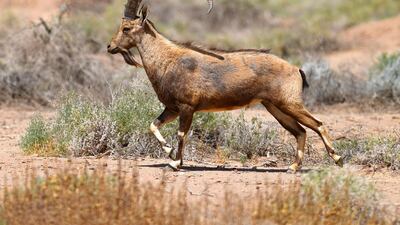
  • A nubian ibex at Sharaan Nature Reserve
    A nubian ibex at Sharaan Nature Reserve
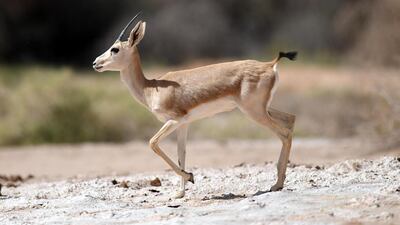
  • Idmi gazelles at the reserve
    Idmi gazelles at the reserve
  • An idmi gazelle at Sharaan Nature Reserve
    An idmi gazelle at Sharaan Nature Reserve
  • The Sharaan reserve is the first step by the Royal Commission for AlUla to re-establish the plants and wildlife that once flourished in the area
    The Sharaan reserve is the first step by the Royal Commission for AlUla to re-establish the plants and wildlife that once flourished in the area
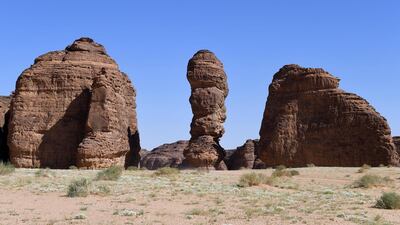
  • Sharaan is a dramatic landscape of cliffs, rocky plateaus and spectacular sand dunes
    Sharaan is a dramatic landscape of cliffs, rocky plateaus and spectacular sand dunes

The first of these is the 100-room Habitas AlUla. This modern, offbeat hotel brand prioritises sustainability and will use 3D printing to create 100 standalone capsules. Using light-on-the-planet materials, the hotel will also utilise local produce and resources.

Music sunset sessions, astronomy-driven yoga and spa therapies infused with local jasmine, frankincense and the Taif oud will be on the cards for visitors, as will plenty of adventure offerings, from canyon trekking to learning desert survival skills.

Also opening this year is a 77-key Banyan Tree resort, the first of the Accor brand to open in Saudi Arabia. Jones says the resort, which offers luxury tented villas, will be "five-star-plus with resort style pools, and some spas and some amazing restaurants".

Other hotels scheduled to open include three Aman Resorts, one a luxury tented camp, another a desert ranch-style hotel and the third one of the hotel's group's new 'conscious mindset' Janu hotels.

Other new hotels will be announced over the coming months and, by the end of 2023, there will be a total of 1,000 keys. Right now, accommodation options are all high-end offerings, so visitors should expect price points to match.

"Initially our goal is hyper-luxury and luxury, and then we'll start to spread out a little bit and add more inventory, perhaps four-star or maybe three-star hotels for travellers," says Jones.

How long should I spend there?

Balloons soar above Al Ula rock formations. Supplied

The enormous region of Al Ula is about the same size as Belgium and also very sparsely populated, with fewer than 50,000 people living there. This means a one-night stay isn't going to allow visitors to easily take in the whole journey.

"Right now, our average visitor stay is about 2.8 days, but by the time all the development is completed, you'd want to have a minimum of five nights, and ideally would spend seven days in the destination," says Jones.

As development continues, there will also be opportunities for long-term stays and immersive travel opportunities across the districts, as well as day-trip options to neighbouring developments.

When's the best time of year to visit?

The season runs from October to April with plans to make it a year-round destination.

The main season at Al Ula currently runs from October to April, with limited activities operating during the summer months, but there are plans to extend this, explains Jones.

"We have a vision to make it a year-round destination and, with the beautiful oasis, there's a lot of opportunity to develop an area for summer visits where it's cooler or shaded."

What can I see and do? 

Each district offers something different for visitors with a focus on local connection, sustainability and preserving the past. RCU

The Wadi of Hospitality will be the central spine of the area. Located in the oasis, which is being carefully regenerated, it will be a series of restaurants, museums and attractions spread throughout the wadi.

This is where visitors will be able to enjoy the beauty of the oasis and take part in local activities. "Visitors will be able to visit farms, drink fresh juices, pick dates; it will all be very interactive and it's going to be a very special place in Saudi Arabia," says Jones.

Visitors can access all five of the Journey Through Time districts via a low-carbon tram that will run across all 46 kilometres. This will be a hop-on, hop-off service and an efficient way to take in the surrounding natural beauty.

Each district offers something different for visitors, here's some of the highlights:

District 1: Al Ula Old Town

  • Al Ula's Old Town is open to visitors. All photos: RCU
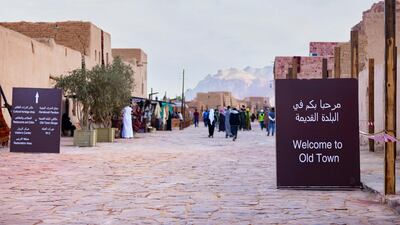
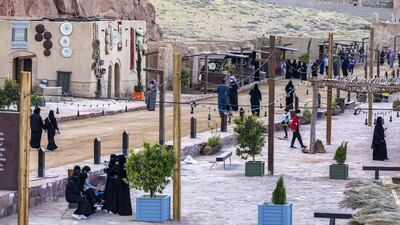
    Al Ula's Old Town is open to visitors. All photos: RCU
  • It reopened to the public in March 2021 for the first time in more than three years.
    It reopened to the public in March 2021 for the first time in more than three years.
  • Visitors can take a self-guided tour of Old Town or book a storytelling tour inclusive of a 'rawi' tour guide.
    Visitors can take a self-guided tour of Old Town or book a storytelling tour inclusive of a 'rawi' tour guide.
  • Three years of restoration works took place in Old Town.
    Three years of restoration works took place in Old Town.
  • The reopening of Old Town attracted tourists from across the kingdom.
    The reopening of Old Town attracted tourists from across the kingdom.
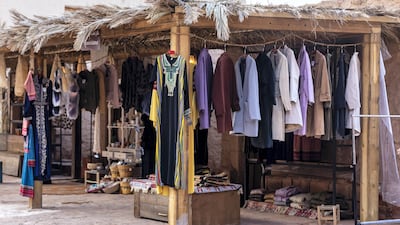
  • Old Town boasts a handicraft pavilion.
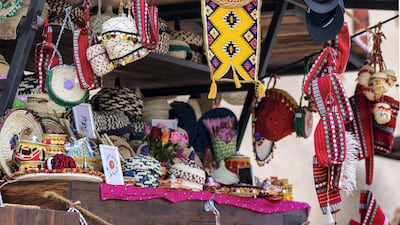
    Old Town boasts a handicraft pavilion.
  • Market and craft stalls are open in Al Ula's Old Town.
    Market and craft stalls are open in Al Ula's Old Town.
  • Open-air eateries in Al Ula's Old Town.
    Open-air eateries in Al Ula's Old Town.
  • Entry to Old Town is free of charge.
    Entry to Old Town is free of charge.
  • Arts and crafts along the Incense Road.
    Arts and crafts along the Incense Road.
  • Visitors can stroll the Incense Road, adjacent to Old Town.
    Visitors can stroll the Incense Road, adjacent to Old Town.
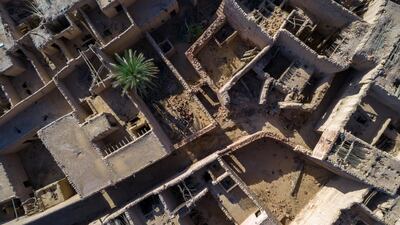
  • An ariel view of the ancient site.
    An ariel view of the ancient site.
  • Al Ula Old Town in Saudi Arabia.
    Al Ula Old Town in Saudi Arabia.
  • Old Town was an important settlement in the pilgrimage from Damascus to Makkah.
    Old Town was an important settlement in the pilgrimage from Damascus to Makkah.
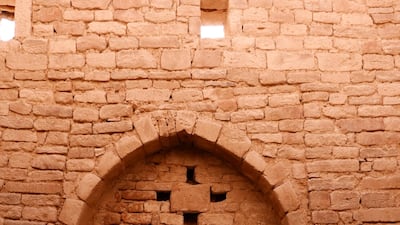
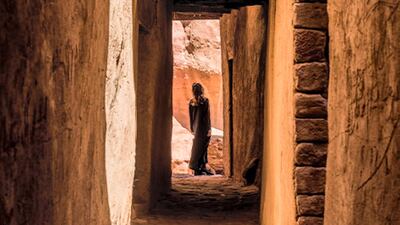
  • Ancient mud-brick houses line the streets of Al Ula's Old Town.
    Ancient mud-brick houses line the streets of Al Ula's Old Town.
  • The Old Town in Al Ula.
    The Old Town in Al Ula.

The starting point of the Journey Through Time is Al Ula's Old Town and the Cultural Oasis. Uninhabited for more than 40 years, the town was closed completely in 2017 by the RCU, but is now welcoming guests with restored streets, buildings and attractions. Here, travellers will be immersed in arts and culture with the Arts District set to preserve the area's character; the paradigm-shifting Perspectives Galleries is also one of the new highlights. With nearly 900 houses, 400 shops and five town squares, the Old Town is also home to Masjid Al Izam, the restored Friday mosque believed to have been visited by the Prophet Mohammed.

District 2: Dadan 

Al Ula's Dadan District.

Dadan, the land of the Ancient Kingdoms of north-west Arabia, is the second district in the journey and it's one that is set to enthral through its history.

With soaring red rocks and many heritage sites, Dadan is the place for travellers interested in finding out more about Al Ula's rich past. The archaeological epicentre of the Dadanite and Lihyanite kingdoms that continue to reveal secrets, Dadan District will also be home to new resorts, hotels and the modern Dadan Village.

The Black Basalt Museum will be found here, as will The Kingdoms Institute. This landmark will become one of the cultural centres of Saudi Arabia and a global hub and learning centre for archaeological research about the civilisations that have inhabited Al Ula. The design of the cluster of buildings making up The Kingdoms Institute is inspired by the Dadan civilisation, and they will appear as if carved in the mountains opposite the archaeological site of Dadan.

District 3: Jabal Ikmah

The Jabal Ikmah District's Jabal Ikmah Interpretive Centre.

Set among the ageless rocks of Al Ula, Jabal Ikmah is home to an open-air library of petroglyphs, making it a natural and monumental testimony of times gone by.

Set to attract archaeology-loving travellers keen to discover more about the tracks and writings of the civilisations of Al Ula, there are also new cultural anchors. The Jabal Ikmah Interpretive Centre will join the historic Hijaz Railway Station on the edge of the oasis among the date palms and, on the opposite side of the valley, the Incense Museum and Gardens are set to include public gardens, galleries and a wellness centre.

District 4: Nabataean Horizon 

Open-air performances will take place at the Nabataean Theatre in the Nabataean District.

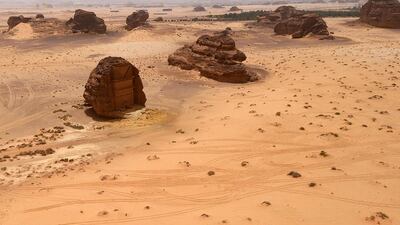
Sweeping across the Al Ula landscape, the Nabataean Horizon is akin to Jordan's Petra.

Travellers will be able to visit the carved village, a new cultural site that mirrors Nabataean architecture with buildings and sites carved into the rock faces. A Nabataean amphitheatre will be the place to go for live open-air performances.

Arabian Horse Heritage will be the hub for equestrianism in the valley, with travellers invited to share immersive experiences based on the ancient Nabataean lifestyle. It's also set to be home to a wide variety of accommodation options, including tented resorts, canyon resorts and a recreational vehicle park.

District 5: Hegra Historical City 

  • The rose-coloured sandstone in Hegra, a Unesco World Heritage site, near Saudi Arabia's northwestern town of AlUla. AFP
    The rose-coloured sandstone in Hegra, a Unesco World Heritage site, near Saudi Arabia's northwestern town of AlUla. AFP
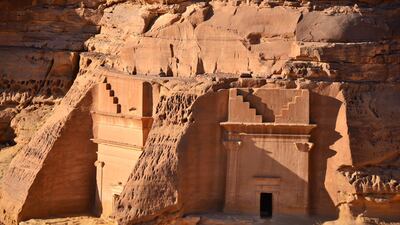
  • One of the tombs at Hegra, formerly known as Madain Saleh. AFP
    One of the tombs at Hegra, formerly known as Madain Saleh. AFP
  • The site was used as the background for a concert by Italian tenor Andea Bocelli. AFP
    The site was used as the background for a concert by Italian tenor Andea Bocelli. AFP
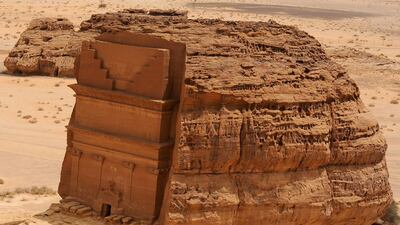
  • The Qasr al-Farid tomb (The Lonely Castle) carved into rose-coloured sandstone in Hegra. AFP
    The Qasr al-Farid tomb (The Lonely Castle) carved into rose-coloured sandstone in Hegra. AFP
  • The Qasr al-Farid tomb (The Lonely Castle) carved into rose-coloured sandstone in Hegra. AFP
    The Qasr al-Farid tomb (The Lonely Castle) carved into rose-coloured sandstone in Hegra. AFP
  • Andrea Bocelli is believed to be the first artist to host a concert at Hegra, Saudi Arabia. Sammy Six
    Andrea Bocelli is believed to be the first artist to host a concert at Hegra, Saudi Arabia. Sammy Six
  • Hegra, known locally as 'rocky place', features 111 monumental tombs carved into stone. AFP
    Hegra, known locally as 'rocky place', features 111 monumental tombs carved into stone. AFP
  • Rock-cut tombs at Hegra, near Al Ula, are Saudi Arabia's equivalent of Petra in Jordan, but receive only a trickle of visitors. Amar Grover / The National
    Rock-cut tombs at Hegra, near Al Ula, are Saudi Arabia's equivalent of Petra in Jordan, but receive only a trickle of visitors. Amar Grover / The National
  • Nabataean tomb in Hegra archaeological site, Al Madinah Province, AlUla, Saudi Arabia. Getty Images
    Nabataean tomb in Hegra archaeological site, Al Madinah Province, AlUla, Saudi Arabia. Getty Images
  • Hegra is the first archeological site in Saudi Arabia to join Unesco's World Heritage List. Photo: Consulum
    Hegra is the first archeological site in Saudi Arabia to join Unesco's World Heritage List. Photo: Consulum
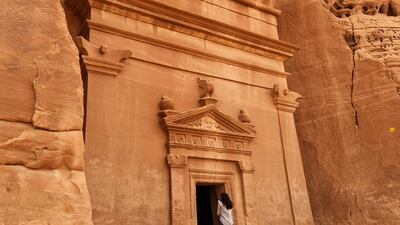
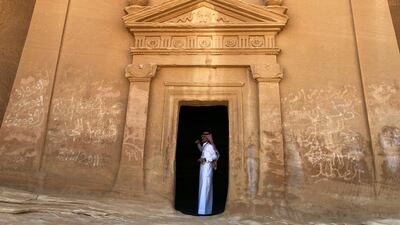
  • A Saudi tour guide stands inside a tomb at Hegra in Saudi Arabia. Reuters
    A Saudi tour guide stands inside a tomb at Hegra in Saudi Arabia. Reuters
  • Hegra is northwest of Riyadh. AP Photo
    Hegra is northwest of Riyadh. AP Photo
  • Nabataean rock-cut tombs at Hegra, near AlUla, are Saudi Arabia's equivalent of Petra in Jordan, but receive only a trickle of visitors.
    Nabataean rock-cut tombs at Hegra, near AlUla, are Saudi Arabia's equivalent of Petra in Jordan, but receive only a trickle of visitors.

The jewel in the crown of the Journey Through Time is the Hegra historical city. The southern capital of the Nabataean civilisation, and Saudi Arabia's first Unesco World Heritage Site, is where travellers can explore the colossal monuments belonging to a vanished civilisation.

Home to more than 110 tombs and numerous archaeological sites, travellers can see the Tomb of Lihyan Son of Kuza and Qasr Al Bint and explore the Hegra Fort and restored Hijaz Railway Station.

Like in Petra, many of the Hegra tombs feature awe-inspiring carved facades but, unlike Jordan, in Saudi Arabia many of the facades also carry Nabataean inscriptions detailing the dead and offering a glimpse into the lives of the people who used to call these ancient lands home.


Ten tax points to be aware of in 2026

1. Domestic VAT refund amendments: request your refund within five years

If a business does not apply for the refund on time, they lose their credit.

2. E-invoicing in the UAE

Businesses should continue preparing for the implementation of e-invoicing in the UAE, with 2026 a preparation and transition period ahead of phased mandatory adoption. 

3. More tax audits

Tax authorities are increasingly using data already available across multiple filings to identify audit risks. 

4. More beneficial VAT and excise tax penalty regime

Tax disputes are expected to become more frequent and more structured, with clearer administrative objection and appeal processes. The UAE has adopted a new penalty regime for VAT and excise disputes, which now mirrors the penalty regime for corporate tax.

5. Greater emphasis on statutory audit

There is a greater need for the accuracy of financial statements. The International Financial Reporting Standards standards need to be strictly adhered to and, as a result, the quality of the audits will need to increase.

6. Further transfer pricing enforcement

Transfer pricing enforcement, which refers to the practice of establishing prices for internal transactions between related entities, is expected to broaden in scope. The UAE will shortly open the possibility to negotiate advance pricing agreements, or essentially rulings for transfer pricing purposes. 

7. Limited time periods for audits

Recent amendments also introduce a default five-year limitation period for tax audits and assessments, subject to specific statutory exceptions. While the standard audit and assessment period is five years, this may be extended to up to 15 years in cases involving fraud or tax evasion. 

8. Pillar 2 implementation 

Many multinational groups will begin to feel the practical effect of the Domestic Minimum Top-Up Tax (DMTT), the UAE's implementation of the OECD’s global minimum tax under Pillar 2. While the rules apply for financial years starting on or after January 1, 2025, it is 2026 that marks the transition to an operational phase.

9. Reduced compliance obligations for imported goods and services

Businesses that apply the reverse-charge mechanism for VAT purposes in the UAE may benefit from reduced compliance obligations. 

10. Substance and CbC reporting focus

Tax authorities are expected to continue strengthening the enforcement of economic substance and Country-by-Country (CbC) reporting frameworks. In the UAE, these regimes are increasingly being used as risk-assessment tools, providing tax authorities with a comprehensive view of multinational groups’ global footprints and enabling them to assess whether profits are aligned with real economic activity. 

Contributed by Thomas Vanhee and Hend Rashwan, Aurifer

Match info

Huddersfield Town 0

Chelsea 3
Kante (34'), Jorginho (45' pen), Pedro (80')

AI traffic lights to ease congestion at seven points to Sheikh Zayed bin Sultan Street

The seven points are:

Shakhbout bin Sultan Street

Dhafeer Street

Hadbat Al Ghubainah Street (outbound)

Salama bint Butti Street

Al Dhafra Street

Rabdan Street

Umm Yifina Street exit (inbound)

The specs

Engine: 2.0-litre 4cyl turbo

Power: 261hp at 5,500rpm

Torque: 405Nm at 1,750-3,500rpm

Transmission: 9-speed auto

Fuel consumption: 6.9L/100km

On sale: Now

Price: From Dh117,059

$1,000 award for 1,000 days on madrasa portal

Daily cash awards of $1,000 dollars will sweeten the Madrasa e-learning project by tempting more pupils to an education portal to deepen their understanding of math and sciences.

School children are required to watch an educational video each day and answer a question related to it. They then enter into a raffle draw for the $1,000 prize.

“We are targeting everyone who wants to learn. This will be $1,000 for 1,000 days so there will be a winner every day for 1,000 days,” said Sara Al Nuaimi, project manager of the Madrasa e-learning platform that was launched on Tuesday by the Vice President and Ruler of Dubai, to reach Arab pupils from kindergarten to grade 12 with educational videos.  

“The objective of the Madrasa is to become the number one reference for all Arab students in the world. The 5,000 videos we have online is just the beginning, we have big ambitions. Today in the Arab world there are 50 million students. We want to reach everyone who is willing to learn.”

The%C2%A0specs%20
%3Cp%3E%0D%3Cstrong%3EEngine%3A%20%3C%2Fstrong%3E6-cylinder%2C%204.8-litre%20%0D%3Cbr%3E%3Cstrong%3ETransmission%3A%20%3C%2Fstrong%3E5-speed%20automatic%20and%20manual%0D%3Cbr%3E%3Cstrong%3EPower%3A%20%3C%2Fstrong%3E280%20brake%20horsepower%20%0D%3Cbr%3E%3Cstrong%3ETorque%3A%20%3C%2Fstrong%3E451Nm%20%0D%3Cbr%3E%3Cstrong%3EPrice%3A%20%3C%2Fstrong%3Efrom%20Dh153%2C00%0D%3Cbr%3E%3Cstrong%3EOn%20sale%3A%20%3C%2Fstrong%3Enow%3C%2Fp%3E%0A
How to wear a kandura

Dos

  • Wear the right fabric for the right season and occasion 
  • Always ask for the dress code if you don’t know
  • Wear a white kandura, white ghutra / shemagh (headwear) and black shoes for work 
  • Wear 100 per cent cotton under the kandura as most fabrics are polyester

Don’ts 

  • Wear hamdania for work, always wear a ghutra and agal 
  • Buy a kandura only based on how it feels; ask questions about the fabric and understand what you are buying

Know your camel milk:
Flavour: Similar to goat’s milk, although less pungent. Vaguely sweet with a subtle, salty aftertaste.
Texture: Smooth and creamy, with a slightly thinner consistency than cow’s milk.
Use it: In your morning coffee, to add flavour to homemade ice cream and milk-heavy desserts, smoothies, spiced camel-milk hot chocolate.
Goes well with: chocolate and caramel, saffron, cardamom and cloves. Also works well with honey and dates.

Key facilities
  • Olympic-size swimming pool with a split bulkhead for multi-use configurations, including water polo and 50m/25m training lanes
  • Premier League-standard football pitch
  • 400m Olympic running track
  • NBA-spec basketball court with auditorium
  • 600-seat auditorium
  • Spaces for historical and cultural exploration
  • An elevated football field that doubles as a helipad
  • Specialist robotics and science laboratories
  • AR and VR-enabled learning centres
  • Disruption Lab and Research Centre for developing entrepreneurial skills
Living in...

This article is part of a guide on where to live in the UAE. Our reporters will profile some of the country’s most desirable districts, provide an estimate of rental prices and introduce you to some of the residents who call each area home.

Chatham House Rule

A mark of Chatham House’s influence 100 years on since its founding,  was Moscow’s formal declaration last month that it was an “undesirable
organisation”. 


The depth of knowledge and academics that it drew on
following the Ukraine invasion had broadcast Mr Putin’s chicanery.  


The institute is more used to accommodating world leaders,
with Nelson Mandela, Margaret Thatcher among those helping it provide
authoritative commentary on world events. 


Chatham House was formally founded as the Royal Institute of
International Affairs following the peace conferences of World War One. Its
founder, Lionel Curtis, wanted a more scientific examination of international affairs
with a transparent exchange of information and ideas.  


That arena of debate and analysis was enhanced by the “Chatham
House Rule” states that the contents of any meeting can be discussed outside Chatham
House but no mention can be made identifying individuals who commented.  


This has enabled some candid exchanges on difficult subjects
allowing a greater degree of free speech from high-ranking figures.  


These meetings are highly valued, so much so that
ambassadors reported them in secret diplomatic cables that – when they were
revealed in the Wikileaks reporting – were thus found to have broken the rule. However,
most speeches are held on the record.  


Its research and debate has offered fresh ideas to
policymakers enabling them to more coherently address troubling issues from climate
change to health and food security.