As a child, I loved trotting to the neighbourhood sweet shop with my grandfather. Hidden amid the labyrinthine lanes of Old Delhi, the cavernous establishment, redolent with the smell of ghee and bustling with cooks frying delicacies in gargantuan woks, held me in thrall.
My favourite part, though, was the shop's glass-fronted counter, which was lined with trays of pastel-hued barfis, syrupy gulab jamuns, rasgullas and rasmalais coated with varq, a wispy, glistening sheet of edible silver. Nose pressed against the glass, I would stare longingly at these delicacies.

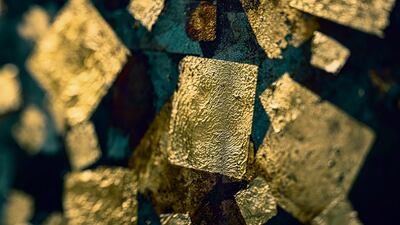
The Indian fascination with gold and silver varq goes back centuries. Chefs and confectioners have long used it to adorn their dishes, as well as items including chyawanprash, a herbal paste said to boost immunity; paan or betel leaf; mukhwaas, a mouth freshener; candied fruits; pastry; and even mocktails. Nuts are often gilded with silver varq to make them look festive. Biryanis, rich meat curries, cardamom and betel nuts are also given a magical makeover with this glistening garnish.
"Varq plays a vital role in Indian cuisine," says award-winning chef Vinod Saini of Leela Palace Hotel, New Delhi. "It adds value to any dish, taking it to the next level. It is the culinary equivalent of an airline upgrade – from economy to business class. Though edible metal doesn't alter the flavour profile of the dish, nor add any nutritional value to it, it is a surefire way to impress guests. After all, eyes eat the food first, don't they?"
Saini, who has hosted Bollywood celebrities, heads of states and royalty at the hotel’s Jamavar Indian restaurant, says even ordinary dishes such as paneer and vegetable curries can be enhanced with varq. “We often use silver varq to garnish dishes like kundan kaliya, a traditional lamb curry dish, desserts like malai kulfi, barfi, kala jam and even some of the hotel’s buffet items. For high-end events, it’s always gold varq.”

For consumption, varq has to be pure, made from sterling silver or 22K to 24K gold. It should also be "food grade", meeting stringent food security and safety standards. And, needless to say, this beautification comes at a price. About 10 sheets of gold varq (enough to decorate 10 to 15 dishes) may set the restaurant back $300 to $400. Silver varq costs about a third of the price.
No matter. Such is the appeal of varq in the Indian subcontinent that an entire restaurant has been named after it. Nestled in New Delhi's Taj Mahal Hotel is Varq, an 82-seater outlet that wows visitors with its gold-leaf coffered ceiling, set against rosewood wall panelling and an auburn tile floor. Its resplendent entrance features a pair of illuminated cylindrical glass sculptures with polished cut-glass floral details set in gold leaf.

"We reference the concept of art on a plate in our dishes," says the hotel's executive chef, Arun Sundararaj. Think modern Indian classics such as the chilled masala pot, an innovative twist on Delhi's signature chaat; varq garden green, a salad prepared with edible flowers; and the panchdhaan khichada, a dehydrated form of the traditional Indian thali, crafted with the five grains used in porridge (oats, black rice, millet, wheat and lentils) and served with six accompaniments, including tempered curd, guava curry and smoked ghee. "All anointed with gold varq, of course," says Sundararaj.
Aside from beautification, chefs say varq is functional, too. "It keeps the food warm and moist," says khansama Haji Bhoora, whose great-grandfather worked in the royal kitchens of Rampur, a north Indian city in Uttar Pradesh known for its ornate, courtly cuisine.
"In royal kitchens, even the slightest break in the varq on the dish would indicate that it had been tampered with. The dish would be promptly sent back to the cook due to fear of contamination," explains Bhoora, who hosts Rampuri food pop-ups to honour his family's centuries-old gastronomic legacy.
Bhoora's repertoire includes a selection of quintessentially Rampuri recipes such as neem ke patton ka halwa, a dessert concocted from neem leaves, and kachhe gosht ki tikki, or mutton kebabs, as well as some other dishes with a provenance that dates back to the 18th century.
The popularity of varq isn't limited to India. Western chefs have also been known to dish out gold-encrusted sushi, for example, as well as burgers and pastry peppered with gold flakes. In 2016, New York's Manila Social Club created a buzz by serving a hamburger decorated with champagne frosting and a coating of 24K gold.
In Dubai, Doors Freestyle Grill offers a succulent Dh786 striploin steak that is coated in a fine sheet of gold, the Dubai International Financial Centre's Maria serves up a handmade burrata flown in from southern Italy, coated with 24K gold leaf, and the Armani Lounge treats guests to a cappuccino made from Arabica beans and topped with 23K gold.

Much of varq's appeal lies in its mystique, say food historians. In 3,000 BC, for example, Egyptians consumed gold, believing that the metal was the skin and flesh of the gods. They saw it as a "gateway to immortality", according to an essay in The Craftsmanship Initiative magazine.
"In the 16th century, Paracelsus, the 'father of toxicology', pioneered the use of minerals in medicine. During the Renaissance, European noblemen sought to impress their guests by decorating their food (bread, oysters, quail, carp) with gold leaf at banquets and weddings.
"In Renaissance Venice, gold-covered, sugared almonds were offered after a meal in the belief that gold strengthened the heart and protected against rheumatism," states the essay.
In India, the practice of eating precious metals was predominantly popularised by Mughal kings and queens, who regarded it as a status symbol. They laid out rich feasts anointed with varq to impress guests. Furthermore, the application of these edible metal sheets helped deliver clean and hygienic food by repelling any dust particles that might contaminate the dishes. The region's best craftsmen were employed by the rulers to craft these thin edible sheets.
But beyond the extravagance, does consuming gold or silver provide any nourishment to the body? The jury is still out on this one. Priti Kandhari, a nutritionist from New Delhi, says scientifically, gold is inert and doesn't break down easily to dissolve in the bloodstream. "It is thrown out of the body as a waste product and hence provides no nutritional or health benefits. Of course, you do gain bragging rights for being able to say you ate gold," she says.
Gulzari Lal, a Vedic scholar who lives in New Delhi, says the tradition of decorating treats in India with gold and silver foil originates from Ayurvedic medicinal practices. Practitioners of Ayurveda believe that gold is an aphrodisiac and that silver has antimicrobial properties.
"Gold relaxes the body and mind. People suffering from digestive problems and those of the urinary system and organs experience relief when they consume silver-charged water because silver has antibacterial, antiviral and antifungal properties. People suffering from respiratory disease such as asthma, breathlessness, heart diseases and brain diseases, find it beneficial to consume gold-charged water. This is done by keeping water in the required metal [tumbler or bowl] for a few hours or as advised by the doctor," he explains.
Given its enormous value, crafting varq can be back-breaking work. The foil is traditionally made by skilled silversmiths who pound the metal sheets by hand for days until they become 1/8,000 of a millimetre thin. These sheets are placed on the back of a piece of paper for support and peeled away immediately before application. Only then can this minuscule layer of precious metal be used to give even the humblest of dishes a makeover fit for royalty.

