



After more than 70 years, the global Miss Universe pageant is making one of the biggest changes to its selection process.
Starting next year, the annual competition will accept married women and mums.
In an internal memo seen by The National, the organisation says it has always strived to evolve with the times and the latest decision was the natural next step.
"We all believe that women should have agency over their lives and that a human's personal decisions should not be a barrier to their success," the memo said.
The new rules will be effective for the 72nd pageant, to be held in 2023. Preliminary pageants have already taken place for Miss Universe 2022, which will be held later this year.
-

Miss India Harnaaz Sandhu, left, is crowned Miss Universe 2021 by Miss Universe 2020 Andrea Meza from Mexico during the Miss Universe 2021 pageant in Eilat, Israel. Contestants from 80 countries and territories competed in the Miss Universe 2021 pageant. EPA -
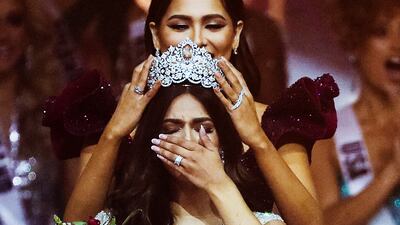
Miss India Harnaaz Sandhu reacts as the Miss Universe crown is placed on her head by the outgoing Miss Universe Andrea Meza of Mexico, at the Red Sea resort of Eilat in Israel. Reuters -

Contestants congratulate Miss Universe 2021 winner Harnaaz Sandhu. Reuters -

Miss Universe contestants congratulate Harnaaz Sandhu as she is crowned Miss Universe during the 70th Miss Universe beauty pageant. AFP -

Miss India Harnaaz Sandhu walks on the stage among celebrations after being crowned Miss Universe 2021. EPA -
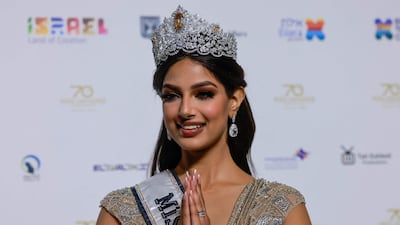
Miss Universe 2021 Harnaaz Sandhu from India speaks to reporters after winning the 70th Miss Universe beauty pageant. AFP -
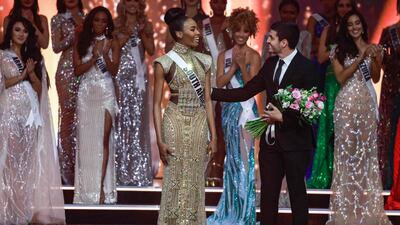
Miss Universe second runner-up Lalela Mswane from South Africa reacts during the 70th Miss Universe beauty pageant. AFP -
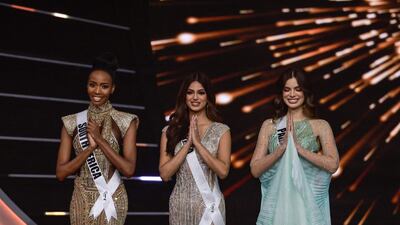
The final three Miss Universe contestants, left to right, Miss South Africa, Lalela Mswane; Miss India, Harnaaz Sandhu; and Miss Paraguay, Nadia Ferreira, pose on stage during the pageant. AFP -

US singer JoJo performs on stage during the 70th Miss Universe beauty pageant. AFP -

Miss India Harnaaz Sandhu during the swimsuit round of the 70th Miss Universe beauty pageant. AFP -
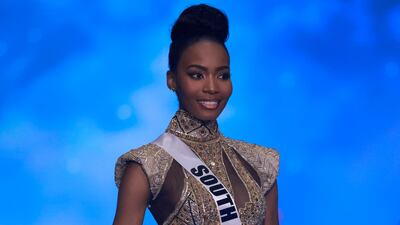
Miss South Africa Lalela Mswane poses in the evening gown competition during the pageant. AFP -

US television host Steve Harvey asks Miss India Harnaaz Sandhu the final question during the 70th Miss Universe pageant. AFP -
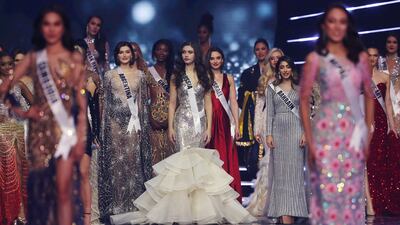
Miss Universe 2021 contestants pose during the pageant. Reuters -

Miss Universe 2020 Andrea Meza appears during the 70th Miss Universe pageant. AP Photo -

Outgoing Miss Universe Andrea Meza of Mexico poses during the event. Reuters -

Miss France Clemence Botino poses during the swimsuit round at the Miss Universe 2021 pageant. EPA -
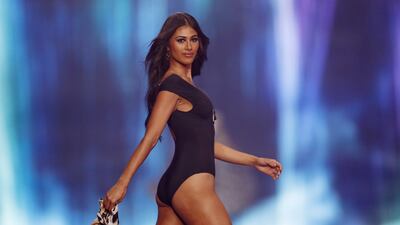
Miss Puerto Rico Michelle Colon poses during the Miss Universe 2021 pageant. EPA -

Miss Colombia Valeria Ayos poses during the Miss Universe 2021 pageant. EPA -

Miss USA Elle Smith poses during the Miss Universe pageant. Reuters -

Miss India Harnaaz Sandhu and at the pageant. AFP -
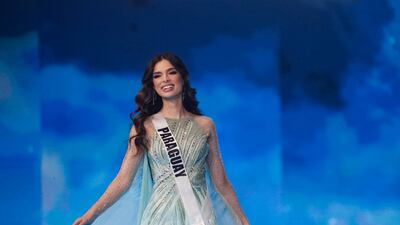
Paraguay's Nadia Ferreira poses during the final round of the 70th Miss Universe pageant. AP Photo -

Miss Universe semifinalists pose on stage during the swimsuit competition of the 70th Miss Universe beauty pageant in Israel's southern Red Sea coastal city of Eilat. AFP -

US television host Steve Harvey hosts the 70th Miss Universe beauty pageant. AFP -

Judges Adriana Lima, left, and Lori Harvey at the 70th Miss Universe pageant. AP Photo


Previously, only single women, aged between 18 and 28, who have never been married or had children were allowed to apply. It wasn't immediately clear if the age bracket will remain the same.
"The Miss Universe Organisation is always the greatest and most innovative platform of its kind and now it will be more inclusive and welcoming to mothers and married women. For me, this is aligned with what I have been fighting for — breaking stereotypes and unlearning the stigma that the old society has forced on us from many many decades ago," Josh Yugen, chief executive of Yugen Group and the national director of Miss Universe Bahrain tells The National.
Based in New York, Miss Universe Organisation also owns the Miss USA and Miss Teen USA pageants, besides the global Miss Universe pageant.
The contest has been changing with the times. Last year, Miss Universe Bahrain made history by choosing to walk the swimsuit round in fully-covered sportswear.
Manar Nadeem Deyani, then a fashion student living in Dubai, was among 79 contestants who participated at the 2021 pageant. Miss India Harnaaz Sandhu, 21, an actress, was crowned Miss Universe 2021 at the event, held in Eilat in Israel.
-
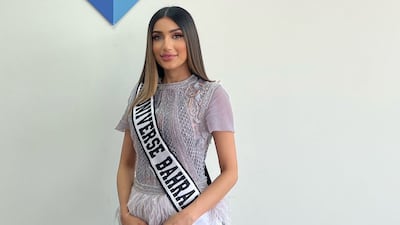
Miss Universe Bahrain 2021 Manar Nadeem Deyani will soon hand over her crown to her successor at the next pageant. All photos: Yugen Group, unless specified -

Manar Nadeem Deyani says her life has completely changed since she was named Miss Universe Bahrain. -
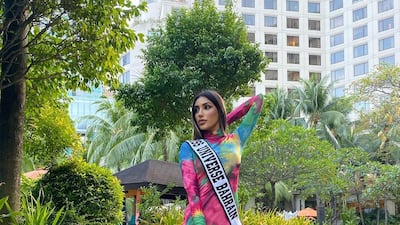
The Miss Universe Bahrain 2022 pageant is set to be held in July. -

Deyani made waves at the Miss Universe pageant in 2021 when she walked out during the swimsuit round in a fully-covered activewear outfit. AP -

Deyani wore a look inspired by Bahrain's long tradition of pearl diving during the national costume round at Miss Universe 2021. -

Deyani, during the preliminary stage of the 70th Miss Universe beauty pageant, in Israel's southern Red Sea coastal city of Eilat in 2021. AFP -

Applications are now being accepted for Miss Universe Bahrain 2022. While details are still scarce, the event is open to all aspiring beauty queens who are between the ages of 18 to 28, are single and hold a Bahraini passport. -

Deyani is also a fashion designer and hopes to launch her own label soon, with a focus on sustainability. -

Deyani in Eilat, Israel, during the Miss Universe 2021 pageant. -

Participating in the Miss Universe pageant gave her the privilege and the opportunity to 'redefine what a modern Bahraini woman is', says Deyani. -

Deyani, just after landing in Israel for the Miss Universe pageant in 2021. Photo: Yugen Group -
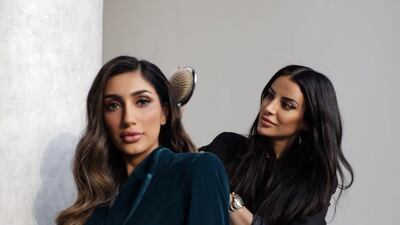
With her hair stylist Maggie Semaan. -

Deyani soon after she landed in Israel in 2021. -
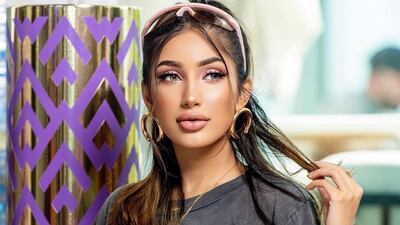
If you are an aspiring Miss Universe, you have to find your purpose, develop your confidence and identify the key messages you want to advocate, advises Deyani.


One of Sandhu's winning answers at the pageant was when she was asked for her advice to the young women watching her on how to deal with the pressures they face today.
"I think the biggest pressure the youth today is facing is to believe in themselves; to know that you are unique and that [is] what makes you beautiful," she said. "Stop comparing yourselves with others and let’s talk [about] more important things that [are] happening worldwide. I think this is what you need to understand. Come out and speak for yourself because you are the leader of your life, you are the voice of your own. I believed in myself, and that’s why I’m standing here today."
Miss Universe 2022 beauty queens crowned: Iraq and Lebanon to Thailand — in pictures
-

Miss Universe Turkey 2022 is Aleyana Sirin. Photo: Instagram / Aleyanasirinn -
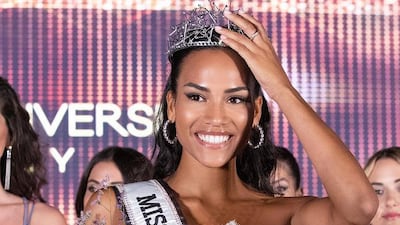
Miss Universe Italy 2022 is Virginia Stablum. Photo: / Instagram / Virginia.Stablum -
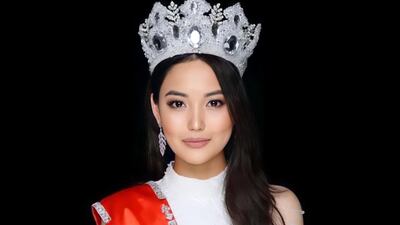
Miss Universe Kyrgyzstan 2022 is Altynai Botoyarova. Photo: Instagram / botoyarova_altynai -

Evlin Khalifa, 24, is the second Miss Universe Bahrain. Photo: Miss Universe Bahrain -

Miss Universe Spain, Alicia Faubel, comes from Alicante and has lived in Dubai and the Philippines. Photo: Instagram / alicia.aliccia -
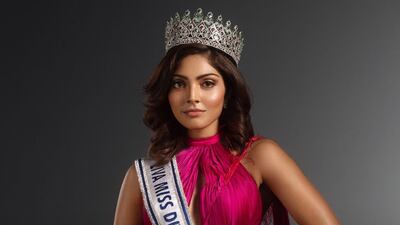
Divita Rai, 23, winner of India's Miss Diva Universe 2022. Photo: Miss Diva -
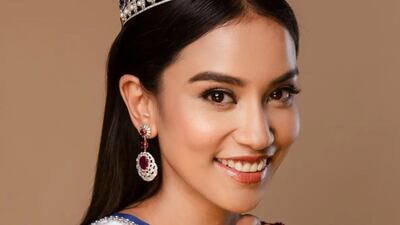
Sophiya Bhujel was crowned Oriflame Miss Universe Nepal 2022. Photo: Miss Universe Nepal -
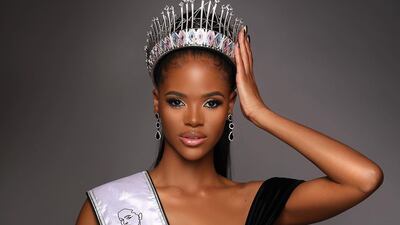
Ndavi Nokeri, winner of Miss Universe South Africa 2022. Photo: Miss South Africa -

Anna Sueangam-iam was named Miss Universe Thailand 2022. Photo: Miss Universe -

Balsam Hussein when she was declared Miss Iraq 2022. Azhar Al-Rubaie for The National -
Yasmina Zaytoun after being crowned Miss Lebanon 2022 at Forum De Beirut. EPA -
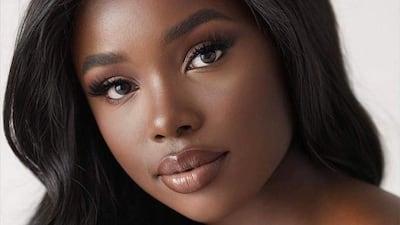
Noky Simbani was crowned Miss Universe Great Britain 2022. Photo: Instagram / Miss Universe Great Britain -

Miss Ukraine 2022 is Viktoria Apanasenko, first runner-up from last year's contest. There was no pageant held this year owing to the war in the country. Photo: Instagram / Viktoria Apanasenko -

Nguyen Thi Ngoc Chau has been named Miss Universe Vietnam 2022. Photo: Facebook / Nguyen Thi Ngoc Chau -
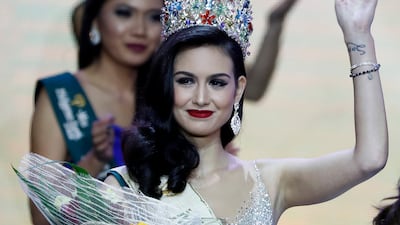
Filipino-Italian beauty queen Celeste Cortesi was crowned Miss Universe Philippines 2022 in Manila. EPA-EFE -

Bhutan is marking its pageant debut this year and Tashi Choden is the country's first beauty queen. Photo: Tashi Choden -
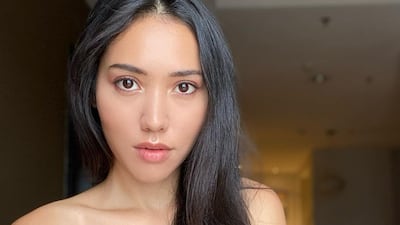
Laksmi Suardana took the Puteri Indonesia 2022 crown, becoming the first contestant from Bali to enter Miss Universe. Photo: Laksmi Shari De Neefe Suardana -
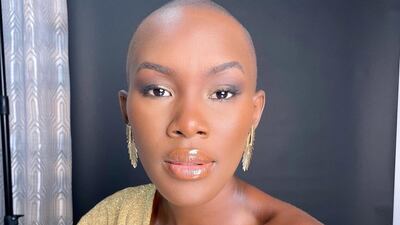
Miss Universe Ghana 2022 Engracia Afua K Mofuman was one of the first women to be crowned in 2022, in order to compete in the 71st Miss Universe pageant. Photo: Engracia Mofuman -

Hanna Kim, from Seoul, will represent South Korea in the next Miss Universe pageant. Photo: Hanna Ming -
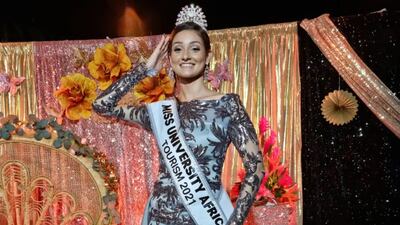
The first and last time the Seychelles competed in Miss Universe was 1995 and so, after that 27-year hiatus, Gabriella Gonthier, from Mahe, will be representing her home country. Photo: Gabriella Gonthier/ Miss University Africa -

Amelia Tu, from Vancouver, winner of Miss Universe Canada 2022. Photo: Miss Universe Canada -
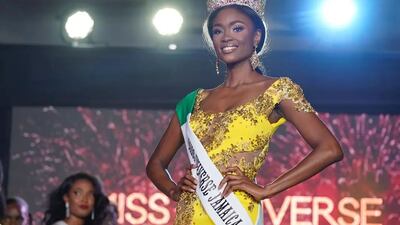
Miss Universe Jamaica 2022, Toshami Calvin, 26, is the cousin of Miss World 2019 Toni-Ann Singh. Photo: Instagram / officialmissuniversejamaica



