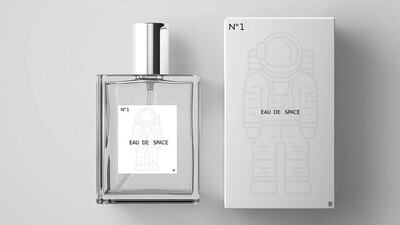
A journey to outer space is out of our reach, but not that of our noses.
A new fragrance called Eau de Space, which was first commissioned by the National Aeronautics and Space Administration, claims to have accurately captured the scent of the expanse that exists beyond Earth.
The fragrance was developed by chemist Steve Pearce, who was engaged by Nasa to produce the perfume back in 2008.
Using descriptions from astronauts, the mission took him four years to complete, but now the fragrance can be sniffed by a wider audience thanks to a new Kickstarter crowdfunding campaign.
Eau de Space has teamed up with perfumers to develop the scent on a mass-production basis, should the online initiative raise enough funds.
"Decades ago, Nasa designed a fragrance to train astronauts on how outer space actually smells. Now we're releasing it to the world," the Kickstarter webpage details.
"We connected with Nasa to bring the world's first perfume, independently verified by actual astronauts, down to Earth."
The perfume was originally designed to help prepare astronauts for the realities of space, bringing on board Pearce, the founder of Omega Ingredients, to craft the scent.
While the ingredients are tightly under wraps, Eau de Space product manager Matt Richmond told CNN that "astronauts describe the smell as a mix of gunpowder, seared steak, raspberries and rum".
"The smell of space has been locked behind 'need to know', astronaut-only field training, and red tape for years," the Kickstarter page continues, adding that it has secured the rights to exclusively produce the fragrance. "Through sheer determination, grit, a lot of luck and a couple of Freedom of Information Act (FOIA) requests, we got it out."
The company aimed to raise $1,969 (Dh7,232) through the Kickstarter campaign, but the tally already sits at $95,705, raised by more than 2,500 contributors, with 46 days of the fundraiser left to go.
The fragrance is set to retail for $15 with an estimated delivery date of October.

COMPANY%20PROFILE%20
%3Cp%3E%3Cstrong%3ECompany%20name%3A%20%3C%2Fstrong%3ENomad%20Homes%3Cbr%3E%3Cstrong%3EStarted%3A%20%3C%2Fstrong%3E2020%3Cbr%3E%3Cstrong%3EFounders%3A%20%3C%2Fstrong%3EHelen%20Chen%2C%20Damien%20Drap%2C%20and%20Dan%20Piehler%3Cbr%3E%3Cstrong%3EBased%3A%3C%2Fstrong%3E%20UAE%20and%20Europe%3Cbr%3E%3Cstrong%3EIndustry%3C%2Fstrong%3E%3A%20PropTech%3Cbr%3E%3Cstrong%3EFunds%20raised%20so%20far%3A%3C%2Fstrong%3E%20%2444m%3Cbr%3E%3Cstrong%3EInvestors%3A%3C%2Fstrong%3E%20Acrew%20Capital%2C%2001%20Advisors%2C%20HighSage%20Ventures%2C%20Abstract%20Ventures%2C%20Partech%2C%20Precursor%20Ventures%2C%20Potluck%20Ventures%2C%20Knollwood%20and%20several%20undisclosed%20hedge%20funds%3C%2Fp%3E%0A
Director: Paul Weitz
Stars: Kevin Hart
3/5 stars
COMPANY%20PROFILE%20
%3Cp%3E%3Cstrong%3EName%3A%3C%2Fstrong%3E%20Haltia.ai%0D%3Cbr%3E%3Cstrong%3EStarted%3A%3C%2Fstrong%3E%202023%0D%3Cbr%3E%3Cstrong%3ECo-founders%3A%3C%2Fstrong%3E%20Arto%20Bendiken%20and%20Talal%20Thabet%0D%3Cbr%3E%3Cstrong%3EBased%3A%3C%2Fstrong%3E%20Dubai%2C%20UAE%0D%3Cbr%3E%3Cstrong%3EIndustry%3A%3C%2Fstrong%3E%20AI%0D%3Cbr%3E%3Cstrong%3ENumber%20of%20employees%3A%3C%2Fstrong%3E%2041%0D%3Cbr%3E%3Cstrong%3EFunding%3A%3C%2Fstrong%3E%20About%20%241.7%20million%0D%3Cbr%3E%3Cstrong%3EInvestors%3A%3C%2Fstrong%3E%20Self%2C%20family%20and%20friends%26nbsp%3B%3C%2Fp%3E%0A
Roll of honour 2019-2020
Dubai Rugby Sevens
Winners: Dubai Hurricanes
Runners up: Bahrain
West Asia Premiership
Winners: Bahrain
Runners up: UAE Premiership
UAE Premiership
}Winners: Dubai Exiles
Runners up: Dubai Hurricanes
UAE Division One
Winners: Abu Dhabi Saracens
Runners up: Dubai Hurricanes II
UAE Division Two
Winners: Barrelhouse
Runners up: RAK Rugby
Sugary teas and iced coffees
The tax authority is yet to release a list of the taxed products, but it appears likely that sugary iced teas and cold coffees will be hit.
For instance, the non-fizzy drink AriZona Iced Tea contains 65 grams of sugar – about 16 teaspoons – per 680ml can. The average can costs about Dh6, which would rise to Dh9.
Cold coffee brands are likely to be hit too. Drinks such as Starbucks Bottled Mocha Frappuccino contain 31g of sugar in 270ml, while Nescafe Mocha in a can contains 15.6g of sugar in a 240ml can.
Ten tax points to be aware of in 2026
1. Domestic VAT refund amendments: request your refund within five years
If a business does not apply for the refund on time, they lose their credit.
2. E-invoicing in the UAE
Businesses should continue preparing for the implementation of e-invoicing in the UAE, with 2026 a preparation and transition period ahead of phased mandatory adoption.
3. More tax audits
Tax authorities are increasingly using data already available across multiple filings to identify audit risks.
4. More beneficial VAT and excise tax penalty regime
Tax disputes are expected to become more frequent and more structured, with clearer administrative objection and appeal processes. The UAE has adopted a new penalty regime for VAT and excise disputes, which now mirrors the penalty regime for corporate tax.
5. Greater emphasis on statutory audit
There is a greater need for the accuracy of financial statements. The International Financial Reporting Standards standards need to be strictly adhered to and, as a result, the quality of the audits will need to increase.
6. Further transfer pricing enforcement
Transfer pricing enforcement, which refers to the practice of establishing prices for internal transactions between related entities, is expected to broaden in scope. The UAE will shortly open the possibility to negotiate advance pricing agreements, or essentially rulings for transfer pricing purposes.
7. Limited time periods for audits
Recent amendments also introduce a default five-year limitation period for tax audits and assessments, subject to specific statutory exceptions. While the standard audit and assessment period is five years, this may be extended to up to 15 years in cases involving fraud or tax evasion.
8. Pillar 2 implementation
Many multinational groups will begin to feel the practical effect of the Domestic Minimum Top-Up Tax (DMTT), the UAE's implementation of the OECD’s global minimum tax under Pillar 2. While the rules apply for financial years starting on or after January 1, 2025, it is 2026 that marks the transition to an operational phase.
9. Reduced compliance obligations for imported goods and services
Businesses that apply the reverse-charge mechanism for VAT purposes in the UAE may benefit from reduced compliance obligations.
10. Substance and CbC reporting focus
Tax authorities are expected to continue strengthening the enforcement of economic substance and Country-by-Country (CbC) reporting frameworks. In the UAE, these regimes are increasingly being used as risk-assessment tools, providing tax authorities with a comprehensive view of multinational groups’ global footprints and enabling them to assess whether profits are aligned with real economic activity.
Contributed by Thomas Vanhee and Hend Rashwan, Aurifer
MATCH INFO
New Zealand 176-8 (20 ovs)
England 155 (19.5 ovs)
New Zealand win by 21 runs
UAE currency: the story behind the money in your pockets
