

The JN.1 strain of Covid-19 is spreading through South-east Asia, with health authorities in Hong Kong, Singapore, China and Thailand urging people to get new booster vaccinations.
Here’s everything we know about this strain of Covid that is considered more contagious than other variants:
Most affected countries
The virus is considered active in Hong Kong, with the city state reporting 31 severe cases in the first week of this month.
In Singapore, the Health Ministry said the number of Covid cases jumped 28 per cent to 14,200 in the week ending May 3, with the number of people being admitted to hospital rising by about 30 per cent.
The picture is similar in Thailand, where Covid cases reached 33,030 last week, doubling from the 16,000 cases reported the week previously.
Covid cases are also rising in China, with positivity rates among outpatient and emergency flu-like cases increasing from 7.5 per cent to 16.2 per cent since March, the Centre for Disease Control and Prevention said.
What is the JN.1 Covid variant?
The JN.1 Covid variant is a descendant of the BA. 2.86 strain that carries more than 30 mutations in the spike protein.
“Covid is with us permanently and we have to be vigilant about new strains like JN.1, a sub-lineage of BA. 2.86 Omicron, that appears correlated with increase in hospitalisation for respiratory illness,” Ramanan Laxminarayan, president of health research organisation One Health Trust, previously told The National.
The World Health Organisation (WHO) has designated JN.1 as "variant of interest", though not yet a "variant of concern."
What does 'variant of interest' mean?
The WHO’s definition states that a variant of interest has “genetic changes that are predicted or known to affect virus characteristics such as transmissibility, virulence, antibody evasion, susceptibility to therapeutics and detectability”.
So JN.1 is more contagious than other Covid strains at this time.
It is also “identified to have a growth advantage over other circulating strains in more than one WHO region with increasing relative prevalence alongside increasing number of cases over time, or other apparent epidemiological impacts to suggest an emerging risk to global public health”.
How was it detected and what is the threat level?
The first case of JN.1 was recorded in the US in September 2023.
JN.1 has not shown any signs of greater severity than other Covid strains but it is more contagious.
Legacy of the Covid pandemic - in pictures
-
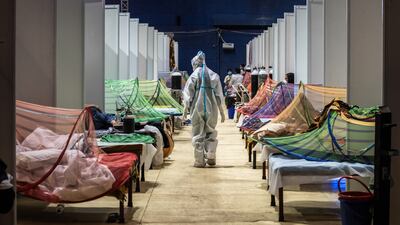
This year marks five years since the World Health Organisation declared a Public Health Emergency of International Concern on January 30, 2020. The National looks at some of the most striking images taken during the Covid-19 pandemic. All photos: Getty Images -
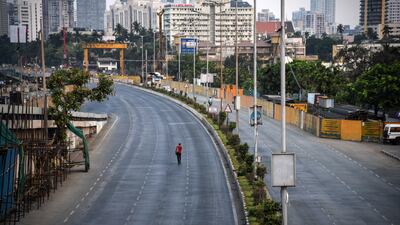
A pedestrian walks along a near-deserted street during a lockdown imposed in 2021 in Mumbai, India -
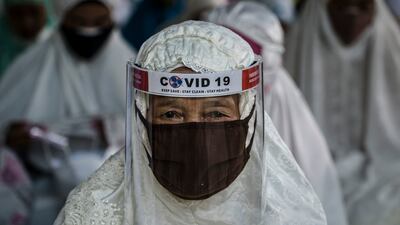
An elderly woman wears a face shield as she attends Eid Al Adha prayers at a mosque in Yogyakarta, Indonesia, in 2021 -
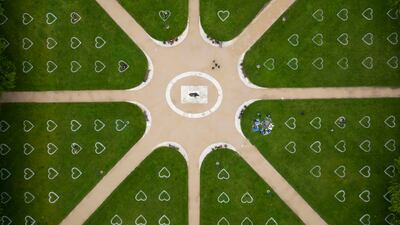
An aerial view of Queen Square in Bristol, England, where hearts were sprayed on to the grass in an effort to encourage social distancing in 2020 -
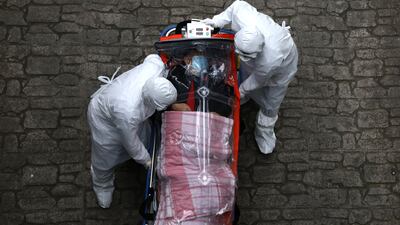
Medical staff in protective gear move a Covid patient from an ambulance into hospital in Seoul, South Korea, in 2020 -
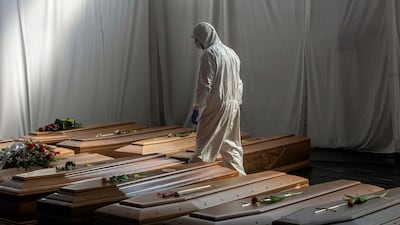
A Civil Protection member in a hangar where 18 coffins of victims of Covid-19 wait to be transported to Florence by the Italian Army in Ponte San Pietro in 2020 -
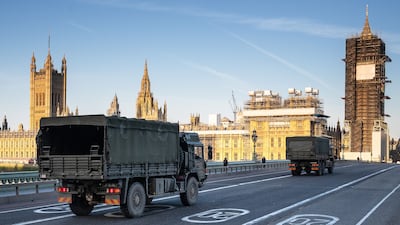
Military vehicles cross an empty Westminster Bridge in London in March 2020 -
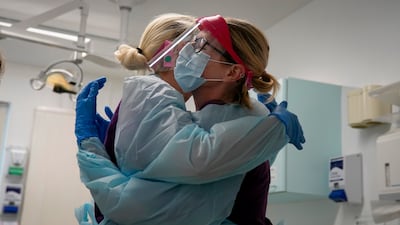
Dental nurses embrace before treating a possible Covid-positive dental patient in Wrexham, Wales, in 2020 -
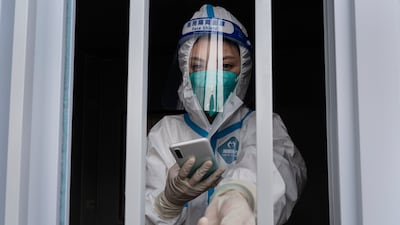
A health worker passes a vial got be used in a nucleic acid test to detect Covid-19 in Beijing, China, in 2022 -
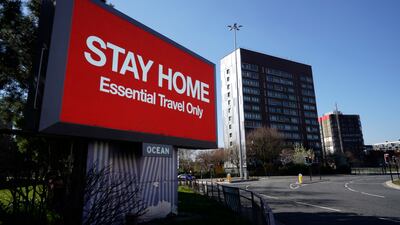
A giant television beside a motorway urges people to stay home in Manchester in the early days of the outbreak -
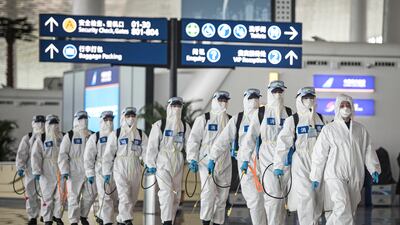
Firefighters prepare to disinfect Wuhan Tianhe International Airport in 2020 in Wuhan, China's Hubei province -
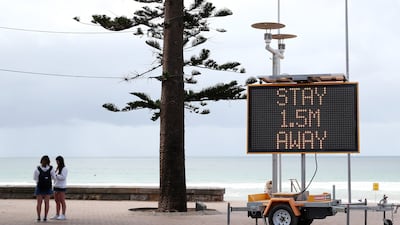
A sign reminding the public of new social-distancing rules displayed at Manly Beach in Sydney in 2020 -
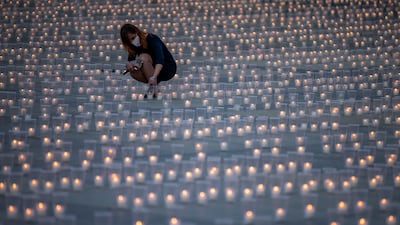
A woman lights a candle to commemorate victims of the pandemic at Prague Castle in the Czech Republic in 2021 -
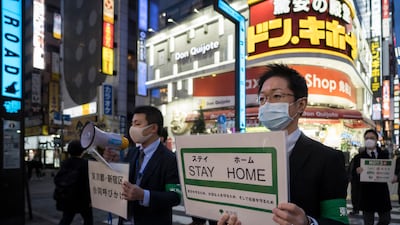
Staff members of the Tokyo metropolitan government hold signs as they call for people to stay home in 2020 -
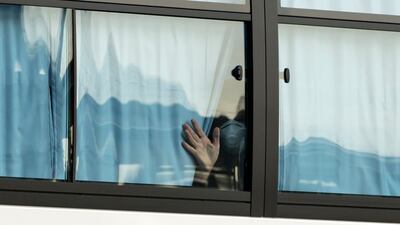
A man waves from a bus carrying passengers who disembarked the quarantined Diamond Princess cruise ship, as he leaves Daikoku Pier in Yokohama, Japan, in 2020 -

About 3,000 people gather in Stockholm, Sweden, to demonstrate against so-called vaccine passes in 2022 -
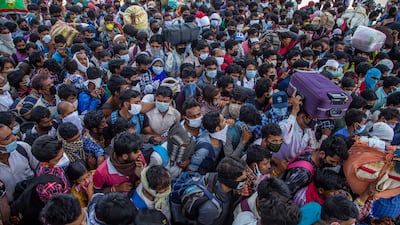
People rush to board buses to return to their native villages in Ghaziabad, on the outskirts New Delhi in 2020 -
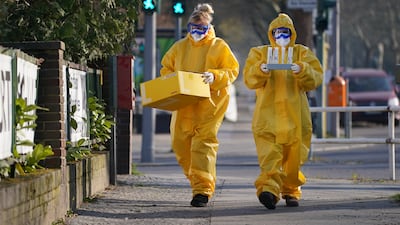
Medical volunteers after taking blood and throat mucous samples from visitors to test them for Covid-19 in Berlin in 2020 -

Members of the Bangkok Metropolitan Authority sanitise classrooms at a school in Bangkok, Thailand, in 2021



