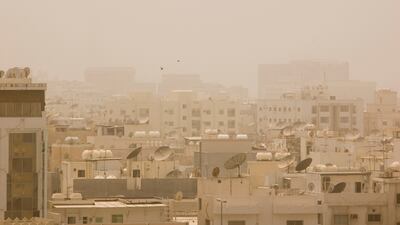
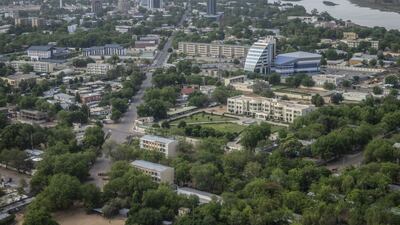
Smog over Cairo, Egypt. A new study has linked air pollution in the region to stroke levels. Reuters

High temperatures and pollution driving rise in strokes across Middle East


Gillian Duncan
  • English
  • Arabic

High temperatures and air pollution are contributing to rises in strokes across the Middle East and Africa, a study has found.

The regions have among the highest stroke rates worldwide, according to the research, which will be presented at the World Stroke Congress in Abu Dhabi in October.

Globally, about 12 million strokes occur each year, causing seven million deaths, according to the study, published in The Lancet Neurology journal.

Between 1990 and 2021, the number of people having their first stroke increased by up to 70 per cent, while deaths due to the condition rose by up to 44 per cent.

Loss of good health due to strokes also increased by about a third during the period. The Middle East, North Africa and sub-Saharan Africa fared worse than most regions during the period, losing more time due to ill health from strokes.

“From 1990 to 2021, the age-standardised proportion of stroke DALYs [time due to ill health] attributable to risk factors increased in North Africa and the Middle East and sub-Saharan Africa,” said the study, “but did not change in south Asia and South-east Asia, East Asia, and Oceania, and decreased in central Europe, eastern Europe, and central Asia, Latin America and the Caribbean, as well as high-income GBD [global burden of disease] regions.”

The rise may “reflect a failure in the control of risk factors” in the regions, said the report. The study identified 23 risk factors, including air pollution, excess body weight, high blood pressure, smoking and physical inactivity.

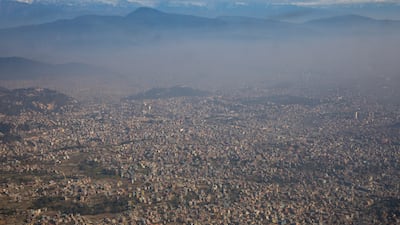
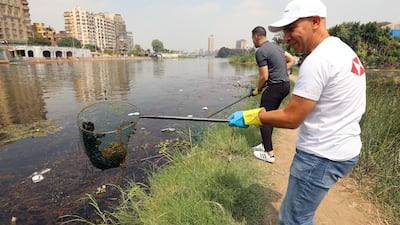
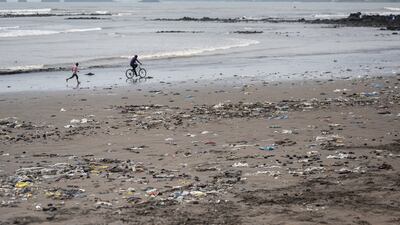
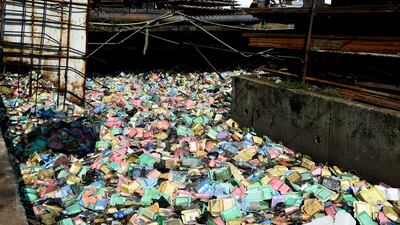
Top 10 most polluted countries – in pictures

  • 1 Nepal. Annual mean concentrations should not exceed 10 micrograms per cubic metre and Nepal had 99.73 micrograms. EPA
    1 Nepal. Annual mean concentrations should not exceed 10 micrograms per cubic metre and Nepal had 99.73 micrograms. EPA
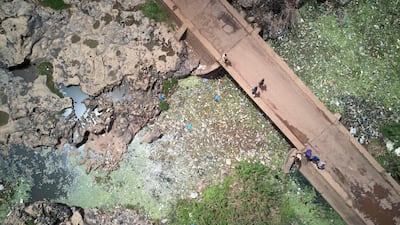
  • 2 Niger — 94.05 micrograms per cubic metre. AFP
    2 Niger — 94.05 micrograms per cubic metre. AFP
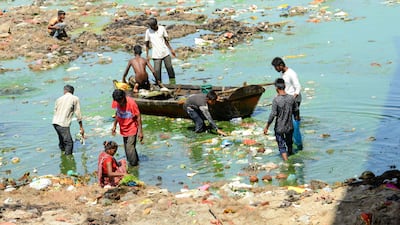
  • 3 India — 90.87 micrograms per cubic metre. AFP
    3 India — 90.87 micrograms per cubic metre. AFP
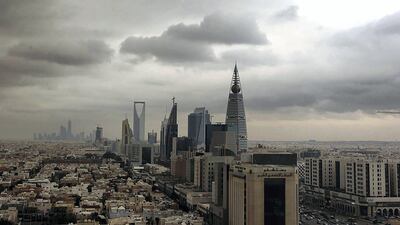
  • 4 Saudi Arabia — 87.95 micrograms per cubic metre. Reuters
    4 Saudi Arabia — 87.95 micrograms per cubic metre. Reuters
  • 5 Egypt — 87.00 micrograms per cubic metre. EPA
    5 Egypt — 87.00 micrograms per cubic metre. EPA
  • 6 Cameroon — 72.79 micrograms per cubic metre. AFP
    6 Cameroon — 72.79 micrograms per cubic metre. AFP
  • 7 Nigeria — 71.80 micrograms per cubic metre. AFP
    7 Nigeria — 71.80 micrograms per cubic metre. AFP
  • 8 Bahrain — 70.82 micrograms per cubic metre. Getty
    8 Bahrain — 70.82 micrograms per cubic metre. Getty
  • 9 Chad — 66.03 micrograms per cubic metre. Bloomberg
    9 Chad — 66.03 micrograms per cubic metre. Bloomberg
  • 10 Iraq — 61.64 micrograms per cubic metre. AFP
    10 Iraq — 61.64 micrograms per cubic metre. AFP

It found the contribution of high temperatures to poor health and early death due to stroke has risen 72 per cent since 1990, a trend likely to continue to increase due to the worsening impact of climate change.

The study also revealed for the first time the high contribution – on par with smoking – of particulate matter air pollution to fatal brain bleeds known as subarachnoid haemorrhage.

“This study is, to our knowledge, the first to show the large contribution of ambient particulate matter pollution and household air pollution from solid fuels to subarachnoid haemorrhage, with a similar [relationship] to that of smoking.”

It found that air pollution in 2021 appeared to be “highly important” to other types of stroke, causing 11.9 per cent of total deaths from all causes, making it the second largest cause of deaths from all causes globally, after high systolic blood pressure.

“These findings are in line with research showing that rises in ambient temperature (including heatwaves) and climate change are associated with increased stroke morbidity and mortality,” added the study.

The Middle East has the world’s highest levels of dangerous air pollution particles, which are responsible for millions of heart disease deaths globally each year, according to a recent report.

The World Heart Foundation (WHF) study found that Kuwait, Egypt and Afghanistan have the worst concentrations of particles less than 2.5 micrometres in diameter (PM2.5), which come from sources that include vehicle exhaust fumes, power plant combustion and burning wood.

Globally, almost 7 million deaths were attributed to air pollution in 2019 – a higher mortality toll than all wars, malaria, tuberculosis, HIV and other infectious diseases combined, according to the WHF.


Mercer, the investment consulting arm of US services company Marsh & McLennan, expects its wealth division to at least double its assets under management (AUM) in the Middle East as wealth in the region continues to grow despite economic headwinds, a company official said.

Mercer Wealth, which globally has $160 billion in AUM, plans to boost its AUM in the region to $2-$3bn in the next 2-3 years from the present $1bn, said Yasir AbuShaban, a Dubai-based principal with Mercer Wealth.

Within the next two to three years, we are looking at reaching $2 to $3 billion as a conservative estimate and we do see an opportunity to do so,” said Mr AbuShaban.

Mercer does not directly make investments, but allocates clients’ money they have discretion to, to professional asset managers. They also provide advice to clients.

“We have buying power. We can negotiate on their (client’s) behalf with asset managers to provide them lower fees than they otherwise would have to get on their own,” he added.

Mercer Wealth’s clients include sovereign wealth funds, family offices, and insurance companies among others.

From its office in Dubai, Mercer also looks after Africa, India and Turkey, where they also see opportunity for growth.

Wealth creation in Middle East and Africa (MEA) grew 8.5 per cent to $8.1 trillion last year from $7.5tn in 2015, higher than last year’s global average of 6 per cent and the second-highest growth in a region after Asia-Pacific which grew 9.9 per cent, according to consultancy Boston Consulting Group (BCG). In the region, where wealth grew just 1.9 per cent in 2015 compared with 2014, a pickup in oil prices has helped in wealth generation.

BCG is forecasting MEA wealth will rise to $12tn by 2021, growing at an annual average of 8 per cent.

Drivers of wealth generation in the region will be split evenly between new wealth creation and growth of performance of existing assets, according to BCG.

Another general trend in the region is clients’ looking for a comprehensive approach to investing, according to Mr AbuShaban.

“Institutional investors or some of the families are seeing a slowdown in the available capital they have to invest and in that sense they are looking at optimizing the way they manage their portfolios and making sure they are not investing haphazardly and different parts of their investment are working together,” said Mr AbuShaban.

Some clients also have a higher appetite for risk, given the low interest-rate environment that does not provide enough yield for some institutional investors. These clients are keen to invest in illiquid assets, such as private equity and infrastructure.

“What we have seen is a desire for higher returns in what has been a low-return environment specifically in various fixed income or bonds,” he said.

“In this environment, we have seen a de facto increase in the risk that clients are taking in things like illiquid investments, private equity investments, infrastructure and private debt, those kind of investments were higher illiquidity results in incrementally higher returns.”

The Abu Dhabi Investment Authority, one of the largest sovereign wealth funds, said in its 2016 report that has gradually increased its exposure in direct private equity and private credit transactions, mainly in Asian markets and especially in China and India. The authority’s private equity department focused on structured equities owing to “their defensive characteristics.”

The five pillars of Islam

1. Fasting 

2. Prayer 

3. Hajj 

4. Shahada 

5. Zakat 

Greatest of All Time
Starring: Vijay, Sneha, Prashanth, Prabhu Deva, Mohan
Director: Venkat Prabhu
Rating: 2/5
Citadel: Honey Bunny first episode

Directors: Raj & DK

Stars: Varun Dhawan, Samantha Ruth Prabhu, Kashvi Majmundar, Kay Kay Menon

Rating: 4/5

TRAP

Starring: Josh Hartnett, Saleka Shyamalan, Ariel Donaghue

Director: M Night Shyamalan

Rating: 3/5

Updated: September 19, 2024, 8:16 AM