A medical worker draws blood as part of new liquid biopsy technology that could detect early signs of cancer in the blood. AP

US cancer death rates steadily declining, report says


Patrick deHahn
  • English
  • Arabic

The overall death rate from cancer in the US decreased 32 per cent between 1991 and 2019, amounting to about 3.5 million lives extended, research has shown.

The American Association for Cancer Research (AACR) says there is now a record number of 18 million cancer survivors living in the US as of January, and that will grow to 26 million by 2040.

The decreased number of cancer deaths is likely thanks to new treatments, early diagnosis and more frequent screenings.

“We have evidenced unprecedented progress against cancer in the last decade,” AACR president Lisa Coussens and chief executive Margaret Foti said in a statement.

“Remarkable advances across the spectrum of medical research, enabled by decades of federal investments, have led to profound improvements in cancer prevention, detection, diagnosis and treatment.”

US President Joe Biden has invested in reviving the “Cancer Moonshot” initiative, with the hope of cutting cancer deaths by 50 per cent in the next 25 years.

However, the AACR says the improvements are not accessible for all populations.

“Advances against cancer have not benefited everyone equally; racial and ethnic minorities and certain underserved populations shoulder a disproportionate burden of cancer,” Ms Coussens and Ms Foti said.

“This is unacceptable.”

Celebrities who have shared a cancer diagnosis — in pictures

  • Actress Sofia Vergara had thyroid cancer when she was 28 years old. AFP
    Actress Sofia Vergara had thyroid cancer when she was 28 years old. AFP
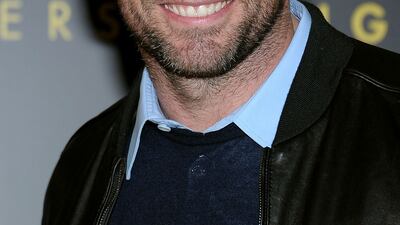
  • Hugh Jackman has been diagnosed with basal cell carcinoma, a malignant type of skin cancer, several times. AFP
    Hugh Jackman has been diagnosed with basal cell carcinoma, a malignant type of skin cancer, several times. AFP
  • US comedian Kathy Griffin was recently declared cancer free after having half her left lung removed. RB/Bauer-Griffin/GC Images
    US comedian Kathy Griffin was recently declared cancer free after having half her left lung removed. RB/Bauer-Griffin/GC Images
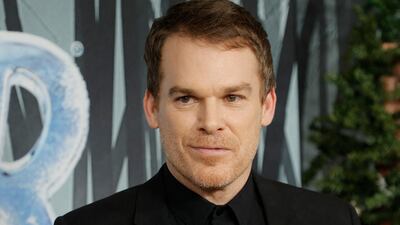
  • Michael C Hall had Hodgkin's lymphoma while filming hit TV series 'Dexter'. AFP
    Michael C Hall had Hodgkin's lymphoma while filming hit TV series 'Dexter'. AFP
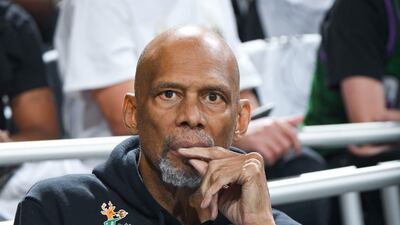
  • Former NBA star Kareem Abdul-Jabbar has had both prostate cancer and chronic myeloid leukemia. AFP
    Former NBA star Kareem Abdul-Jabbar has had both prostate cancer and chronic myeloid leukemia. AFP
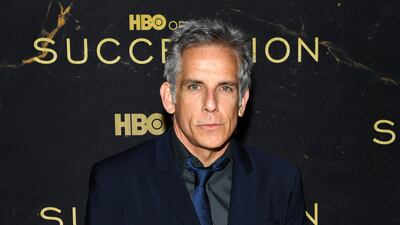
  • Actor Ben Stiller was treated for prostate cancer in 2014. AFP
    Actor Ben Stiller was treated for prostate cancer in 2014. AFP
  • Bollywood actress Sonali Bendre had metastatic cancer in her abdomen. AFP
    Bollywood actress Sonali Bendre had metastatic cancer in her abdomen. AFP
  • Nepalese actress Manisha Koirala had ovarian cancer in 2012. AFP
    Nepalese actress Manisha Koirala had ovarian cancer in 2012. AFP
  • British TV personality Sharon Osbourne was diagnosed with colon cancer in 2002, and also had a double mastectomy in 2012 after finding out she had the gene that increases risk of getting breast cancer. AFP
    British TV personality Sharon Osbourne was diagnosed with colon cancer in 2002, and also had a double mastectomy in 2012 after finding out she had the gene that increases risk of getting breast cancer. AFP
  • Khloe Kardashian has been treated for skin cancer in the past. AFP
    Khloe Kardashian has been treated for skin cancer in the past. AFP
  • Lebanese singer Elissa has famously discussed her journey with breast cancer. AFP
    Lebanese singer Elissa has famously discussed her journey with breast cancer. AFP
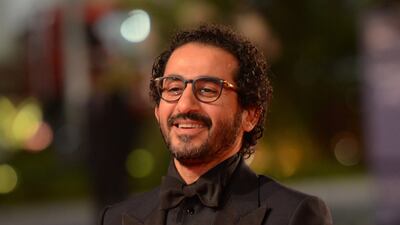
  • Egyptian actor Ahmed Helmy underwent treatment for cancer while his wife, Mona Zaki, was pregnant with their child. AFP
    Egyptian actor Ahmed Helmy underwent treatment for cancer while his wife, Mona Zaki, was pregnant with their child. AFP
  • From left: Ahmed Helmy, Khloe Kardashian and Manisha Koirala have all opened up about their cancer journeys. Photos: Front Row, AP Photo, AFP
    From left: Ahmed Helmy, Khloe Kardashian and Manisha Koirala have all opened up about their cancer journeys. Photos: Front Row, AP Photo, AFP

Cancer is a leading cause of death in the US and the AACR says about 600,000 deaths will be recorded this year.

The AACR says that the Covid pandemic has affected overall research and patient care, but this is not reflected in this report, which sources numbers from before 2019.

Total global cancer cases and deaths rose between 2010 and 2019 but mortality and incidence rates marginally decreased.

Still, there were more than 17 million cases and about 10 million deaths from the disease in 2019, and the AACR reports 28 million cases and 16 million deaths could be recorded in 2040.


Brief scores:

QPR 0

Watford 1

Capoue 45' 1

21 Lessons for the 21st Century

Yuval Noah Harari, Jonathan Cape
 

History's medical milestones

1799 - First small pox vaccine administered

1846 - First public demonstration of anaesthesia in surgery

1861 - Louis Pasteur published his germ theory which proved that bacteria caused diseases

1895 - Discovery of x-rays

1923 - Heart valve surgery performed successfully for first time

1928 - Alexander Fleming discovers penicillin

1953 - Structure of DNA discovered

1952 - First organ transplant - a kidney - takes place 

1954 - Clinical trials of birth control pill

1979 - MRI, or magnetic resonance imaging, scanned used to diagnose illness and injury.

1998 - The first adult live-donor liver transplant is carried out

Mercer, the investment consulting arm of US services company Marsh & McLennan, expects its wealth division to at least double its assets under management (AUM) in the Middle East as wealth in the region continues to grow despite economic headwinds, a company official said.

Mercer Wealth, which globally has $160 billion in AUM, plans to boost its AUM in the region to $2-$3bn in the next 2-3 years from the present $1bn, said Yasir AbuShaban, a Dubai-based principal with Mercer Wealth.

Within the next two to three years, we are looking at reaching $2 to $3 billion as a conservative estimate and we do see an opportunity to do so,” said Mr AbuShaban.

Mercer does not directly make investments, but allocates clients’ money they have discretion to, to professional asset managers. They also provide advice to clients.

“We have buying power. We can negotiate on their (client’s) behalf with asset managers to provide them lower fees than they otherwise would have to get on their own,” he added.

Mercer Wealth’s clients include sovereign wealth funds, family offices, and insurance companies among others.

From its office in Dubai, Mercer also looks after Africa, India and Turkey, where they also see opportunity for growth.

Wealth creation in Middle East and Africa (MEA) grew 8.5 per cent to $8.1 trillion last year from $7.5tn in 2015, higher than last year’s global average of 6 per cent and the second-highest growth in a region after Asia-Pacific which grew 9.9 per cent, according to consultancy Boston Consulting Group (BCG). In the region, where wealth grew just 1.9 per cent in 2015 compared with 2014, a pickup in oil prices has helped in wealth generation.

BCG is forecasting MEA wealth will rise to $12tn by 2021, growing at an annual average of 8 per cent.

Drivers of wealth generation in the region will be split evenly between new wealth creation and growth of performance of existing assets, according to BCG.

Another general trend in the region is clients’ looking for a comprehensive approach to investing, according to Mr AbuShaban.

“Institutional investors or some of the families are seeing a slowdown in the available capital they have to invest and in that sense they are looking at optimizing the way they manage their portfolios and making sure they are not investing haphazardly and different parts of their investment are working together,” said Mr AbuShaban.

Some clients also have a higher appetite for risk, given the low interest-rate environment that does not provide enough yield for some institutional investors. These clients are keen to invest in illiquid assets, such as private equity and infrastructure.

“What we have seen is a desire for higher returns in what has been a low-return environment specifically in various fixed income or bonds,” he said.

“In this environment, we have seen a de facto increase in the risk that clients are taking in things like illiquid investments, private equity investments, infrastructure and private debt, those kind of investments were higher illiquidity results in incrementally higher returns.”

The Abu Dhabi Investment Authority, one of the largest sovereign wealth funds, said in its 2016 report that has gradually increased its exposure in direct private equity and private credit transactions, mainly in Asian markets and especially in China and India. The authority’s private equity department focused on structured equities owing to “their defensive characteristics.”

Updated: September 22, 2022, 7:55 PM