
Saudi Arabia has held the Hajj for 60,000 pilgrims without a case of the coronavirus, authorities said on Thursday.
The Minister of Hajj, Dr Tawfiq Al Rabiah, said complex planning to maintain social distancing and insisting on vaccination for all pilgrims had resulted in a successful Hajj "free from coronavirus and other epidemic diseases".
Worshippers started streaming out of Mina valley near Makkah on Thursday, marking the end of this year's Hajj.
Before leaving Mina, which is known as the city of tents during the annual pilgrimage, pilgrims cast stones at a wall representing the devil in a symbolic ritual.
“I cannot believe it’s almost over. It feels like it just started. I’m leaving with a heavy heart that’s both sad to leave yet overjoyed as my dream has come true,” Hadeel, an Egyptian pilgrim, told The National.
The stoning ritual refers to when the Prophet Ibrahim cast pebbles at a representation of the Devil.
It was later adopted by the Prophet Mohammed and became a part of Hajj.
In the afternoon, pilgrims will perform the final tawaf at Makkah’s Grand Mosque, circling the Kaaba, which Muslims around the world face during their daily prayers.
The Tawaf Al Wada is the final ritual of Hajj, which pilgrims must perform before they return home.
The farewell circumambulation is only for pilgrims who are leaving Makkah immediately. Those who plan to remain longer will perform the ritual later.
-
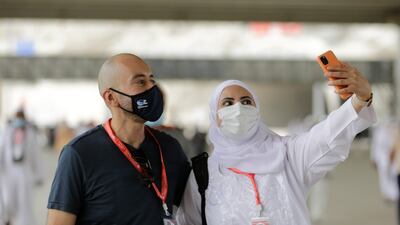
Pilgrims take a selfie after the symbolic stoning ritual during the Hajj in Mina, near Saudi Arabia's holy city of Makkah. AP -
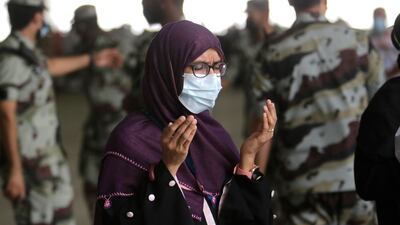
A woman pilgrim prays after the stoning ritual. AP -
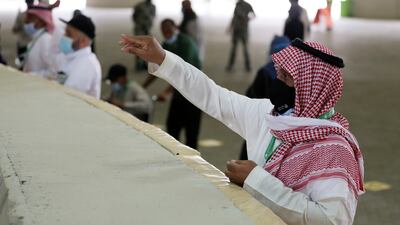
Pilgrims cast stones at a pillar representing the devil, one of several rituals that form part of the annual Hajj. Reuters -

A pilgrim flings a stone at a pillar symbolising Satan. Reuters -
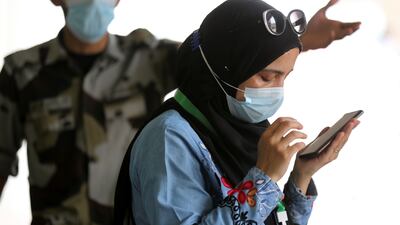
An official in Mina, near Makkah, directs a pilgrim during the annual Hajj pilgrimage. -
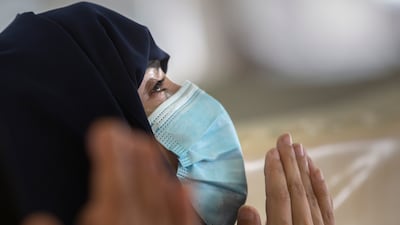
Coronavirus hit the Hajj for a second year running. An event that annually attracts about 2. 5 million Muslims from around the world this year is unrecognisable in scale with strict health restrictions in place. -
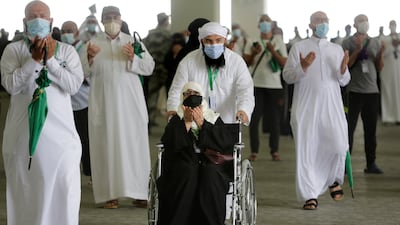
Muslim pilgrims pray after taking part in the symbolic stoning of the devil ritual in Mina. AP -
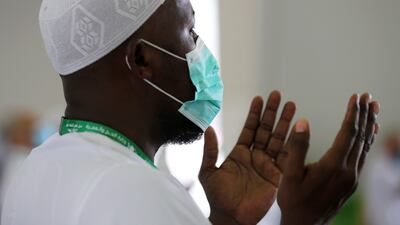
A pilgrim during prayer after the stone-throwing ritual. -
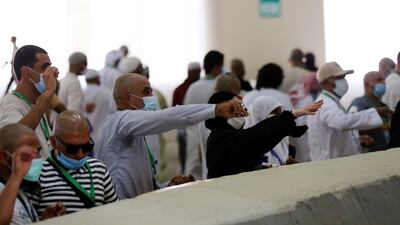
Pilgrims cast stones in a ritual stoning of Satan during Hajj. -
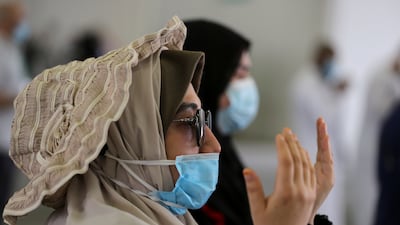
Pilgrims pray after the stone-throwing ritual in Mina, Saudi Arabia. -

A Hajj pilgrim in Mina, near Makkah, casts a stone at a pillar representing Satan. -
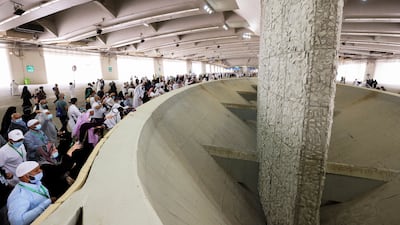
Pilgrims cast stones at a pillar symbolising Satan during the annual Hajj. -

A pilgrim prays after throwing stones at a pillar symbolising Satan. -
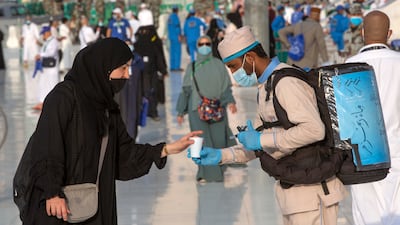
A worker distributes free water from the holy well of Zamzam to pilgrims. -
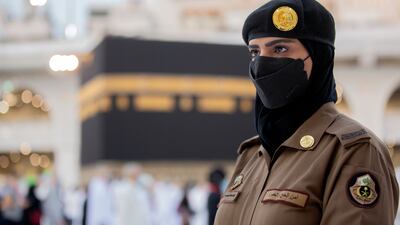
A Saudi policewoman, Samar, stands in front of the Kaaba. -
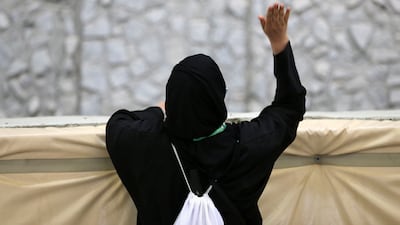
A pilgrim casts stones at a pillar symbolising Satan. -

Pilgrims throw stones at pillars symbolising Satan during Hajj in Mina, near Makkah, Saudi Arabia. -
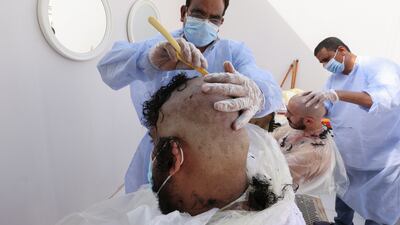
Pilgrims have their heads shaved on the second day of Eid Al Adha after throwing stones at a pillar symbolising Satan. -
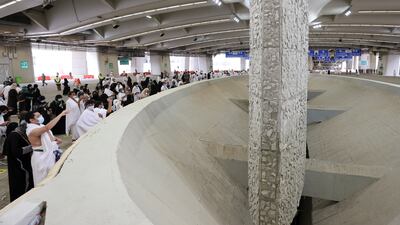
Pilgrims, keeping social distancing and wearing protective masks, cast stones at pillars symbolising Satan. -
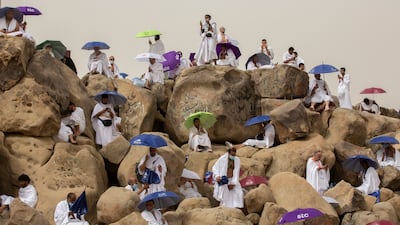
Pilgrims pray on top of the rocky hill known as the Mountain of Mercy, on the Plain of Arafat, near Makkah. -

Pilgrims gather on the plain of Arafat during Hajj. -
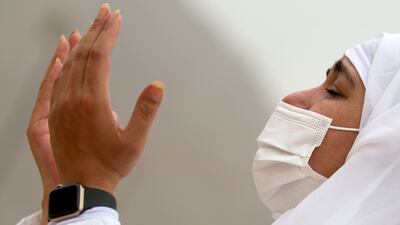
A pilgrim prays in front of the rocky hill known as the Mountain of Mercy, on the plain of Arafat, near Makkah, Saudi Arabia. -
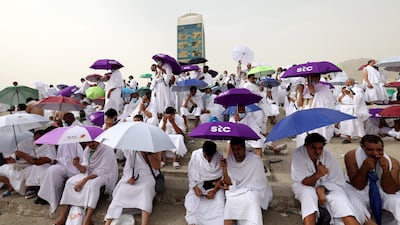
Pilgrims gather around Mount Arafat, also known as Jabal Al Rahma, or the Mountain of Mercy. -
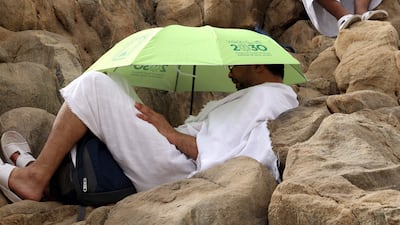
Muslim pilgrims at Mount Arafat. -
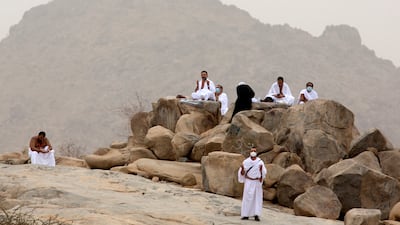
Vaccinated pilgrims performing Hajj. -

Pilgrims shelter from the sun under an umbrella. -
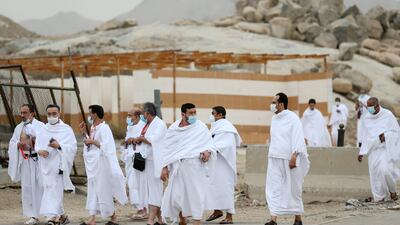
Participants remained socially distanced and wore masks as the coronavirus took its toll on the Hajj for a second year running. -
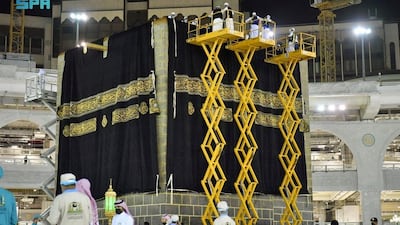
Officials replace the covering cloth of the Kaaba. -
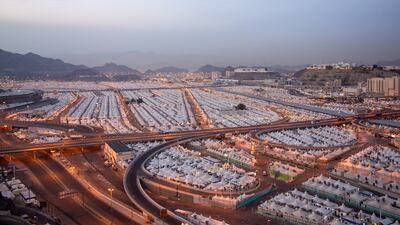
Aerial view of the Mina area during the annual Hajj pilgrimage, in the holy city of Makkah. -
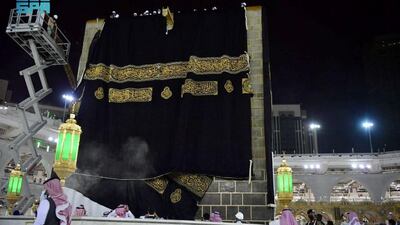
The Kaaba is covered with the Kiswa cloth. -
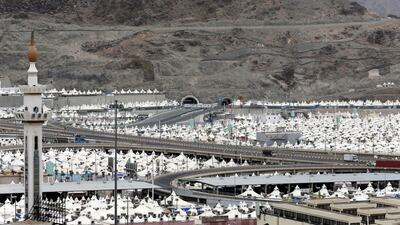
Another view of the Mina area. -
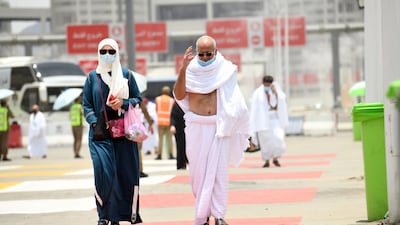
Pilgrims must be under 65 and without a chronic disease. -
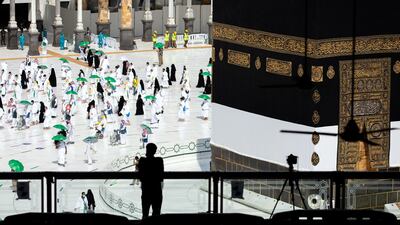
Rules for the 2021 Hajj allow for a maximum of 60,000 citizens and residents Saudi Arabia. -
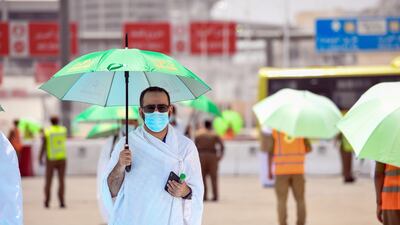
Pilgrims must show proof of Covid-19 vaccination to be allowed entry. -
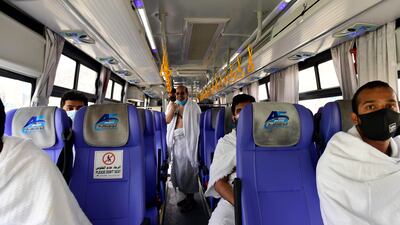
It is the second consecutive year that numbers at Hajj are limited due to pandemic. -

Muslim pilgrims, wearing protective face masks, circle the Kaaba. -
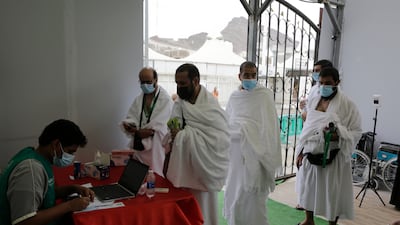
Coronavirus precautions are taken across the site. -
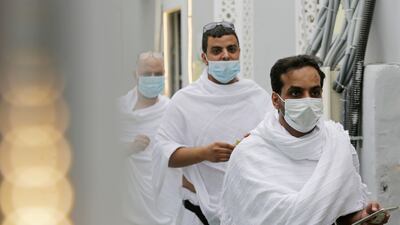
Pilgrims arrive at their tented camp in Mina, near the Muslim holy city of Makkah, Saudi Arabia. -
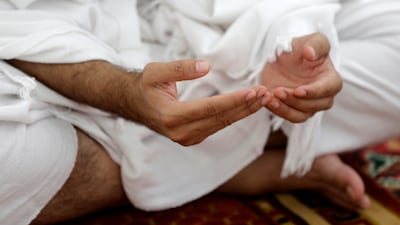
Time for prayer and reflection. -
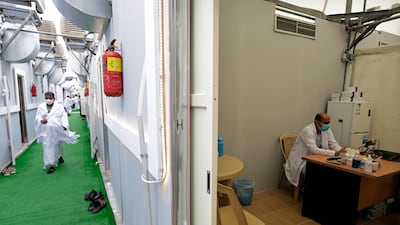
For some worshippers, this year’s Hajj is a strange experience because it has been scaled down to such an extent. -
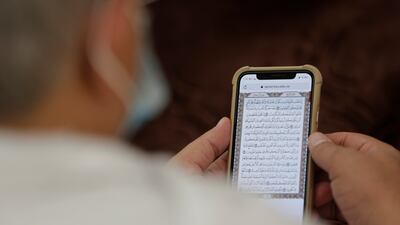
A pilgrim recites the Quran. -
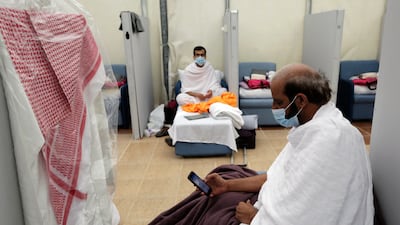
Saudi pilgrim Irak al Dofairy, 65, reads the Quran on his mobile phone at a camp in Mina. -
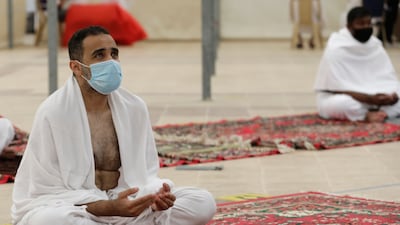
A pilgrim sits cross-legged. -
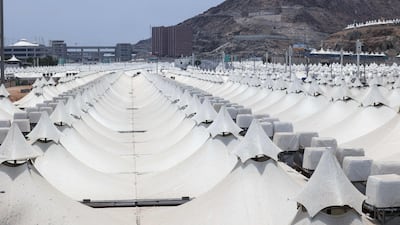
.Mina sits in a narrow valley surrounded by rocky mountains. -
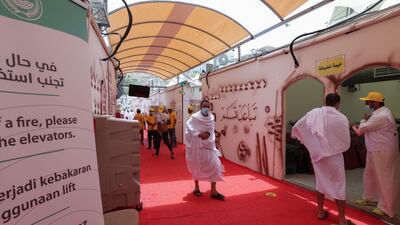
Visitors partake in the rituals of the great pilgrimage. -
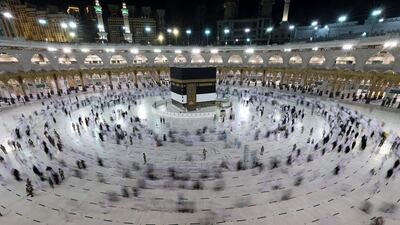
Walking around the Kaaba, Islam's holiest shrine, at the Grand Mosque. -

Back at the camp. -
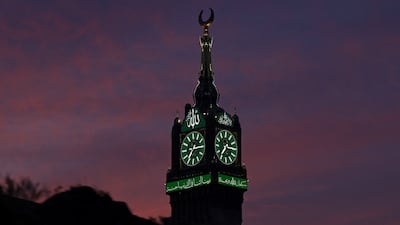
The annual Hajj pilgrimage, one of the five pillars of Islam, started with only 60,000 vaccinated Saudi citizens and residents allowed to take part this year because of the pandemic. -

Pilgrims pour into Makkah for first Hajj rituals amid strict health measures. -
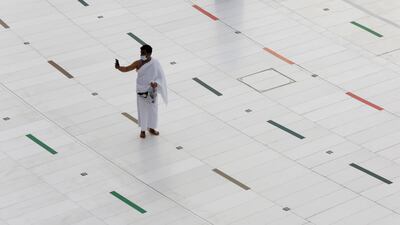
A pilgrim takes a selfie at the Grand Mosque as he wears a mask and stands on social distancing signs. -
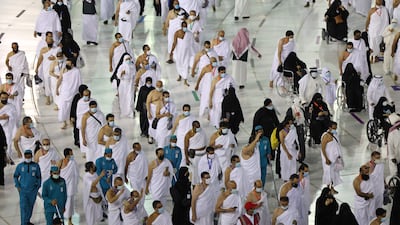
A total of 60,000 assembled in Mina on Sunday before moving to Arafat on Monday. -

Muslim pilgrims pray in front of the Kaaba. -
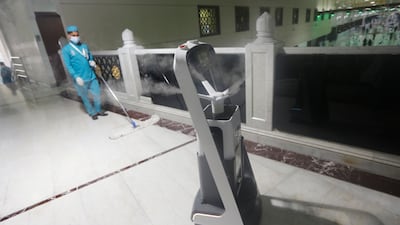
A robot sterilises an area of the Grand Mosque before Hajj. -
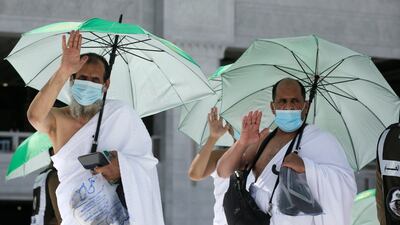
The pilgrimage to Makkah is required once in a lifetime of every Muslim who can afford it and is physically able to make it. -

Muslim pilgrims pray at the Grand Mosque. -
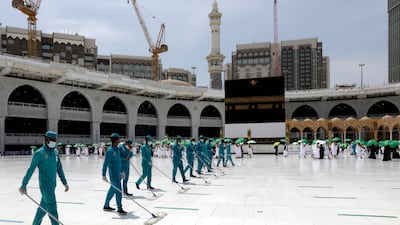
Workers disinfect the grounds. -

Muslim pilgrims walk around the cubic building of the Kaaba. -
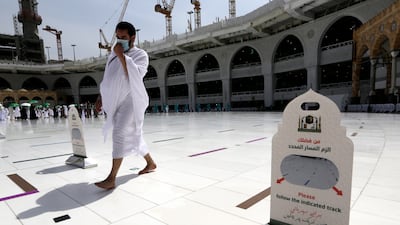
A Muslim pilgrim walks past a sign reminding Hajj participants of social distancing. -
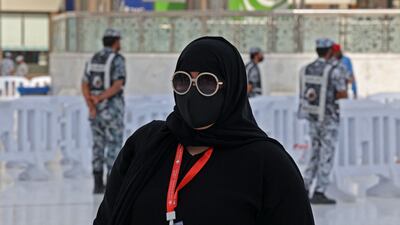
A pilgrims arrives to atend the Hajj season in Makkah. -
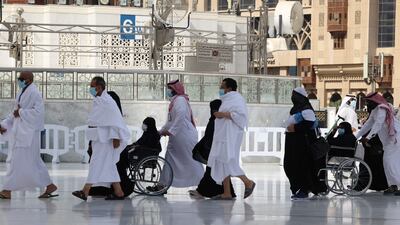
Hajj authorities have been disinfecting the Grand Mosque around the clock to ensure pilgrims' safety. -
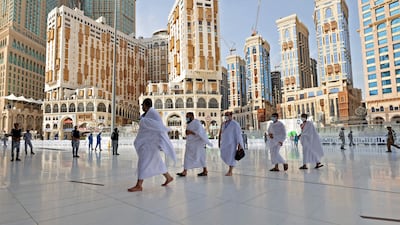
The pilgrimage remains a deeply personal experience for many, despite the downsizing for the second year running. -

A person can perform Hajj on behalf of someone who has died or is unable to come to Makkah but only if they have already performed the pilgrimage for themselves. -
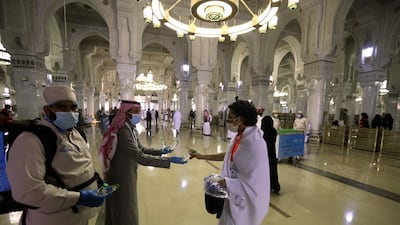
A man hands a bottle of water to a pilgrim at the Grand Mosque. -

The annual ritual is an important part of Islam. -
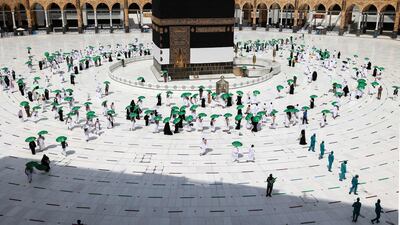
Pilgrims are dotted around the site. -
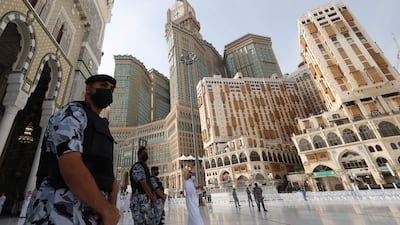
Saudi troops stand guard as the first pilgrims arrive at the Kaaba, Islam's holiest shrine, at the Grand Mosque. -

A person takes a video as pilgrims perform Tawaf, the rite of circumambulating the Kaaba. -
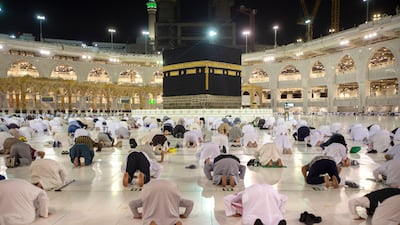
Pilgrims pray in the evening near the Kaaba. -
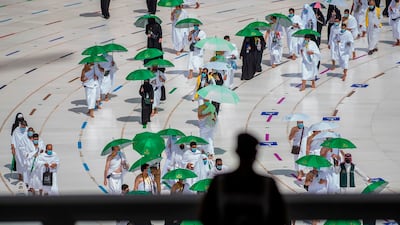
A Saudi security officer watches as pilgrims circumambulate the Kaaba


On Monday, the pilgrims performed the most important ritual of Hajj as they headed towards the Mount Arafat, where it is believed the Prophet Mohammed delivered his final sermon.
The Hajj is one of the five pillars of Islam and must be undertaken by all able-bodied Muslims at least once in their lives, if they can afford it.
This year’s gathering is much smaller than usual because of the Covid-19 pandemic, with only 60,000 fully vaccinated citizens and residents of the kingdom allowed to take part.
In normal times, Hajj attracts up to 2.5 million Muslims from around the world.
"For the second year in a row, the kingdom prioritises pilgrims’ health and safety above everything else, without taking any economic factors into consideration," Saudi Arabia's Centre for International Communication said.
"Pilgrims’ health and their safe return is the most important goal of organising Hajj with limited numbers."
Saudi authorities implemented strict safety measures to protect pilgrims from infection.
More than 5,000 workers have constantly cleaned the site, air purifiers have been used and 10 sterilisation robots operated inside the Grand Mosque.
The Ministry of Hajj and Umrah also carried out safety checks on prepared meals provided to pilgrims.
"The ministry has carried out extensive inspection tours in co-ordination with the licensed and regulating authorities for the catering sector and pre-prepared meals from the Holy Capital Secretariat and the Food and Drug Authority, in order to ensure the application of standards and requirements and the accountability of defaulters," it said.
This year 500 volunteers have been trained to assist Hajj pilgrims in Jeddah, Makkah, Madinah, and Taif.
Training was mandatory for all volunteers to ensure they could help pilgrims to cope with medical emergencies and healthcare.
“I share the love of volunteering with my wife, who has also been a volunteer for almost eight years now,” said Abu Khalil, a Saudi national living in Jeddah.
"We are blessed to be living in the kingdom where we can host and serve the pilgrims. It’s in our blood and comes naturally to people of our nation.
“Every year we are assigned different roles and the youth are particularly excited to participate and help out every year.
“There are so many heart-breaking stories I hear from pilgrims when they arrive. I want to change that and make them happy as they leave. That’s our purpose."
Young Saudi volunteers said they were excited to be participating during Hajj this year amid the exceptional circumstances.
“It is part of our religion and national duty to embrace pilgrims all year round and especially for Hajj, which is once in a lifetime for people,” said Aya, a young Saudi volunteer.
"The stories I hear and the feelings they carry with them are overwhelming and the most powerful or rewarding aspect for me.
Summaya, another Saudi volunteer, said: “This year Hajj has changed remarkably since the time I performed it for the first time in 1985.
"We didn’t have any of these services and foreigners who don’t speak Arabic can feel lost and helpless. I am happy to share my experience and knowledge with pilgrims."
Muhammad, a Pakistani volunteer, said: “I speak five languages and am able to help communicate on behalf of [those] performing Hajj from different countries.
"There is no greater cause for me than to help and serve the guests of God."
Pilgrims were guided by young volunteers and even assisted by police officers to their buses.
“I got lost and couldn’t find my group or my bus as it there were hundreds there and I lost belongings," said Samira, a pilgrim from Morocco.
"But this high-ranking policeman walked me all the way to my bus and I was welcomed with cold water and snacks by volunteers there.
"These things you can never forget."

